
Each year, 7,000 to 8,000 people in the United States are bitten by venomous snakes. While some of the bites are painful and may cause non-life-threatening symptoms, there are others that those bitten have a matter of hours to act before the situation turns dire.
One snake in particular has a bite that causes the most severe reactions, including seizures. It is not the cottonmouth or copperhead snakes, which are who most would assume given how potent their venom is. Instead, it is a snake that will most of the time warn people they are getting too close. The highly venomous snake is the eastern diamondback rattlesnake.
What Makes the Eastern Diamondback Rattlesnake So Dangerous

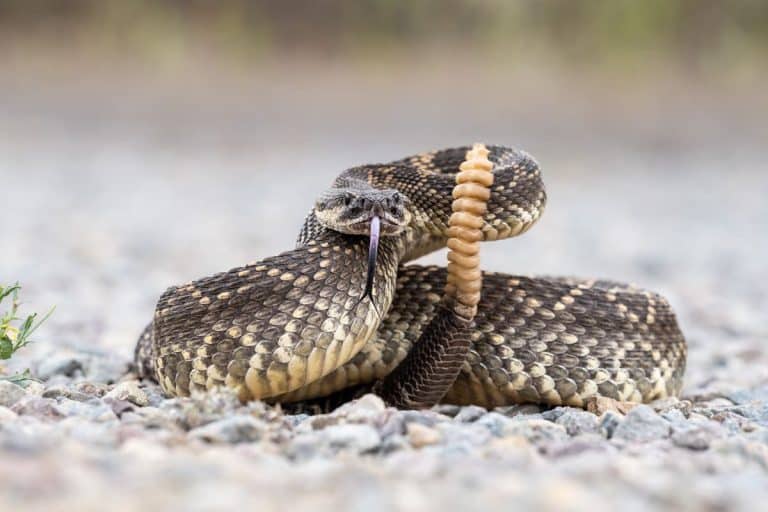
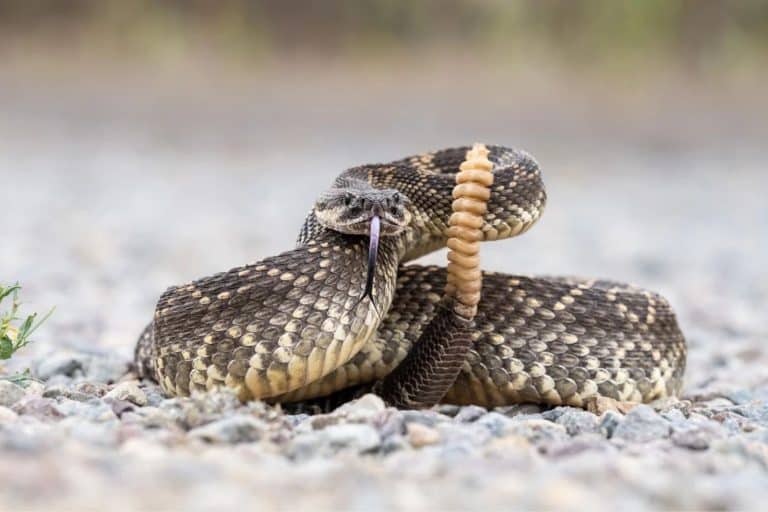
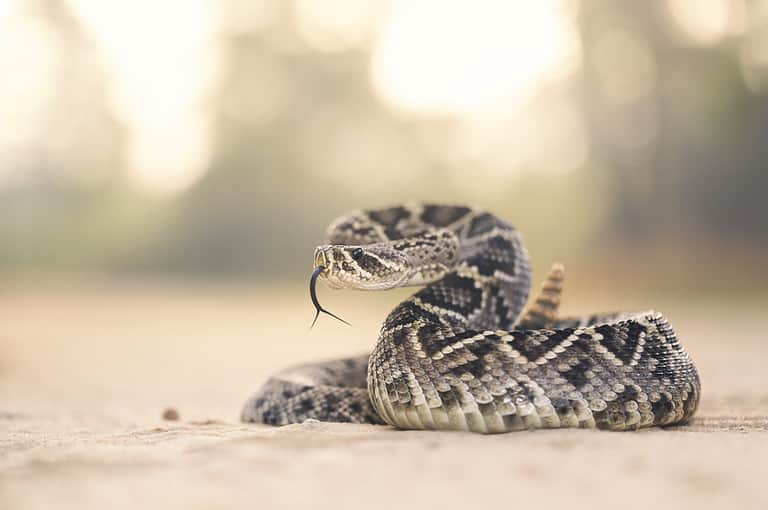
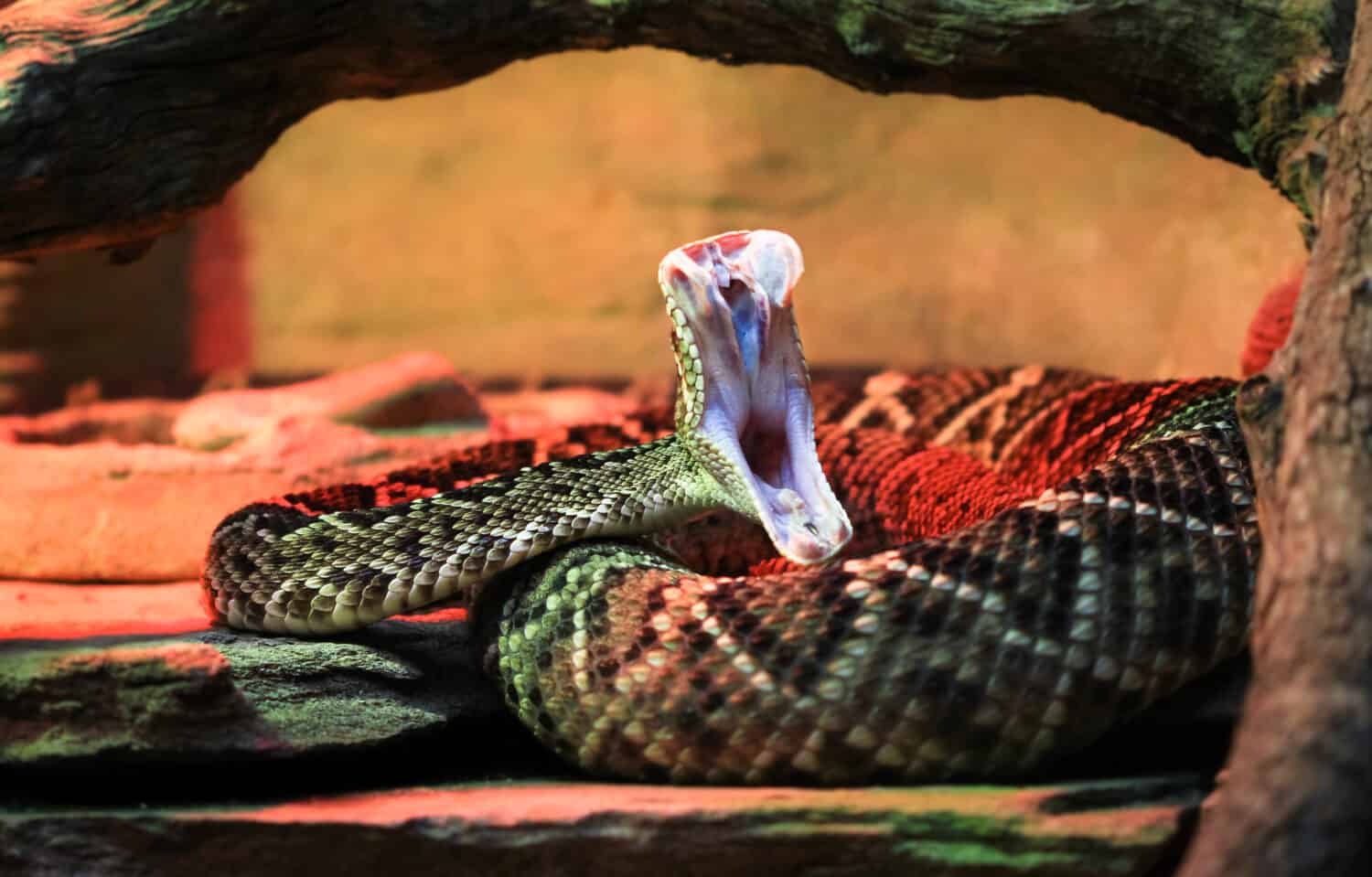
Eastern diamondback rattlesnakes are one of the most venomous snakes in the United States.
©Brittany Mason/Shutterstock.com
Forty-four different types of rattlesnakes have been identified. While all produce venom, not all venom is created the same. This means that antivenin is not required for all rattlesnake bites. But there is one rattlesnake that is so dangerous that once its venom begins coursing through a person’s veins, damage immediately begins. The rattlesnake that causes this damage is the eastern diamondback rattlesnake.
Eastern diamondback rattlesnakes is located in the Southeastern United States, specifically Alabama, the Carolinas, Florida, Georgia, Louisiana, and Mississippi, with Florida’s having one of the highest populations of all states. These snakes are also found in parts of Texas, particularly in East Texas.
Their body color ranges from tan to brown to yellow. But it is the distinct cream-colored and brown diamonds that give away what species of rattlesnake they are, however. Additionally, eastern diamondback rattlesnakes have a triangular-shaped head outlined by a white stripe, making them look exceptionally striking.
Eastern diamondback rattlesnakes can grow as long as eight feet and weigh more than ten pounds, according to the Florida Fish and Wildlife Conservation Commission. On average, individuals are three to six feet long and weigh two to four pounds.
According to a January 2025 study, published in the journal Transactions of the Royal Society of Tropical Medicine & Hygiene, the eastern diamondback rattlesnake is considered the “most dangerous snake in the U.S.A.” This reason is that those who are bitten by a rattlesnake face a 10-20% fatality rate if the bite is not treated. Eastern and western diamondback rattlesnakes are responsible for up to 95% of snake-bite fatalities in the U.S. Consequently, if bitten by a rattlesnake, a diamondback is likely the culprit.
The difference between the two diamondback rattlesnake specie is that eastern diamondback rattlesnakes are generally considered more dangerous due to their larger size and ability to deliver more venom per bite. This is why those living in Florida, where the study’s information was compiled, need to be aware of where eastern diamondback rattlesnakes live to stay as far away from them as possible.
Where Eastern Diamondback Rattlesnakes Are Found in Florida

Eastern diamondback rattlesnakes are found in every county of Florida.
©Carolyn Hinton Hutchins/Shutterstock.com
Rattlesnakes are found throughout much of the state of Florida. However, over the last several decades, the chances of encountering one have declined, given the snakes’ natural habitat being fragmented or disappearing altogether, and the population declining. With that said, there are some habitat that are well-known for being hotspots for their eastern diamondback population. Those areas include:
- Scrublands
- Coastal forests
- Barrier islands
- Pine flatwoods
- Wiregrass flatwoods
- Dry sandy areas
The reason Florida has a larger population of eastern diamondback rattlesnakes than most other states is due to the state’s diverse habitats. Consequently, while there may be fewer encounters with these rattlesnakes than in the past, these rattlesnakes still pose a very real threat to those enjoying time in the Sunshine State.
Common Reactions to Eastern Diamondback Rattlesnake Bites

The symptoms of being bitten by an eastern diamondback rattlesnake come on quickly.
©MaeMatilda/Shutterstock.com
Those who are bitten by an eastern diamondback rattlesnake will begin to feel the effects of the venom nearly immediately. This is because the venom quickly spreads through the body, affecting body systems in its wake. Some of the most common reactions, according to the study, include:
- Tingling or numbness at the bite site
- Nausea
- Destruction of muscle tissue
- Vomiting
- Respiratory distress
- Rapid heartbeat
- Low blood pressure
- Altered consciousness
- Bleeding
- Skin necrosis
- Seizures
By not receiving emergency care immediately, the symptoms will worsen. Consequently, those bitten by an eastern diamondback rattlesnake only have a matter of days before the worst-case scenario occurs.
Eastern Diamondback Rattlesnake Bites Can Be Fatal

Death is the worst-case scenario after being bitten by an eastern diamondback rattlesnake.
©Donna Bollenbach/Shutterstock.com
If bitten by an eastern diamondback rattlesnake, it is necessary to receive medical attention immediately. Those who think they will get better and that the symptoms will pass are incorrect. The only way to get better is to receive an antivenom.
The longer a person who has been bitten by an eastern diamondback rattlesnake waits to get treatment, the more dire the outcome will be. This is because the venom is a hemotoxin. As the venom works its way through the body, red blood cells are damaged and killed. The damage leads to necrosis of the skin around the bite site that may require extensive hospitalization and even skin grafts.
For those who choose not to get the antivenom and try at-home remedies to heal themselves, this has proven to be a “death sentence,” according to the study. Most fatal rattlesnake bites in Florida have been attributed to the eastern diamondback rattlesnake. Therefore, do not hesitate if bitten by an eastern diamondback rattlesnake or any rattlesnake, for that matter. Seek medical attention to have the best chances at recovery without any long-lasting side effects.
How to Avoid Being Bitten

Avoiding eastern diamondback rattlesnakes is the best way to keep from getting bitten.
©John P Ruggeri/Shutterstock.com
Occasionally, due to how well the eastern diamondback rattlesnake can camouflage itself, it may be impossible to avoid being bitten. But, there are some steps that can be taken to prevent being bitten by this or other rattlesnakes while enjoying the outdoors.
Some ways to prevent getting bitten by a rattlesnake, be it an eastern diamondback or others, include:
- Know if rattlesnakes are commonly seen in the area to be explored
- Pay attention to any warning signs posted in the area
- Hike using trekking poles and use them to move vegetation that has grown onto trails where rattlesnakes may be hiding
- Stay on marked hiking trails rather than venturing off into the wilderness
- Do not hike through thick vegetation or dense brush where rattlesnakes could be hiding
- Keep dogs on a leash
- Keep children on marked hiking trails
- Do not reach into areas that cannot be seen
- If camping, be careful of any branches or wood being moved for campfires, as it could be a hiding spot
- Wear ankle-high hiking boots, along with thick socks and long pants, when hiking
If in the wilderness known to be a habitat for rattlesnakes, these tips can help prevent an encounter with the reptile that neither the hiker nor the snake wants.
What to Do If Bitten

If bitten by an eastern diamondback rattlesnake, emergency care is needed immediately.
©Kevin Barry Photography/Shutterstock.com
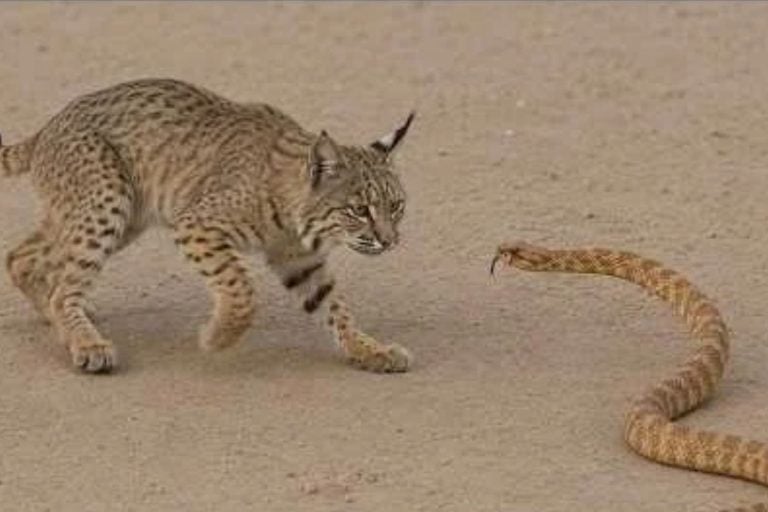
The first thing to remember is that an eastern diamondback rattlesnake will generally only strike if it feels threatened. In most cases, there will be ample time to hear the rattle from the snake to keep a safe distance so that no harm comes to those who cross the snake’s path, nor the snake.
However, if a bite occurs, it is necessary to receive medical attention as soon as possible. Therefore, the first step is to call 9-1-1 or contact a local hospital by phone and inform them that an eastern diamondback rattlesnake bite victim is en route. But, if it is not possible to get to a vehicle to be transported to a hospital or if one is too far away, the steps to take after being bitten by the eastern diamondback rattlesnake include:
- Get away from the snake to a safe location
- Stay out of direct sunlight to keep comfortable
- If the bite site is covered by clothing, cut the clothing away to expose the bite area
- Gently wash with soap and water if available
- Do not walk or run unless necessary, remaining sitting until help arrives
- Jot down what time the bite occurred
- If able to do so without getting harmed, snap a picture of the snake that bit to properly identify it
- If the snake is no longer alive, carefully package it up, ensuring to stay away from the fangs
- Do not tourniquet the bite site, but put firm pressure on the bite site to keep the venom from spreading
- Remove any jewelry or tight clothing near the bite site
- Fashion a splint to keep the portion of the body bitten immobilized
- Do not take any medication unless advised by medical personnel to do so
The goal is to reach the emergency room as soon as possible so that antivenom can be administered. The quicker this happens, the better the prognosis and fewer chances of any long-term effects or worse occurring as a result of the lethal eastern diamondback rattlesnake bite.