
Quick Take
- Male horse guard wasps look like they can sting you, but the truth about their anatomy is nothing like it seems. Learn about wasp anatomy →
- A single wasp chamber can hold enough paralyzed prey to seem impossible, and the biology behind it explains everything. Explore the chamber biology →
- Horse guard wasps are considered gentle, but one wrong move around them could trigger a serious medical emergency. Understand the sting risks →
Horseflies are common pests. With jaws that cut like scissors, horsefly bites are not only painful but can also lead to infections or allergies. Consequently, repellent is consistently applied to animals in horsefly country to keep them as comfortable as possible.
However, repellent is not the only way horses and cattle are protected from horseflies. These animals have an unlikely protector that is just a fraction of their size: the horse guard wasp, which hunts horseflies. Just one wasp is capable of killing hundreds of horseflies each season, making them invaluable to people and livestock alike.
Continue reading
Horse Guard Wasps and Their Incredible Stingers
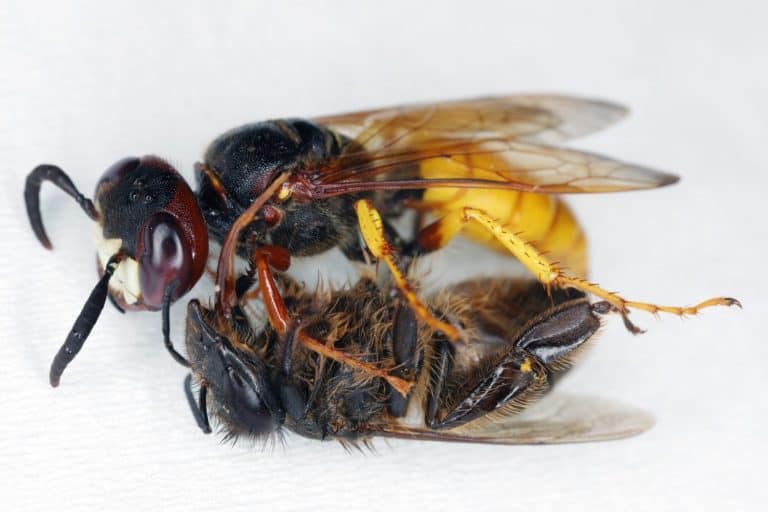
Horse guard wasps are one of the largest wasps found in North America. They measure 20 to 25 millimeters long and have a strong body. Compared to other backyard wasps, they are significantly larger. However, this size is necessary, given that horse guard wasps both target and carry horseflies.
According to a YouTube video by Kelvin Wiley, only female horse guard wasps can inject venom. As seen in the video, the ovipositor, or stinger, is very large. It is smooth and can sting multiple times, injecting venom with each sting.
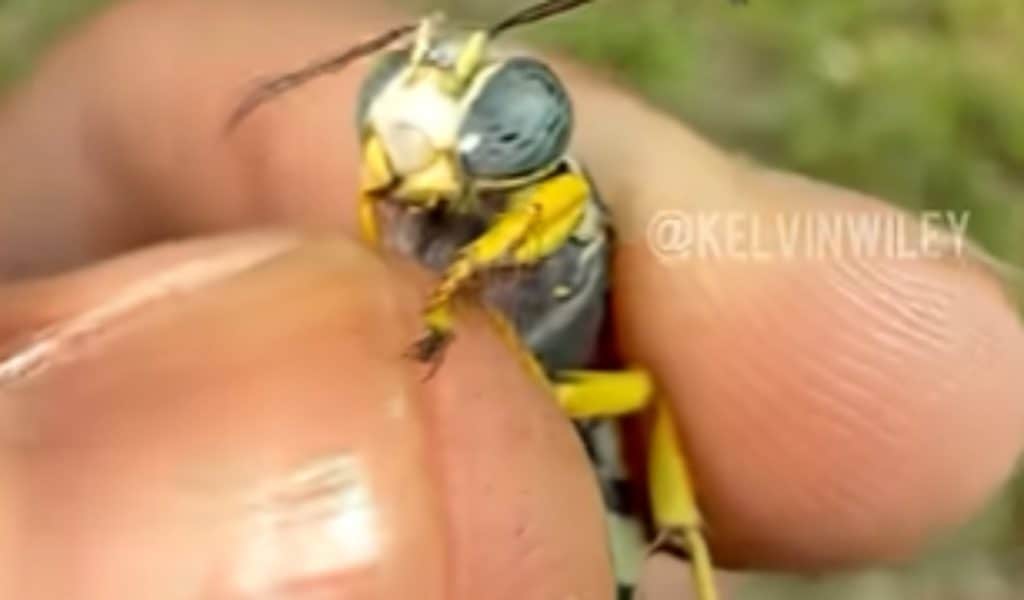
The female horse guard wasp has a stinger capable of paralyzing horseflies.
©@KelvinWiley / YouTube – Original
Males have an abdominal structure that can resemble a stinger, but it is actually part of their reproductive anatomy and cannot inject venom. In other words, males cannot sting, but females can. Horse guard wasps keep horsefly populations under control, keeping livestock from being bitten. Typically, the wasps are not bothered by horses or cattle, making them an insect worth keeping around for these animals’ health.
How the Horse Guard Wasps Take Down Horseflies
Female horse guard wasps target horseflies for their young. However, they do not kill the horseflies. Instead, horse guard wasps paralyze the biting flies, keeping them alive for the growing larvae for as long as possible.
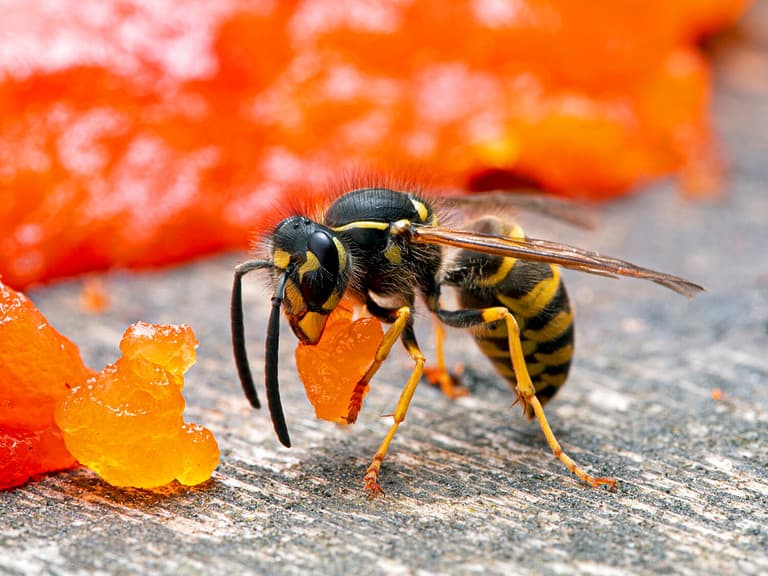
Typically, the targeted horseflies are resting or feeding. This ensures both a sneak attack and less resistance. The female horse guard wasp will inject the horsefly with venom. The venom paralyzes the horsefly, stopping it from moving or flying away.
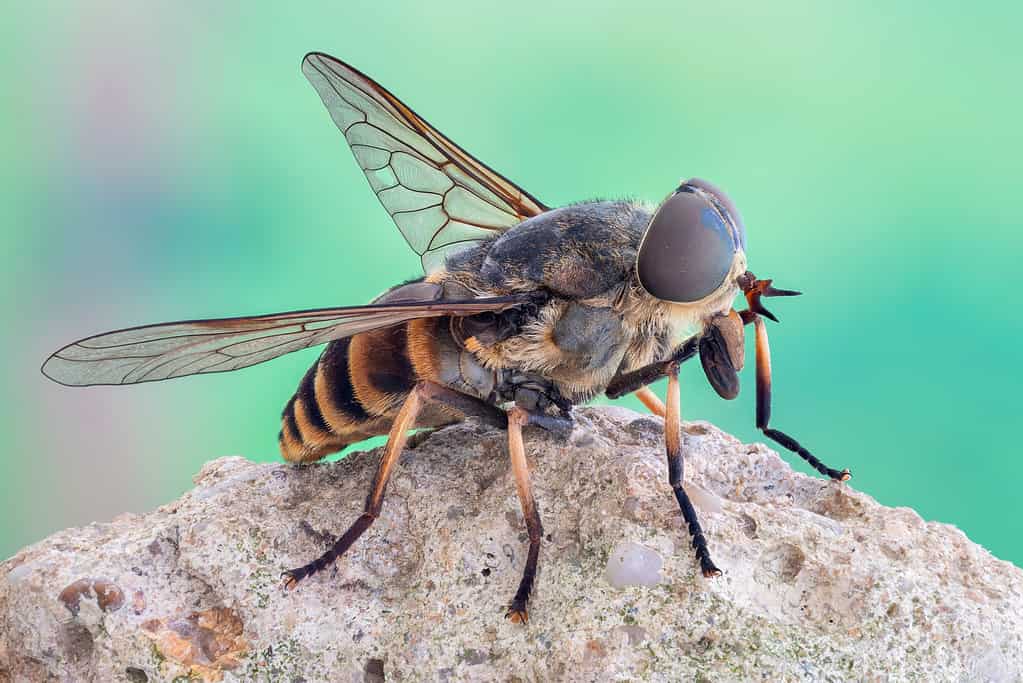
Horse guard wasps take down horseflies when they are eating or resting by injecting them with paralyzing venom.
©iStock.com/guraydere
Once paralyzed, the horse guard wasp will carry the horsefly back to the chamber dug out for a laid egg. After the egg hatches, the larvae will have fresh food to eat, as the fly is still alive.
Were the female horse guard wasp to kill horseflies and then take them back to the unhatched egg, there would not be much nutrition to be had. By keeping multiple horseflies alive in the chamber, the larvae can feed continuously and receive protein-rich prey, allowing them to grow quickly and become strong, mature adult horse guard wasps.
Why Female Horse Guard Wasps Kill Horseflies
The entire reason female horse guard wasps kill horseflies is to provide proper nutrition for the larvae in their nest. These larvae need a protein-rich diet to mature and grow quickly, something that horseflies provide in spades.
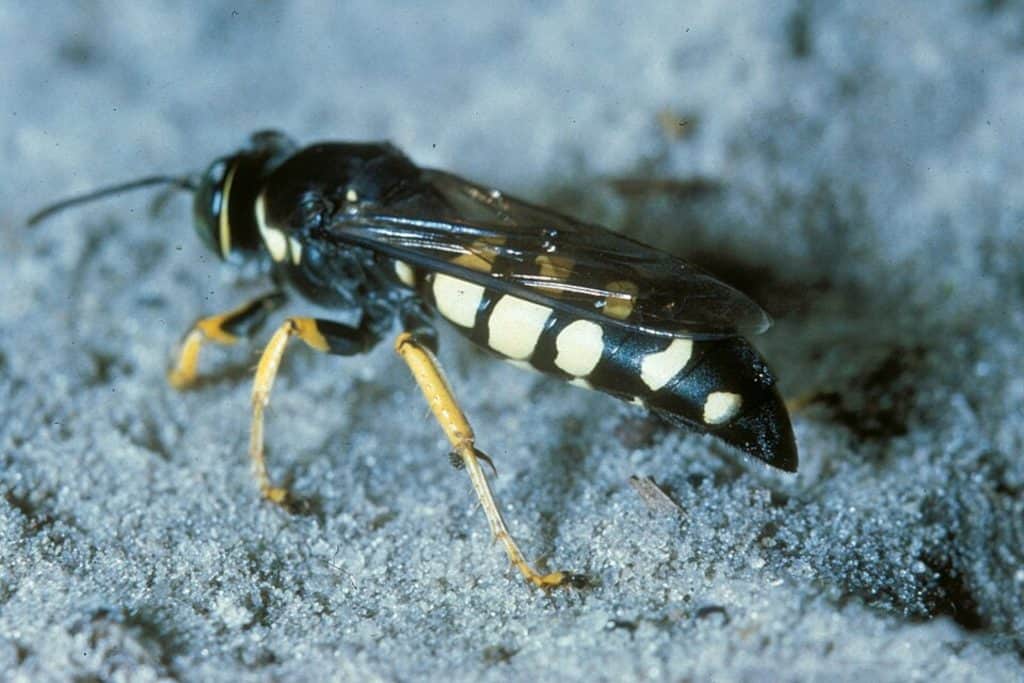
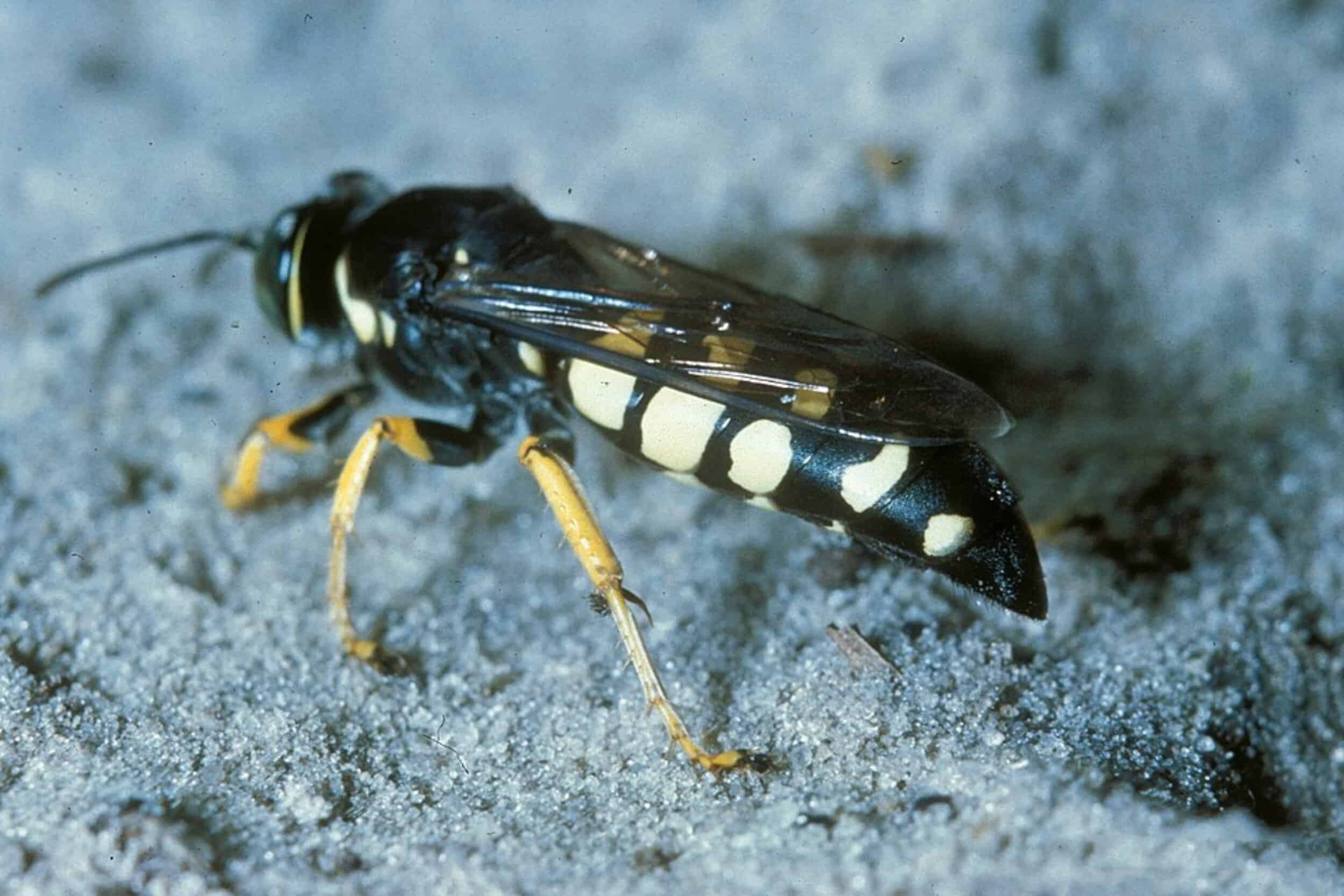
Female horse guard wasps dig chambers to lay eggs, which they then fill with horseflies for the larvae once they hatch.
©Howard Ensign Evans, Colorado State University, Bugwood.org, CC BY 3.0 US , via Wikimedia Commons – Original / License
Before a horse guard wasp lays an egg, she digs out a chamber. Each chamber will only hold one egg. However, each chamber can hold multiple paralyzed horseflies. While the exact amount can vary, female horse guard wasps tend to bring 15 to 60 horseflies to the chamber for larvae to consume once they hatch from eggs.
Over the course of their lifespan, which is no more than several weeks to a couple of months, females will dig multiple chambers and paralyze hundreds of horseflies to feed their young. This makes horse guard wasps not only doting mothers but also exceptional pest-control agents.
Where Do Horse Guard Wasps Live?
Horse guard wasps are picky about their habitats. They choose locales with sandy, loose soil and abundant sunshine to build their nests. This is why only certain portions of the United States are home to horse guard wasps.
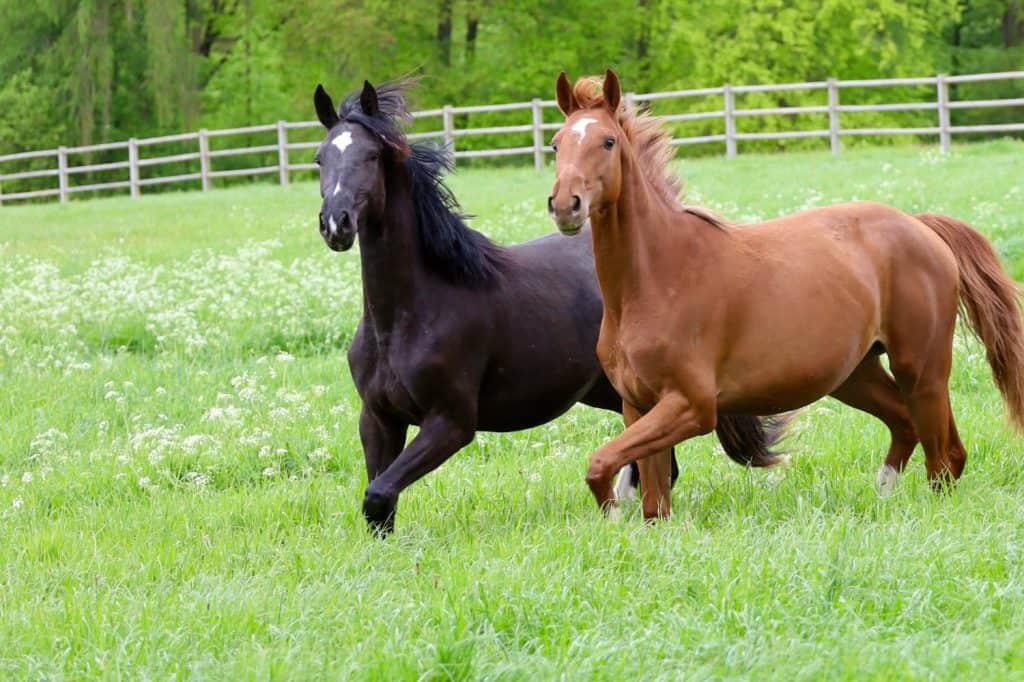
Horse guard wasps can be found in pastureland with loose soil near horses and cows.
©c_brcknr/Shutterstock.com
Typically, horse guard wasps can be found east of the Rocky Mountains, from parts of New Mexico and the Great Plains through the Midwest and eastern United States, as far south as Florida. In these states, horse guard wasps will look for locations with access to horseflies. Some of the best locations to find these insects include:
- Pastures
- Grazing land
- Grasslands
- Open areas with standing vegetation
Between the loose soil, perfect for building nests, and the ease with which horseflies can be located, these regions provide it all for horse guard wasps. Therefore, the more open, untouched land near horses, the greater the likelihood of sharing environments with horse guard wasps.
Why Horse Guard Wasps Should Not Be Handled
Horse guard wasps tend not to be as aggressive as other social wasps. This is because they are solitary wasps that would prefer to just be left alone. However, just because they are not as aggressive does not mean they should be handled. In fact, doing so could lead to serious health problems.
As Wiley explained in his YouTube video, males cannot sting. Females have the stinger. Females can sting multiple times without dying. Each sting injects venom into its prey (or the person holding it). The sting is incredibly painful. It can lead to redness, swelling, and, in rare cases, anaphylaxis. That is why it is recommended to give the horse guard wasp space at all times.
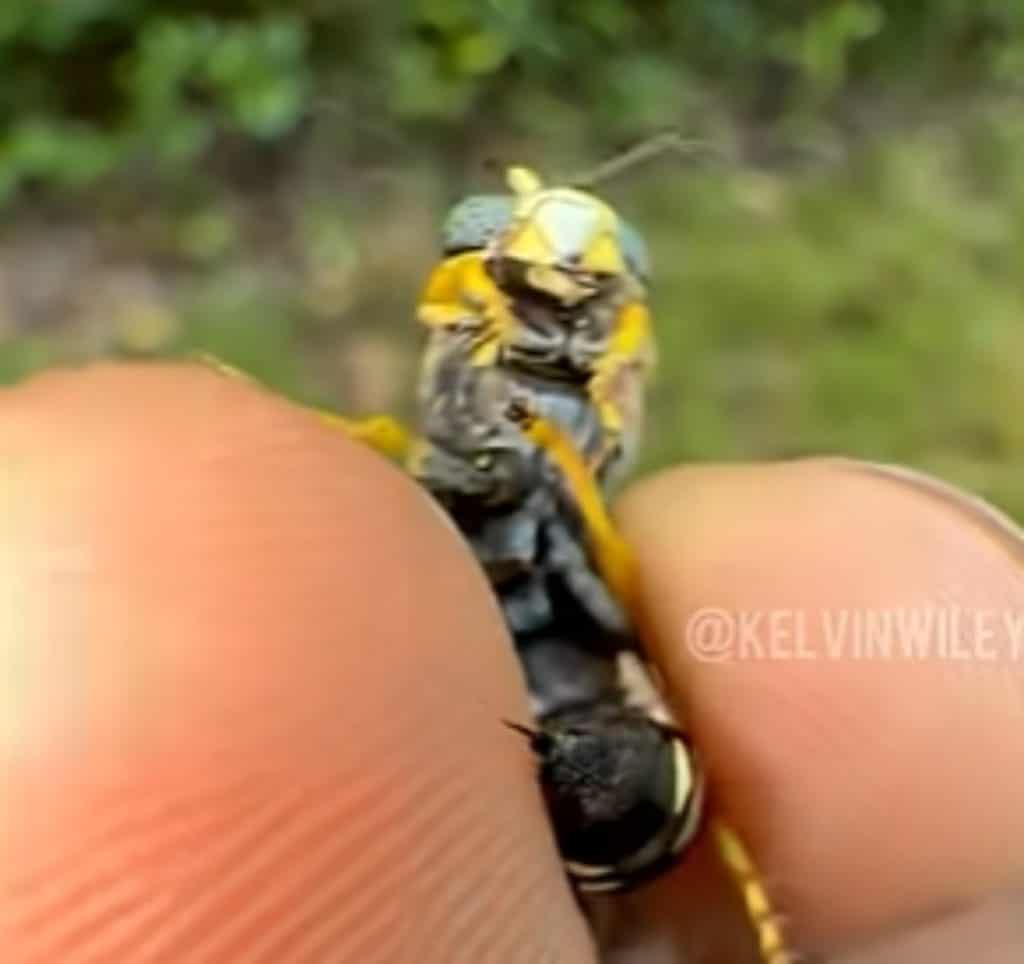
Because of the ability to sting multiple times, horse guard wasps should never be handled.
©@KelvinWiley / YouTube – Original
If a person is stung by a horse guard wasp, first aid should be promptly administered to minimize the effects of the venom. The first aid to provide is as follows:
- Remove the stinger if it is still present in the skin
- Thoroughly wash the sting site with soap and water
- Use a cold pack to keep the site from swelling too badly
- If itching is present, antihistamines or topical corticosteroids can be applied to the sting site
For those who experience an allergic reaction or are stung in a highly sensitive part of the body, seek medical attention immediately.
Although horse guard wasps are solitary, they may still attack if they feel threatened. Therefore, keep your distance and avoid approaching them for the safety of both yourself and the wasp.