Quick Take
- This snake can strike farther than most people assume, and the distance is measured in a way that might change how you stand near one. See strike range details →
- Eastern diamondbacks show up somewhere in Florida most residents would never expect to find them. Explore their Florida range →
- Getting bitten doesn't guarantee venom enters your body, though that fact is more dangerous than it sounds. Understand dry bites →
- The snake on the road initially refused to move, and understanding why reveals something about how these animals actually respond to humans. Watch the snake's behavior →
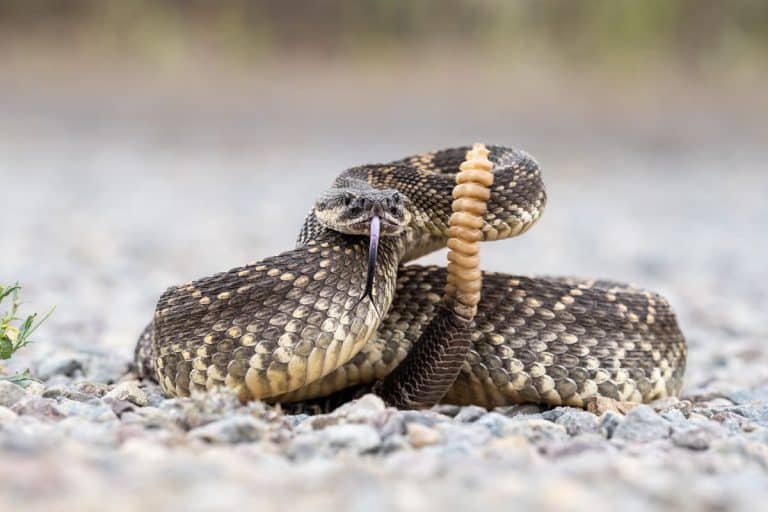
Using a telephoto lens and keeping his distance, this guy captured some excellent footage of an eastern diamondback rattlesnake. It is the largest rattlesnake species in the United States and one of Florida’s most impressive venomous snakes. In the clip below, the snake makes its way across a country road, showing off the distinctive dark diamond pattern running down its back. It initially appears reluctant to continue with a person nearby, but once given more space, it carries on across the road.
Watch the Action Below
Where Do Eastern Diamondback Rattlesnakes Normally Live?
Eastern diamondback rattlesnakes (Crotalus adamanteus) are native to the southeastern United States. Their range includes Florida, Georgia, Alabama, southern Mississippi, eastern South Carolina, southern North Carolina, and historically eastern Louisiana, although populations have declined in some parts of that range. In Florida, they occur statewide and can even be found on barrier islands and parts of the Florida Keys.
These snakes are strongly associated with open longleaf pine habitats, but they also live in pine flatwoods, sandhills, scrub, coastal areas, and palmetto-wiregrass communities. They often use existing shelters such as gopher tortoise burrows, stump holes, root channels, and other animal burrows. Adults commonly measure about 3 to 6 feet long, although exceptionally large individuals can exceed 7 feet. Where development overlaps suitable habitat, eastern diamondbacks can occasionally turn up in suburban areas as well.
Are Eastern Diamondback Rattlesnakes Dangerous?
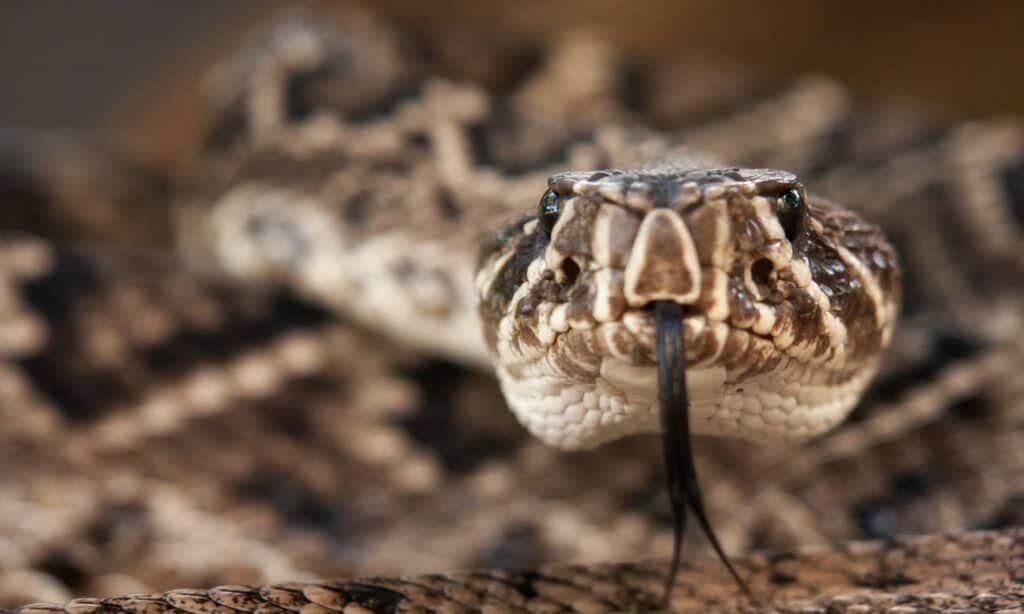
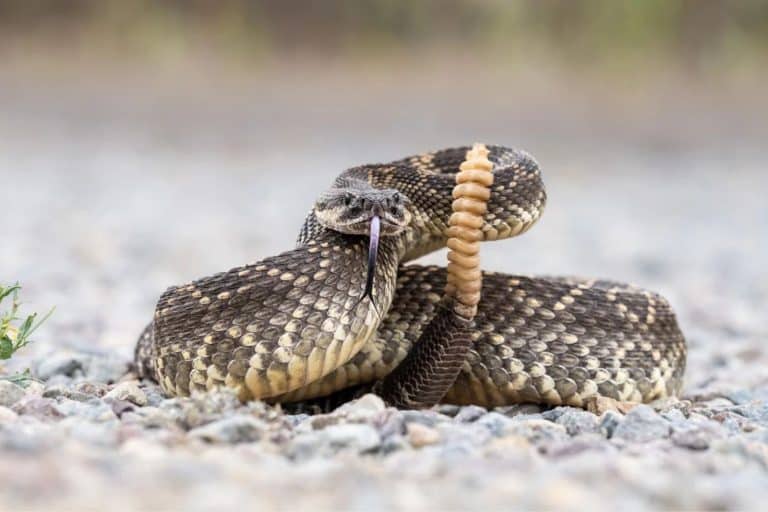
Eastern diamondback rattlesnakes are large and venomous snakes.
©iStock.com/Wide-River-Rick
Eastern diamondbacks are large, powerful ambush predators that typically wait under cover for mammals and other prey to come within striking distance. They do not hunt or pursue people. When confronted, they generally prefer to remain still or move away, but a threatened snake may coil, raise its head and neck, and rattle as a warning. They are capable of striking up to about two-thirds of their body length, which is more than enough reason to admire one from a generous distance.
Eastern diamondback venom is complex and primarily affects blood, tissue, and circulation. Envenomation can cause severe pain, swelling, tissue damage, bleeding problems, low blood pressure, and, in serious cases, effects elsewhere in the body. Some pit viper bites are “dry bites,” meaning little or no venom is injected, but there is no safe way to determine that immediately after a bite. Anyone bitten by an eastern diamondback should treat it as a medical emergency and seek immediate professional care. With modern antivenom and prompt treatment, deaths from rattlesnake bites in the United States are uncommon.