
Sometimes, you learn an animal fact so surprising that you question whether it’s real or not. One such tidbit regards the giant wood moth. As the heaviest moth in the world, adult females only live for a few days but lay roughly 20,000 eggs! An Instagram post by @the_mothladies shows a short clip of this massive moth climbing around. Read on to learn more about these moths, their incredibly long wings, and their remarkably short life cycle.
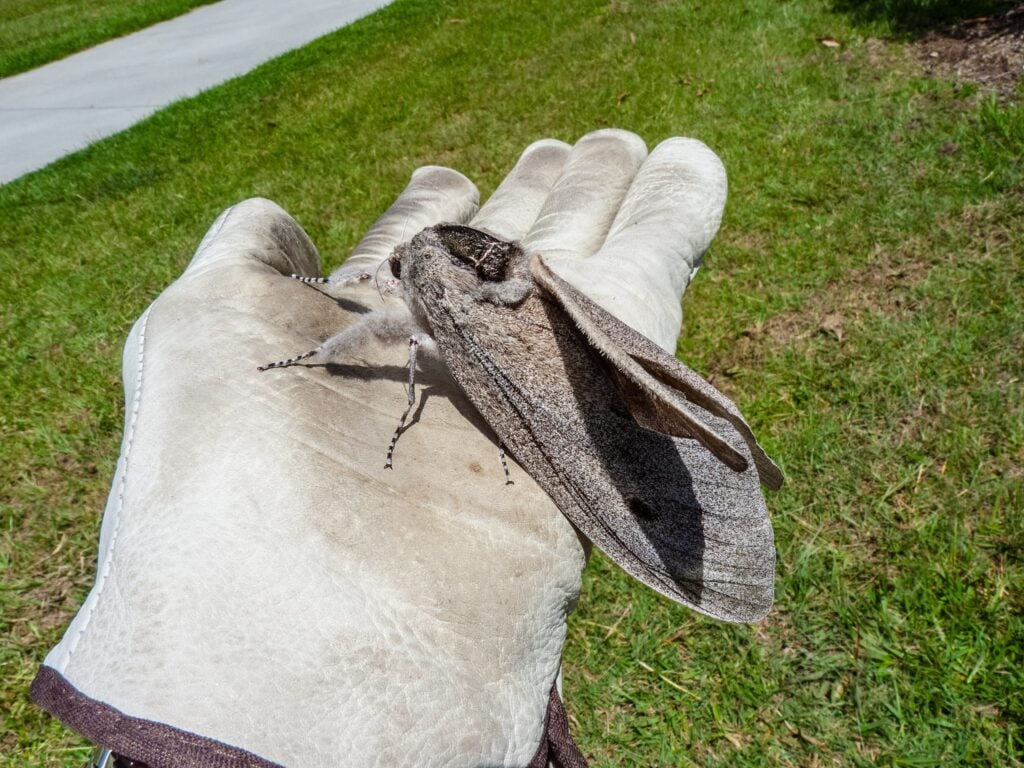
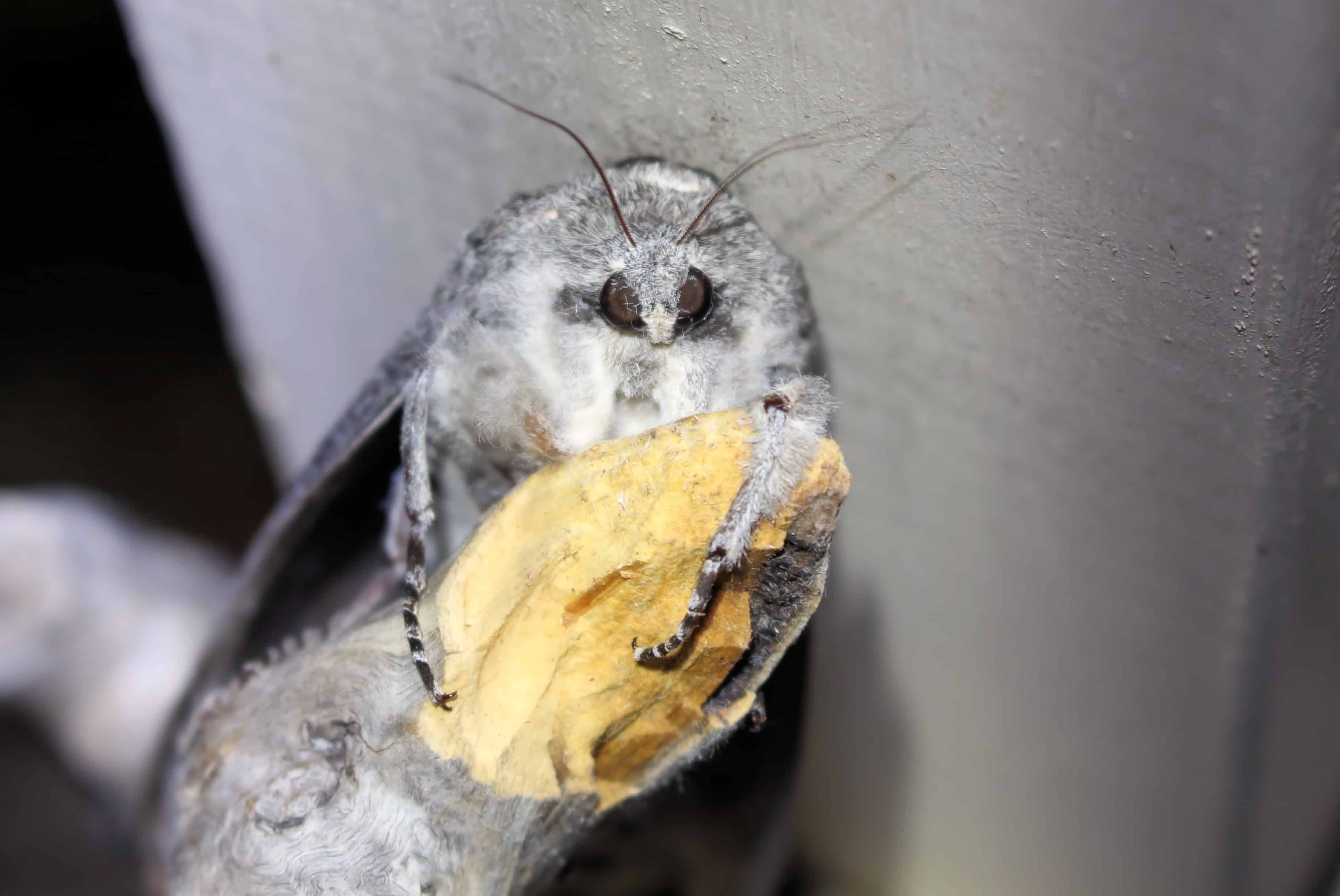
Giant wood moth, Endoxyla cinereus, perches on a man’s work glove.
About the Giant Wood Moth
The giant wood moth, scientifically known as Endoxyla cinereus, is a member of the Cossidae family. As part of the carpenter or wood-boring moth family, the larvae of these moths bore into trees, specifically eucalyptus trees. They are native to eastern Australia. In their larval stage, they live in trees for around two to three years before entering their pupal stage, which lasts a few weeks. After emerging as full-grown adults, they only live for a few days, since they rely on stored fat for energy in lieu of eating. While they are not “rare” per se, their short life cycle means humans come across them infrequently. They are extremely famous, however, for their large size.
While not the largest moth in terms of wingspan, they are among the heaviest moths in the world. Most adult females weigh about one ounce, approximately the weight of a pencil. Their wingspan is impressively large, reaching up to about nine inches! Giant wood moths exhibit sexual dimorphism, meaning there are major distinctions between the sexes. Females are much larger than males, with males being about half their size. Despite their wide wings, their mass makes it difficult for these moths to fly. Rather than expend the necessary energy to take to the sky, they mostly navigate by crawling. Females crawl around trees and wait for males to find them before mating. Given their short adult lifespan, which is only a few days, they go through emergence, mating, egg-laying, and death incredibly quickly.