
Quick Take
- The northern leopard frog is often discussed as the earliest frog sound you’ll hear when the temperatures begin to rise.
- The more frog calls you hear, the better the ecosystem.
- Many frog calls begin in the spring and continue into the summer months.
Amazing things happen in nature as spring begins. The weather changes, plants and trees begin to flourish, and animals start to emerge from their hiding places. According to the U.S. Fish & Wildlife Service, various species of toads and frogs often begin the wildlife chorus that you may hear during your time outside, and they produce a wonderful sound. While the link focuses on the wetlands of Minnesota, the fact is that many frog species begin to emerge all across the nation, and they’re among the most reliable signs of spring.
You may be hearing the sweet sounds yourself. But what exactly are you hearing? In this guide, we’ll tell you about the five frog species you’re likely to hear first. We’ll tell you about them, about their sounds, and where you can find them in your neck of the woods.
Why Frogs and Toads Call in Spring
Despite what you may initially believe, frog and toad vocalizations are not just random noise. They are typically purposeful, highly evolved mating calls. Almost all of the sounds you are hearing are coming from males who are either attempting to attract females or defend their territory.
The calls often increase due to the conditions of the area. Common factors include:
- Temperatures: Warmer weather will increase activity
- Moisture: The increase in rain and the rise of humidity can trigger calling behavior
- Season: Most species begin their calls during the spring or summer season
Head to temporary pools, wetlands, and places with slow-moving water to increase your chances of hearing the calls. If you’re lucky, you may begin to hear some calls as soon as the snow begins to melt in some places.
The First Five Frog Species You’re Likely to Hear
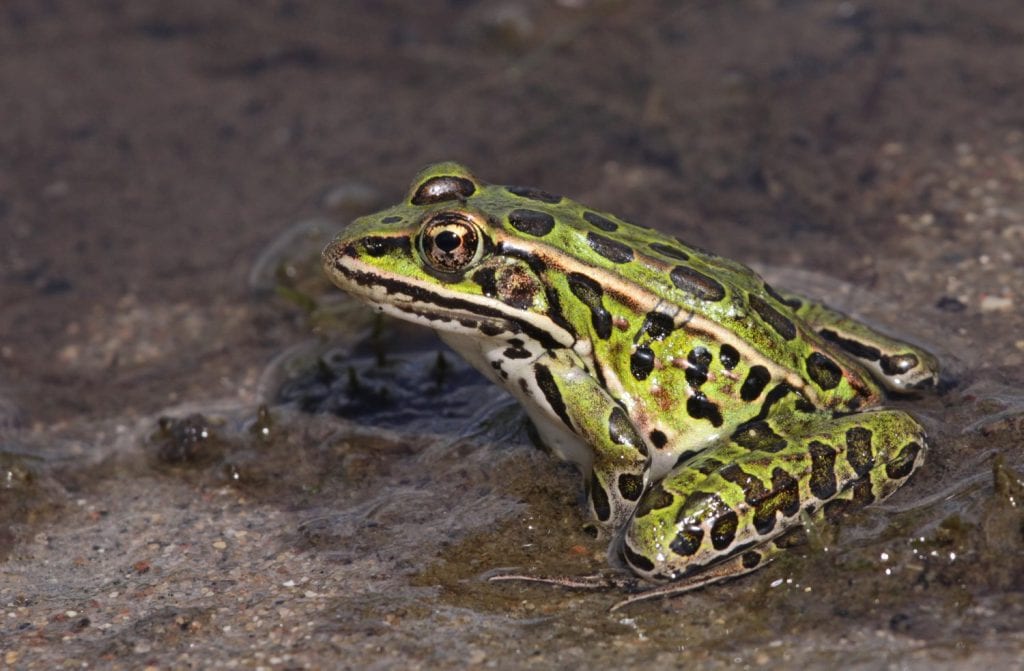
Northern Leopard Frogs are typically the first frog you’ll hear when the temperatures begin to rise.
©Chris Hill/Shutterstock.com
Like many other animal groups, some toads and frogs are early risers. The species on this list often begin calling and mating sooner than many other creatures. It’s often in an attempt to mate while there’s an absence of fish, which makes it safer to lay eggs. Here are some species to watch for:
Wood Frog
The wood frog is among the first species you’re bound to hear. In some regions, you may even hear them while ice still clings to the ponds. During late winter and very early spring, head to nearby forest wetlands and vernal pools to get your chance. Unlike many other frogs, wood frogs are explosive breeders that gather in large numbers and call intensely for a few days. The best time to hear them is during the late afternoon through early evening, especially after the first rains of the season.
The wood frog has a short, raspy call that’s often compared to a duck’s quack. Some believe it sounds like “rack-et, rack-et.”
Spring Peeper
The spring peeper often emerges from its slumber in early spring, sometimes as early as March. You’ll often find them in woodland wetlands and around shrubs that are near water. At about an inch long, this species is very tiny but incredibly loud, and their calls can carry far distances.
It’s possible that you may not realize you’re hearing a frog at all. The sound they emit is a sharp, high-pitched “peep” that resembles a chick or a small bird. You may hear hundreds of spring peepers calling at the same time. Many avid followers believe the call sounds like sleigh bells echoing through the night.
Boreal/Western Chorus Frog
If you find yourself near fields, grasslands, or wetlands this spring, you may hear the sound of various chorus frogs, such as the boreal and western chorus frog. These are among the most widespread and commonly heard early-season callers. They’re very frequent noise makers that can be heard day and night. You’ve probably heard them before. Fans suggest the noise they make sounds like a repetitive “crreeeek,” often compared to running a finger along a comb.
Northern Leopard Frog
The northern leopard frog is often mentioned as the first frog you’ll hear when temperatures begin to rise. Emerging in early spring, the frogs find their places in prairies, pond edges, and shallow wetlands. The leopard frog’s call is lower in pitch, which gives them a distinct voice when compared to the rest of the frog chorus. Their sound is often described as a snore-like call that’s very deep, followed by chuckling notes that sound like “chuck-chuck-chuck.”
American Toad
One of the most recognizable amphibians in North America is the American toad, an iconic early caller. You’re likely to hear the call around backyard ponds, forest edges, and even suburban neighborhoods where there may be standing water. Unlike similar amphibians that emit short bursts of sound, the American toad produces a long, musical trill that can last up to 30 seconds.
Why Early Callers Matter
You may enjoy hearing these frog species making their joyful noises early in the season, but these early risers provide more benefits than just offering a lovely tune. In fact, these frogs and toads are vital components of healthy ecosystems.
Frogs and toads are considered to be bioindicators. That means that their health reflects the overall condition of the environment around them. Many amphibians have permeable skin, which absorbs water, and with it, pesticides and chemical runoff. Frogs also have a dual life cycle, which exposes them to time on land and water, so they’re exposed to a wide range of environmental conditions.
All of that is to say that if water contamination and pollutants are a serious factor in an area, then you’re less likely to hear from many frog species. Hearing them means that your natural environment is on the right track.
Early frog risers also play an important role in providing natural pest control to the area. Many adult frog species are opportunistic predators and consume a wide variety of invertebrates, including mosquitoes, flies, beetles, ants, and moths. Because many frog species are active at the start of the season, when insect populations really begin to rise, they can help prevent explosive growth later in spring and summer. This phenomenon has many benefits. Insects are more than just pests. They can spread disease, ruin crops, and cause other issues in ecosystems. So frogs are an essential part of the solution.
Tips for Identifying Frog Calls
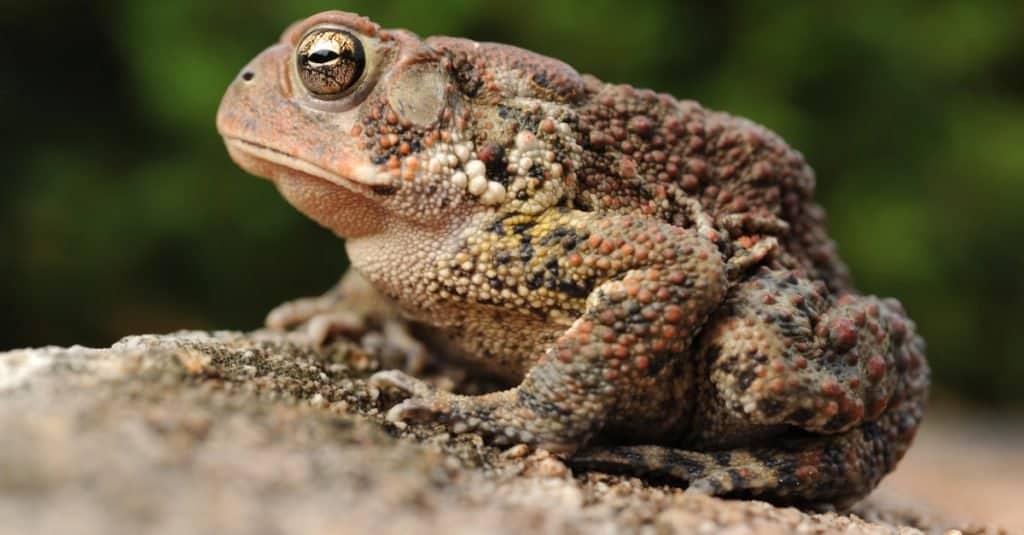
The American toad makes a long, trill-like sound that will make anyone’s ears perk up.
©Miles Boyer/Shutterstock.com
If you’re an amphibian enthusiast and you want the best chance of hearing your favorite frog species, then there are some tactics to try. Here are some considerations if you want to try to hear the first five frog species.
Start by focusing on sound patterns. If you believe you hear a frog in the distance, consider this:
- Short “peeps” = Spring peeper
- Long trills = American toad
- Duck-like quacks = Wood frog
- Deep “boink” = Green frog
You can also use habitat cues—such as the type of water body or surrounding vegetation—to help identify the frog species by their calls. Although there are some variances, consider the following:
- Forest pool = Wood frog or peeper
- Open wetland = Chorus frog
- Large pond = Bullfrog
As a rule of thumb, if you want to identify the five species we mentioned, you’ll want to listen for their calls as early in the season as possible. Head out in early spring, and you have a good chance. Wait until summer, and you’ll hear more vocal overlap and complexity, and picking out a specific species will prove more difficult. Finally, when you’re listening for frogs, stay still and quiet. Frogs will stop calling if disturbed, and they may not start again until they’re sure you’ve left.
Identifying Later Frog Species
If you miss the early spring window to listen for frogs and only visit your local wetlands in the summer, you can still hear a variety of frog species. There are several frog species that you may hear as the temperatures rise. A sampling of these includes:
- Gray Treefrog – This species will emerge between late May and June near trees and shrubs around wetlands. Their call sounds like a short, musical trill similar to a toad’s call.
- Green Frog – The green frog will emerge during late spring near lakes, streams, and permanent pools. They’re prolonged breeders and may call throughout the summer, and with a deep, resonant “boink,” similar to a loose banjo string.
- American Bullfrog – You may come across this species between late spring and summer. They enjoy time spent in lakes, marshes, and large ponds. This species has one of the more recognizable sounds, a deep, booming “jug-o-rum” or cow-like “moo.”
No matter the season, the best way to hear your favorite calls is to take a stroll near a pond or wetland at dusk and just listen. Eventually, you’ll hear those wonderful amphibian sounds. The chorus is almost guaranteed to deepen your appreciation for the natural world.