
Quick Take
- This mammal is small enough to be regularly mistaken for an insect in flight. See the insect confusion →
- This bat shares a facial feature with pigs, and scientists think that feature serves a surprisingly important purpose. Explore the pig-like nose →
- Its size should make sophisticated echolocation impossible, yet it pulls off this complex process. Discover its echolocation ability →
- This bat reproduces slower than almost any creature its size, and that one biological quirk could determine whether it survives at all. See the reproduction challenge →
When people think of bats, they usually picture these creatures of the night with wide wingspans flitting through the dark sky. The bumblebee bat, however, does not fit this image at all. Also known as Kitti’s hog-nosed bat, this tiny animal is the smallest bat ever discovered. This species is so tiny that it weighs less than a penny. Here are eight reasons why the bumblebee bat is one of nature’s greatest miniatures.
It’s One of the Smallest Mammals on Earth
The bumblebee bat is by far the world’s smallest bat. But it is also regarded as the smallest mammal on Earth by overall body dimensions. Adults measure only 1.1 to 1.3 inches long and weigh just 2 grams. That’s the weight of a single penny! Although the Etruscan shrew is slightly lighter, the bumblebee bat is proportionally smaller. Its miniature size has made it internet famous.
Is it Really the Size of a Bumblebee?
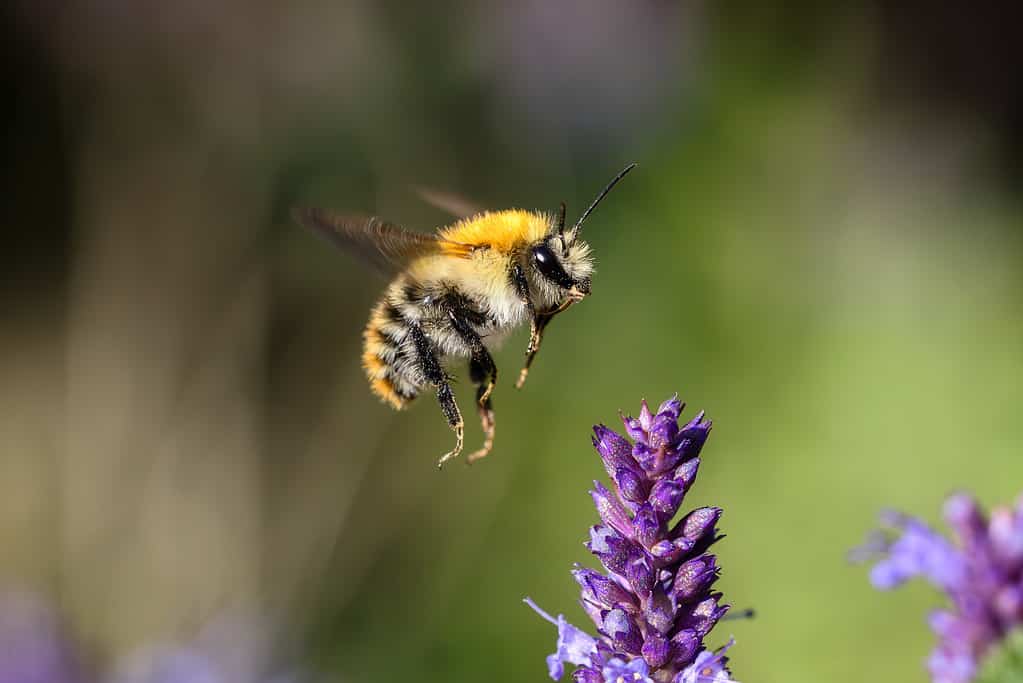
©chris-mueller/iStock via Getty Images
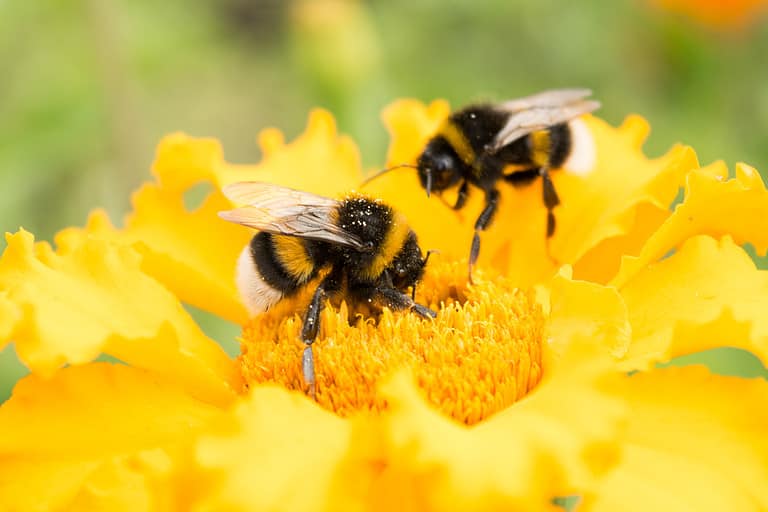
Its common name is only a bit of an exaggeration. The bat is a tad larger than a bumblebee, but its body is small enough that early observers immediately compared it to the buzzing insect. With its micro proportions and swift wingbeats, it can easily look like a large flying insect in evening light. It is certainly one of the only mammals small enough to be regularly mistaken for an insect.
It Shares a specific Feature with pigs
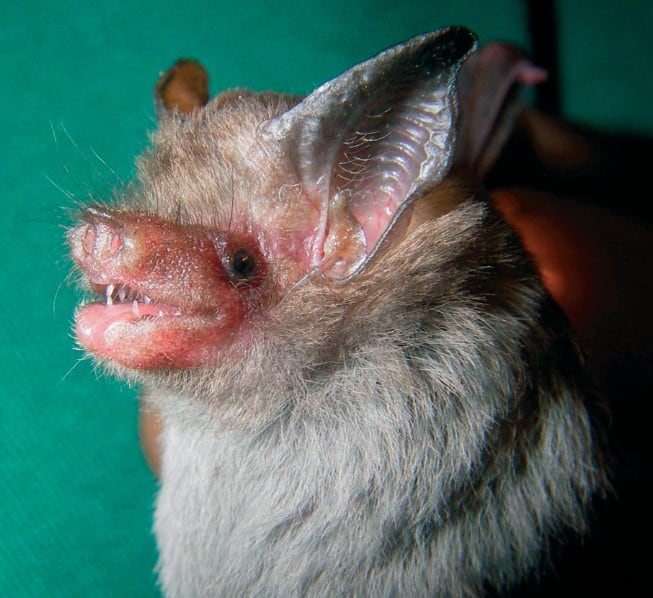
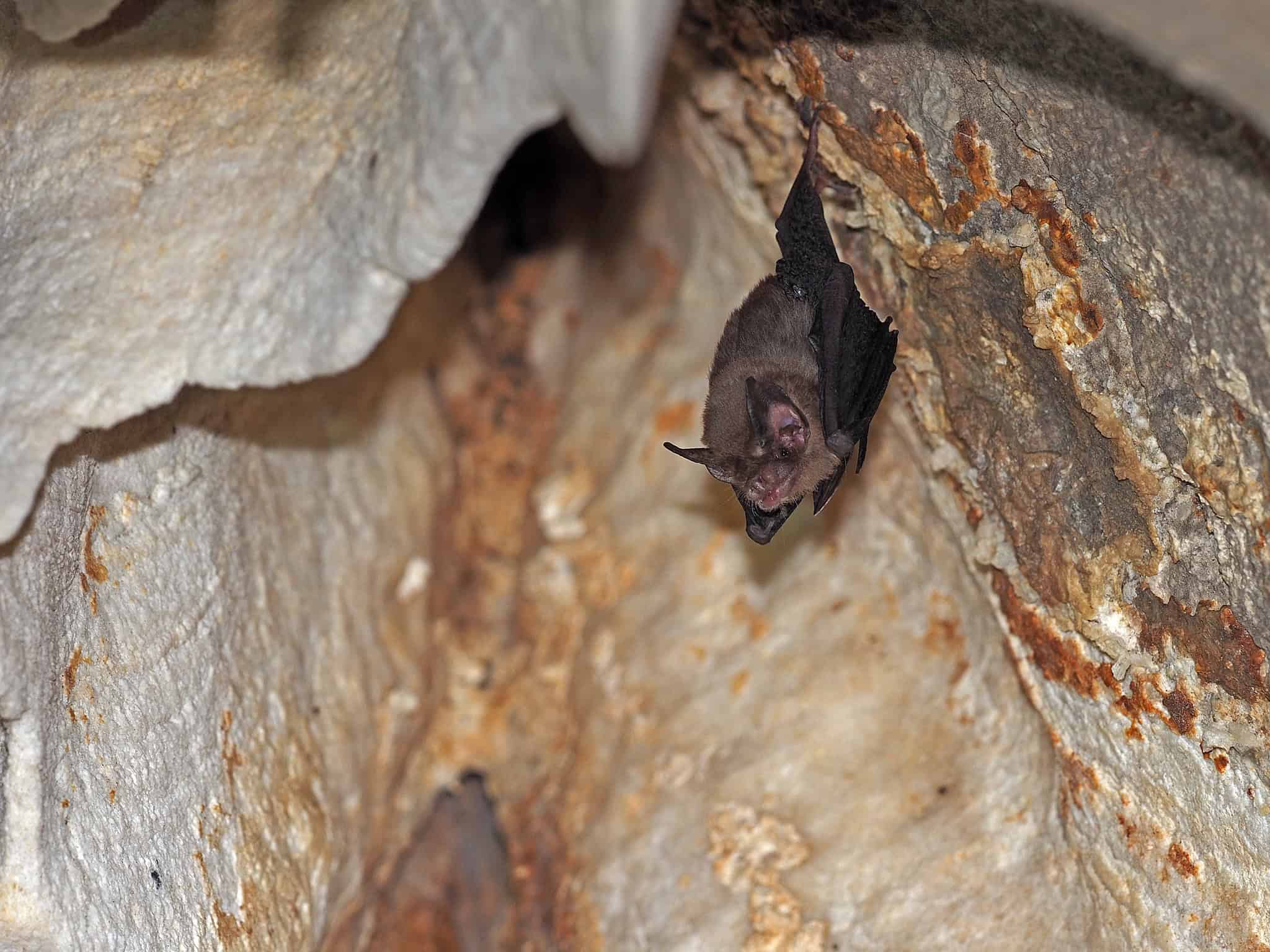
©Sébastien J. Puechmaille1,*, Pipat Soisook2, Medhi Yokubol2, Piyathip Piyapan2,Meriadeg Ar Gouilh3, 4, Khin Mie Mie5, Khin Khin Kyaw5, Iain Mackie6,Sara Bumrungsri2, Ariya Dejtaradol2, Tin Nwe5, Si Si Hla Bu7, Chutamas Satasook2,Paul J. Bates8, Emma C. Teeling1, / CC BY 4.0 / Wikimedia Commons – Original / License
The species gets its scientific nickname, “hog-nosed,” from its snout. Instead of the long nose seen in many bats, it has a short nose with round nostrils that looks remarkably like that of a scaled-down pig. Scientists think the unusual nose might help with echolocation and enhance its excellent sense of smell. Regardless of the purpose, the nose gives the bat one of the cutest faces in the mammal world.
Use of Sophisticated Echolocation
Despite being incredibly tiny, the bumblebee bat employs the same advanced sonar system other bats use. It emits ultrasonic calls and listens for the echoes, which inform the bats where to locate flying insects. Within complete darkness, these tiny bats are able to quickly and accurately locate prey. The remarkable ability also allows it to avoid flying head on into obstacles and helps it navigate tree packed forests. Size has done nothing to limit the effectiveness of its echolocation.
It Lives Almost Entirely in Limestone Caves

©Amarisa M/Shutterstock.com
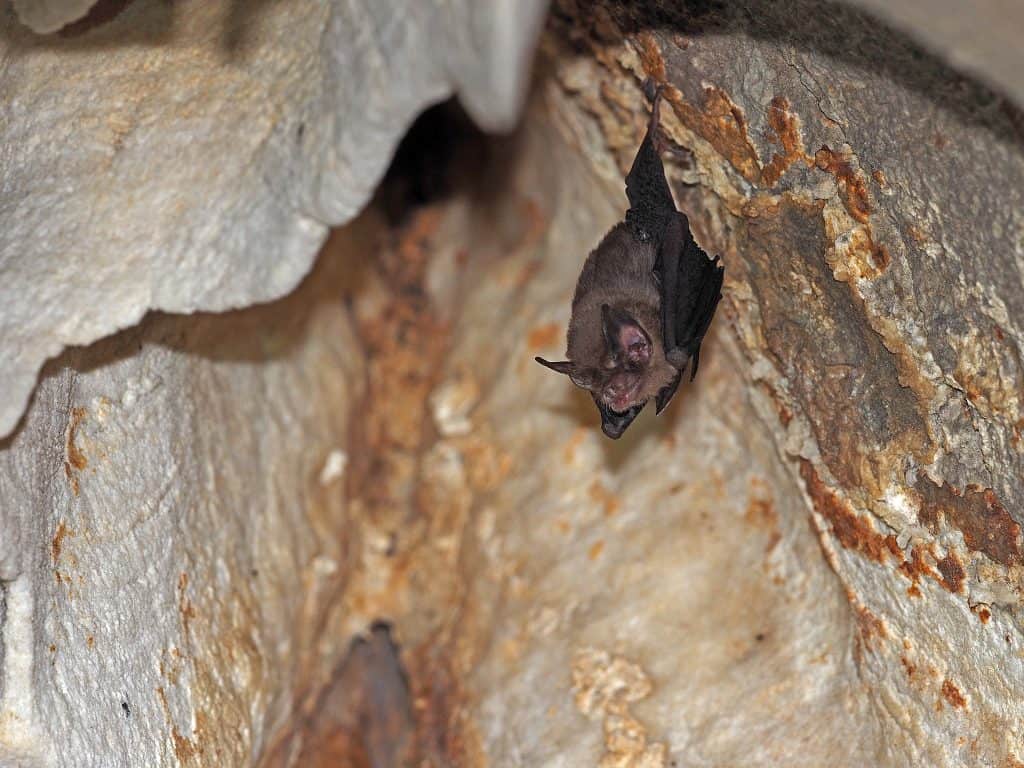
Bumblebee bats live inside small limestone caves in the Southeast Asian countries of Thailand and Myanmar. Colonies are much smaller than those of other bat species, made up of only a few dozen to a few hundred bats. At dusk, they fly into the night to hunt. Because they depend on both caves and the surrounding habitat, changes to either environment can threaten them.
Incredible Aerial Agility
Although tiny, the bumblebee bat is a skilled flyer. It can weave through dense trees and shrubs while on the heels of insect prey. Its itty-bitty size allows it to move through tight spaces. Researchers believe its agility in the air helps compensate for its minuscule size.
Reproductive Drawbacks
Bumblebee bats reproduce very slowly. Females give birth to only a single baby (called a pup) each year. This means that any declining populations due to habitat loss will recover quite slowly. Because every pup is so valuable, protecting colonies is an important conservation step.
The Extraordinary of Tiny
©"bumblebee bat, hog-nosed bat, kitti's hog-nosed bat" by James Eaton is licensed under CC0 1.0. – Original / License
The bumblebee bat may be the smallest mammal ever documented, but it performs maneuvers that seem impossible for an animal its size. It flies with precision and hunts using the complex process of echolocation, all while weighing the same as two paper clips. This cool little bat is a great reminder that evolution sometimes favors diminutive size. Sometimes, animals shrunk to super tiny proportions can be just as successful as the largest creatures on the planet.