
Nature is full of amazing creatures whose species have evolved over centuries to get to where they are today. One amazing adaptation is mimicry, a tool that some species use to trick both predators and prey. This Instagram post by @explainingnature shows a spider-tailed horned viper, a snake with a unique tail it uses for hunting. Read here to learn more about this snake and how it uses its spider-like tail to hunt prey.
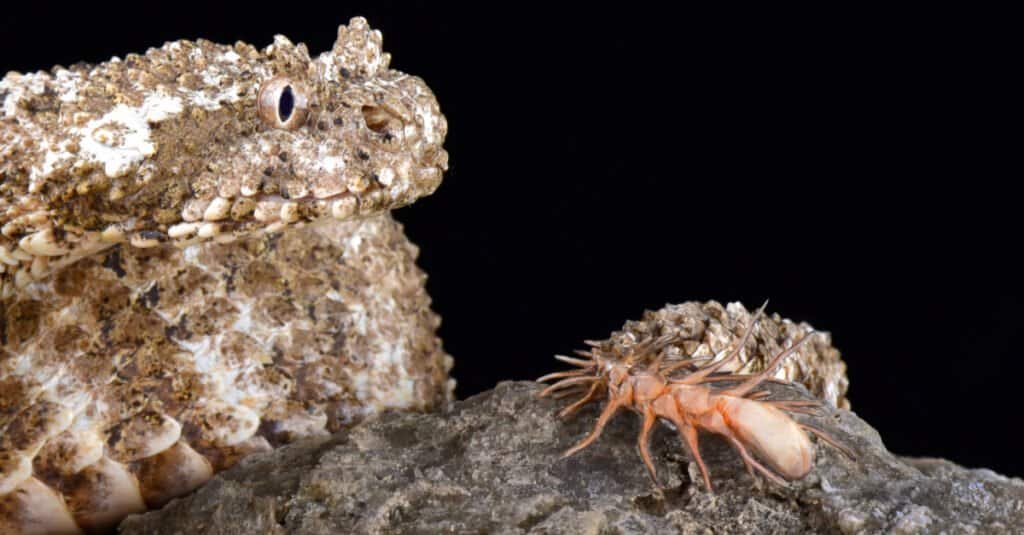
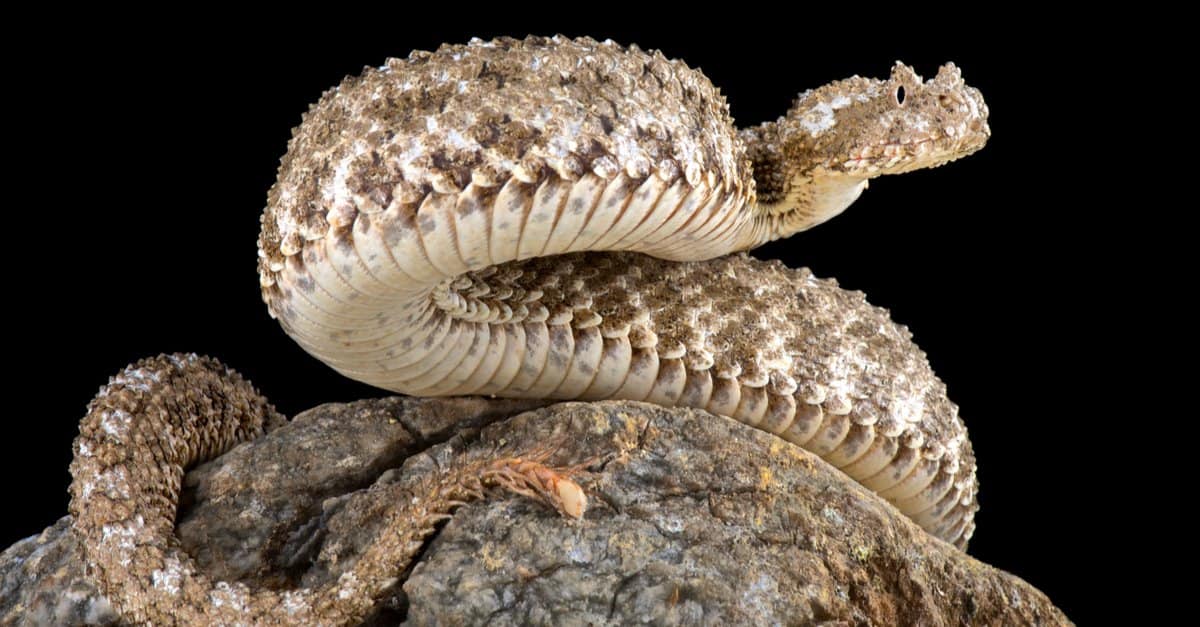
The spider-tailed horned viper (Pseudocerastes urarachnoides) has a unique tail that has a bulb-like end and that is used to catch birds. It lives in Iran.
©reptiles4all/Shutterstock.com
Snake Mimicry
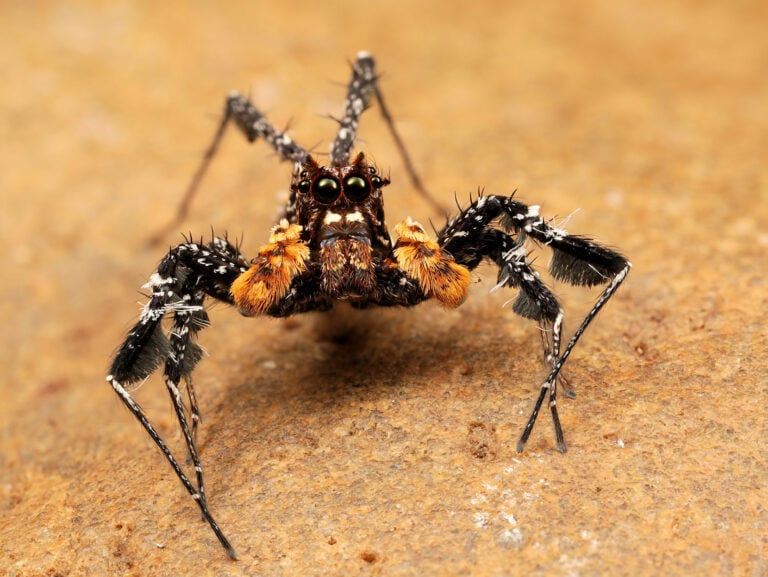
The spider-tailed horned viper is a venomous viper that is endemic to Iran. It inhabits the rocky and arid environments of the region. Using the cracks and crevices of the terrain as shelter, the snake is highly adaptable. Known scientifically as Pseudocerastes urarachnoides, the species name ‘urarachnoides’ comes from Greek roots meaning “tail” and “spider-like,” reflecting its distinctive tail. This viper species’ tail is its greatest advantage, helping it hunt. At the end of its tail is a bulb-like structure with protruding scales that resemble a spider. The snake uses this structure as a lure.
By mimicking the movements of a spider walking in the sand, the snake lures in birds that hunt spiders. When the bird attempts to strike, the snake quickly reveals itself and strikes the bird. This is predatory mimicry, in which the snake mimics another animal, or a spider in this case, to lure in its prey. As seen in the video above, this unique hunting strategy is fascinating to witness. This viper has adapted to mimic other animals due to the scarcity of prey. In the harsh and arid environment where this snake lives, prey is hard to come by unless it has a sneaky trick to get close. The tail mimicry is perfect, as it brings prey to the snake, meaning it does not have to use as much energy hunting. Thanks to its highly specialized adaptation, the spider-tailed horned viper possesses one of the most interesting forms of animal mimicry.