
Quick Take
- Scientists still can't fully explain why 100,000 birds move as one, and the leading theories are stranger than you'd expect. See the leading theories →
- Murmurations vanish completely for months each year, and the reason why has nothing to do with weather. Discover the seasonal pattern →
- You have a narrow window each day to witness a murmuration, but most people don't know when to look. Find the best viewing window →
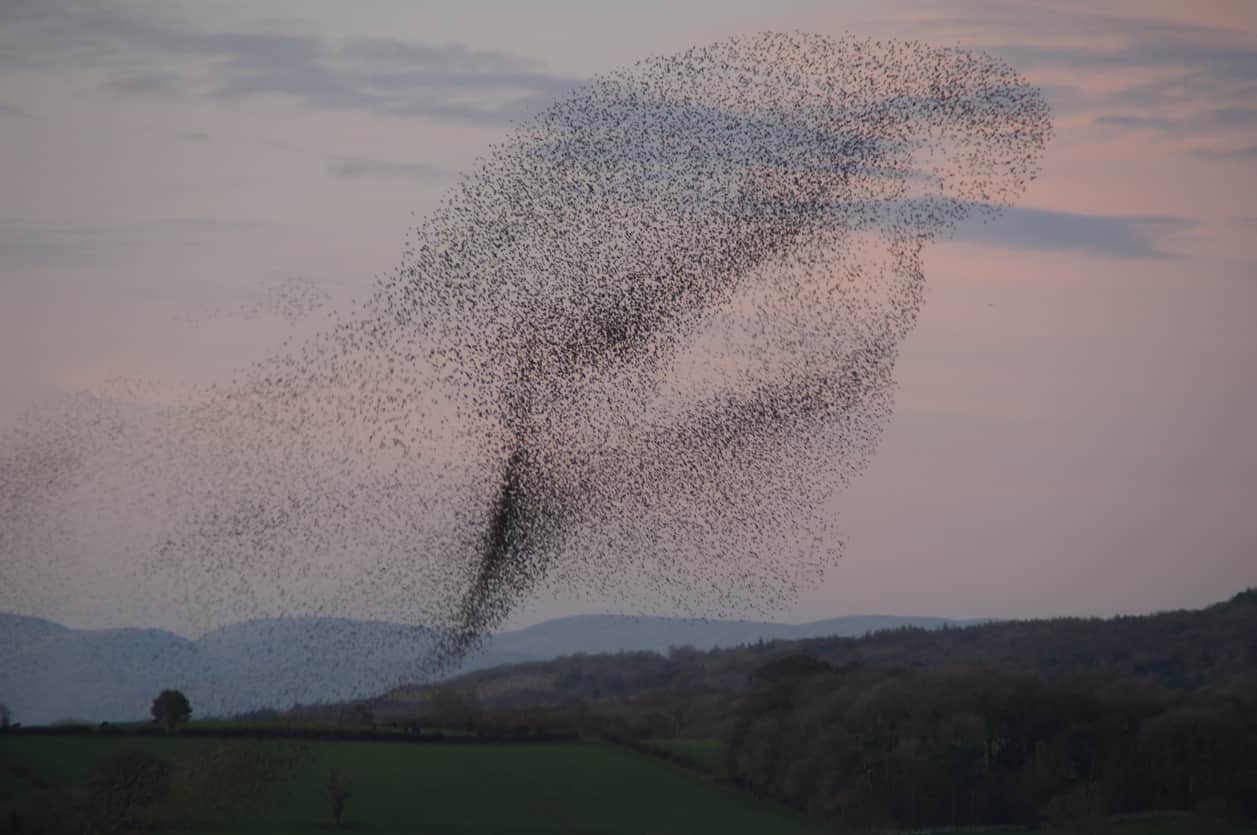
Have you ever glanced up at the sky in late summer or the fall and seen a huge flock of birds create the most amazing shapes? Seemingly moving as one, the shape swoops, twists, and rotates, mesmerizing everyone watching. This is a murmuration, and it’s named after the murmuring sound it makes. Take a look at this clip to see some spectacular murmurations, then read on to learn the science behind them.
Which Birds Form Murmurations?
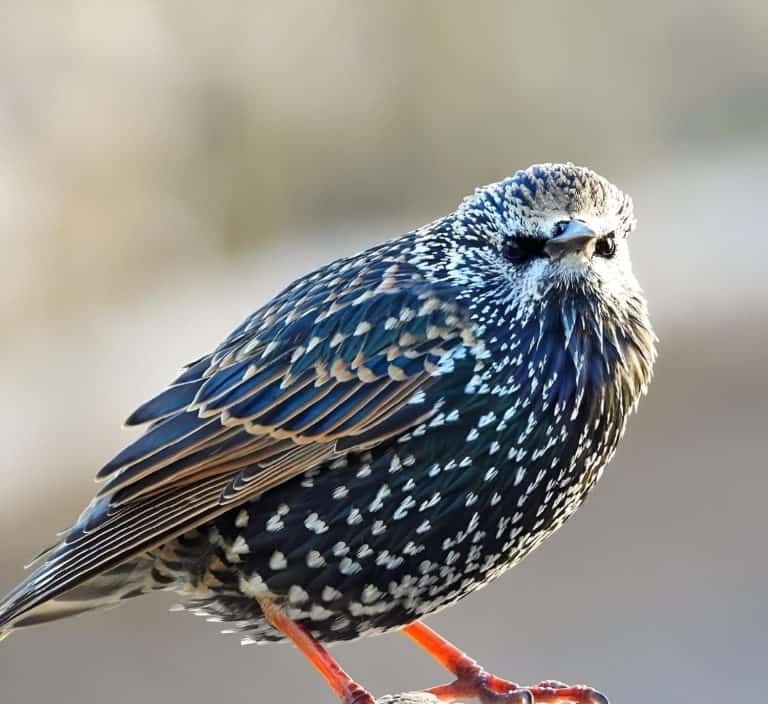
The most common bird forming murmurations is the European or common starling (Sturnus vulgaris). These small garden birds are found from Central Siberia in the east to the Azores in the west, and from Norway in the north to the Mediterranean in the south. However, they were introduced to North America in 1890 and are now found across the continent, from the Atlantic to the Pacific (east to west) and from southern Canada to northern Mexico (north to south). Starlings are lowland birds that are found mainly in non-mountainous areas.
Other birds can also form murmurations, including red-winged blackbirds and common grackles. Other animals, such as fish, also exhibit swarming behavior.
Why Do Birds Murmurate?
Birds flock together for safety, and lots of bird species flock together before they migrate. However, murmuration is somewhat different, and experts are still not completely sure why birds engage in this behavior.
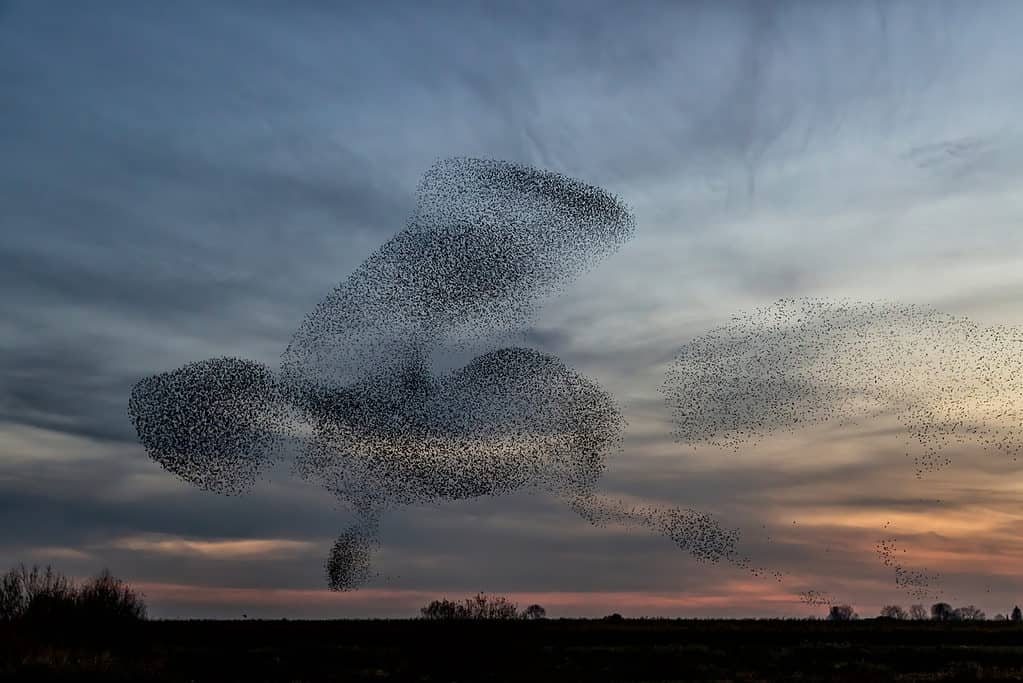
In starling murmurations, hundreds of thousands of starlings come together, forming large clouds to protect against birds of prey.
©iStock.com/Henk Bogaard
A murmuration is a fantastic display of group behavior and coordinated athleticism. A starling murmuration can contain 100,000 birds! The flock appears as a single black shape pulsing across the sky. This behavior likely confuses and deters predators. It may also serve as an invitation for other birds to join the group, allowing them to keep warm in their nightly roost.
When Do Murmurations Happen?
You are unlikely to see a murmuration during the summer months because the birds are busy finding mates and raising their young. Starling breeding season in the Northern Hemisphere is from late March until early July. You are most likely to witness this phenomenon during the fall and early winter, most often just before dusk. You may see them for up to 45 minutes, after which the birds will settle on their roost following a remarkable display of aerial teamwork.