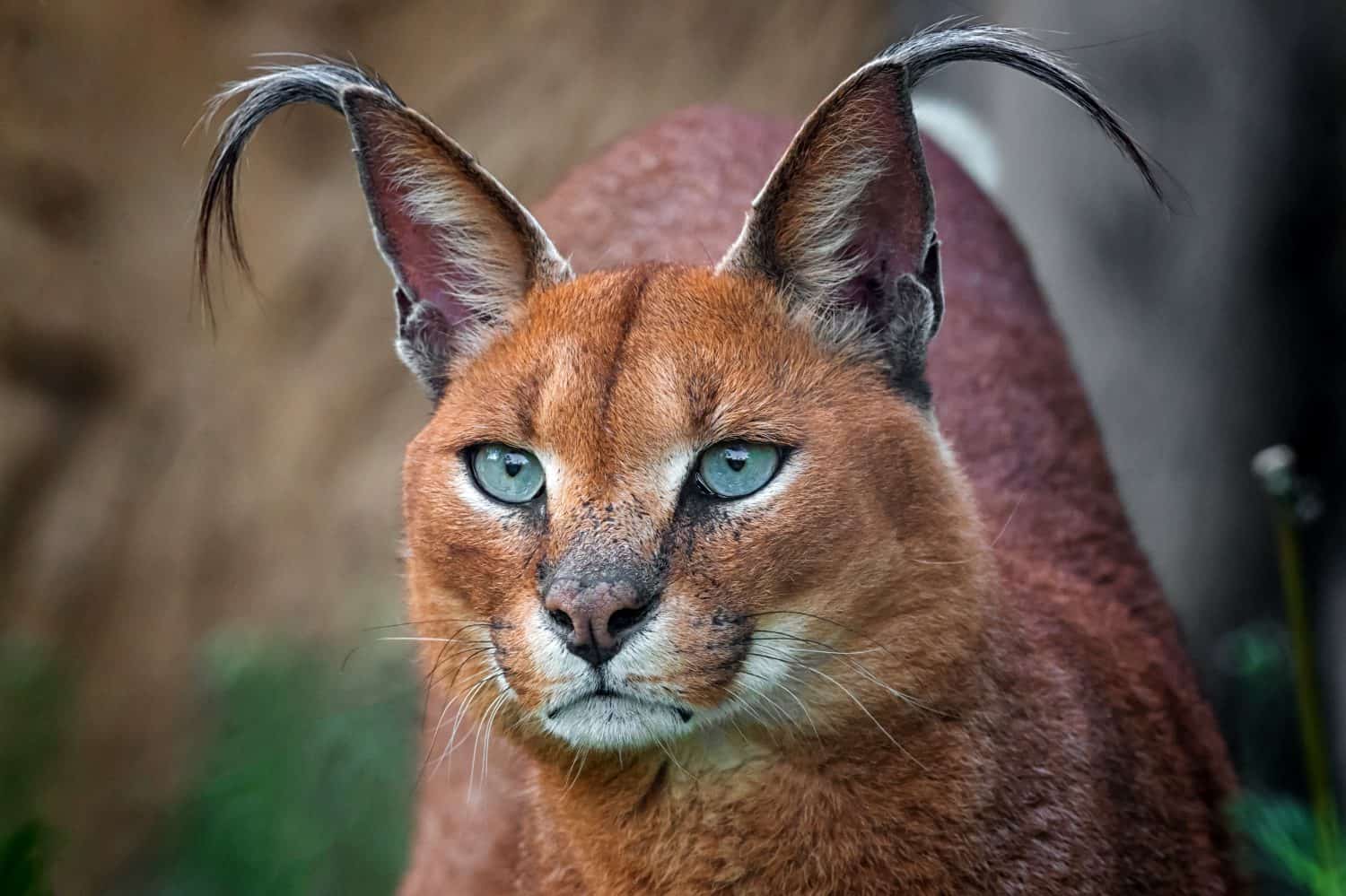

Some people may be able to wiggle their ears, but nobody has the sheer dexterity and ear-moving skill of a cat. Even in the cat category, however, one species outshines all the rest when it comes to ear muscle proficiency: the caracal. Not only are their ears big, bold, and beautiful, but they also come equipped with remarkable features. In this YouTube video, a caracal moves its massive ears with incredible skill and subtlety.
Its ears might be big and glamorous-looking, but caracals are pretty secretive creatures. They move by moonlight, effortlessly avoiding the watchful eyes of both prey animals and humans alike. Considering the caracal’s phantom-like nature, let’s shed light on this elegant cat’s movements, behavior, and impressive sound detection skills. Chances are, however, that they will detect our presence long before we notice them eavesdropping.
Caracal Background
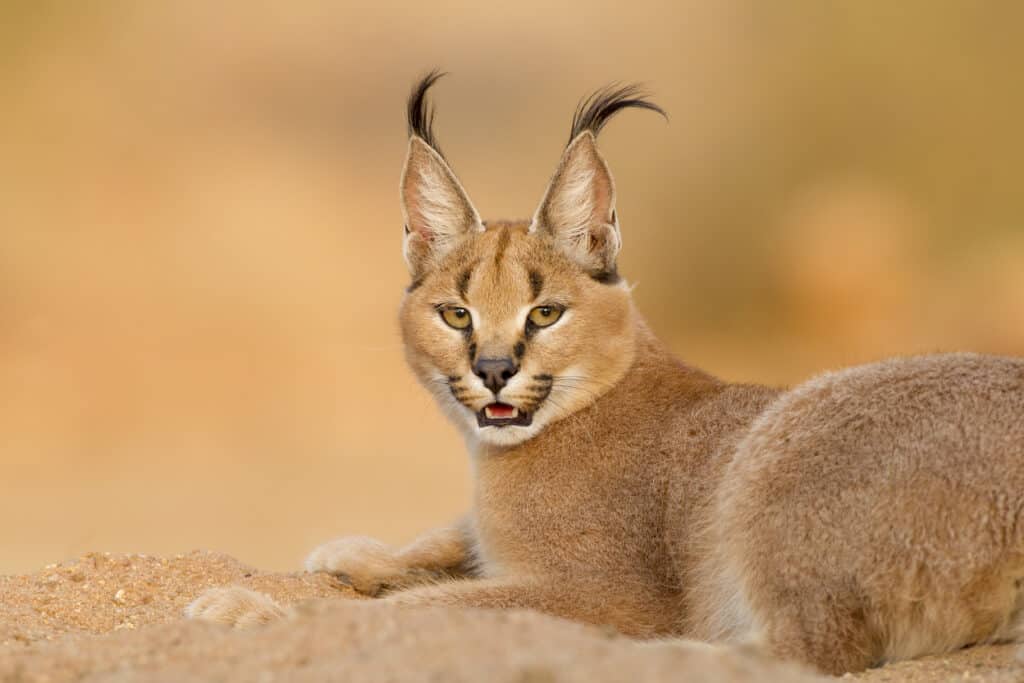
These extravagant-looking wild cats have long legs, sturdy, muscular bodies, and ears with bold tufts of black hair shooting out beyond their top points.
©iStock.com/StuPorts
Caracals (Caracal caracal) are striking cats with sturdy builds, long legs, short, rounded faces, and, of course, elongated and vibrant ears. On average, they reach between 16-20 inches in height at the shoulder. Their coats range in color from reddish to sandy, with lighter underbellies and insides of their legs. Male caracals average between 31 and 43 inches in length, while females range between 28 and 41 inches. Compared to other medium-sized wild cats, caracals have distinctive looks and lean, muscular frames.
Unlike other wild cats that are restricted to certain habitats, however, caracals are incredibly adaptable. Native to Africa, Central Asia, the Middle East, and parts of India, they thrive in a variety of environments. They adjust easily to savannas, scrublands, high deserts, and even dry forests. Despite being at home in all these regions, you won’t have much luck seeing these elegant-looking cats during daylight hours. Caracals are nocturnal, coming alive at night to hunt birds, rodents, and even small antelopes.
Human encroachment and habitat loss have reduced local caracal populations, but their numbers remain pretty strong overall. The International Union for Conservation of Nature (IUCN) classifies caracals as “Least Concern.” This is, in part, due to their impressive hunting capabilities.
Caracal vs. Lynx
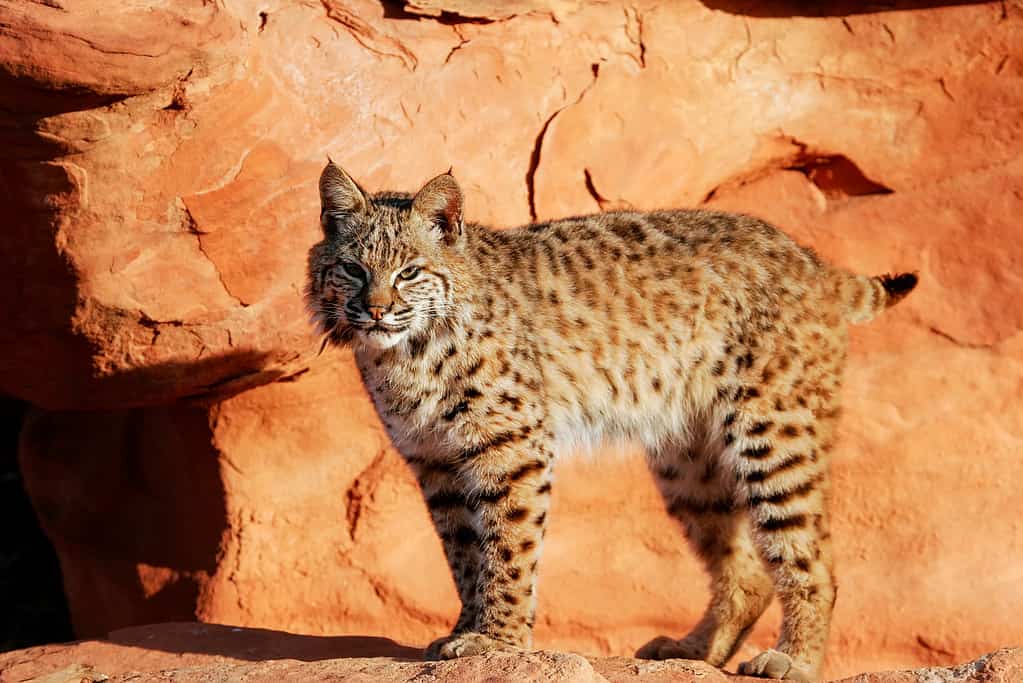
Whereas lynxes have pointy ears and spotted coats, caracals have pointy ears and solid-colored coats
©Don Mammoser/Shutterstock.com
Caracal ears are tall and triangular, ending in points, and are further distinguished by tufts of feathery black hair extending from the tips. Caracal ears are so unique-looking, in fact, that they give the species its name. The Turkish term “karrah-kulak or “kara-coulac” means black ears. Caracals are often confused with lynxes because of their ears. The difference between the two species, however, comes down to pattern. Lynxes have spots on their coats, while caracals have more monochromatic fur.
Supersonic Sound Detection
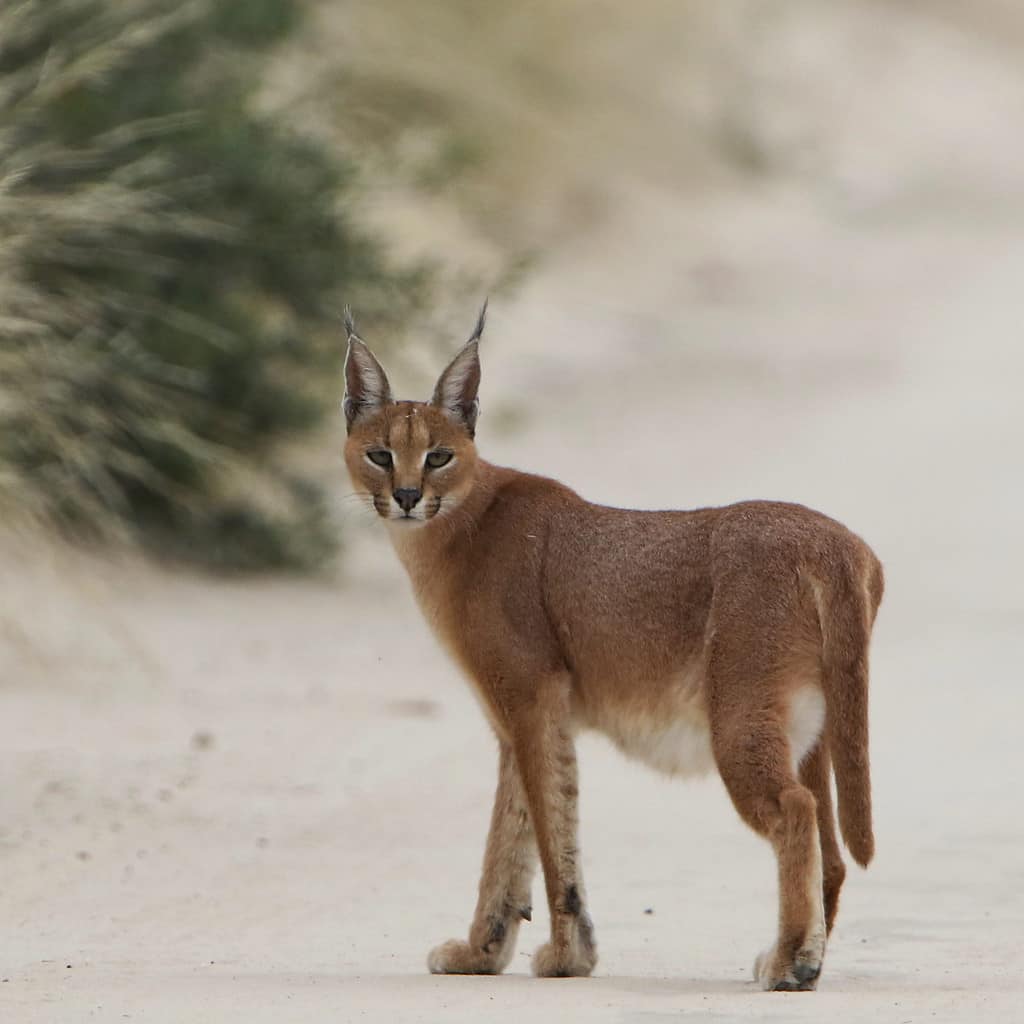
Caracals are capable of moving their ears up to 180 degrees using 20 muscles that work independently.
©Derek Keats from Johannesburg, South Africa, CC BY 2.0 – Original / License
In this YouTube video, a caracal adjusts its ears through remarkably minute muscle movements. This ear mobility and dexterity are signature features of the caracal. As seen in this video, caracals are constantly moving their ears, scanning their environment for the slightest change in sound. They can operate their ears like satellites thanks to 20 separate muscles. This allows caracals to move their ears independently of each other and the rest of their head. In comparison, humans have a mere six muscles in their ears.
These independent micromovements are crucial for the caracal’s hunting. Their scanning ears can pick up the slightest shift in pitch. A slight sonic shift, imperceptible to human ears, is easily detected by the caracal. This enables them to detect the rustling of a bird or a rodent in a bush. Scientists aren’t exactly sure why they have those long black tufts at the tops of their ears, but they are believed to aid both hunting and social signaling.
Long Black Tufts

No one is quite sure why caracals have black tufts of fur on their ears, but some experts believe these tufts facilitate intraspecies communication.
©AnastasiaPe4enya/Shutterstock.com
Scientists have offered several theories to explain the distinct length and shape of the caracal’s black ear tufts. The most widely accepted explanation is that these feather-like appendages help caracals communicate with each other. Other theories suggest more pragmatic purposes: the tufts may help caracals keep flies out of their faces or break up the outline of their heads when they are stalking prey through tall grass. Whatever the reason, it’s hard to deny the striking appearance of the caracal’s tall black ear tufts.
Jumping Jacks
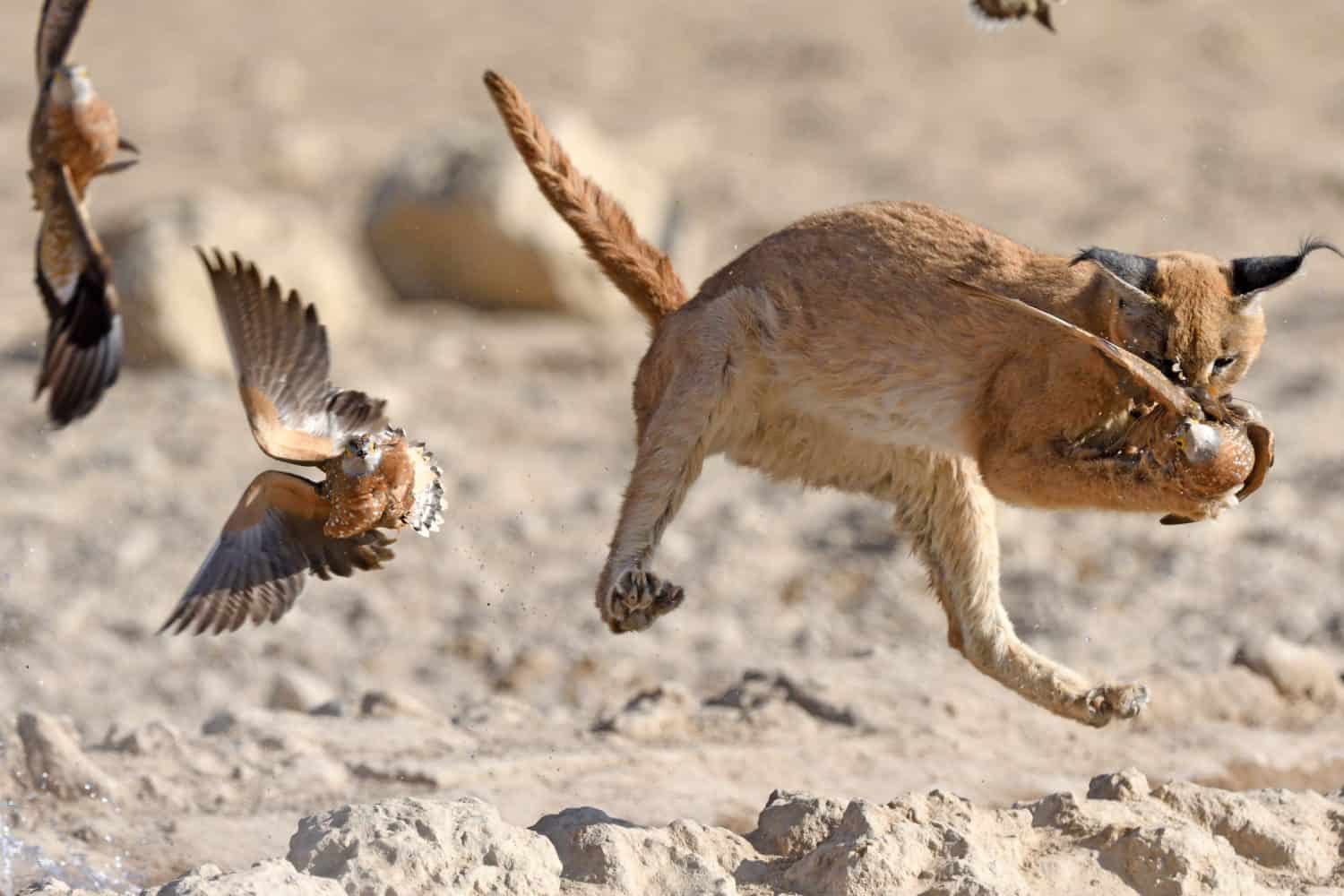
Caracals can jump 10 feet in the air, catching birds in mid-air.
©Rich Lindie/Shutterstock.com
This YouTube video shows a caracal moving its ears independently. It’s an impressive skill, to be sure, but it isn’t the only trick in this cat’s arsenal. Caracals have long legs and specialized hind limbs full of fast-twitch muscle fibers that allow them to explode into the air. They may be well-known for their ears, but they are equally famous for their jumping ability. Indeed, caracals can jump up to 10 feet vertically in the air, catching birds mid-flight. They don’t have a problem with falling from such heights, either. Their thick tails balance and soften their landings. From head to tail, caracals are truly impressive creatures.