
Quick Take
- Some spiders don't just groom for hygiene. For certain species, skipping it is a death sentence. Discover when grooming is survival →
- A spider's 'fangs' are actually just one small piece of a more complex feeding system you've probably never heard of. Explore the full feeding anatomy →
- The way spiders eat makes grooming far messier and more critical than you'd expect. See why liquid diets get messy →
- One spider species grooms itself in a way that looks almost identical to a common household pet.
Nothing to see here, just a spider doing some personal grooming! But if you do want to take a peek at this fascinating YouTube clip, you’ll witness a spider cleaning its chelicerae, fangs, pedipalps, and legs. But what does that mean, and why is it doing it?
What Are Chelicerae, Fangs, and Pedipalps?
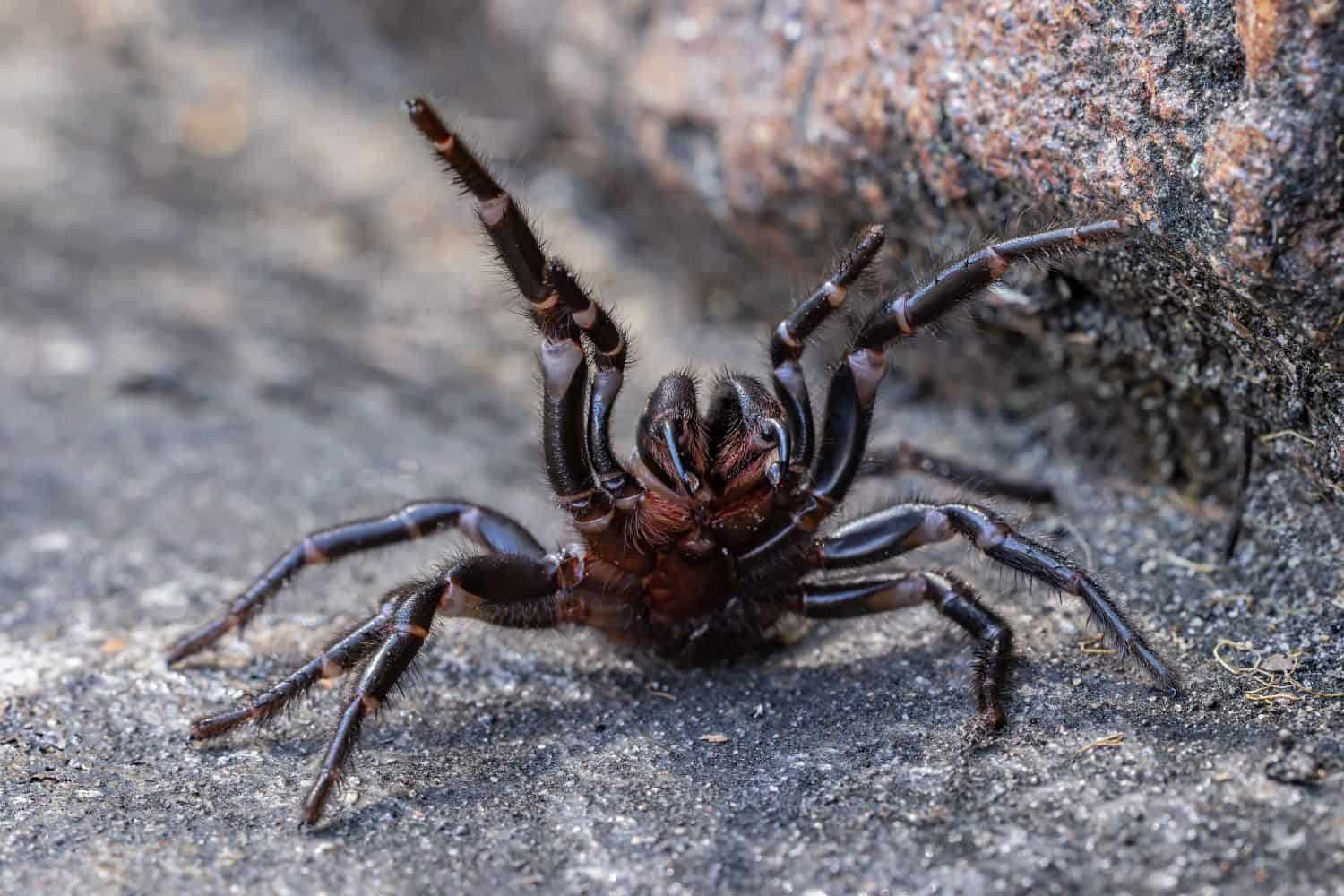
This spider has a lot of cleaning to do, with eight legs to groom as well as chelicerae, fangs, and pedipalps. Chelicerae are essentially the spider’s jaws. These muscular mouthparts are found at the very front of the spider’s body and fulfill several roles, such as holding prey while the spider injects venom. Also, they act like scissors to shred and mash prey so that the spider can eat it. At the tip of the chelicerae are the fangs that deliver venom.
Pedipalps are appendages located near the mouth, between the chelicerae and the first pair of legs. They serve sensory functions, help manipulate food, and, in male spiders, are also used for reproduction. Finally, spiders have eight legs, and in many cases, these are covered in tiny hairs. All of these body parts can get dirty!
Why Do Spiders Groom Themselves?
Spiders do not have teeth and therefore live on a liquid or at least a semi-liquid diet. Their venom contains enzymes that begin to digest the prey before it is actually consumed. Once the prey is the correct consistency, they use their ‘sucking stomach’ to draw in the liquified remains. Eating liquified food in this way can be a messy business, and bits of organic matter can get stuck to the spider’s body. Also, there can be dust and dirt, silk residue from web spinning, and even parasites or fungal spores adhering to them. For a spider, grooming involves pulling their legs through their mouthparts or rubbing their legs together. They also clean their mouthparts to lessen the risk of disease and infection.
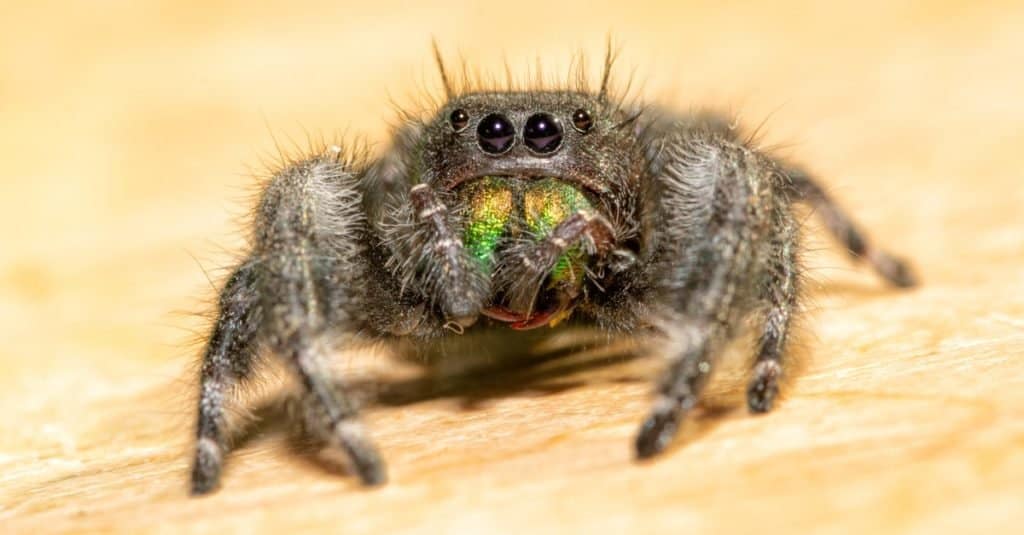
Jumping spiders groom their chelicerae and fangs with their pedipalps.
©Sari ONeal/Shutterstock.com
For spiders that rely on fine adhesive hairs on their feet and legs, grooming is a matter of life or death. If they don’t keep their claw tufts clean, they will fall off the wall!
While all spiders groom, some do it more noticeably than others. Jumping spiders even groom themselves by wiping their front legs across their eyes and mouthparts, very much like a cat!