
Quick Take
- Baby sea turtles follow a single navigational rule so simple it mirrors behavior found in plants, and yet this rule has guided them to the ocean for millions of years. Discover the simple rule →
- The biggest threat to sea turtle hatchlings on busy beaches isn't predators. It's something millions of tourists and hotel owners create every single night without realizing it. Learn about lighting dangers →
- If you ever spot a hatchling crawling toward the water, your first instinct about how to help it is almost certainly wrong. Find out how to actually help →
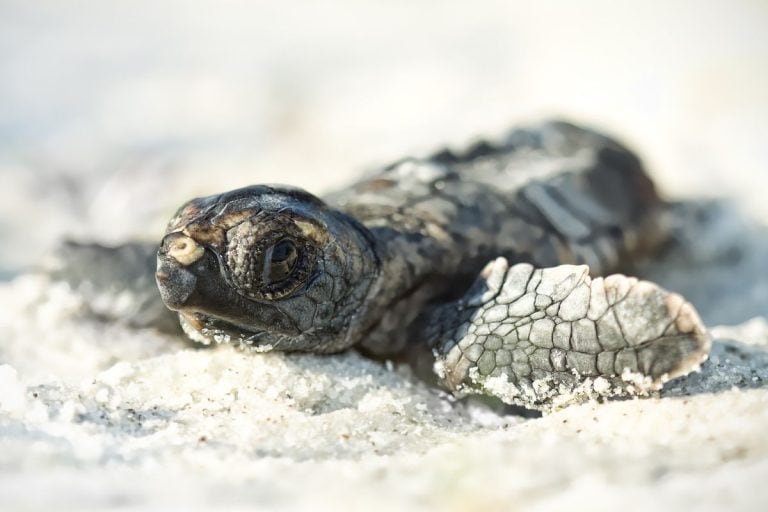
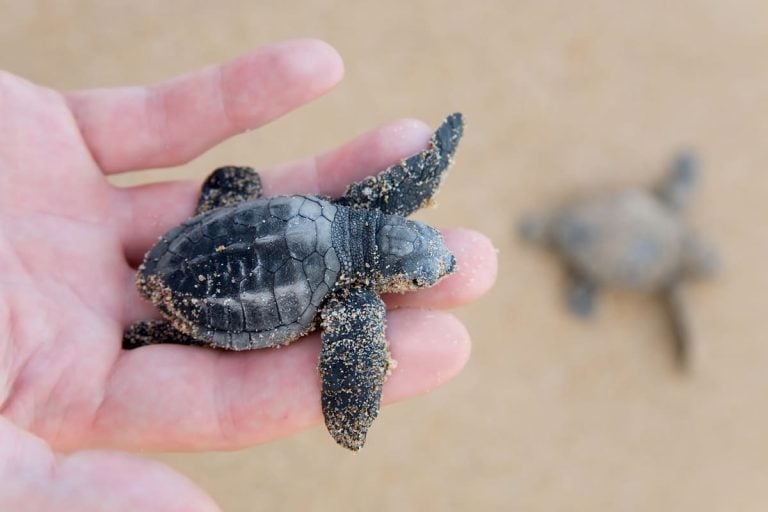
Did you know that sea turtle hatchlings instinctively travel from their nests to the ocean? In a process called “sea finding,” these small creatures use natural light to find their way to the sea. Once they emerge from their nests, they follow light cues to the brightest horizon (the ocean), then immediately swim to deeper waters.
In this article, we speak with Deby Cassill, an integrative biologist and animal behavior expert with the University of South Florida, about sea finding. Here’s what you should know about this instinctual behavior, and how humans can help sea turtle hatchlings make it to the ocean safely.
What Is Sea Finding?
Sea finding is the natural process of sea turtles traveling from their nests to the ocean, or the brightest horizon.
“Sea finding is an instinctive behavior that directs newly hatched sea turtles to head to the sea as fast as they can after digging their way out of the nest,” says Cassil. “The hatchlings follow one simple rule: crawl toward the lowest and brightest horizon.”
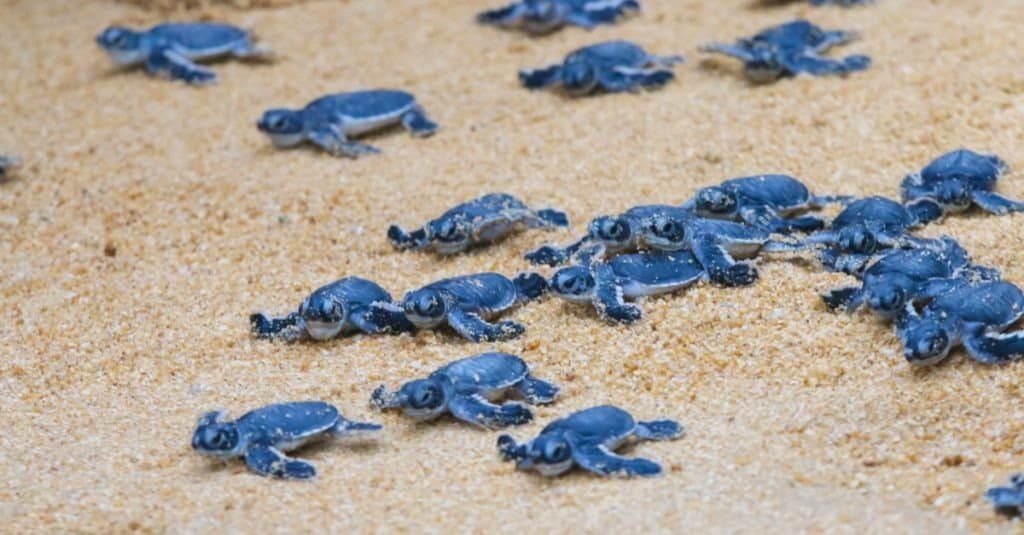
Sea turtle hatchlings often travel to the ocean in groups (or “boils”).
©zulkamalober/Shutterstock.com
When it comes to a natural beach, the bright horizon is the ocean, as it reflects celestial light from the moon, stars, etc. Of course, this can get thrown off if artificial light is present. (More on that later.)
“[Sea finding] is one of the most remarkable examples of an inherited navigational instinct in animals,” Cassil continues. “By comparison, plant leaves instinctively turn their ‘faces’ to the light as the sun moves from one horizon to another.”
When Do Sea Turtle Hatchlings Migrate?
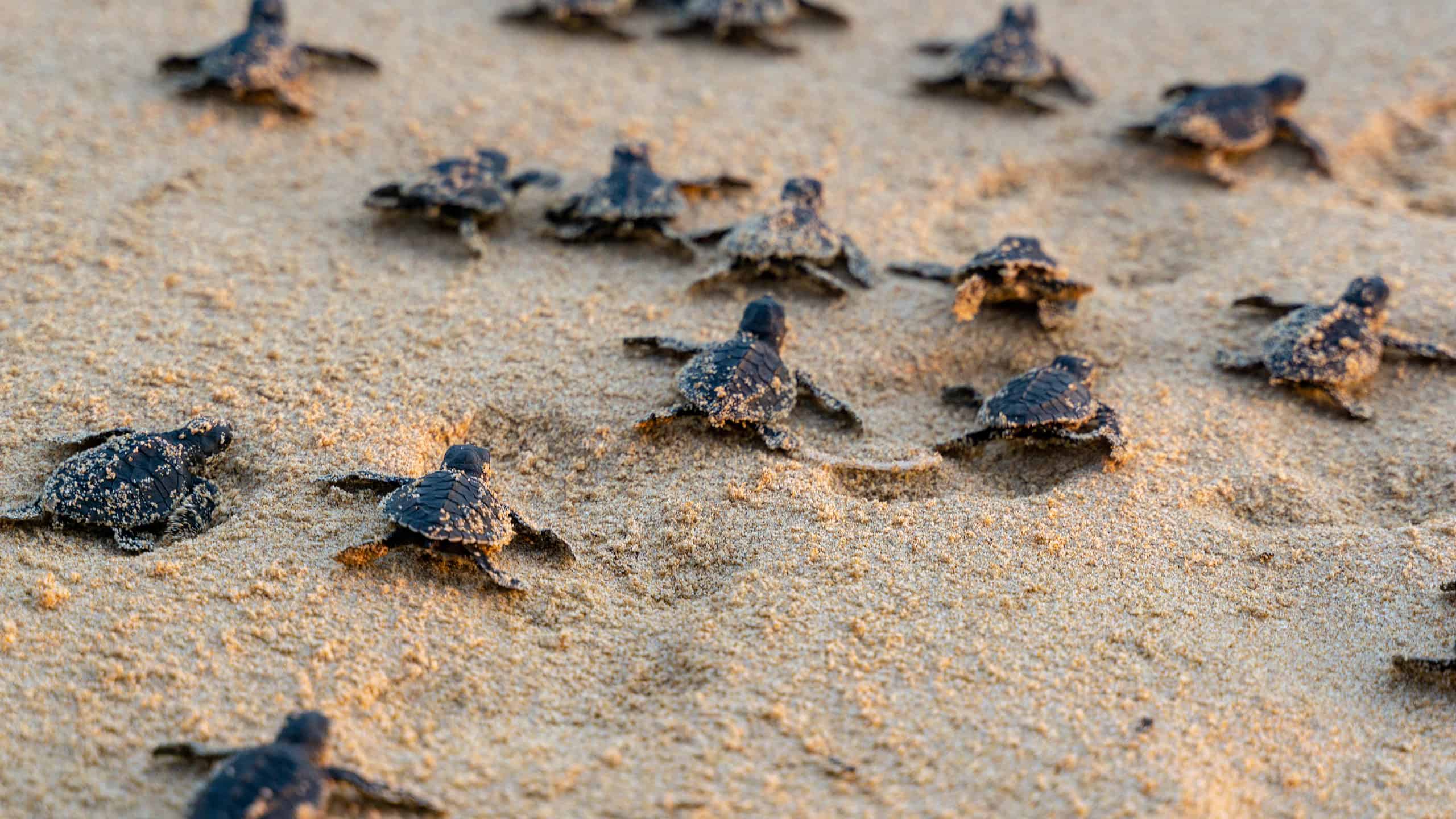
Sea turtle hatchlings migrate almost immediately after emerging from their nest. This usually occurs during late summer and early fall, when many sea turtles hatch.
According to Cassill, most sea turtle hatchlings leave their nests during nighttime, which is why you might not catch them in the act. This is when temperatures are lower, and predators are less active. The hatchlings use the natural light, such as moonlight and starlight, reflecting off the ocean as a guide.
“At the same time, they instinctively move away from the higher dark horizon, often silhouetted with higher dunes and vegetation that block the night sky,” says Cassil.
Sea finding is an instinctive behavior that directs newly hatched sea turtles to head to the sea as fast as they can after digging their way out of the nest.
Deby Cassill, integrative biologist and animal behavior expert with the University of South Florida

Baby sea turtles swim for up to 48 hours to reach deeper, safer waters.
©Niyash Nizar/Shutterstock.com
Once they reach the ocean, the hatchlings then enter a state called “frenzy swimming,” where they swim constantly for hours (or days) on end to reach deeper water. This is also instinctual, as predator-rich shallow water is dangerous for the babies. Since they don’t stop to eat, the sea turtles rely on their remaining egg yolk from hatching for energy.
During this phase, “They switch from visual cues to wave direction and, eventually, to Earth’s magnetic field,” Cassil explains.
How Do Conservation Efforts Help Sea Turtle Hatchlings?
You might have heard of sea turtle conservation, which is a popular mission that many wildlife conservationists partake in. Such efforts ensure sea turtle hatchlings safely make it to the ocean by protecting them from predators and poachers.
However, an often-overlooked threat to hatchlings is artificial lighting, which can disorient babies and disrupt their natural sea-finding instincts. For example, tourist areas with tons of hotels, boardwalks, and artificial nighttime lighting can completely alter a sea turtle’s journey, preventing them from making it to the ocean where they can survive.
“Unfortunately, artificial lighting from homes, hotels, roads and coastal development can disorient or misorient hatchlings away from the water, leading to exhaustion, dehydration, predation and often death,” says Cassil.
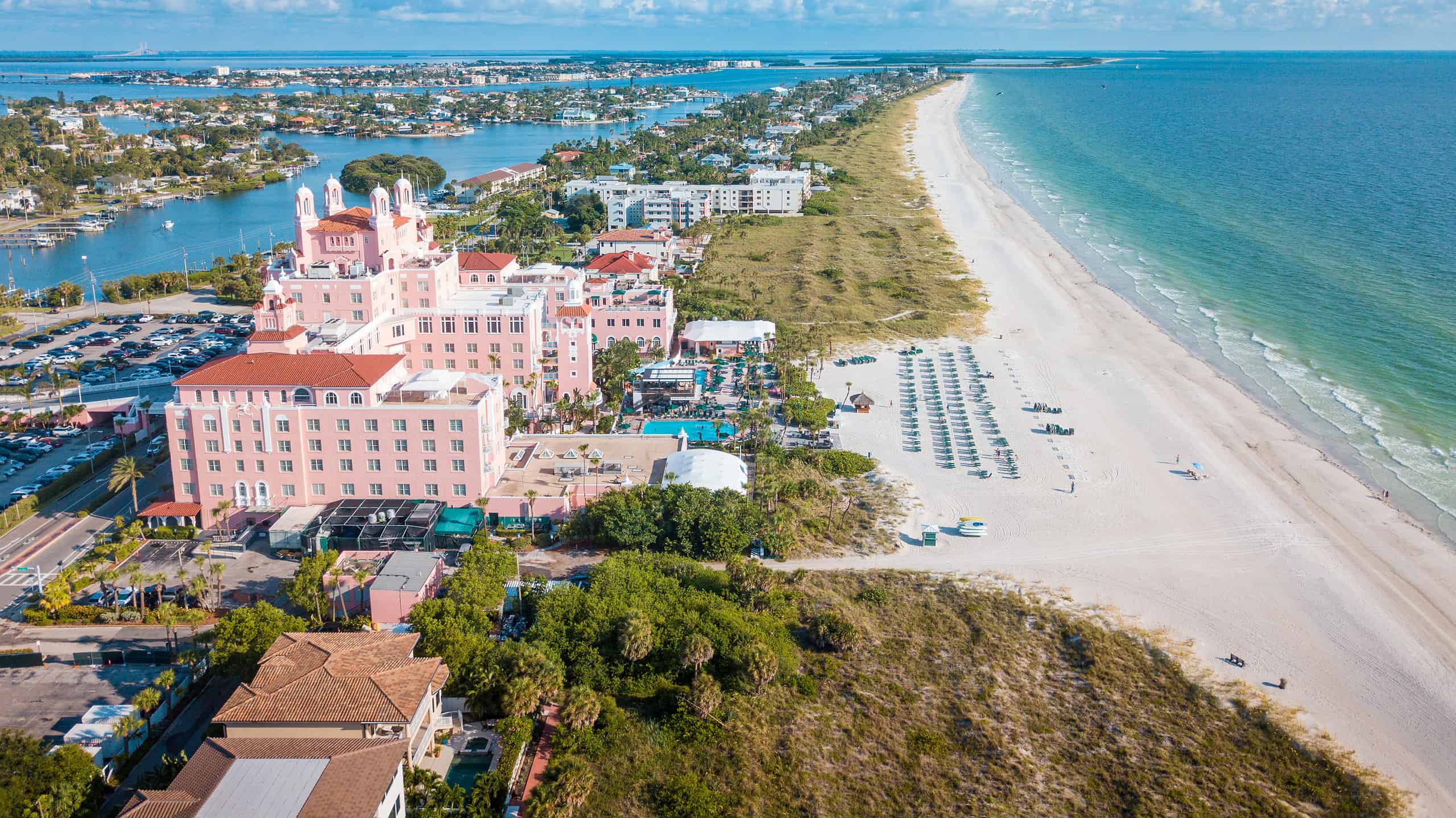
At night, hotel lights shining onto the beach can disorient sea turtle hatchlings, causing them to migrate in the wrong direction.
©Artiom Photo/Shutterstock.com
Thankfully, there are many ways we can help sea turtle hatchlings reach the ocean. In fact, coastal communities have already implemented some best practices and helpful initiatives. Some communities use downward facing, shielded amber lights, or limit their artificial light pollution as much as possible.
“Conserving natural dune systems, coastal vegetation, and dark beaches helps preserve the visual landscape that sea turtles have relied upon for millions of years,” Cassil says. “Protecting coastal habitats near the ocean benefits both wildlife and the human communities that share these shorelines.”
Additionally, if you see a sea turtle hatchling in the act, make sure not to disturb or scare it. Don’t pick it up, flash a light on it, or pile sand in its path. Simply let it do its thing without interfering.
“Sea turtles and humans have shared coastlines for millennia,” says Cassil. “Conserving natural coastal habitats and reducing light pollution does not require choosing between people and sea turtles. Instead, it allows both to thrive.”