Monkey
Hands, minds, and social lives

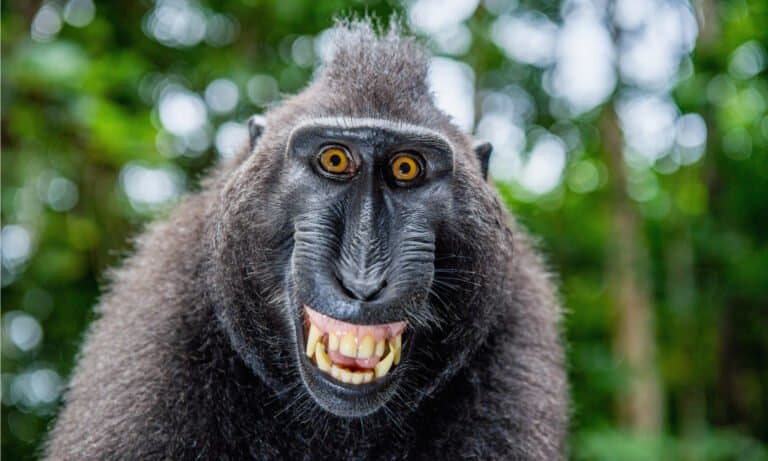
Perched on the southern tip of the Iberian Peninsula, Gibraltar's natural heritage is defined by the dramatic limestone Rock, wind-scoured cliffs, and a narrow ribbon of Mediterranean coastline. Its most famous residents are the Barbary macaques-free-ranging primates that have become a cultural icon as well as a conservation and management priority. Beyond the macaques, Gibraltar's position at the gateway to the Mediterranean makes it a place where wildlife "passes through" in immense numbers, giving visitors outsized encounters for such a small territory.
The Rock's cliffs, scrub, and caves provide nesting and roosting habitat for birds, while surrounding waters-where the Atlantic meets the Mediterranean-support productive marine life, including dolphins and seasonally present whales. Coastal slopes and patchy Mediterranean shrubland vegetation offer stopover resources for migratory passerines, and the territory's protected areas help safeguard key vantage points and habitat fragments that are disproportionately valuable in an urbanized, heavily trafficked region.
Globally, Gibraltar's conservation significance comes from its role as a transcontinental bottleneck: many European raptors and soaring birds funnel over the Strait on their journeys to and from Africa, making the territory a front-row seat to one of the planet's most accessible long-distance migrations. The wildlife experience is uniquely concentrated-within minutes you can watch macaques on limestone escarpments, scan the sky for honey-buzzards and booted eagles riding thermals, and then shift to the shore for dolphin-watching in busy, biologically rich waters shaped by strong currents and mixing seas.
Gibraltar's very small land area is dominated by the limestone Rock of Gibraltar and a narrow coastal fringe at the Strait of Gibraltar, creating steep elevational and exposure gradients over short distances. Cliffs, caves, scrubby Mediterranean slopes, and limited coastal habitats concentrate terrestrial wildlife into a few habitat patches, while the surrounding strait strongly shapes marine biodiversity and makes Gibraltar a major migration bottleneck for birds moving between Europe and Africa. Urban development further compresses habitats, so wildlife distribution is tightly linked to the Rock's terrain, remaining scrub/wooded pockets, and nearshore waters.
Gibraltar's protected area system is small but unusually important for conservation because the territory sits on a major Europe-Africa migration bottleneck and contains steep limestone cliffs, Mediterranean maquis scrub, caves, and surrounding coastal waters. Protection is delivered mainly through the Gibraltar Nature Reserve (the Upper Rock) and European-style site designations retained in Gibraltar/UK practice (notably Special Protection Areas for birds and Special Areas of Conservation for habitats), including a dedicated marine SAC in the Strait of Gibraltar. Management is led by the Government of Gibraltar (including the Department of the Environment and Climate Change and the Gibraltar Ornithological & Natural History Society as a key conservation partner), with strong emphasis on habitat protection, migratory bird monitoring, and safeguarding the Barbary macaque population.
Approx. ~35-45% of Gibraltar's land area is under formal protection, largely via the Gibraltar Nature Reserve/Upper Rock and overlapping Natura 2000-style designations (SPA/SAC) that cover key terrestrial habitats; in addition, a substantial area of surrounding waters is protected through a marine SAC.
The Upper Rock concentrates Gibraltar's best wildlife habitat-Mediterranean scrub, cliffs, and wooded pockets-supporting the only free-ranging population of Barbary macaques in Europe and acting as a prime vantage point for raptor and passerine migration across the Strait.
This legally protected complex of cliffs, caves, and maquis scrub is central to Gibraltar's role as a migration bottleneck and provides nesting/roosting opportunities for cliff-associated birds, as well as refuges for reptiles and specialized Mediterranean flora.
The steep east-facing cliffs and high ridge-line are one of the best places in Gibraltar to watch visible migration-raptors, swifts, and other soaring birds funnel along the Rock when winds and thermals are favorable.
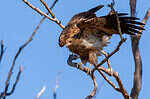
While best known archaeologically, the cave-and-cliff system also supports wildlife through sheltered roosting sites (including bats) and productive nearshore waters and ledges used by seabirds; it sits adjacent to some of Gibraltar's most intact coastal habitat.
The protected waters at the Strait's entrance are important for cetaceans and marine biodiversity, influenced by strong currents and high productivity that attract dolphins and other mobile marine species.
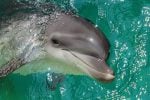
At Gibraltar's southern tip, coastal headlands provide exceptional viewing of migration (especially raptors and storks) as birds make landfall or stage before crossing, with nearby cliff habitat supporting resident birds.
Gibraltar is tiny in area but disproportionately rich in wildlife because it sits at the narrow sea-crossing between Europe and Africa. The Rock of Gibraltar provides steep cliffs, scrub, and caves for breeding birds (including raptors) and bats, while the Strait of Gibraltar concentrates migrating birds and supports diverse marine life (dolphins, whales, sea turtles) in highly productive waters. Overall, Gibraltar's wildlife "character" is defined by spectacular bird migration, iconic macaques on the Upper Rock, and easy-to-access marine megafauna watching from shore or short boat trips.
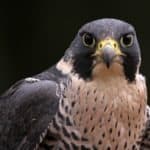
Gibraltar's wildlife tourism is compact but high-impact, built around the Rock of Gibraltar, its famous Barbary macaques, and the Strait of Gibraltar-one of Europe's premier migration corridors for birds and marine wildlife. Economically, nature viewing complements the territory's strong day-trip/cruise market: visitors often combine macaques, birdwatching lookouts, and dolphin/whale trips with the Upper Rock Nature Reserve and historic sites. Wildlife interest here has a long history tied to the Rock's naturalist appeal and to decades of organized raptor monitoring at the Strait. Accessibility is a major advantage: Gibraltar is walkable, the Upper Rock is reached by cable car, taxi tours, or on foot, and marine wildlife operators run short trips from the marina-ideal for 1-3 day itineraries or as an add-on to Andalusia.
Year-round for something, with clear seasonal peaks:
- February-April: Early spring migration builds-storks, early raptors, and passerines moving north; excellent visibility from Rock viewpoints; macaques active and easier to photograph in cooler weather.
- March-May: Prime spring raptor migration across the Strait (honey-buzzards later in spring, plus eagles/kites/harriers depending on conditions); strong birding plus reliable dolphin trips as seas are often calmer.
- June-August: Best for coastal/sea watching in settled weather-boat trips for common dolphins and striped dolphins are frequent; good chance of shearwaters and other pelagic birds; hottest months on land.
- September-October: Peak autumn migration-large movements of raptors and soaring birds heading south; excellent watchpoint days when winds funnel birds; also good marine mammal viewing.
- November-January: Quieter season with wintering seabirds and coastal species; good for relaxed macaque viewing and storm-driven seabird watching (conditions-dependent).
Gibraltar's emblematic "Gibraltar candytuft" (Iberis gibraltarica) isn't exclusive to Gibraltar-it also grows naturally in Morocco. The plant that truly is Gibraltar-only is the Gibraltar campion (Silene tomentosa), which was once declared extinct and then rediscovered in 1994 on near-inaccessible cliffs.
The famous macaques are managed like a serious conservation population, not a tourist gimmick: Gibraltar runs a formal program (health checks and population control), and feeding them is regulated and can be fined.
Migration can become a street-level spectacle: in unfavorable winds, raptors will 'stack up' over the Rock-circling low over the city while they wait for safer conditions to attempt the sea crossing.
Africa can be visibly close from the Rock on clear days, and the Strait's narrowest crossing is only about 14 km-short enough that many birds make the Europe-Africa leap in a single nonstop flight.
Some of Gibraltar's key wildlife habitat is vertical (and even subterranean): cliffs, crevices, and caves on the Rock provide nesting and roosting sites right above one of the most densely built-up places in Europe.
Europe's only free-ranging wild monkey population lives on the Rock of Gibraltar: the Barbary macaques (Macaca sylvanus).
Tiny-but-mighty bird list: over 300 bird species have been recorded in Gibraltar-an area of only ~6.8 km²-because it sits on a major Europe-Africa migration flyway.
One of Europe's most concentrated raptor-migration watchpoints: on peak days in spring/autumn, thousands of soaring birds (especially black kites and European honey-buzzards) can stream past Gibraltar within hours.
Among the smallest places with a large protected upland: the Upper Rock Nature Reserve covers roughly a third of Gibraltar's total land area.
A marine crossroads at the mouth of the Mediterranean: the Strait off Gibraltar is a well-known cetacean corridor where multiple dolphin species (notably common, bottlenose, and striped dolphins) are regularly seen and whales migrate through seasonally.
Thank you for reading! Have some feedback for us?
We appreciate your help in improving our content.
Our editorial team will review your suggestions and make any necessary updates.
There was an error submitting your feedback. Please try again.