
Quick Take
- Your instinct to cut one in half could turn one worm into many, but there's a counterintuitive reason why that backfires badly. Why cutting backfires →
- These worms carry the same toxin as one of the ocean's most notorious creatures, a connection you would never guess. See the toxin connection →
- Bare hands aren't the only risk. Skipping one specific step before disposal could actually make the situation worse. Safe disposal methods →
- Your garden's earthworms may already be under threat from something that hitchhiked in through a surprisingly ordinary purchase. How they spread to gardens →
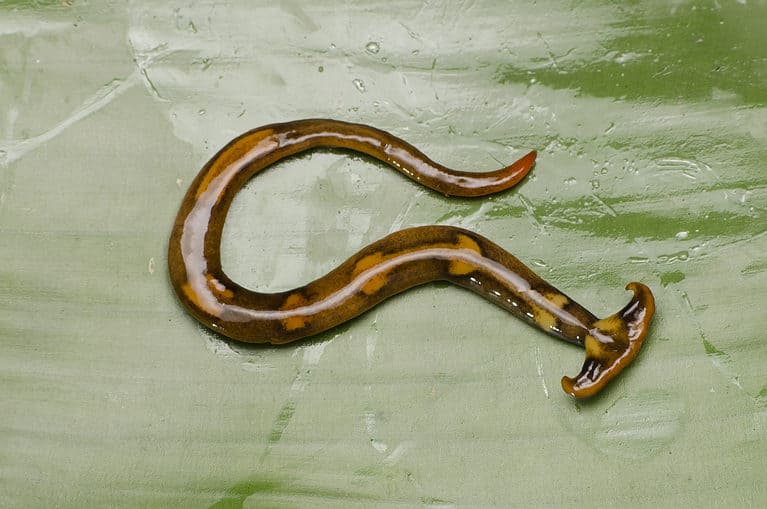
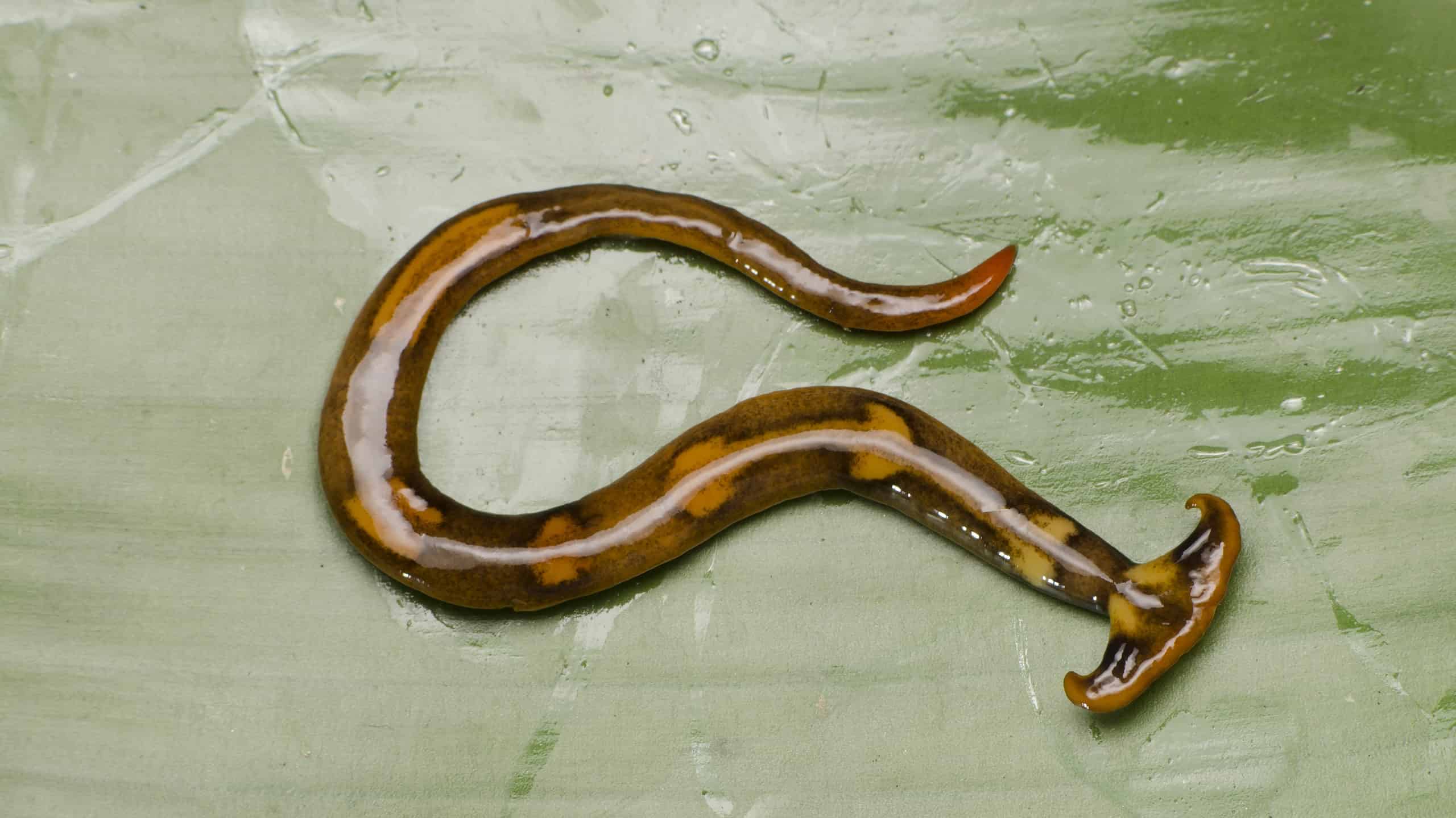
Looking straight out of a sci-fi film, hammerhead worms are popping up more and more across the United States. Native to Southeast Asia, the hammerhead worm has been increasingly spotted in states such as Tennessee in recent weeks. While they don’t pose a major threat to humans, experts are issuing warnings about how to handle this invasive species. This Instagram post by @newschannel5 shares a picture and some details about the hammerhead worm. Read here to learn more.
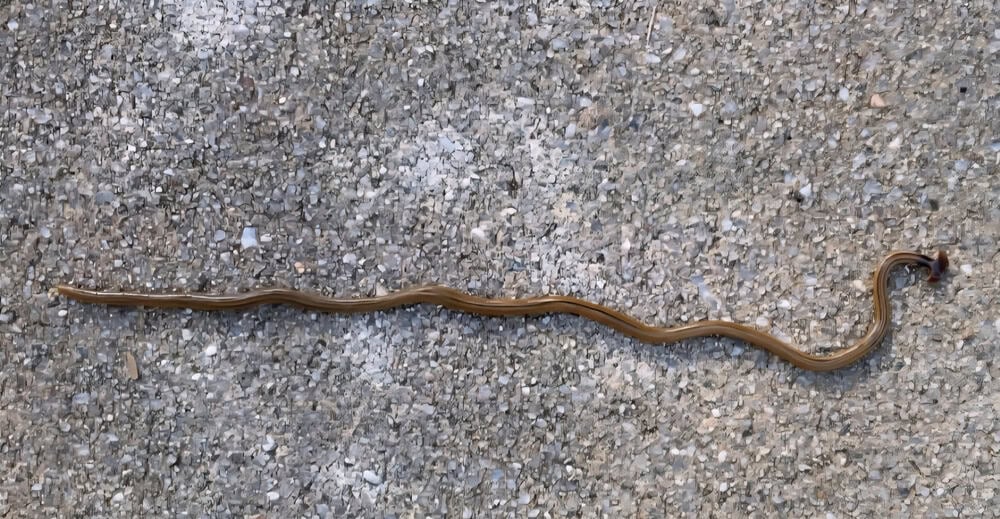
The hammerhead worm secretes a neurotoxin similar to that of a pufferfish that can cause skin irritation.
©Izzna501/Shutterstock.com
What to Do With a Hammerhead Worm
Hammerhead worms get their name for a very apparent reason. Their long, slimy bodies have a hammer-like structure at the head, similar to a hammerhead shark. They grow to between four and eight inches long and can range in color from tan, yellow, and orange to brown, gray, and black, often with one or more dark stripes along the back. Native to Southeast Asia, they are an invasive species in the United States. They commonly travel around the country by hitchhiking in the soil of potted plants sold at plant nurseries or home centers. While they have been documented throughout the country, including Tennessee, for decades, there has been a noticeable increase in sightings in the state in recent weeks. It’s common to notice these worms emerge from soil after warm and wet weather. Given the intense heat wave currently gripping the country, it is not surprising that sightings of these worms are increasing.
Part of the reason that these worms have hit the news is because of their irritating neurotoxins. While they aren’t particularly dangerous to humans, hammerhead worms contain tetrodotoxin. This is the same neurotoxin found in pufferfish, and hammerhead worms secrete it in their slimy mucus. When touched with a bare hand, it can cause skin irritation. Experts recommend not touching the worms directly and using gloves or a stick to move the worm. If you are looking to exterminate them, seal them in a bag and cover them with salt, rubbing alcohol, or a spray mixture of oil and vinegar. Exterminating this invasive species helps protect your garden, as hammerhead worms are harmful to native earthworms and can disrupt natural ecosystems.