
Quick Take
- A biologist assumed animals would shrug off a solar eclipse like a passing storm, but he was completely wrong. See the zoo study →
- When researchers finally ran the experiment without humans present, the animals' reaction changed dramatically. Discover the human effect →
- According to the scientist who studied it most, one group of animals behaves far stranger than any other during a solar eclipse, and it is probably not the ones you are thinking of. Find out which animals →
Since ancient times, people have been fascinated by one of the planet’s strangest phenomena: the solar eclipse. On the rare occasions when the Moon passes between the Earth and the Sun, creating a ring of light in the sky, people have reacted in various ways. Some ancient cultures saw it as a blessing bestowed upon mankind by the gods. Others saw it as a curse. But what about animals? How do they react when a solar eclipse occurs?
After experiencing his first solar eclipse, Adam Hartstone-Rose, a biologist at the University of South Carolina, wondered what animals might do when such celestial anomalies occur. Initially, he figured animals would treat it as nothing more than a passing storm. He was wrong. Animals of all shapes and sizes seemed to react in different ways when a solar eclipse occurred. A new study published in the journal Zoo Biology helps explain why. Let’s learn more about the study, its findings, and how the presence of humans might have a profound influence on animals during a solar eclipse.
Atmospheric Uproar
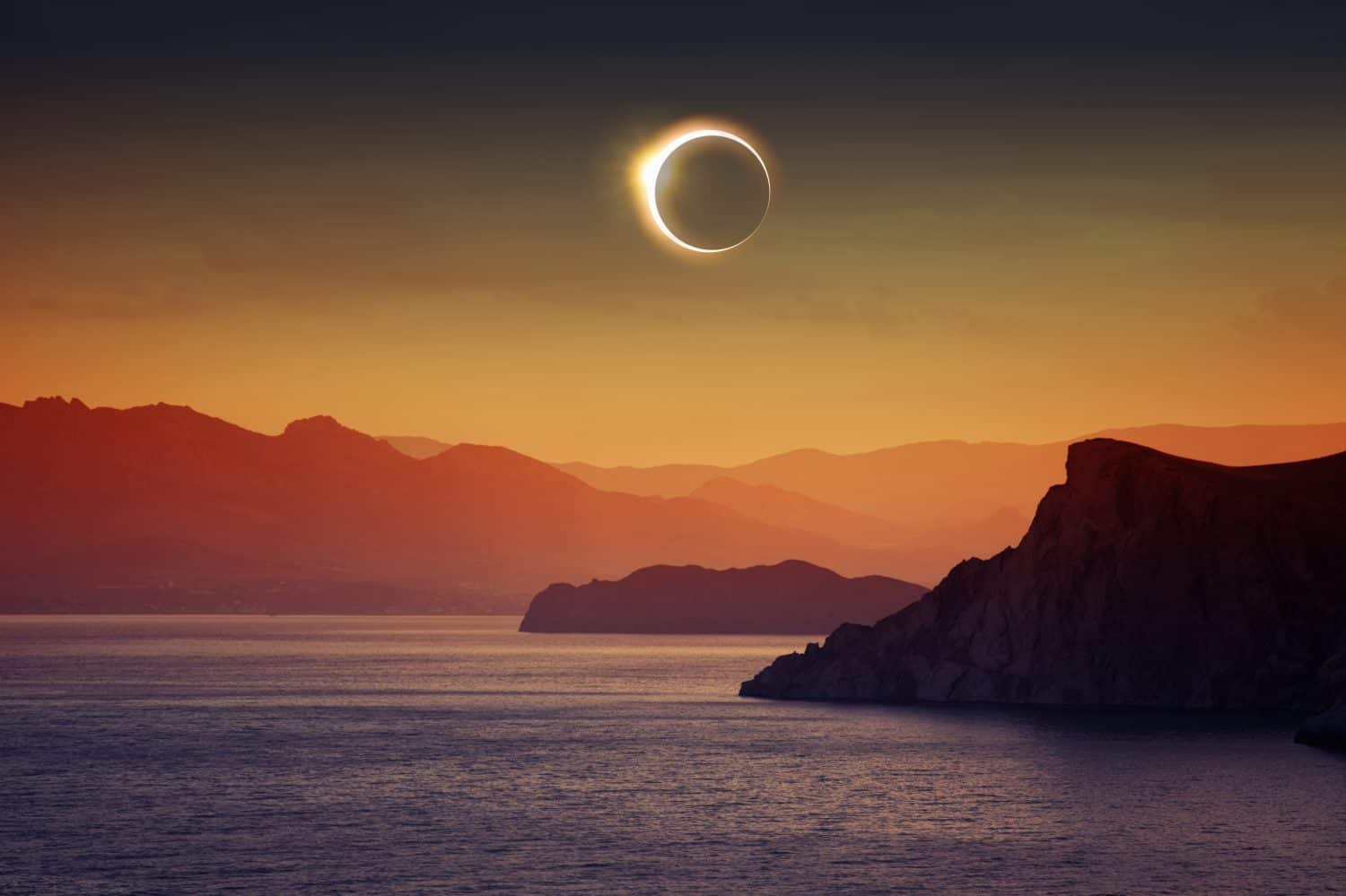
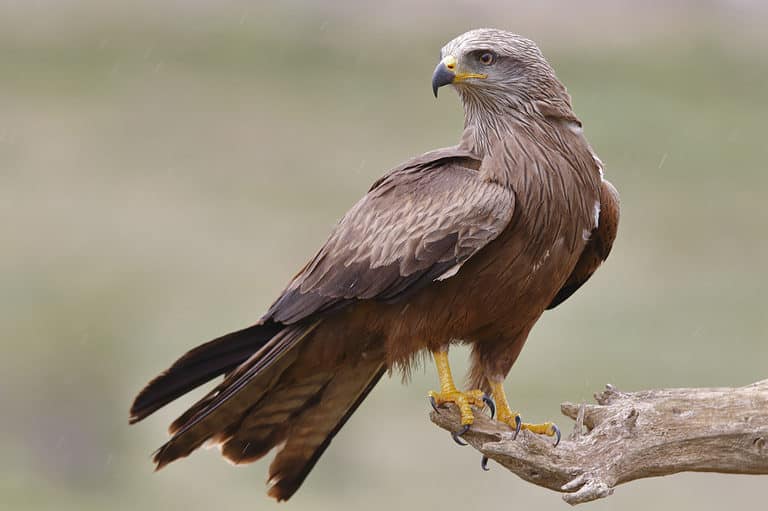
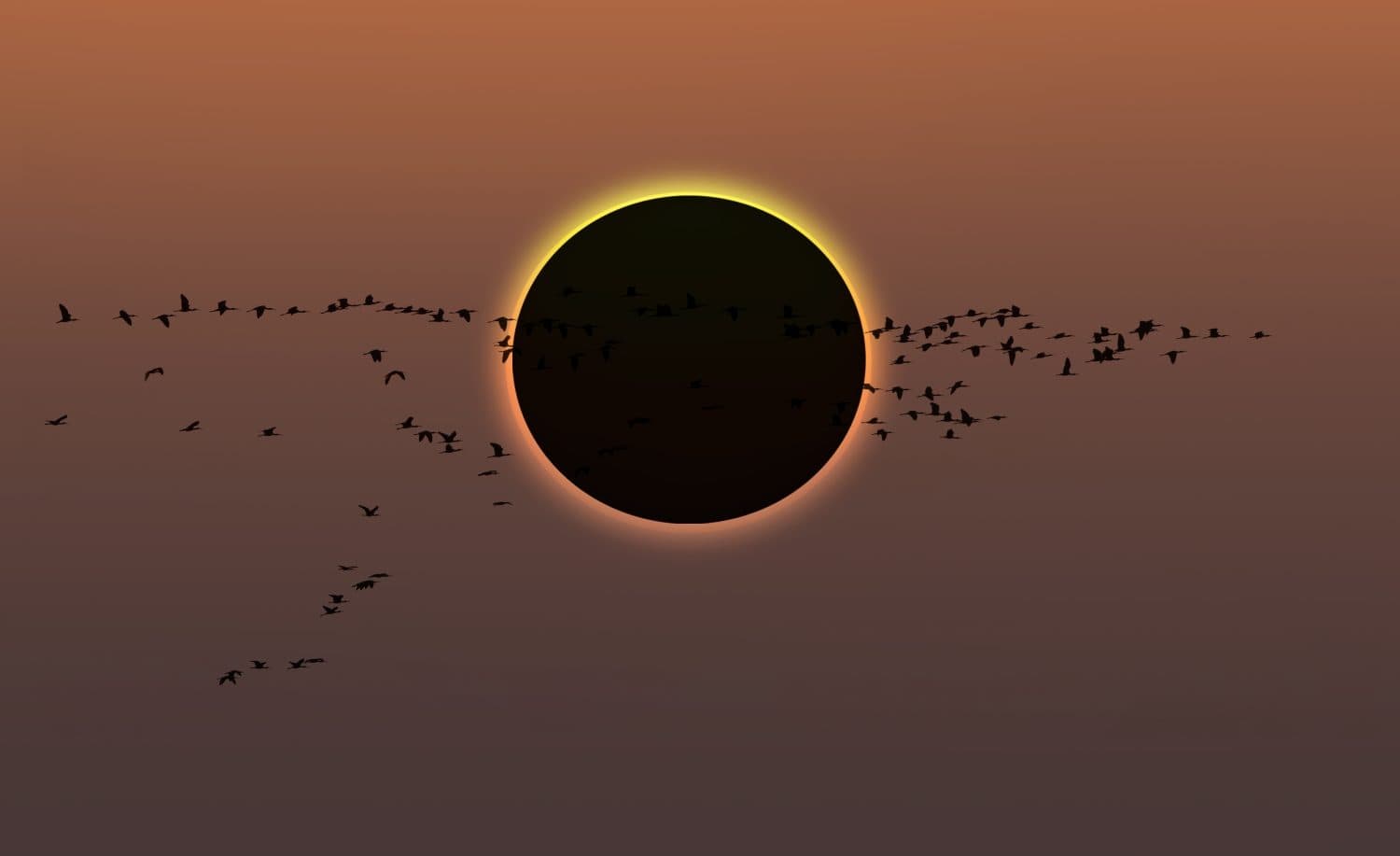
Total solar eclipses are brief, rare, and might affect animals. Some birds, for example, treat the end of solar eclipses as the start of dawn.
©IgorZh/Shutterstock.com
Eclipses are rare, but cyclical. Lunar eclipses occur when the Moon orbits through the Earth’s shadow and can be viewed anywhere on the night side of Earth for an hour or more. They are also safe to look at. Solar eclipses, on the other hand, are rare events and dangerous to look at directly. They occur only in a small part of the world once every 18 months. Even then, they only recur in the same spot once every 360 to 410 years.
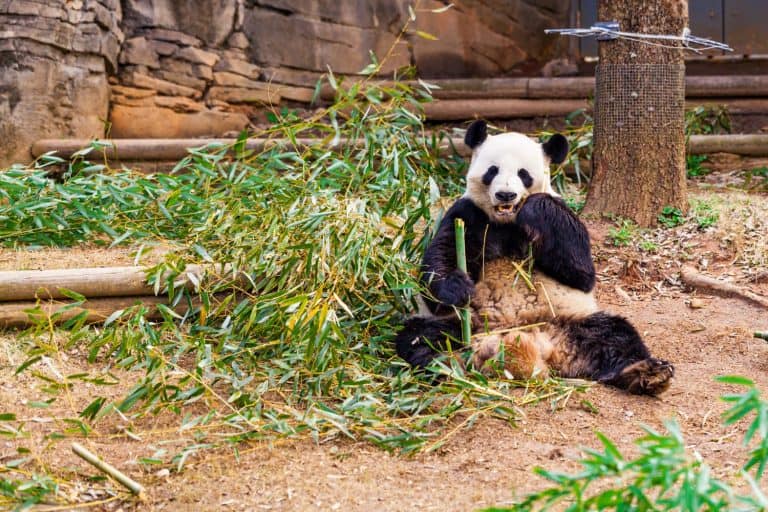
Surprisingly, there was little research on the effects of solar eclipses on animals until recently. In 2020, biologist Adam Hartstone-Rose co-authored the cheekily titled paper: Total Eclipse of the Zoo: Animal Behavior during a Total Solar Eclipse. Its findings showed various anomalous animal behaviors during a solar eclipse: a colony of flamingos formed a circle around juveniles, giraffes ran off, and baboons huddled together. A Komodo dragon also ran around its enclosure, and a pair of Galápagos tortoises began mating. The eclipse also appeared to trigger the nighttime routines of other animals. Lorikeets flew to their nests, gorillas gathered at their den’s gate, and elephants headed toward their barn. Meanwhile, other animals showed little to no reaction to the eclipse at all.
The eclipse observed by Hartstone-Rose and his colleagues had occurred in a zoo packed with human guests. This suggested that the presence of humans could have contributed to some of the animals’ strange behavior.
People Are Strange
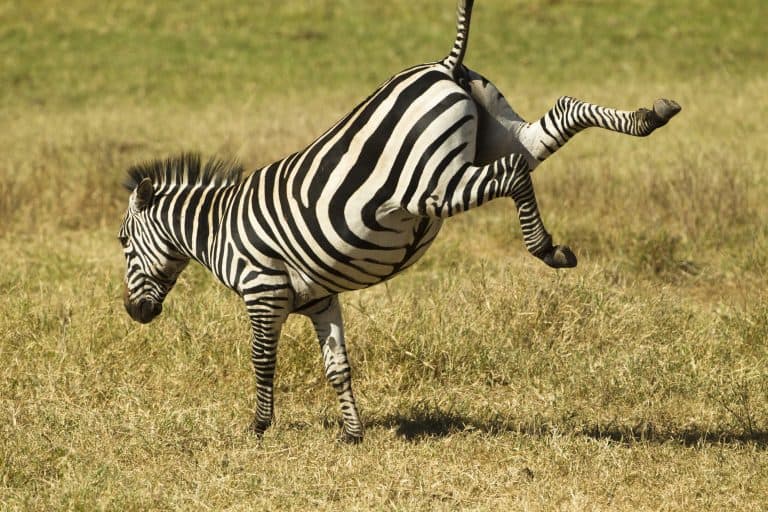
In a recent study published in Zoo Biology, Canadian researchers observed zoo animals during the 2024 total solar eclipse, but this time the zoo was closed to visitors. The Japanese macaques climbed higher in their enclosures and zebras showed minor signs of distress. Otherwise, the rest of the animals didn’t seem to notice or care.
Hartstone-Rose also conducted an experiment in Texas in 2024 to examine how the eclipse influenced animal behavior. While animals at the Fort Worth Zoo, which had a smaller human crowd, were subdued, the large crowds at the Dallas Zoo during the eclipse resulted in animals reacting much more strongly. It appears that most captive animals only behave unusually during a solar eclipse when the humans around them are also acting out of the ordinary. As Hartstone-Rose told The Smithsonian Magazine, “We don’t think about it, but animals at the zoo are perceptive of what’s happening with the humans, just as the humans are perceiving what’s happening with the animals.”
However, some animals are directly affected by eclipses, regardless of human presence. A 2025 Study published in Science showed clear behavior changes in some animals, particularly birds. Its authors analyzed nearly 100,000 bird calls during the 2024 solar eclipse. They found that half of the recorded species sang their dawn calls in the moments after totality ended, as the sky lightened. Other research has shown that certain insects act as if it were nighttime when total solar eclipses occur.
Ongoing Study
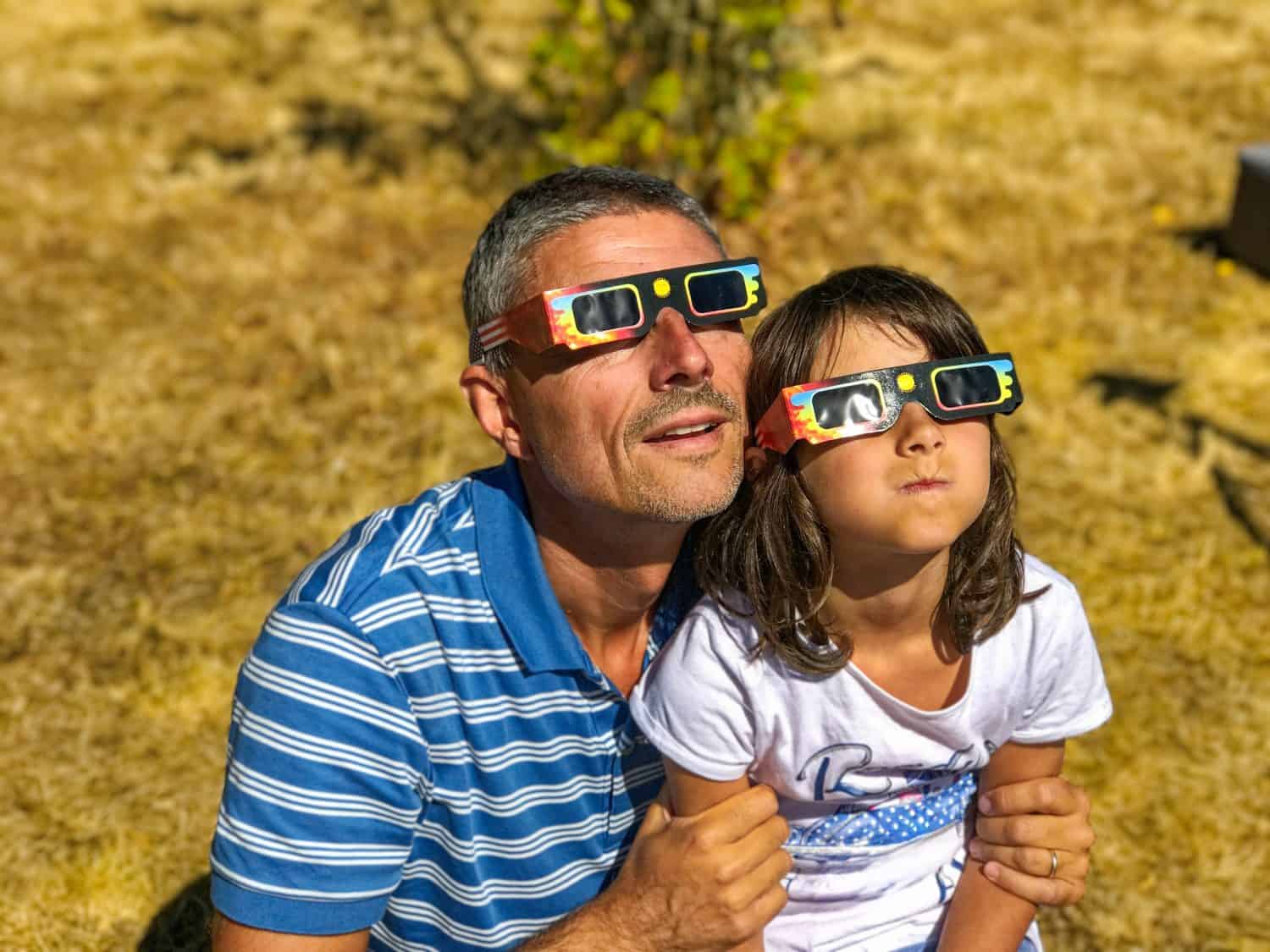
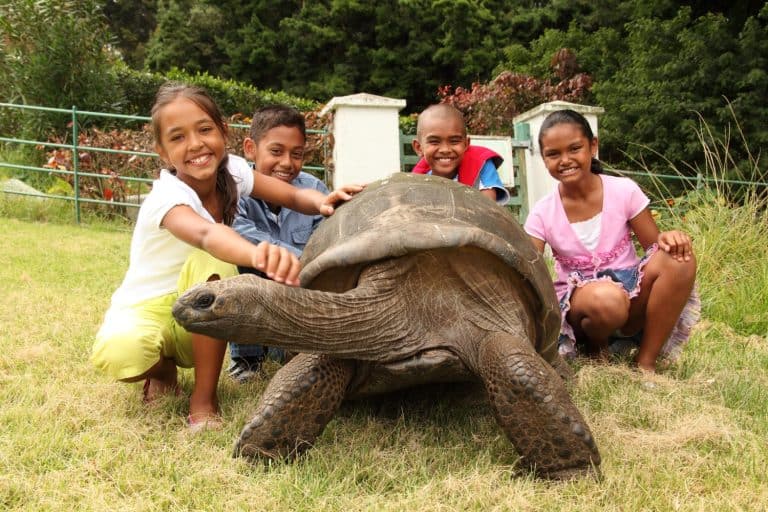
The presence of people and the level of their emotional reactions during a solar eclipse seem to affect the behavior of nearby animals.
©GagliardiPhotography/Shutterstock.com
Because eclipses are rare, it is difficult to secure funding to study their effects on animal behavior. Yet there does seem to be some correlation between human behavior during a solar eclipse and the behavior of nearby animals. A 2024 study co-authored by Hartstone-Rose involved hundreds of citizen scientists who recorded their observations of animal behavior during a solar eclipse. As Hartstone-Rose explained, “…what was really mind-blowing [was] that people who observed changes in animal behavior also felt significantly stronger feelings of awe and inspiration, and also stronger feelings of belonging in science, and that they contributed to science.”
While more research is needed to confirm a definitive link between human and animal behavior during such celestial events, there does appear to be some connection. Hartstone-Rose said, “The animals that do the strangest thing during an eclipse, by far, are the people. I think that’s actually an explanation for some of the anomalous behavior that we see in animals, too.”