
Quick Take
- Scientists may have spent decades getting the woodcock's rocking walk completely wrong, and the real explanation may be far stranger than anyone expected. See the real explanation →
- The woodcock's body is built with a feature so unusual it sounds like a mistake, though it gives the bird a hidden survival edge. Explore the woodcock's body →
- What looks like a nervous tic may actually be a calculated message sent directly to predators, and it may actually work. Unpack the predator signal →
There’s no denying that the American woodcocks in this fabulous YouTube clip have got plenty of rhythm. The way they hold their heads perfectly still, placing one foot forward and rocking their plump little bodies is truly mesmerizing. So, let’s find out more about these fascinating birds and why they are ‘dancing’ across this road.
What Do We Know About American Woodcocks?
American woodcocks (Scolopax minor) are only found in North America. You can spot them in forests that have open areas, ideally a mix of young forests and abandoned farm fields.
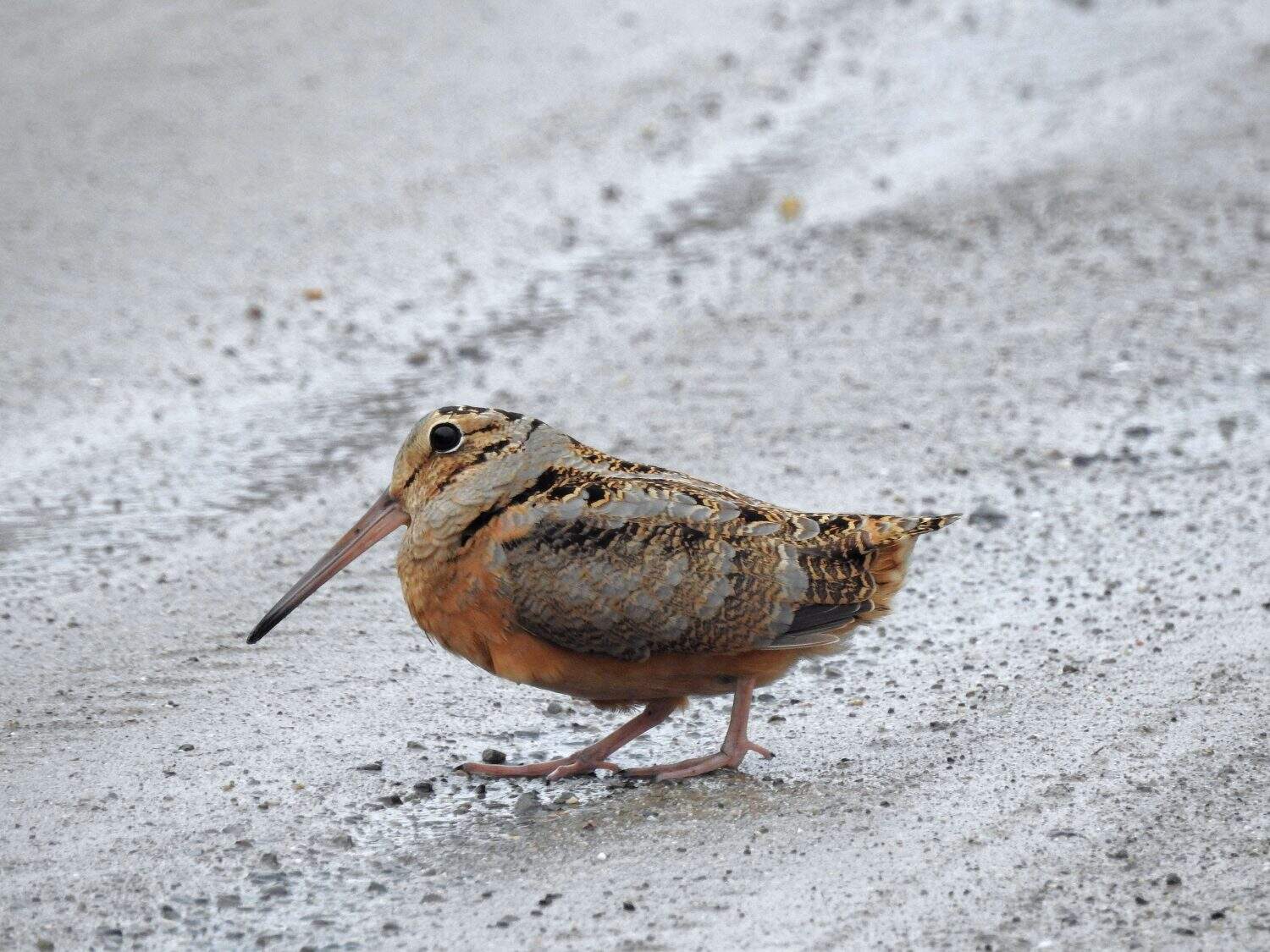
These are short, plump birds with mottled brown and gray plumage that camouflages them well in woodland habitats. They use their large brown eyes, set far back in their skulls, for rearview binocular vision to spot predators. They weigh up to 9 ounces and have wingspans of up to 20 inches. Woodcocks are mostly active at dusk and dawn and primarily feed on invertebrates. Earthworms make up the majority of their diet, but they will also eat beetles, flies, and centipedes. Larger birds and mammals hunt them.
Why Does the Woodcock Dance?
The woodcock’s rocking walk/dance has fascinated scientists for decades. There have been several theories about why they do it. Was it a nervous action resulting from fear? Are they mimicking the movement of leaves on trees to hide from predators? Are they imitating the shadows cast by leaves on the forest floor to blend in? Is this a special way of detecting earthworms? All of these theories have been both supported and discounted by various experts over the years.
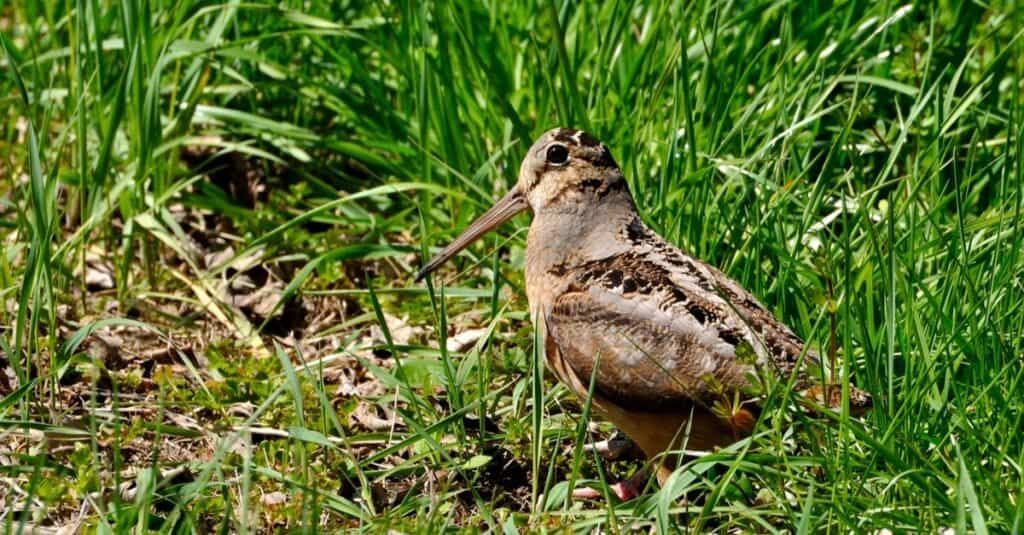
American woodcocks have a rocking dance.
©Andrea J Smith/Shutterstock.com
However, more recent observations suggest another reason. It suggests that woodcocks use this special dance when they know they are being watched and are in open habitats. This suggests that the behavior is an ‘advertisement of unprofitability’. This is an act designed to reduce the likelihood of attack by a potential predator. Here’s how this strategy works.
Predators mainly rely on stealth to catch prey like woodcocks. Once the woodcock realizes it is being observed by a predator, the predator’s stealth advantage is lost. The predator then knows it will have to expend a lot of energy to launch an attack that is likely to fail, since the bird will simply fly away. The woodcock also does not want to use up energy in an explosive, defensive takeoff. It makes more sense for the woodcock to signal to the predator, “I know you are there,” encouraging the predator to give up and search for another meal.
These theories are still being debated by scientists.