
Quick Take
- Vampire bats form tight food-sharing bonds, and these close relationships drive their calls to become more alike over time.
- Genetics alone explains little. Social housing prompts convergence, especially among roostmates who share food.
- Bats have individual voice signatures. Calls can be linked to the caller.
If you’ve ever caught yourself picking up a friend’s accent or slang, you already understand a little bit about vampire bats.
A new study published in the journal Proceedings of the Royal Society B about common vampire bats (Desmodus rotundus) shows that close “bat friends” actually start to sound more alike over time, especially when they share food. In other words, bat besties pick up each other’s vocal habits, just like human friends do. And for an animal whose entire life depends on cooperation, that may be a very big deal.
What Is a Vampire Bat?
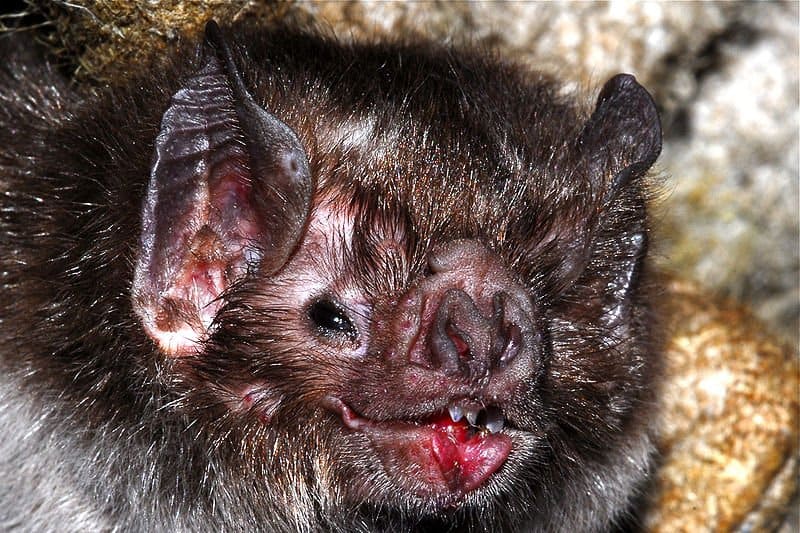
The common vampire bat, Desmodus rotundus
©Desmodus / CC BY-SA 3.0 / Wikimedia Commons – Original / License
Common vampire bats are the only mammals that feed exclusively on blood. Instead of sucking, as in any typical vampire movie, they make a tiny incision with razor-sharp teeth and lap up blood from sleeping animals such as cows, birds, or other mammals. They need to eat almost every night; if they go too long without a meal, they can starve. Luckily, they don’t face that danger alone.
Female vampire bats live in tight-knit social groups, forming strong, long-term bonds with other females who aren’t relatives. When a bat has a good night at the “all-you-can-drink” buffet, and a roostmate comes home hungry, she may literally save her friend’s life by regurgitating blood straight into her partner’s empty stomach. Over time, these bats keep track of who helped whom and tend to return the favor. Those food-sharing partnerships are some of the closest friendships in the bat world, and this new study shows they appear not just in behavior, but in the bats’ voices, too.
Vampire Bats Can Be Close Friends

Vampire bat friendships are formed in blood.
©Oasalehm / CC BY-SA 4.0 / via Wikimedia Commons – Original / License
The new research pulls together nearly a decade of work on wild-caught and captive vampire bats. Scientists brought 95 bats from different origins into captivity and carefully tracked who groomed whom, who shared food, and how their relationships changed over time. Some of the bats had lived together before. Others were total strangers, captured from roosts hundreds of miles apart and then “roomed” together in new social groups. That setup allowed the researchers to watch new friendships form almost from scratch.
“We found that bats that share food with one another, which are some of the closest social bonds in this species, also sound similar to one another,” Dr. Grace Smith-Vidaurre of Michigan State University tells A-Z Animals. “This finding may be analogous to how humans start to pronounce words in similar ways, or how people start to use new slang words after making new friendships. It’s also possible that sounding similar to others helps the bats build new relationships, too.”
So, to understand bat friendships, the team didn’t just watch who shared dinner — they listened for who started to “talk” alike.
How Do Humans Record Bat Communication?
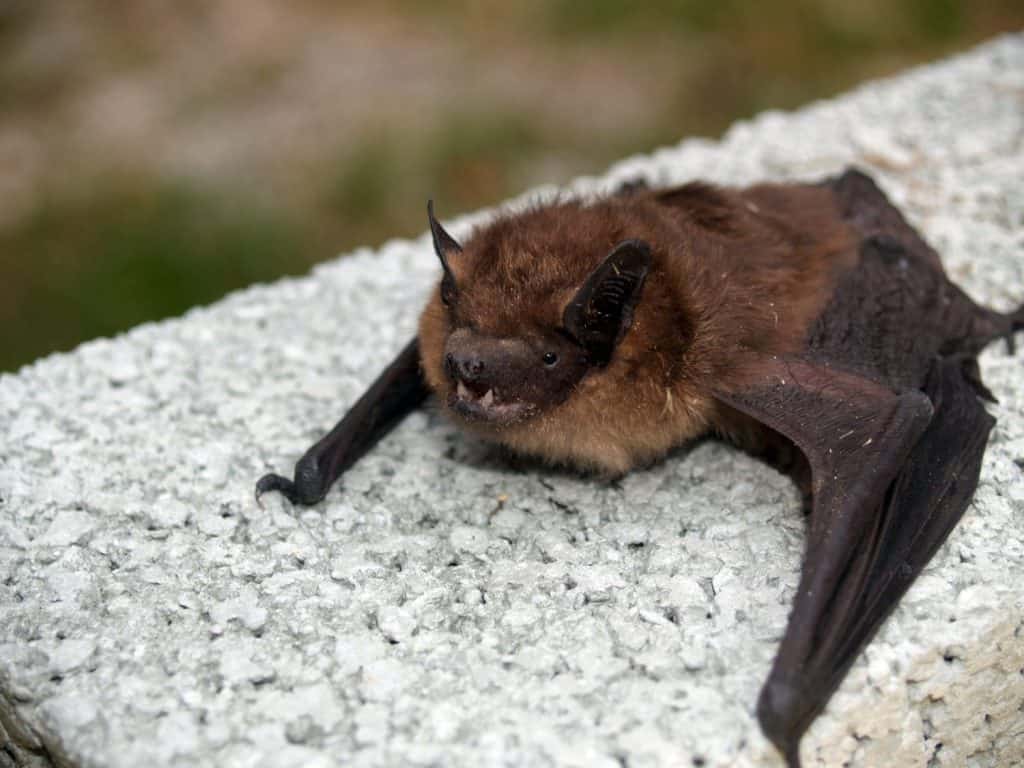
Most of the sounds vampire bats make are much too high in pitch for humans to hear.
©Scherbi/Shutterstock.com
Vampire bats keep in touch with high-pitched “contact calls” — short, squeaky sounds that help them find and recognize one another when they’re alone, flying, or crawling around in the dark. Most of these calls are far too high for humans to hear.
To study them, the researchers placed each bat alone in a mini sound booth and recorded its calls with specialized ultrasonic microphones. Over the years, this grew into a massive dataset: 693,494 contact calls from those 95 animals. For each call, the team measured 35 different acoustic features, such as duration and frequency patterns, to describe what it “sounds” like in mathematical terms.
“Aside from the size of this dataset, what’s especially exciting is how the Carter Lab collected vocalizations alongside data on the bats’ genetic relatedness, and the formation of different types of social bonds amongst bats,” Smith-Vidaurre says.
That combination — sound plus family tree plus friendship map — allowed the team to ask a powerful question: do bats sound alike because they’re related, or because they’re friends?
We found that bats that share food with one another, which are some of the closest social bonds in this species, also sound similar to one another.
Dr. Grace Smith-Vidaurre of Michigan State University
Do Bats Have “Accents,” and Do They Learn Them?
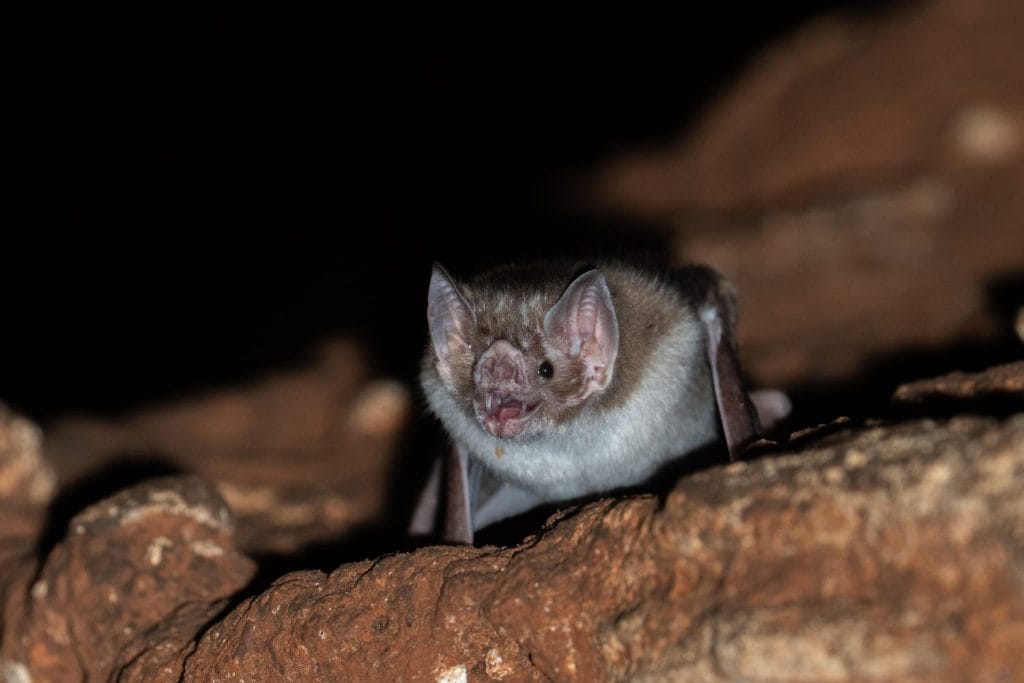
Vampire bat’s sound-alike calls could be some type of accent.
©Griffin Gillespie/Shutterstock.com
First, the scientists confirmed that each bat’s calls were individually recognizable. Using statistical models, they could assign many calls to the correct caller at rates far above chance, indicating that contact calls contained a built-in voice signature. Then they looked at how similar different bats’ calls were to each other, and started matching that to their social lives.
“To really address questions about whether, how, and why animals change their vocalizations, it’s very important to also have these additional datasets to account for whether the bats’ calls happened to be similar because they were genetically related,” Smith-Vidaurre explains. “These datasets also help assess whether ‘sounding alike’ occurs across all social bonds or only specific types of social bonds.”
When the researchers dug into their enormous archive of vampire bat calls, a clear pattern emerged. Bats that had never met and were kept in completely separate groups had the least similar contact calls. Their “voices” were as distinct as strangers from different regions. But when unrelated bats were brought together and housed in the same social group, their calls slowly started to converge. Over time, those once unfamiliar animals began to sound more alike.
The strongest effect showed up in the bats with the tightest social bonds. That is exactly the kind of pattern you would expect if vampire bats were learning and adjusting their vocalizations based on the individuals they interact with, rather than simply producing fixed, genetically programmed calls. In other words, the bats’ most generous “friends” also became their closest vocal matches.
Taken together, the findings suggest that familiarity nudges bats’ calls toward one another and that deep, cooperative bonds push that similarity even further. That is exactly the kind of pattern you would expect if vampire bats were learning and adjusting their vocalizations based on the individuals they interact with, rather than simply producing fixed, genetically programmed calls.
Blood Isn’t Always Thicker Than Water
Vampire bats may choose those they have formed friendship bonds with over those they’re related to.
©Independent birds/Shutterstock.com
The analysis showed that genetics alone could not explain the patterns of call similarity. Who a bat lived with and who it fed turned out to matter far more than who it was related to. As Smith-Vidaurre explains, “This study provides evidence that vampire bats sound alike not because they are genetically related, but because they are capable of vocal learning, or the social learning of vocalizations. Vocal learning is critically important for human language, and is an ability shared across different groups of mammals and birds.”
That conclusion puts vampire bats into a select group of animals — including parrots, dolphins, elephants, and certain songbirds — that don’t just make sounds but learn them from others. It suggests that these blood-feeding mammals are quietly running their own version of a vocal classroom in the darkness of their roosts, where social life shapes how individuals sound.
Why, though, would it help a bat to sound like her friends? One simple explanation is exposure. If a bat hears her closest companions more often than anyone else, she might naturally start to match their calls, just as people gradually pick up a local accent or new slang after spending enough time with a group. Having a similar “accent” could make it easier for vampire bats to recognize roostmates and tell them apart from unfamiliar individuals in the dark, crowded spaces they share.
Another possibility is that call matching actively helps to build or maintain relationships. Two bats that already share food might, over time, become vocal look-alikes, strengthening their bond or making it easier to find each other in a bustling roost full of jostling bodies and overlapping calls. In that scenario, shifting your voice toward a friend isn’t just a side effect of spending time together; it becomes part of how you stay close.
Smith-Vidaurre notes that there may be many layers to what “sounding alike” really means in this context. She points out that “’sounding alike’ could mean many different things, from slight and gradual changes in acoustic structure, to stably producing exact copies of call structures produced by other bats, or even rapidly modifying acoustic structures in real time.” All of those possibilities, she adds “are exciting areas for future research in the vampire bats and other study systems.”
Future work by the research team will delve even deeper into how flexible these calls can be and what information they convey. Smith Vidaurre and her fellow researchers are currently exploring how socially learned sounds can “carry information about social identity, and how these vocalizations may be used to recognize unique individuals, group members, or other categories of social bonds.” One especially intriguing question is whether female vampire bats might use particular call variants for specific partners — essentially, whether they have the equivalent of individual “names” for their closest companions, and whether those names themselves are learned and adjusted over time.
For readers, the broader lesson is surprisingly relatable. Vampire bats are often cast as spooky villains, but this research paints a very different picture. These animals form long-term bonds with non-relatives, help each other survive by sharing hard-won food, and gradually begin to “talk” more like their best friends than like other group members. Their social lives are rich, cooperative, and dynamic, and their voices reflect that complexity.