
Quick Take
- Tropical wasp societies look nothing like the orderly insect colonies scientists usually study, and that chaos turned out to be the key to understanding something surprising about cooperation. Discover the tropical difference →
- When a wasp queen disappears, all-out war breaks out, yet some colonies survive even the most brutal succession battles. The reason why defies what scientists expected. See the succession chaos →
- The wasps that kept the colony alive during the fighting weren't biologically special. So what actually drove them to act differently? Explore the behavioral findings →
- Researchers studying wasp warfare think their findings say something uncomfortable about how human societies hold together under pressure. Read the human parallels →
For some species, war seems inevitable. When a community loses a powerful leader, it creates a power vacuum. This lack of leadership throws the community into chaos, and often, violent power struggles ensue. Such situations are commonplace for one of the more defensive orders of insects, wasps, which belong to the order Hymenoptera and suborder Apocrita. New research on tropical paper wasps in the Caribbean illustrates how their colonies devolve into chaos once they lose their single dominant breeding female. What makes this research special, however, is that scientists discovered that the colonies tend to push through periods of all-out battle.
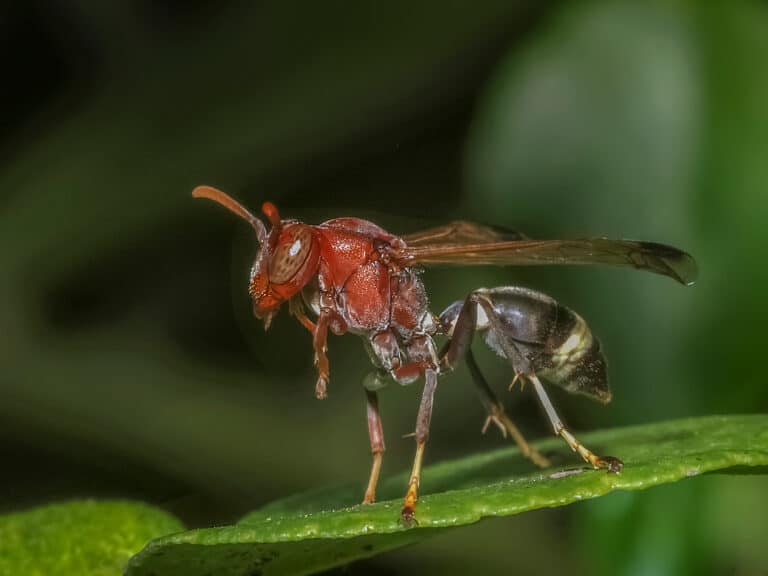
Despite the calamity and violence, these colonies often endure, even well past what appeared to be points of no return. When researchers removed wasp queens, disorder erupted, at least for a while. Much to their surprise, however, a group of red paper wasps in the colony—separate from the aggressors—quietly kept working to ensure that the colony’s essential tasks got done. Almost like first responders, this select group of stabilizers made colony survival possible even in the midst of all-out war. Let’s learn more about this sequence of events in a wasp colony and what it can teach us about cooperation during strife.
Temperate Vs. Tropics
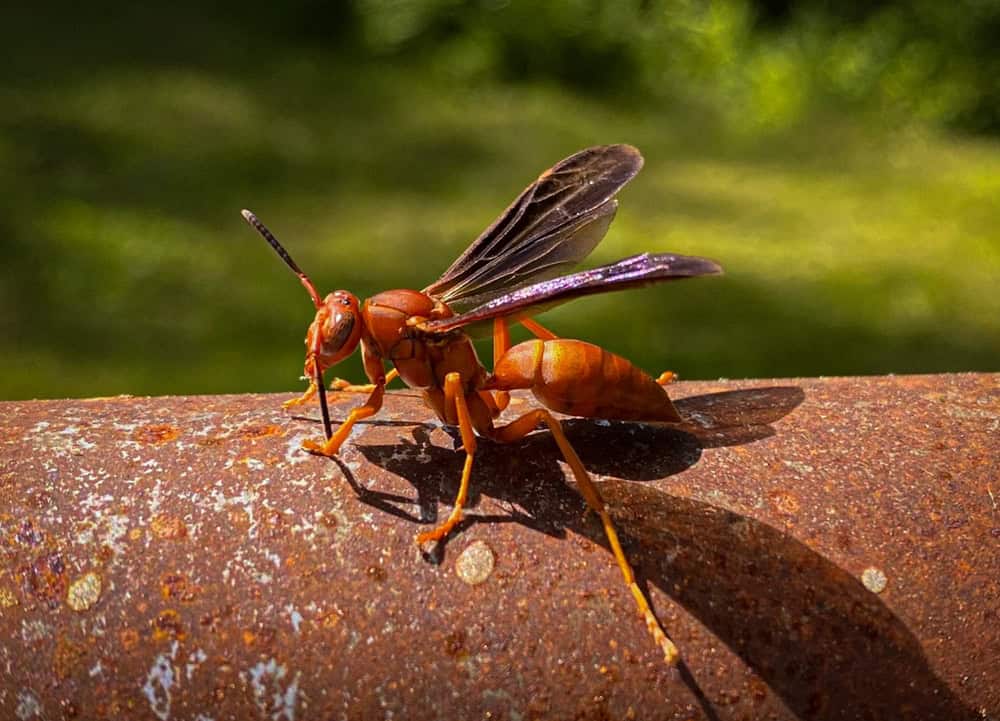
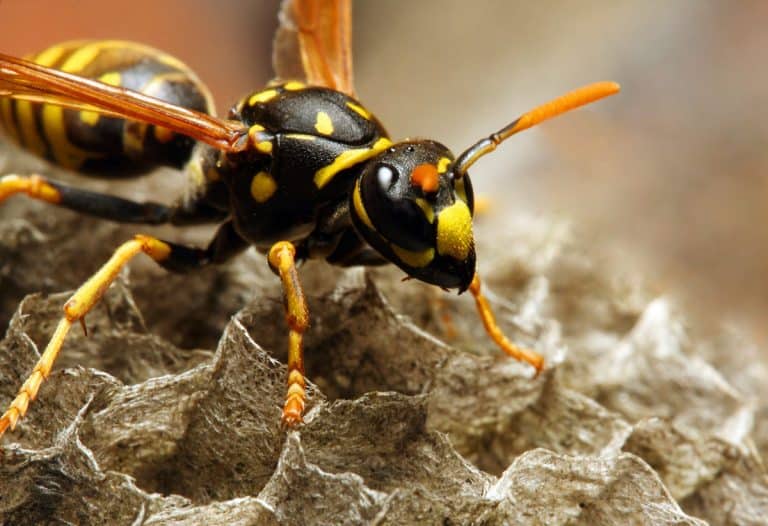
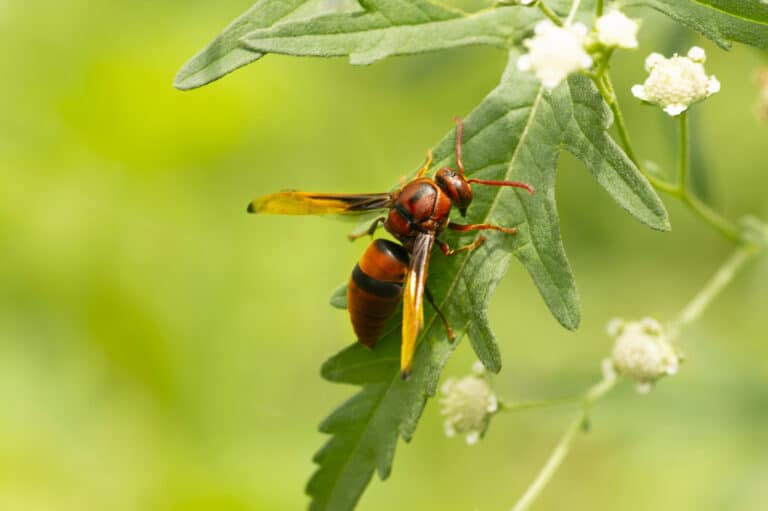
While wasps in temperate regions live in more rigid and orderly societies, tropical wasps like red paper wasps live in colonies that often break out in conflict.
©cb_pictures/Shutterstock.com
Scientists continue to be fascinated by the cooperation strategies employed by insect societies. However, the majority of research has focused on insect species found in the more temperate regions of Europe and North America. The clement weather seems to influence insect societies to be more predictable and rigidly hierarchical. Curious about such structures in the tropics, researchers at University College London sought out red paper wasps. While this species (Polistes canadensis) is widely distributed across most of the Neotropical region, UCL researchers focused on those found in the Caribbean.
Red paper wasps have a much more flexible idea of societal structure, or at least, far less orderly. When leadership changes take place, these paper wasp colonies fight, with the female wasp competition for dominance upsetting the typical state of things. To figure out exactly what happens to these colonies and why they seem to survive through the chaos, researchers compiled data collected during fieldwork in Panama during the early 2000s from queen-removal experiments and associated behavioral observations.
Removing the Queen
The study, entitled “Compensation of labour by noncompetitive individuals mitigates costs of aggressive succession contest in a social wasp,” yielded notable results. As explained in a 2026 study published in Animal Behaviour, red paper wasp colonies went through stages of disorder once queens were removed.
Suffice it to say that removing dominant queens from established colonies produced immediate results. Sensing a serious power vacuum, other female wasps began competing for the top position. Leadership didn’t transfer between individuals peacefully, either, as the female competition threw the colonies into disorder and conflict. Surprisingly, however, not all wasp inhabitants became embroiled in the fury.
Researchers found that a separate group of wasps ignored the infighting and acted as the equivalent of first responders. They kept up the colony’s essential duties like food collection and rearing of young larvae while the others fought. With wasp larvae being fed and food stores remaining stocked, the colonies were able to weather the periods of calamity until new leadership took the reins. Due to their stabilizing influence, the researchers called this group of wasps compensators.
Strategy Over Biology
Remarkably, researchers didn’t find any biological or anatomical difference between the competing wasps and the compensators. This led the researchers to conclude that such behaviors “reflect strategic choices instead of fixed social roles.” It seems that different wasps saw their best chance at survival as involving different tactics. While fighting appealed to some, others figured that the survival of the brood mattered more in the long run.
According to the study’s lead author, Dr. Owen Corbett, the different roles wasps adopted amid conflict painted a nuanced picture. In a statement to Science Daily, he said, “The conflict after queen removal was intense, but it wasn’t the whole story. While some individuals fought over dominance, others completely avoided the conflict and quietly stepped up to keep the colony running. Cooperation didn’t disappear; it was redistributed.”
Lessons for the Future
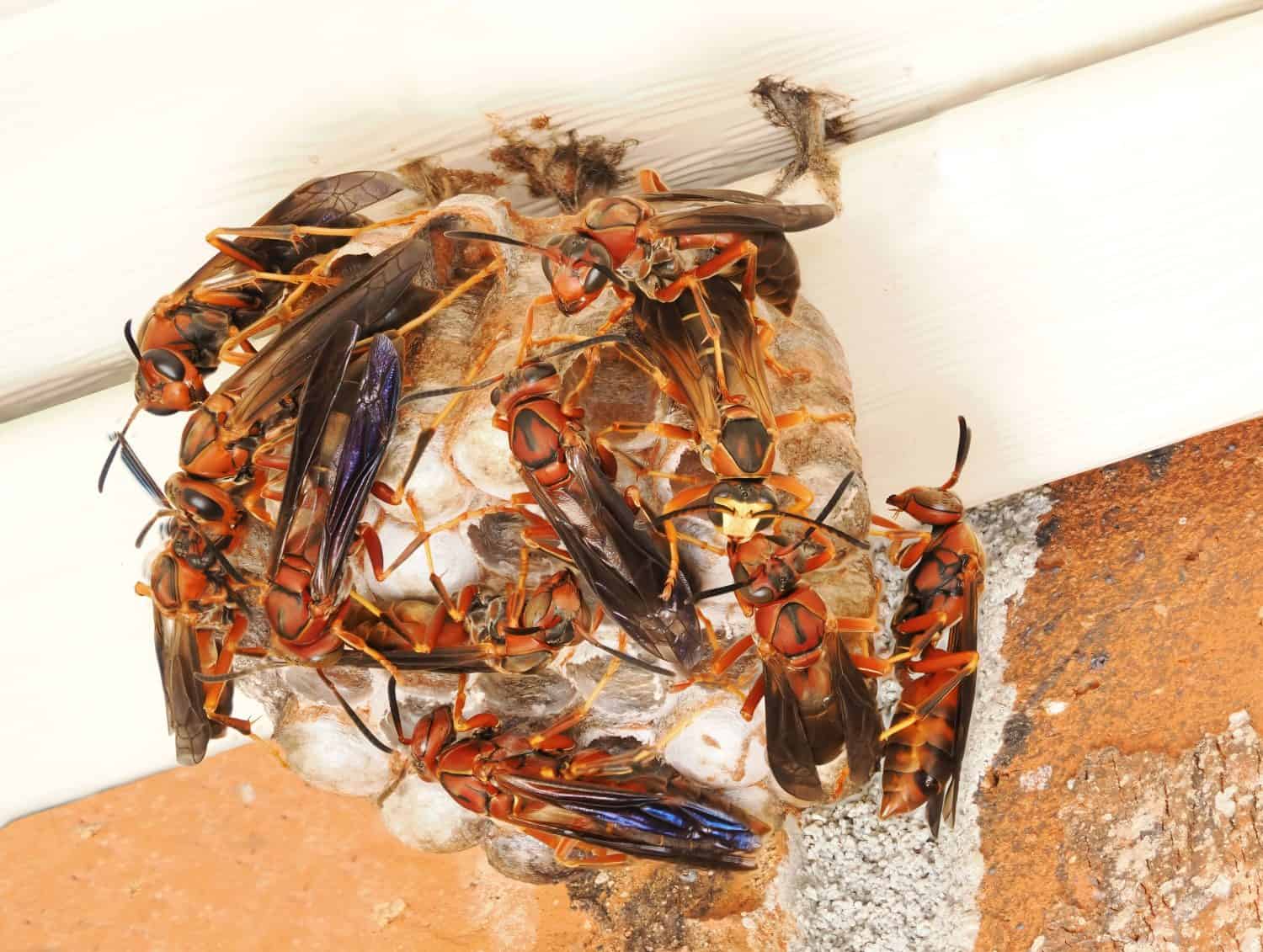
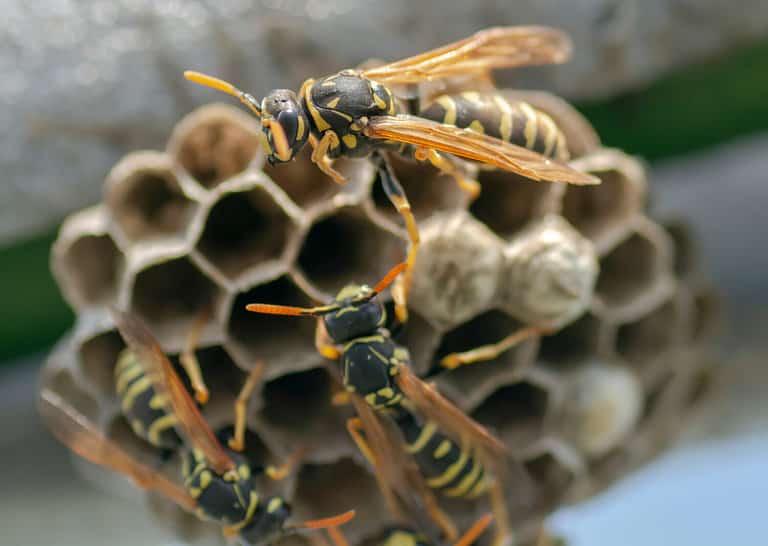
The different roles red paper wasps take during conflict could provide lessons for our own fractured societies.
©Steve Bower/Shutterstock.com
Insect societies, like those of red paper wasps, are large, multidimensional, and complex. This new study suggests that even the most complex societies can maintain equilibrium amid conflict. Succession in red paper wasp colonies is violent and chaotic, but such societies manage to endure thanks to the tireless work of a select few compensators willing to do the essential work while everyone else is fighting.
As senior author Professor Seirian Sumner explained in a statement to Science Daily, the study’s insights could provide lessons for our own unstable societies. She said, “Understanding how animal societies manage conflict can help us think differently about cooperation more broadly. In times of turmoil, society depends on those who keep doing the essential work in the background. In many ways, we may be more like wasps than we realize.”
People tend to like bees but avoid wasps. It turns out, however, that the answers to some of our own human problems might lie within the wisdom of the red paper wasp.