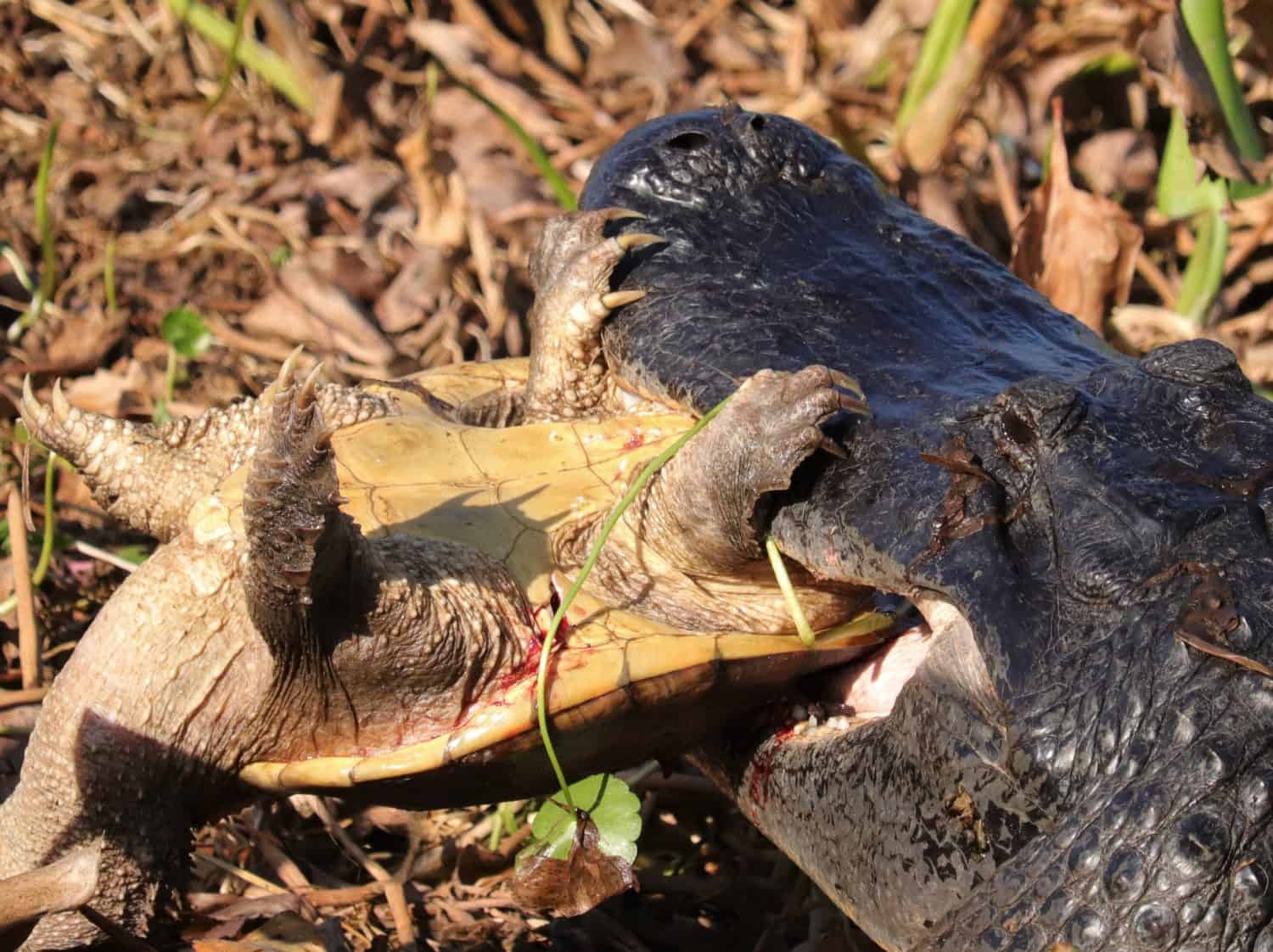

Alligators are known for their incredible jaw strength. Snapping turtles are known for their aggressive nature, strong beak bite, and shells that can withstand a significant amount of pressure. Therefore, when the two come into contact with one another and it becomes alligator versus snapping turtle, the outcomes vary. Unfortunately, for one large snapping turtle, the result of its encounter with an alligator was not favorable. But as a result of its shell strength, the alligator had to work to overcome the snapping turtle, making the experience a difficult one for both creatures.
A Snapping Turtle Is No Match for an Alligator
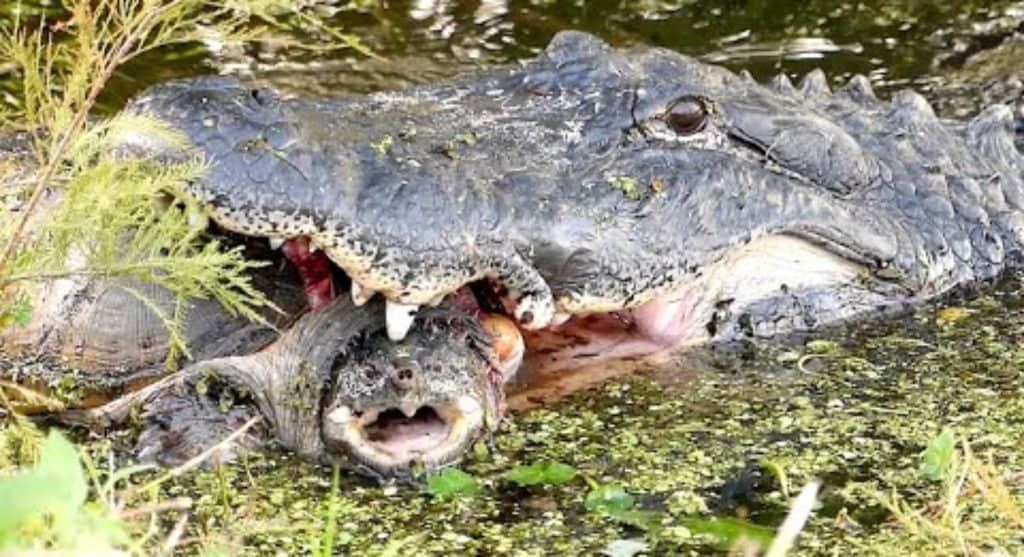
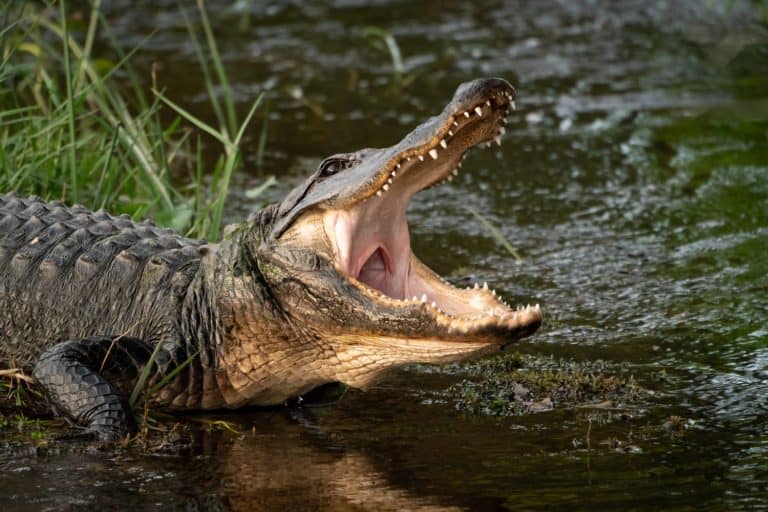
An alligator successfully grabs a snapping turtle to consume as prey.
© – Original
Looking at size alone, it would appear that a snapping turtle would be no match for an alligator. But as a viral YouTube video has shown, snapping turtles make difficult prey for alligators, given their hard shells. While the snapping turtle ultimately succumbed to its injuries, the alligator had to work hard for its meal, something the opportunistic hunter would prefer not to do.
In 2024, Michelle Siefken Photography uploaded a video to YouTube that showed the harsh realities of Mother Nature. A large snapping turtle became prey for an alligator. However, the snapping turtle proved not to be the easy meal the alligator had anticipated. Initially, the alligator struggled to hold the snapping turtle in its jaws. The shell did not begin to crack until the alligator managed to position the snapping turtle correctly and made several crushing attempts with its jaws.
Even with the shell having been broken, it took the alligator three hours, according to the caption of the video, to finally make a meal of the snapping turtle. This required the alligator to expend a lot of energy for a single meal, especially since the shell could injure the alligator during swallowing. The video, with over one million views, shows that snapping turtles are prey that alligators will pursue. However, if there are other options available, alligators will leave snapping turtles be.
Snapping Turtles Are Not the Preferred Prey for Alligators
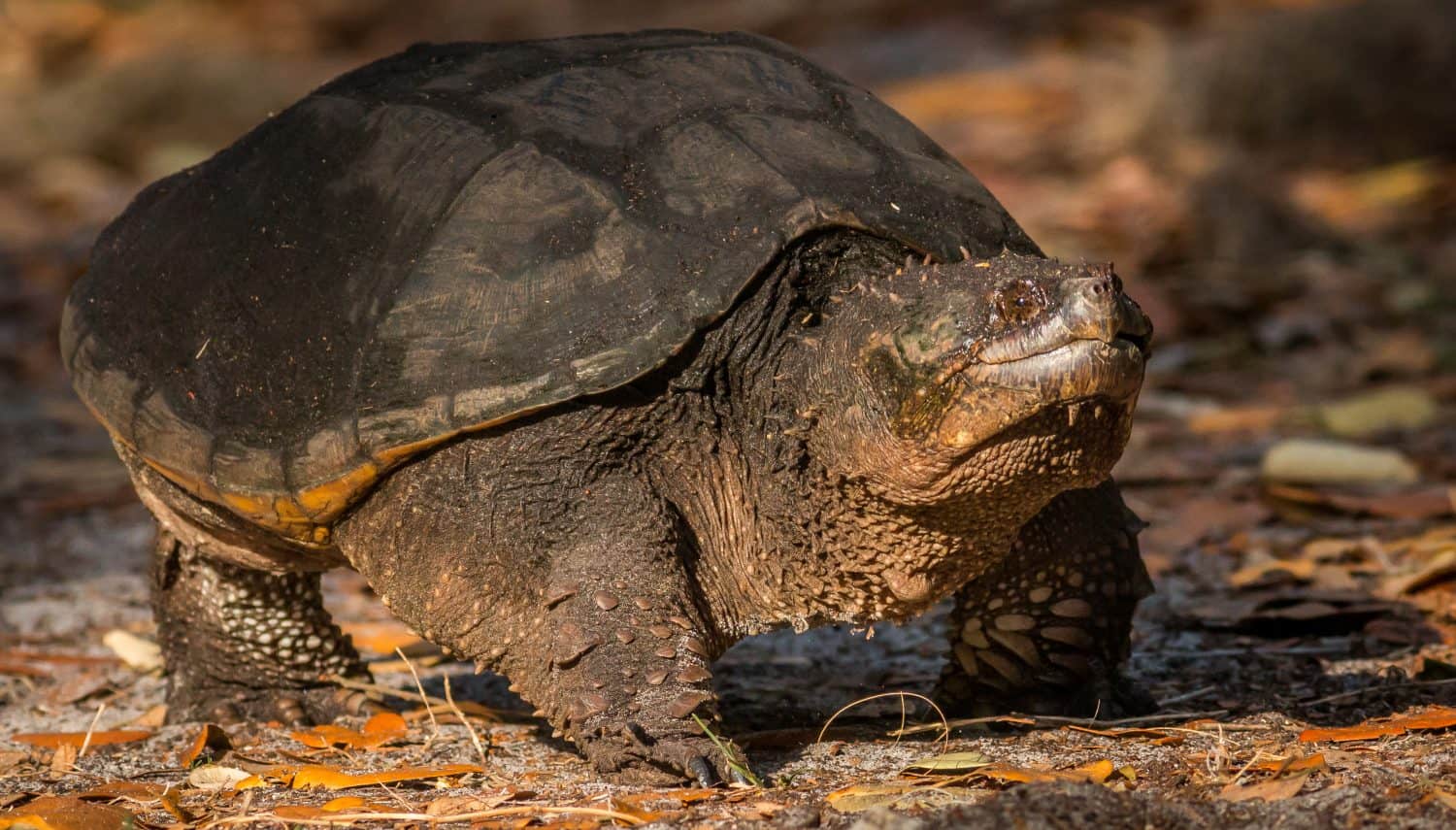
Snapping turtles are not the easiest prey for alligators to consume.
©Barry James Davis/Shutterstock.com
Alligators are opportunistic hunters. Because of this, just about anything that is within their striking distance is fair game for a meal. In general, however, alligators would prefer to leave snapping turtles alone in search of prey that will not fight back and potentially injure the alligator, as well as not take hours to subdue.
While alligators will eat turtles of all sizes, they do have a preferred prey. The animals that alligators tend to target as prey include:
- A variety of fish
- White tailed deer
- Feral pigs
- Wading birds
- Muskrats
- Nutria
- Beaver
- Raccoons
- Snakes
- Frogs
Alligators prefer to target prey that is easy to sneak up on and consume quickly. However, it is their opportunistic hunting behavior that has also led to them eating domestic dogs, black bears, panthers, other alligators, and even snapping turtles. Snapping turtles, in particular, have shells that can be nearly impenetrable, causing alligators to waste energy on a meal they may not be able to eat.
It Can Be Difficult for Alligators to Break a Snapping Turtle’s Shell
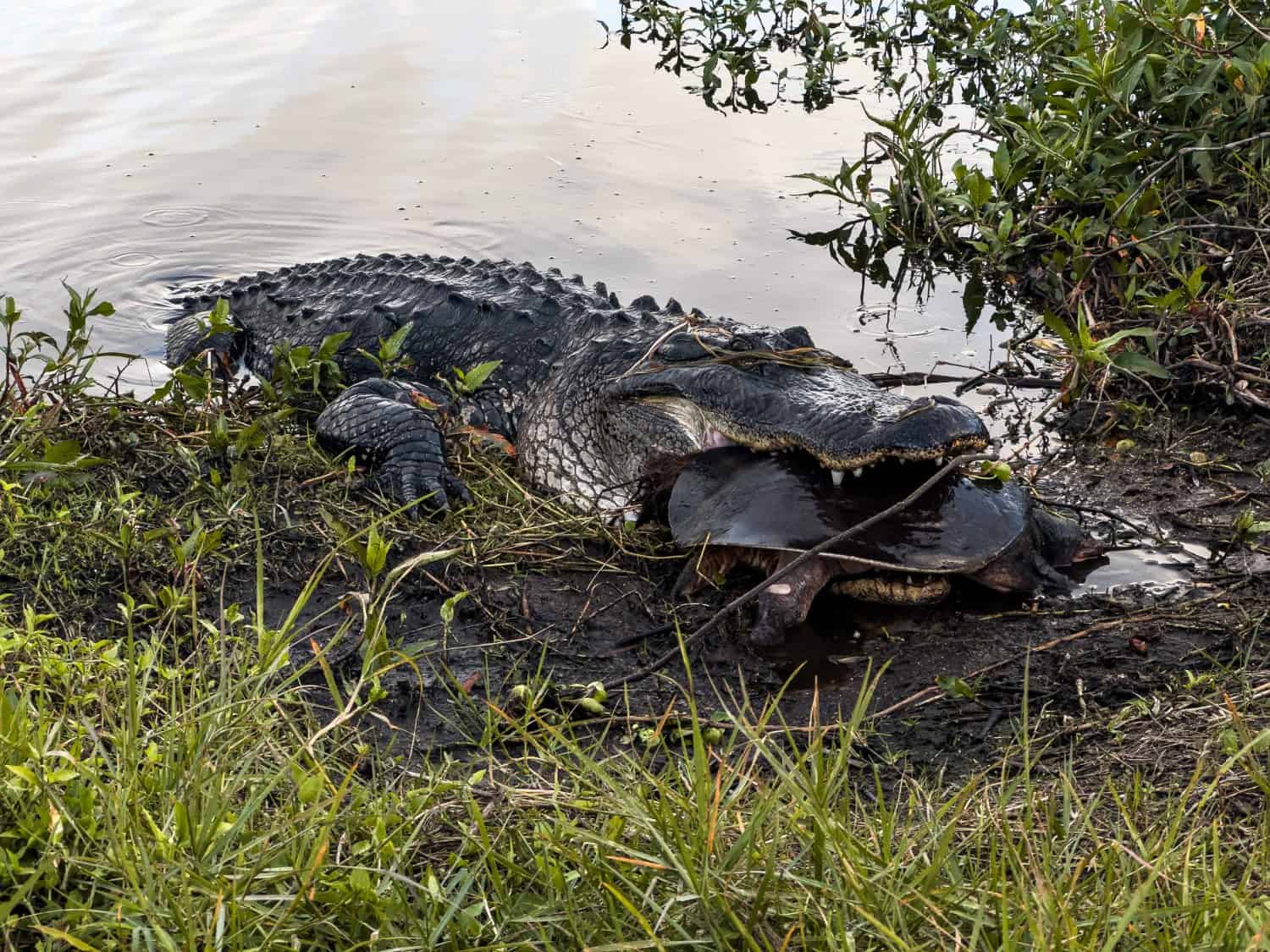
Cracking snapping turtle shells can be difficult for alligators.
©vulianjonko/Shutterstock.com
A snapping turtle has its shell to protect its vital organs from would-be predators. While the snapping turtle cannot retreat into its shell to protect its head and appendages, the shell is incredibly strong. This makes it difficult even for alligators to crack open, which is why eating snapping turtles is not always an easy task.
The snapping turtle’s shell is capable of withstanding 200 times its body weight. Common snapping turtles weigh between 10 and 35 pounds, which means their shells are capable of withstanding a force of up to 2,000 to 3,500 psi.
Alligators’ jaws have a force of up to 3,000 psi. This means that in some instances, alligators would be incapable of cracking the snapping turtle’s shell. It is also worth noting that not all alligators have the same amount of force in their jaws. Therefore, an alligator’s success in cracking a snapping turtle’s shell depends on the size and jaw strength of both the alligator and the snapping turtle.
Snapping Turtles Can Be Formidable Opponents to Alligators
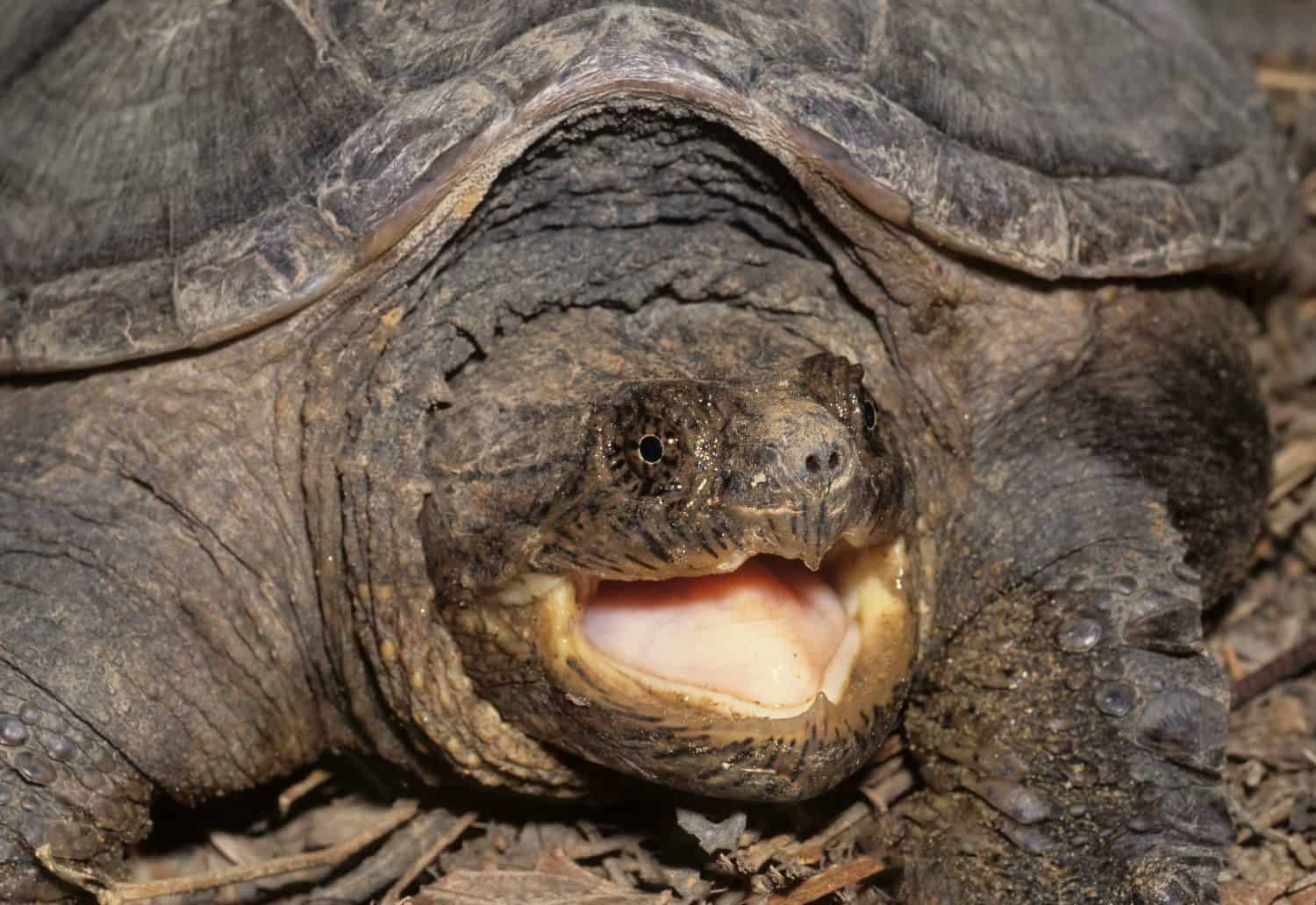
Snapping turtles can put up a fight when encountered by an alligator.
©Gerry Bishop/Shutterstock.com
The YouTube video made it appear that the snapping turtle was an easy meal for the alligators. This may very well have been the fact for this particular alligator and snapping turtle. But the truth of the matter is, snapping turtles can be formidable opponents to alligators. This is why many alligators leave them alone.
Snapping turtles cannot retract their bodies into their shells. This means that when they are attacked, they attack back. From biting with their strong beak to using the claws on their feet, snapping turtles can inflict damage on an alligator. To put this in perspective, a snapping turtle has enough force in its beak to remove a human finger. While this is not enough to kill an alligator, it tends to be enough to stop an alligator from attacking and seeking new prey.
Since snapping turtles can be difficult prey, as long as there are enough resources for both species, snapping turtles and alligators can coexist peacefully and may even interact in mutually beneficial ways.
Snapping Turtles and Alligators Can Live Peacefully Together
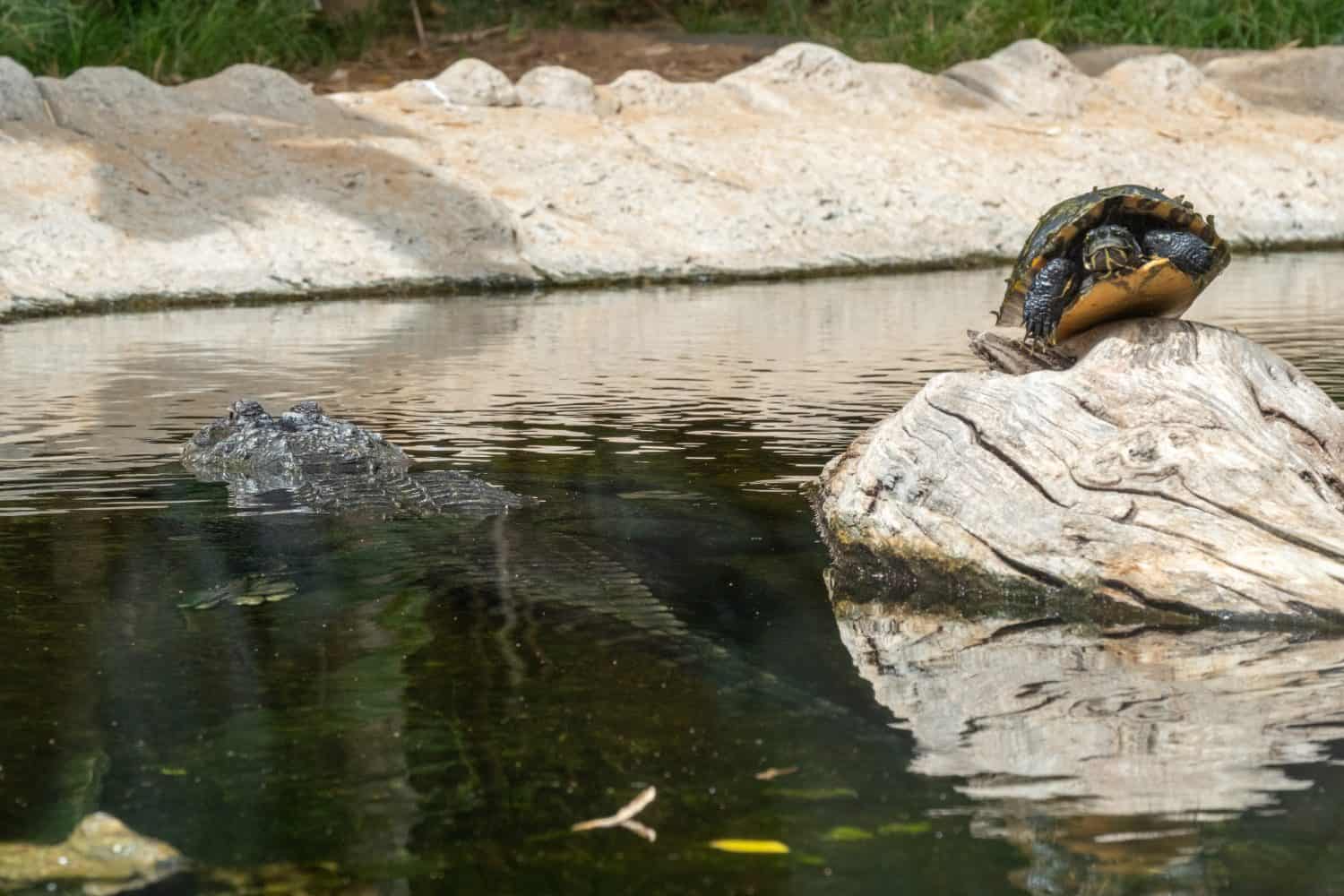
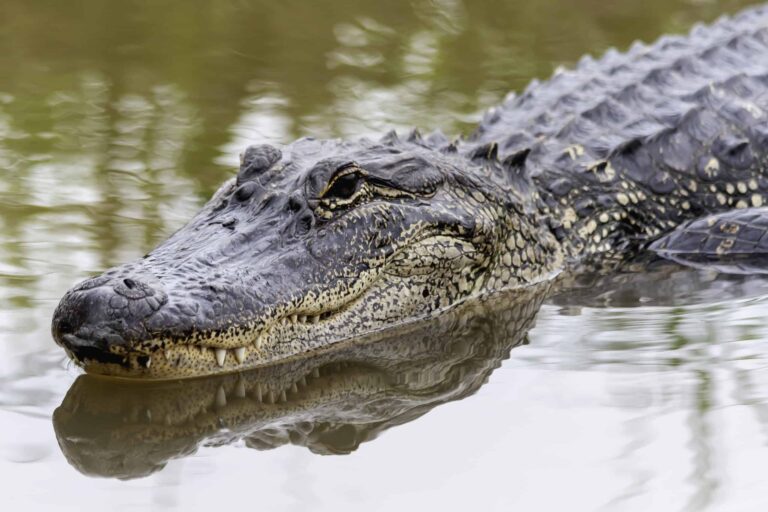
Alligators, snapping turtles, and turtles in general can co-exist if there are enough resources for all.
©Kepler Studio/Shutterstock.com
Despite what the YouTube video showed, snapping turtles and alligators, more often than not, share an environment without conflict. It is when there is a lack of resources or territorial issues that problems arise with the two species.
However, when there is plenty of food and space, snapping turtles and alligators share an environment without incident. The two have been spotted sunning themselves on the banks of brackish bodies of water. Snapping turtles will climb on the back of alligators to catch a ride or enjoy some time in the sun. There are even reports of alligators allowing snapping turtles to clean their teeth without any harm coming to the turtles.
While the video is consistent with what can happen if an alligator is successful in gaining the upper hand on a snapping turtle, in most instances, alligators would prefer to leave snapping turtles alone. Not only are they challenging to catch, but they are also hard to swallow. Alligators are opportunistic hunters, meaning anything and everything is on the menu. However, if given the choice, alligators prefer prey that will not fight back or be difficult to eat—qualities that do not describe snapping turtles.