
Nature is full of interesting and strange phenomena. Whether it’s an animal’s bone structure, physical appearance, or coloring, there is so much amazing uniqueness. One of these strange animals is the blue-tongued skink. This YouTube Short by @AnimalBrief shows one of these reptiles and its tongue up close. If you’re interested to learn more, keep reading below!
©Lutsenko_Oleksandr/Shutterstock.com
What Are Blue-Tongued Skinks?
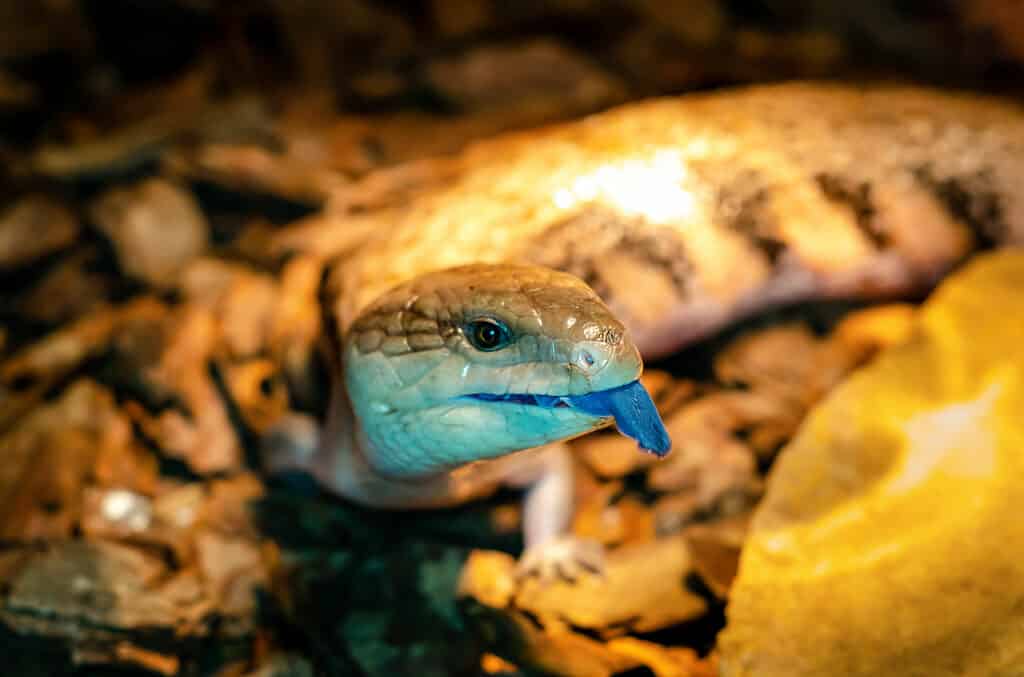
The blue-tongued skink is a lizard, a part of the Scincidae family. These lizards are native to Australia, Tasmania, New Guinea, and parts of Indonesia. Within these countries, they inhabit a diverse range of ecosystems such as forests, grasslands, woodlands, and arid regions. Some species are adaptable to human environments as well, living in gardens throughout urban areas. While the size these lizards grow to depends on the species, the average length is around one to two feet. Similarly, their weight can vary, but they typically weigh around one pound. In the wild and in captivity, blue-tongued skinks typically live around 15 to 20 years, though some individuals in captivity have been known to reach up to 30 years. They are omnivores that feed on insects, invertebrates, fruits, vegetables, and other greens.
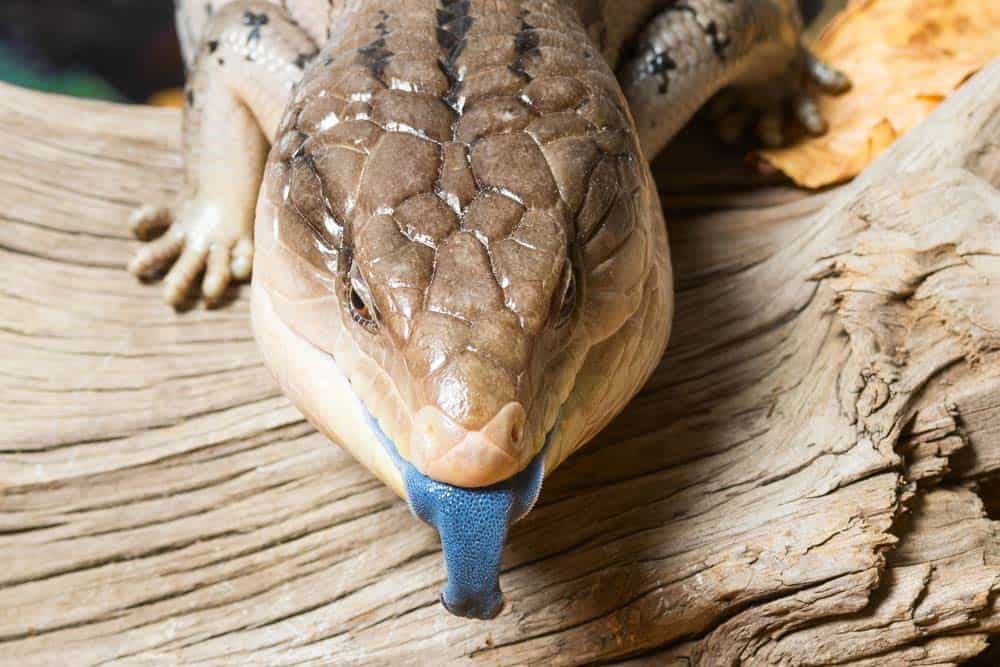
The blue-tongued skink is named for an obvious reason: its blue tongue. Their tongues contain pigment that reflects the color blue. So, while it may appear to be a unique melanin coloration, the blue color is actually thought to result from UV light reflecting off their body tissue. The way that these lizards use their unique tongues is fascinating. It may seem like the lizard is poisonous due to its coloring, but this is primarily a display. This behavior is known as a deimatic display, which is used to startle predators. When other forms of defense do not work, the blue-tongued skink opens its mouth wide to display its tongue. The flash of blue may startle and confuse predators, helping to drive them away.
Are They Good Pets?
According to reptile owners, blue-tongued skinks make excellent pets. They are docile and calm, which makes them easy to handle. This also makes them great for beginners who have never owned a lizard before. Given their long lifespan, children can grow alongside them and observe how these lizards interact with their environment. There are some challenges, of course. One such challenge is that they require plenty of space. Given their size, owners recommend tanks of around 120 gallons, which are on the larger side for reptile enclosures. Constant attention to the tank’s temperature, humidity, and feeding can be challenging due to the time required. As with any pet, it is important to consider all the factors involved in caring for these remarkable lizards.