
Quick Take
- Most blue insects don't actually contain blue pigment, but this bee breaks that rule in a way scientists only recently discovered. Discover the rare pigment →
- It's a vital pollinator that also steals from the very flowers it visits, and it has a surprisingly clever method for doing so. See the dual role →
- These bees live alone, yet a 2023 study found they share something biologically intimate that scientists thought only colony insects could have. Explore the gut microbe findings →
- Blue carpenter bees have no queen, no hierarchy, and no hive, but their social life turns out to be far stranger than a honeybee's. See the solitary social life →
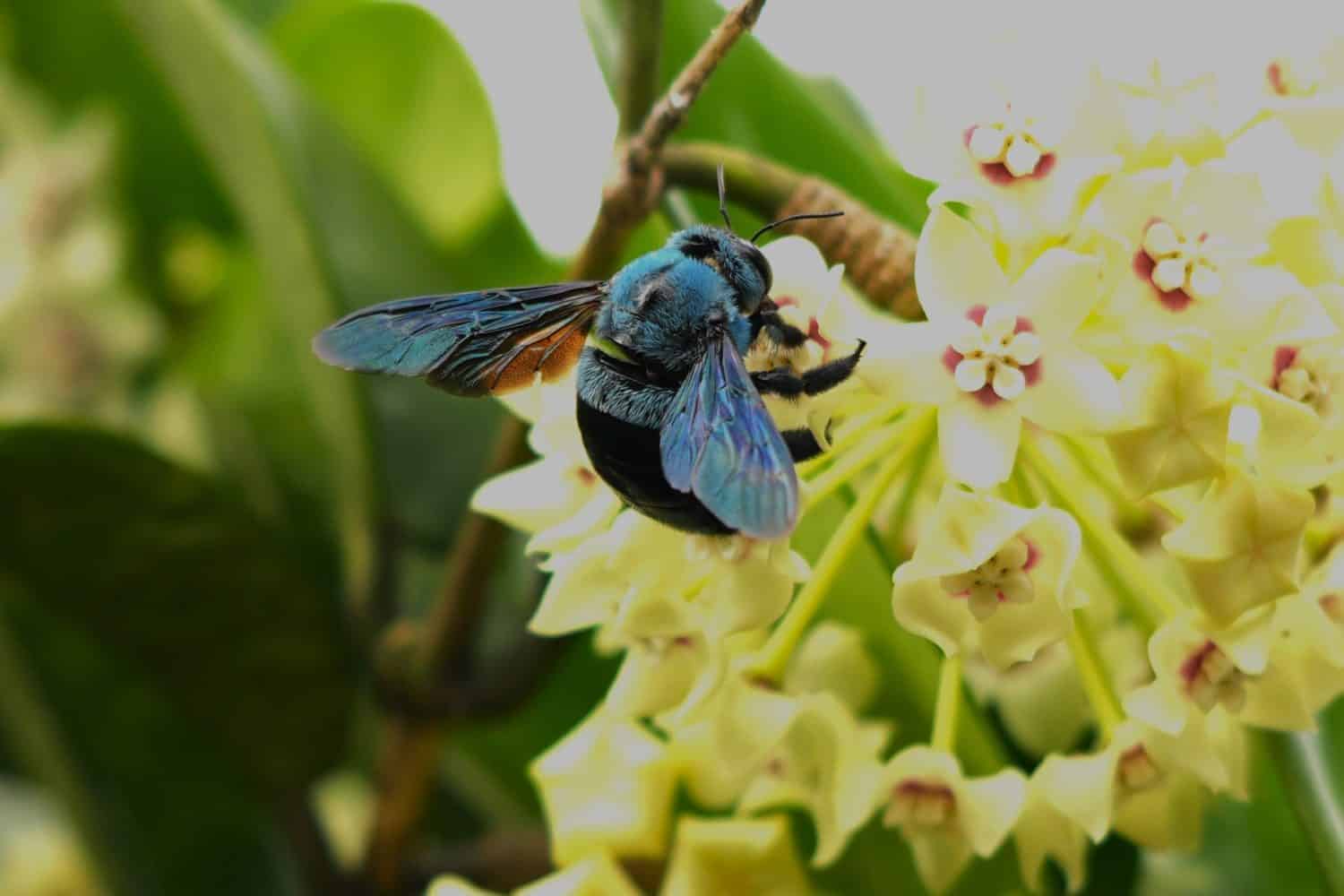
Most bees are easy to recognize with their fuzzy, yellow-and-black bodies. However, deep in the forests of Asia, the blue carpenter bee (Xylocopa caerulea) looks like it came from a completely different world. Cloaked in brilliant electric blue fuzz, this striking bee is one of the most dazzling insects on Earth.
Its behavior is just as unusual as its appearance. Found in the tropical forests of South and Southeast Asia, these solitary bees don’t serve a queen in a crowded hive. Instead, females behave like cooperative roommates, sharing nesting tunnels that they drill into dead wood and bamboo to raise their young. While they are important pollinators, they also have a sneaky side: they sometimes slice open flowers to steal nectar directly from the base.
A Bee Unlike Any Other
The blue carpenter bee is one of Asia’s largest bees, measuring nearly an inch long. It has a dark, glossy abdomen and a plush, cerulean-blue upper body, topped with semi-translucent, brown-tinted wings.
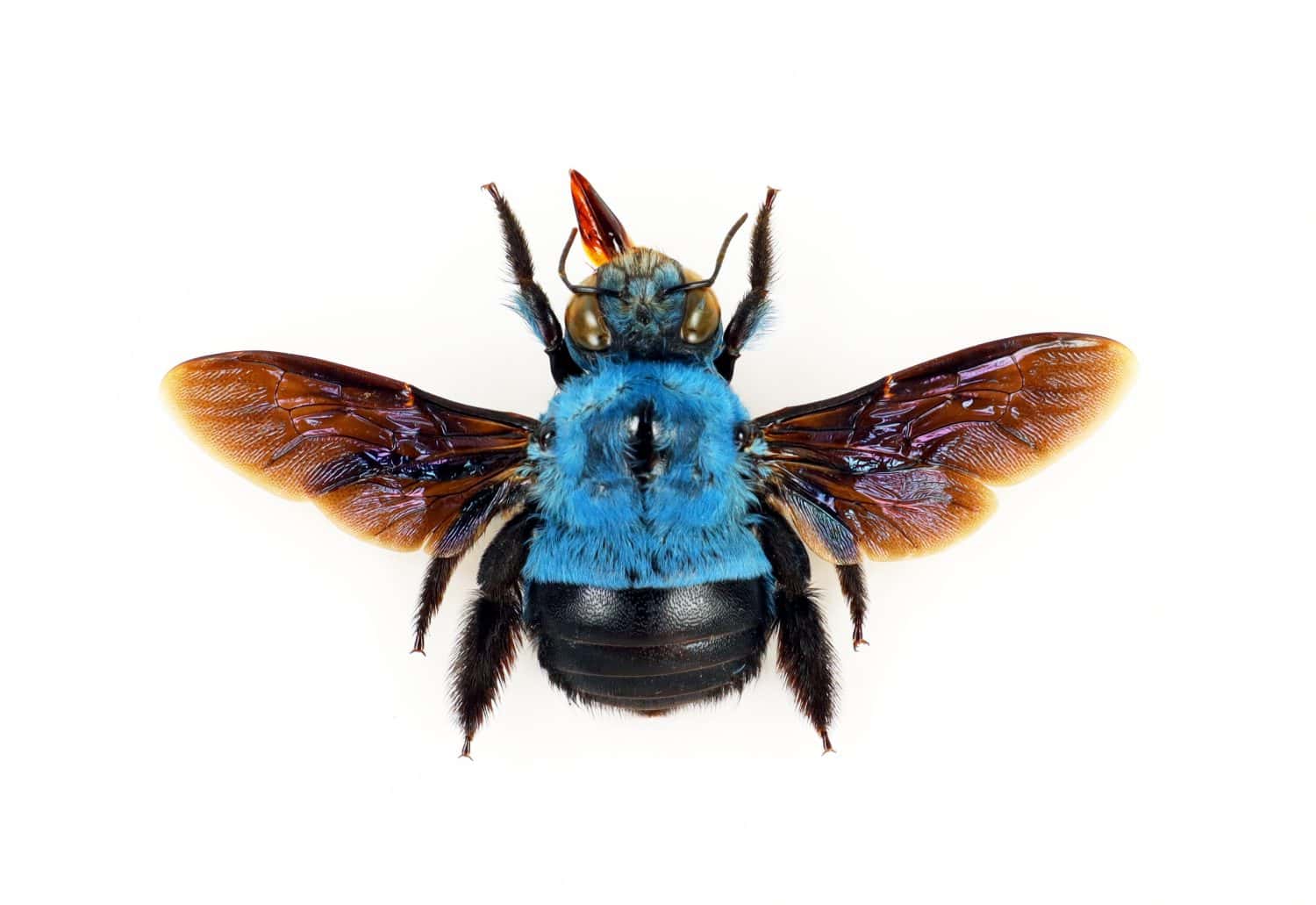
Females have electric blue hair, while males tend to have more brownish colors.
©catocala7/Shutterstock.com
Blue carpenter bees thrive in tropical rainforests, forest edges, and gardens across South and Southeast Asia, including countries like Singapore, Malaysia, Indonesia, Thailand, Myanmar, India, and southern China. As long as there are plenty of flowers to visit and suitable wood for nesting, these colorful bees flourish.
What Makes This Bee So Blue?
Many of the brilliantly blue insects we see in nature do not actually have blue pigments. Instead, microscopic structures on their bodies simply manipulate the light to create the illusion of a blue color. The blue carpenter bee, however, is a rare exception.
A 2023 study published in The Science of Nature revealed that the bee’s vibrant hairs contain bilin, an extraordinarily rare chemical pigment for bees. Tiny light-scattering granules inside each hair amplify this pigment, giving the bee its electric blue sheen. Because this specific color stands out against green leaves in the visual spectrum that bees perceive, scientists think it helps them find mates, recognize their own species, or deter potential predators.
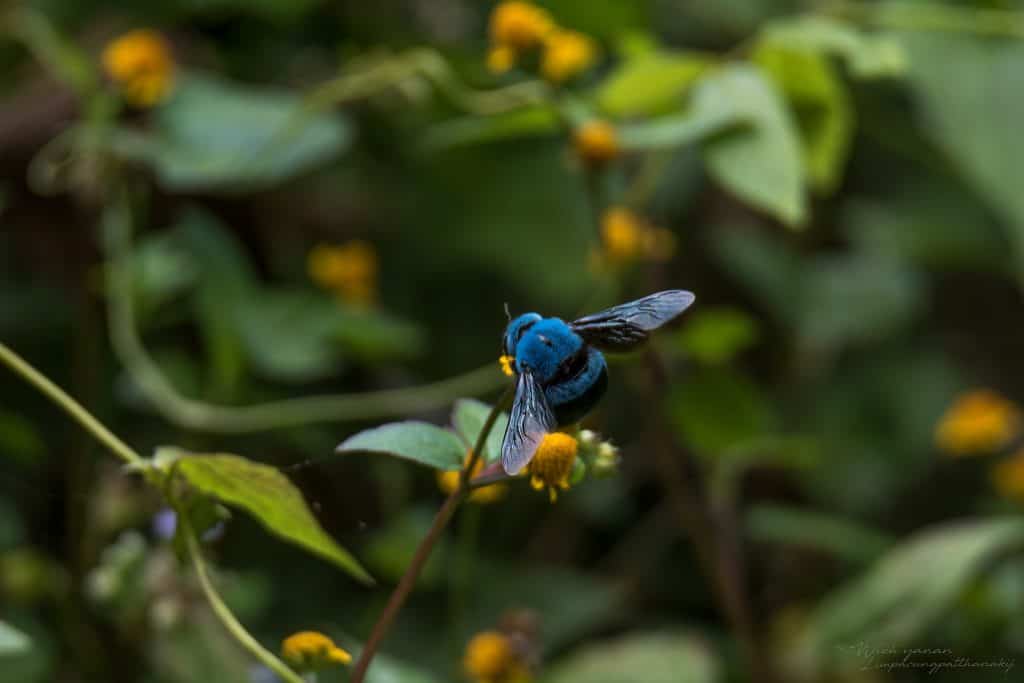
Female blue carpenter bees excavate wood tunnels to create their nests.
©Wich'yanan L / CC BY 4.0 / Wikimedia Commons – Original / License
Life Without a Queen
Unlike honeybees, blue carpenter bees do not answer to a queen or rely on a worker hierarchy. Instead, each female builds and maintains her own nesting area, using her powerful jaws to chew tunnels into dead wood, logs, or bamboo. Inside, she lays her eggs and feeds her larvae a nutrient-rich mixture of pollen and nectar called “bee bread.”
Each female raises her own offspring, but blue carpenter bees are surprisingly social for a mostly solitary species. Multiple females often nest in the same piece of wood — peacefully sharing entrance tunnels like roommates in an apartment complex, while each maintains her own separate nursery room. Despite their large size, they are generally calm and gentle around humans, stinging only if they are directly squeezed or stepped on.
Pollinator and Nectar Thief
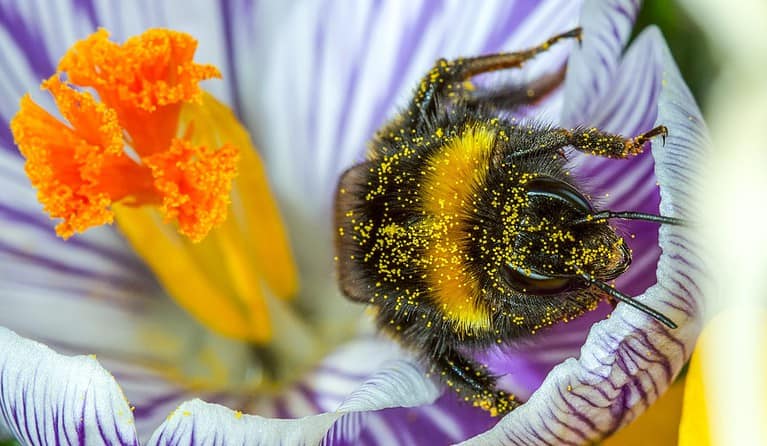
Blue carpenter bees are crucial pollinators across South and Southeast Asia, helping native forests and gardens thrive as they travel between flowers collecting pollen and nectar. They even practice buzz pollination, a specialized foraging technique where the bee grips a flower and rapidly vibrates its flight muscles to shake loose tightly trapped pollen that other insects can’t reach.
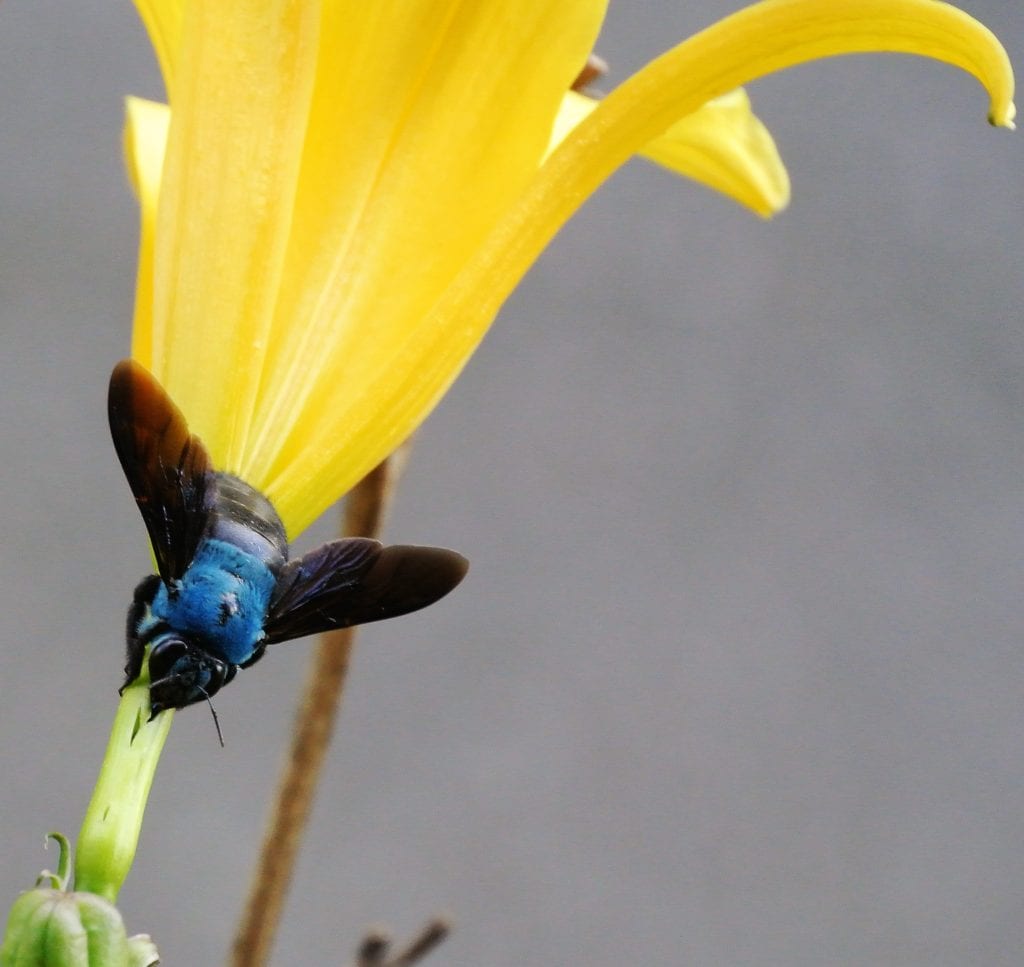
Blue carpenter bees are typically peaceful creatures.
©Joshhecken / CC BY-SA 4.0 / Wikimedia Commons – Original / License
Although they are diligent pollinators, these blue bees do not always follow the usual rules. When confronted with blossoms that are difficult to access, they sometimes become nectar robbers. Instead of entering through the flower’s opening, they use their sharp mouthparts to slice through the side or base of the flower and drink the nectar directly, bypassing the flower’s pollen-collecting structures entirely.
More Than Just a Pretty Pollinator
Scientists long assumed solitary bees like the blue carpenter bee lacked the stable, specialized gut bacteria found in social species like honeybees and bumblebees. However, a 2023 study in Frontiers in Microbiology challenged that assumption. Researchers found that the blue carpenter bee actually harbors a consistent group of beneficial gut microbes — much like its social cousins — that help break down complex sugars and fats in pollen and nectar.
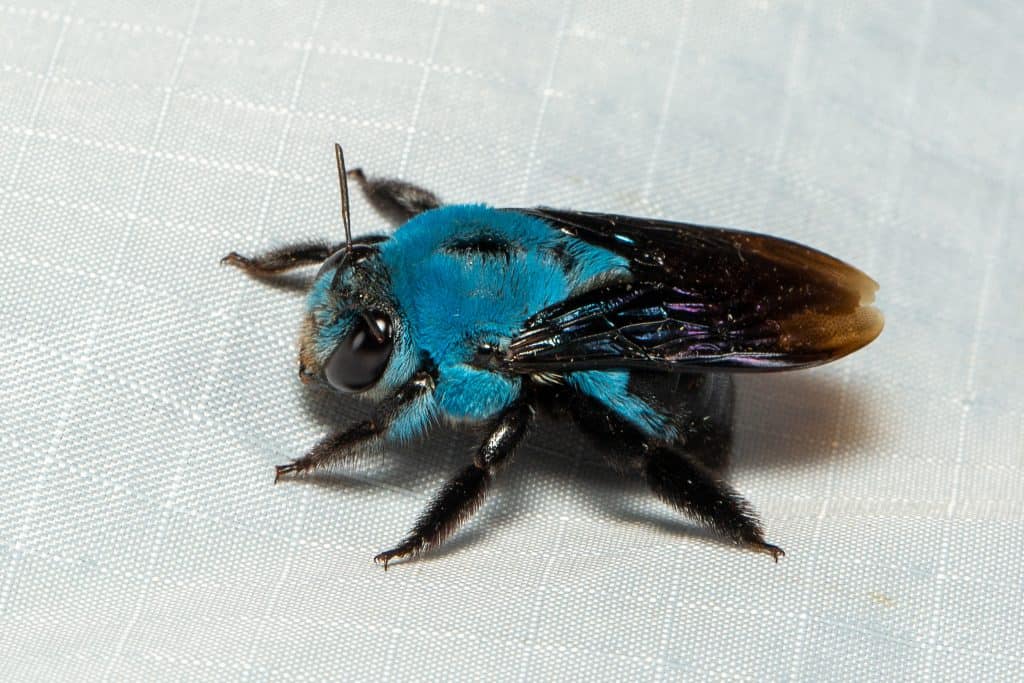
Only female bees have stingers.
©dhfischer / CC BY 4.0 / Wikimedia Commons – Original / License
\Because these bees don’t live in traditional hives, scientists believe they transmit these vital microbes by sharing nesting tunnels and living in close proximity. Even without a complex colony structure, their unique roommate-like lifestyle provides them with the same biological benefits.
Far more than just an eye-catching pollinator, the blue carpenter bee redefines what a bee can look like, and its shared nesting habits, nectar-stealing shortcuts, and surprisingly complex gut microbiome continue to reshape how scientists view solitary bees.