
Quick Take
- The sea robin's six 'legs' do something no fin was ever supposed to do. See the walking fins →
- Other fish have cracked the code on the sea robin's hunting routine, and they exploit it shamelessly. Meet the opportunist thieves →
- The sea robin looks like several animals stitched together, and every bizarre feature turns out to be deliberate. Explore its strange anatomy →
The most popular mode of transportation for fish in the ocean is their fins, which is why watching one walk on six legs is a bizarre sight. The sea robin is a unique ray-finned fish known as a gunnard, from a family of species known as Triglidae. While it was named for its bird-like appearance, its method of movement is more akin to a mammal or reptile than a winged creature.
As it crawls along the seabed, it also displays several other unusual characteristics. At first glance, the sea robin looks like an amalgam of animals rather than a typical ocean-dweller. But it turns out all of its otherworldly traits make it one of the ocean’s most fascinating fish.
Continue reading
The Fish That Walks In the Ocean
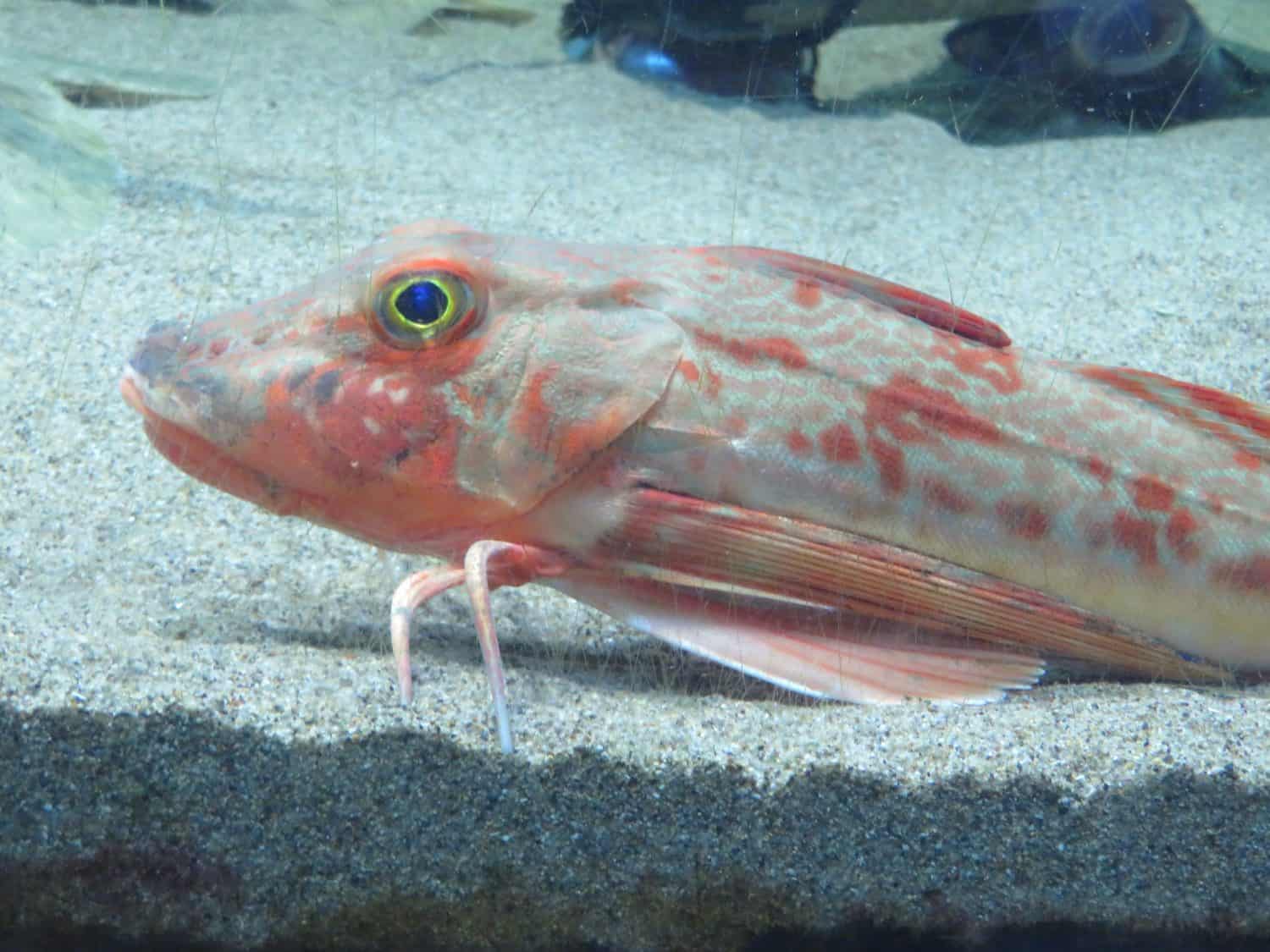
The sea robin causes most people to do a double-take. Its skinny, tentacle-like “legs” allow it to walk effortlessly along the seafloor. While it tiptoes through the sandy bottom, each “leg” operates independently. This human-like appearance is due to smaller pectoral fins that separate from the main fin as the sea robin matures.
Sea robins may look like a ‘Franken-fish,’ but each of their unique characteristics makes them highly effective bottom-feeders.
©dlearyous photography/Shutterstock.com
Its pectoral fins keep it close to the seafloor, allowing it to find prey in the sand. As bottom-feeders, sea robins consume clams, shrimp, worms, and even small fish and squid. Their tentacle-like pectoral fins do more than help them walk; they can also sense minuscule movements beneath the sand. When these vibrations are detected, a sea robin uses its pectoral-fin-legs to move sand aside and dig for the source.
Some species, such as the northern sea robin, have specialized taste buds on their pectoral fins. As they crawl along the sand like a crab, they can “taste” prey that might be hiding. The bumps on their legs, known as papillae, are extremely sensitive. This helps northern sea robins locate an animal before swallowing their prey whole.
Other Fish Are Drawn to Sea Robins
Humans aren’t the only ones drawn to the strangeness of the sea robin’s movements. Scientists have observed other fish following sea robins to steal food they uncover while hunting, a behavior known as kleptoparasitism. As sea robins scout the seabed for a potential meal, other fish also find an opportunity.
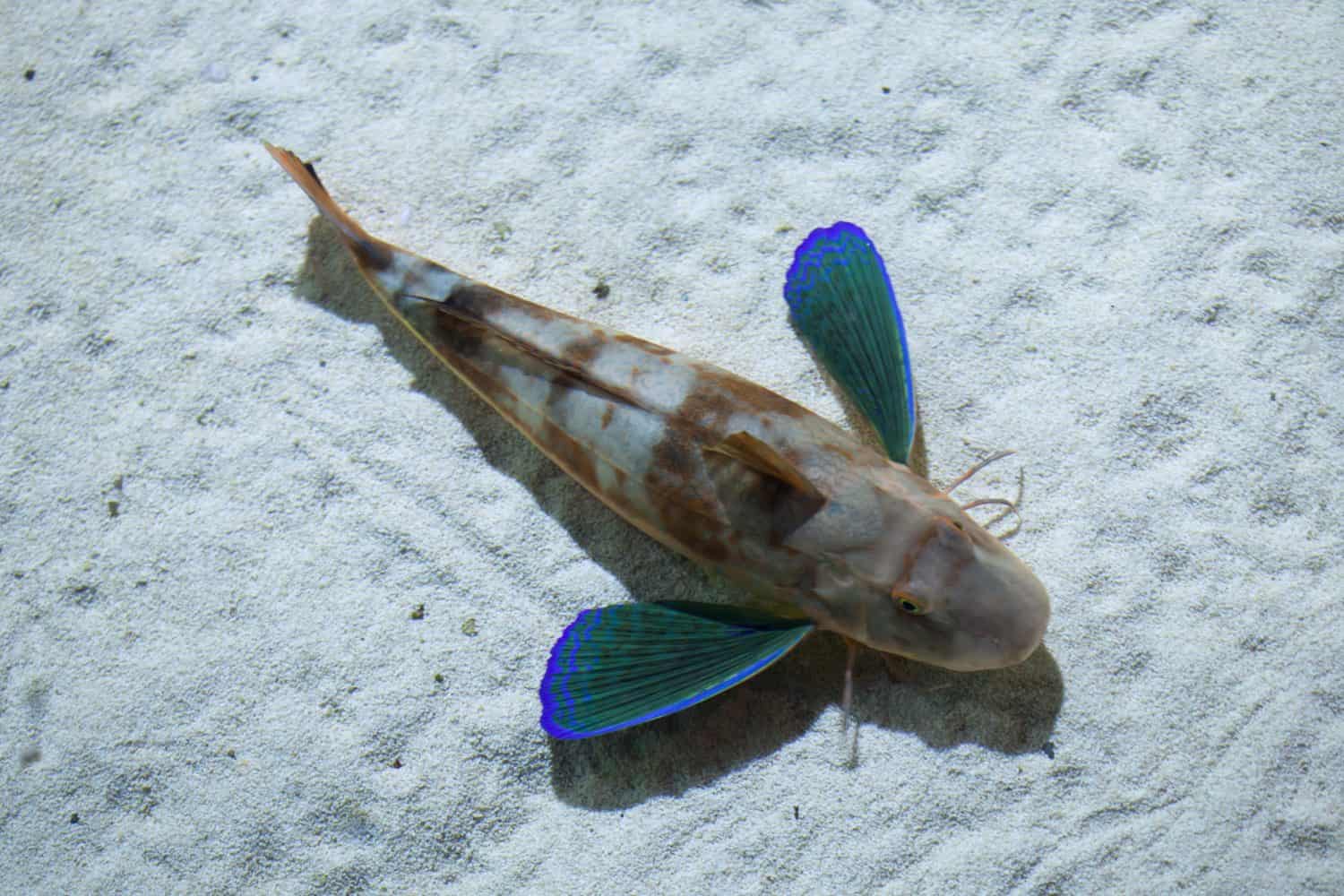
Brightly-colored fins serve as a defense mechanism against predators, and sea robins flap them to deter attacks.
©Vladimir Wrangel/Shutterstock.com
Scavengers typically crowd the sea robin while it hunts. To other fish, the skilled tracking of this species is a way to secure their own prey without doing the work. Sea robins sweep the sand off the ocean floor, sometimes uncovering more than they can consume in one sitting. As a result, other fish try to take advantage, feeding on small crustaceans and fish that are unearthed by the sea robin’s efforts.
Sometimes, local reef and benthic fish have the advantage. Depending on water conditions, these fish may be faster than the sea robin, even with its six crab-like appendages. While this means the sea robin loses out on a meal, its opportunistic followers benefit.
Hunt Like a Crab, Swim Like a Bird
Sea robins and other fan-finned fish often look more like birds than fish in the water. They use these wing-like fins to glide along the bottom of the ocean. These wings are also an excellent deterrent for potential predators. When a sea robin feels threatened, it spreads its brightly colored ‘wings’ to warn off potential predators.
As the sea robin scuttles across the seabed, these wings also serve as a stabilizer. They provide much-needed balance to its body, giving it greater agility when walking on six pectoral fins. If a sea robin is caught, anglers have noticed another unusual trait. They make a frog-like croaking sound, which scientists have determined comes from specialized muscles beating against their swim bladders.
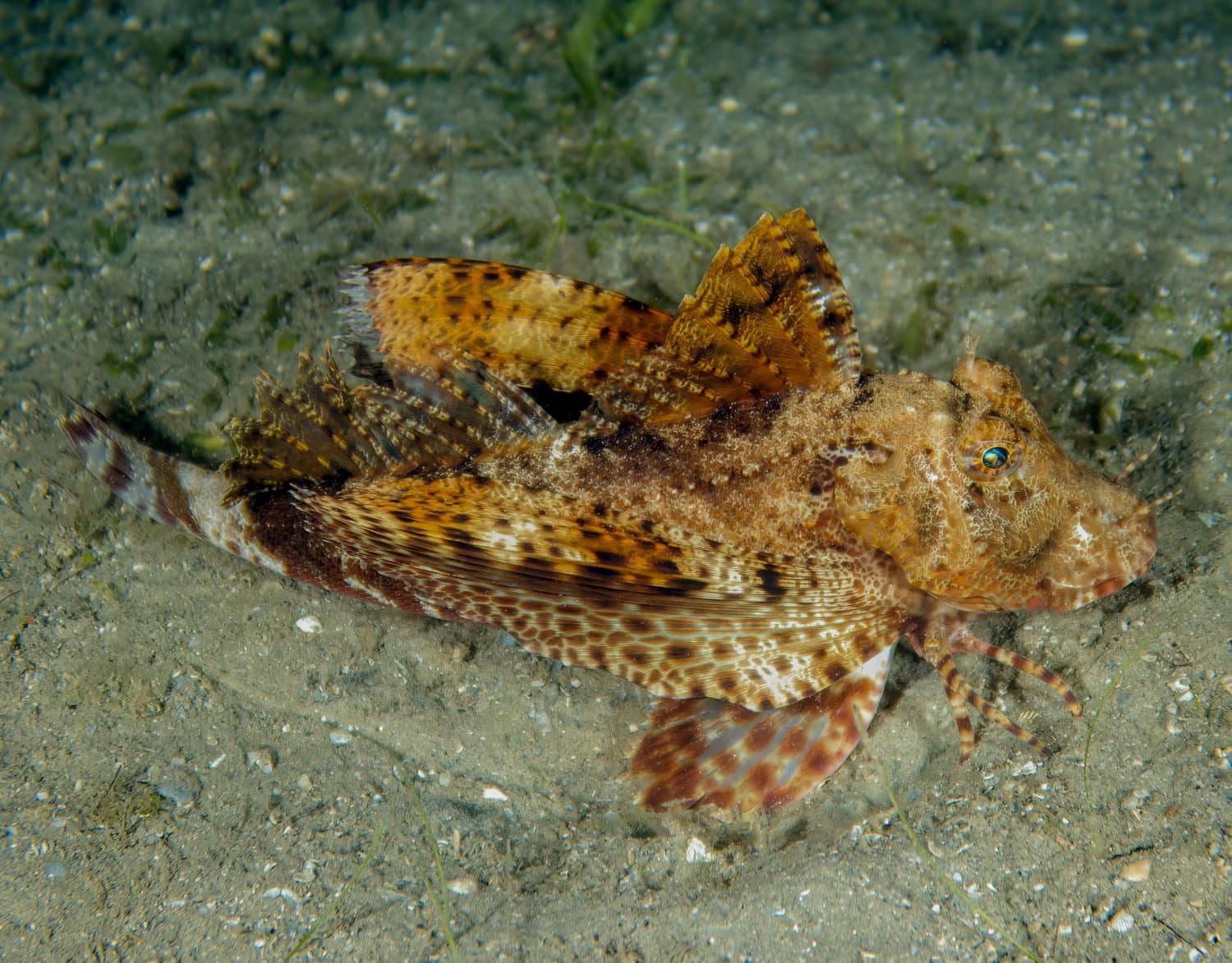
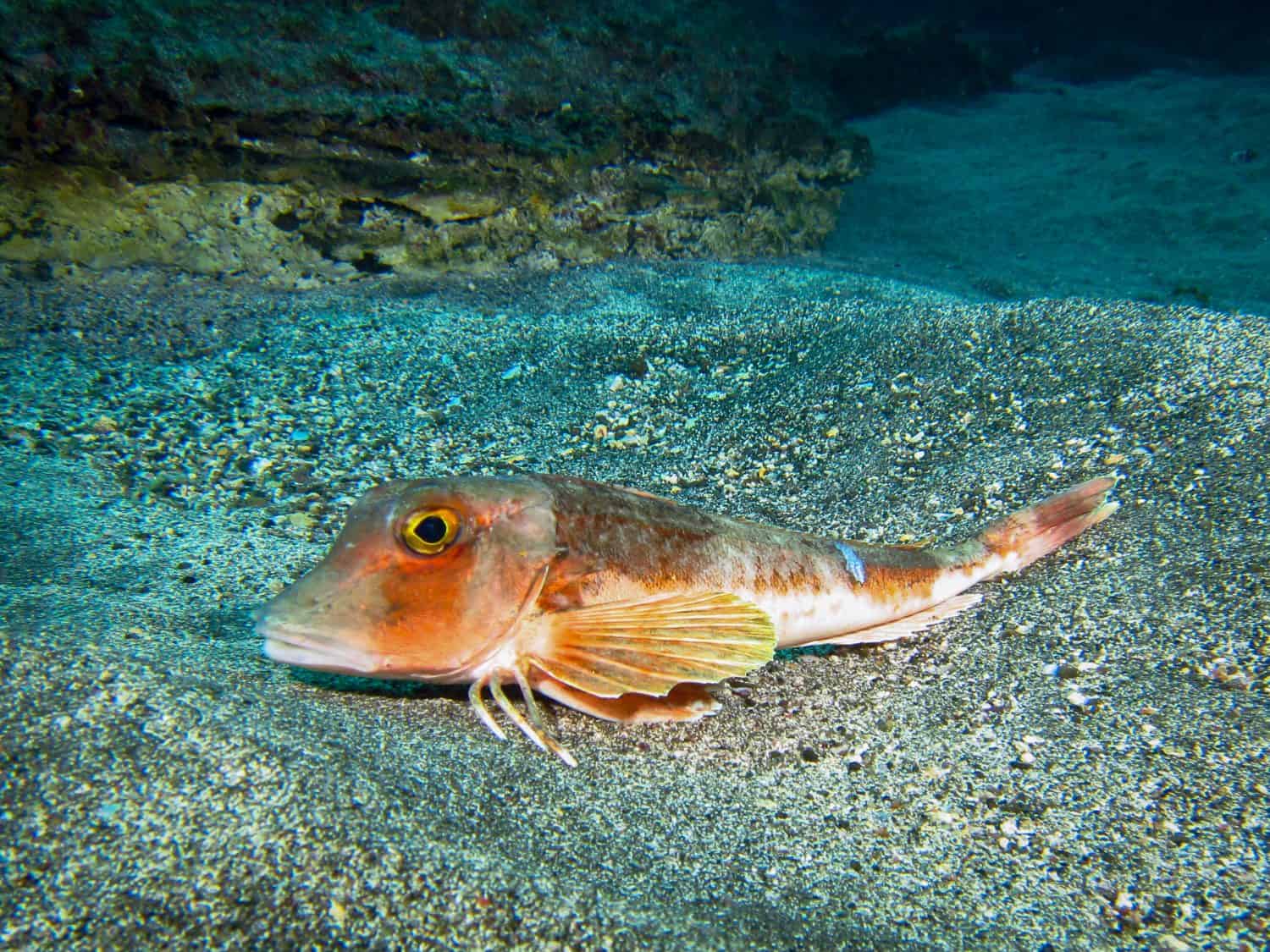
Some sea robins have better camouflage than others, helping them blend into the sandy seabed.
©Rob Atherton/Shutterstock.com
Underwater, this may sound different and even menacing to predators. Above water, the grunting noise is loud enough to startle a human, indicating that it may serve as an even more effective deterrent underwater. At times, this noise can even sound like barking. As a last resort, sea robins may use the same technique for defense as they do for hunting. Using its legs, a sea robin can burrow into the sand and attempt to hide from predators. While this is not always effective, it is just one more unusual behavior exhibited by these fascinating fish.