
Quick Take
- The first Yellowstone grizzly of 2026 was sighted on March 9.
- Males are at their most aggressive right after emerging from hibernation.
- Females often emerge later, during April, and many are sows with cubs.
- The grizzly in Yellowstone National Park was seen feeding on a bull bison carcass.
March is a universal alarm clock for many hibernating species. It’s a reminder that spring is close by, and that it’s time to awaken and begin the search for food and a mate. For the grizzlies of Yellowstone National Park, March marks the end of their long torpor. By late in the month, many of them are already on the prowl, extreme hunger driving the distances they cover.
The first Yellowstone grizzly of 2026 was sighted on March 9, five days earlier than the previous year’s. While this doesn’t mean much about the status of the grizzlies, it does mean these bears are awake, active, and frequently traversing the national park trails.
A Hungry Grizzly on the Prowl in Yellowstone
After emerging from their dens, a bear’s first priority is to increase its caloric intake. The bear spotted on March 9 was feasting on a bison bull carcass, likely one of its first meals after hibernation. Grizzlies are both predatory and opportunistic hunters, and will take advantage of a kill that’s already been made. Carrion is a great way to source calories, especially when their systems haven’t fully “woken up” until several weeks following hibernation. According to the National Park Service, they often seek out animals that have died over the winter. This includes elk, deer, bison, and even small mammals.
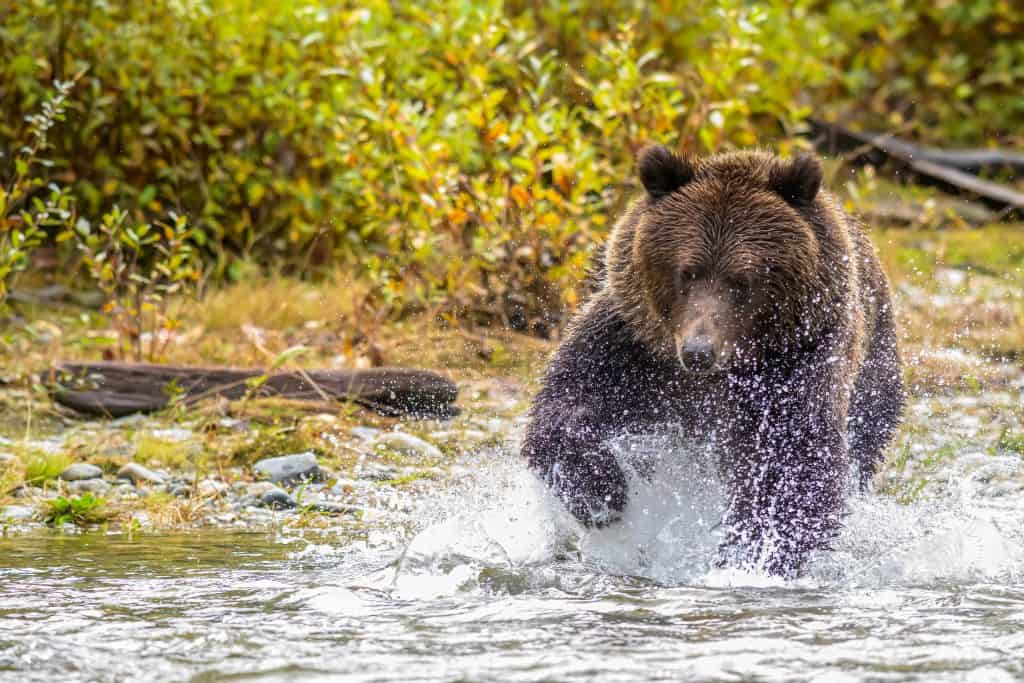
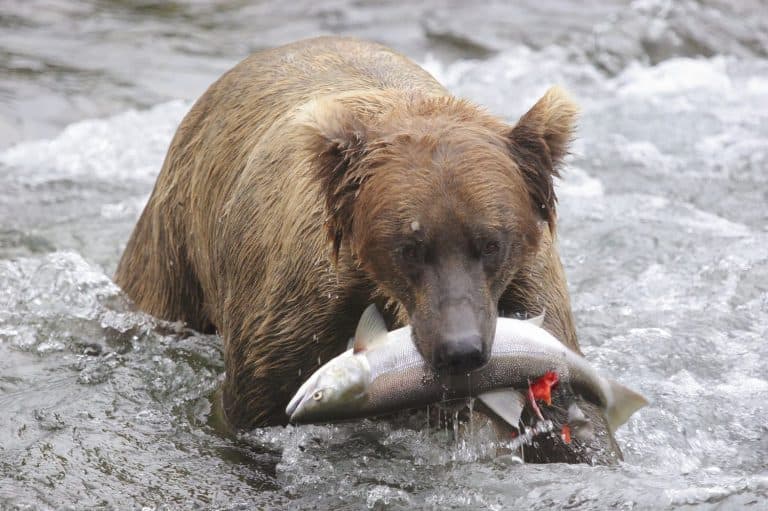
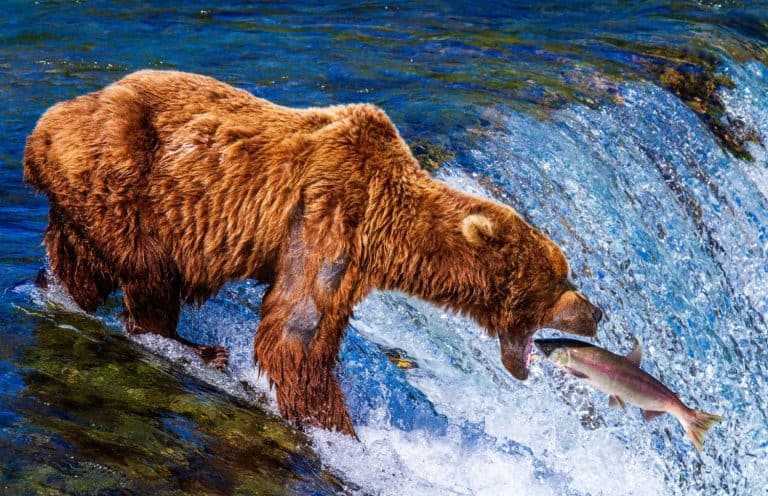
Grizzlies rely on fish for some of their calories, but are opportunistic hunters when emerging from hibernation.
©David Maki Photography/Shutterstock.com
More often than not, the first bears to emerge from their dens are males. They wake up first in search of food, while females stay behind with their cubs. In April, sows join males on the hunt for food. This is also when they teach cubs how to hunt and forage, and when female grizzlies are most aggressive.
The Incredible Rebound of the Yellowstone Grizzlies
Experts theorize that at one point there may have been more than 100,000 grizzlies in the U.S. Compared with the current population of more than 1,000, that statistic is staggering. Land development and human conflict are partly to blame for their population decline. At their lowest, grizzlies were considered a threatened species with a population of 136 individuals in 1975. From the 1980s on, their numbers steadily increased as more attention was given to their dwindling numbers.
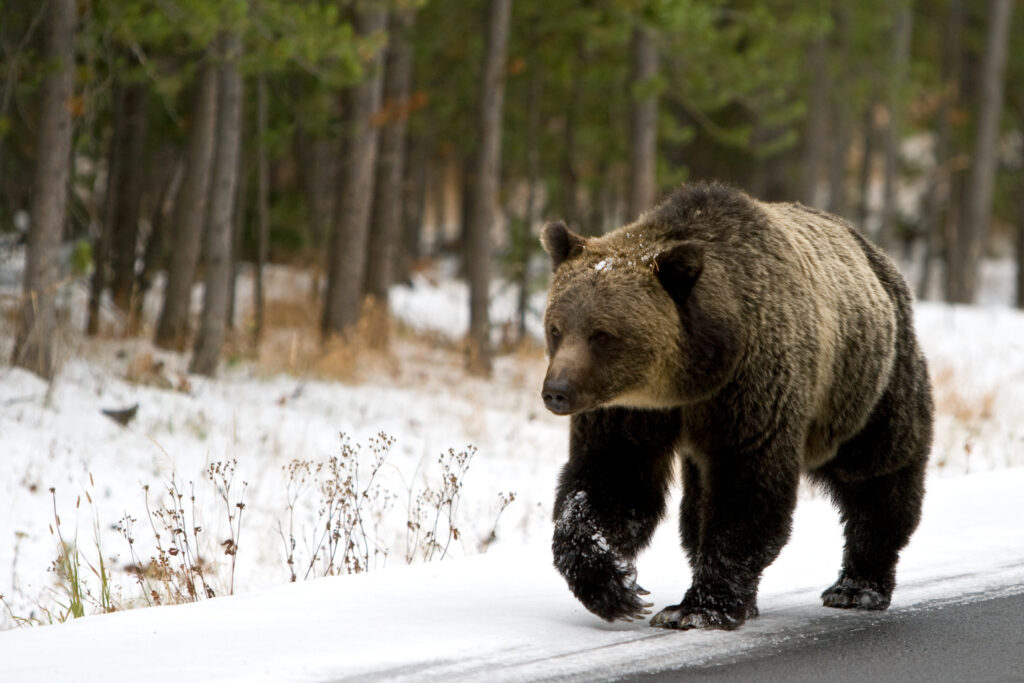
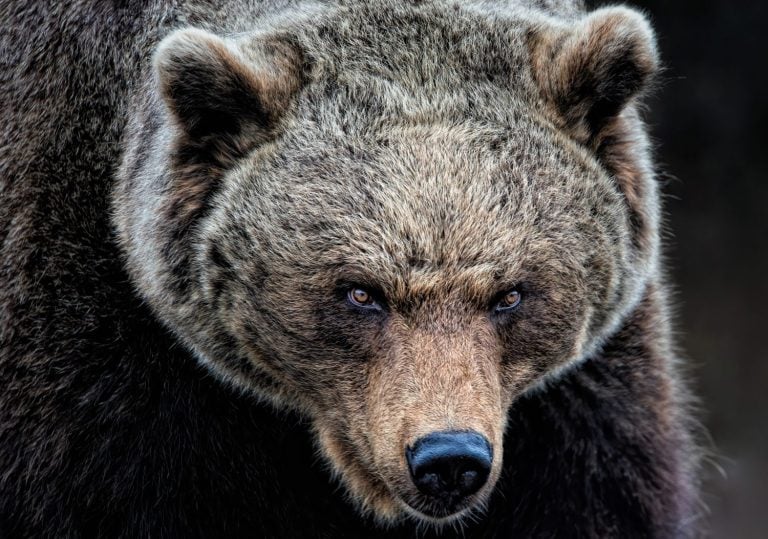
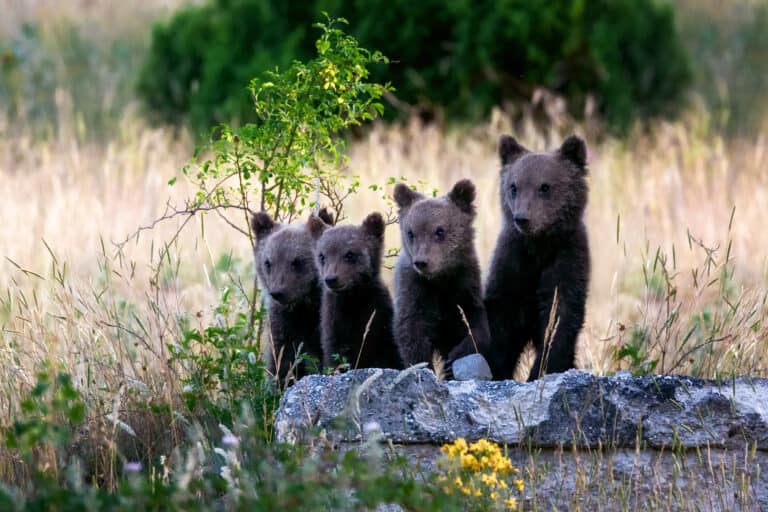
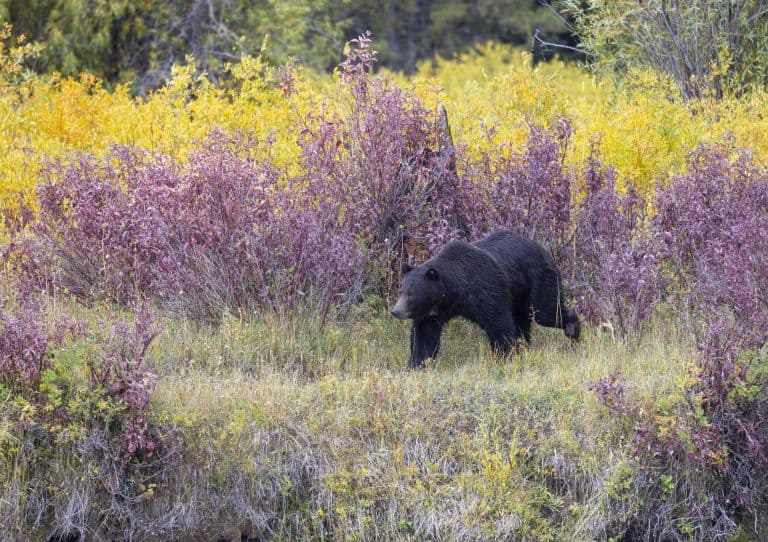
Grizzly sightings on the roads and trails around Yellowstone are not unusual as they search for food.
©Paul Knowles/Shutterstock.com
Now, anywhere from 1,000 to 1,100 grizzlies live within the Greater Yellowstone Ecosystem (GYE), including Yellowstone National Park and surrounding areas. Better education on how to coexist with the species, along with bear safety, is a big part of its rebound. Fewer fatal encounters between animals and humans means that grizzlies survive long enough to reproduce, ensuring future generations. An average lifespan allows sows to continue birthing cubs for 15-20 years. Therefore, protecting the species and educating the general public have become crucial steps.
Grizzlies Occupy the Majority of Yellowstone
Although Yellowstone National Park covers thousands of miles, the GYE covers 22,500 square miles. This means grizzly territory often overlaps with human territory, which is where many conflicts arise. It also means that the span of grizzlies is far more vast than most Yellowstone visitors realize. This extends into Montana, Idaho, and Wyoming, with bears traversing primarily valleys and low-lying grasslands.
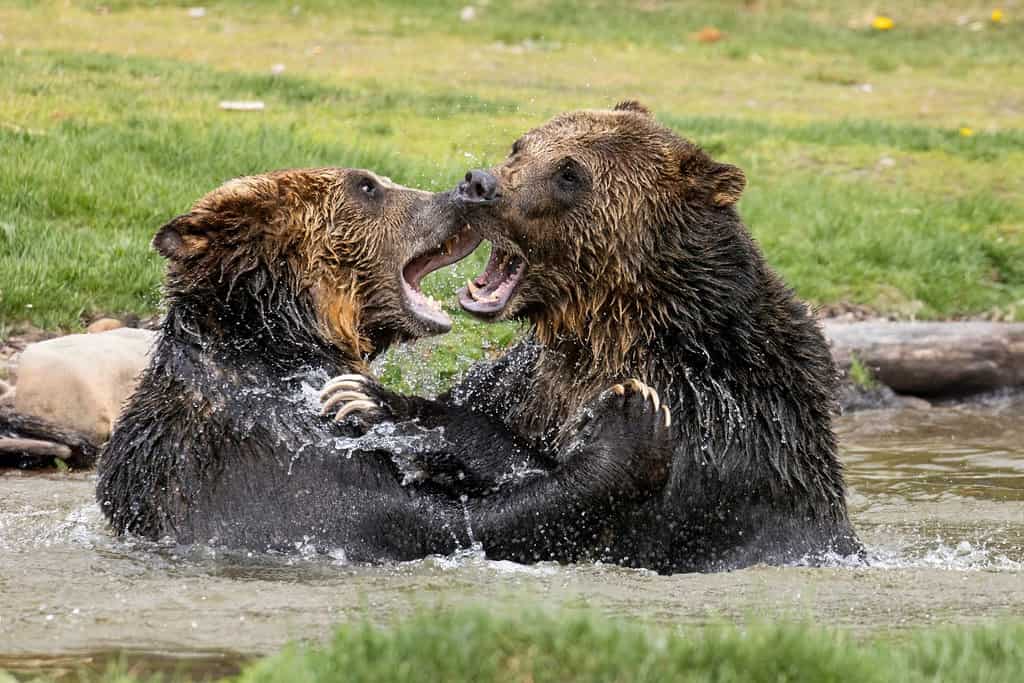
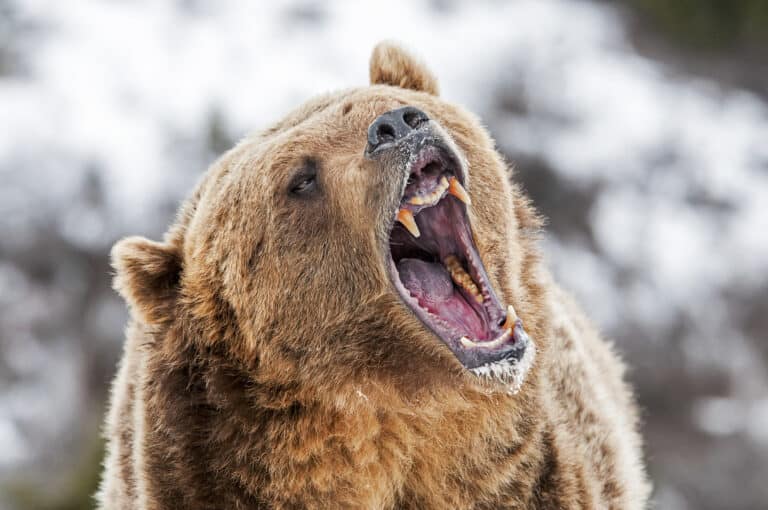
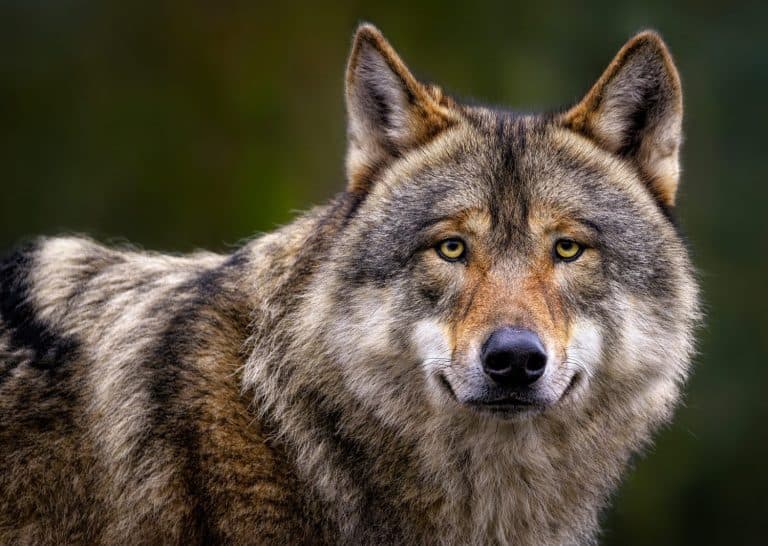
Males are most aggressive during March, while females show increased aggression during April.
©Kenneth Keifer/Shutterstock.com
As the bear population rises, so does the square footage they occupy. As of 2025, grizzly bear territory in the GYE contracted by about 4%, while the Northern Continental Divide Ecosystem grizzly range expanded by 12%. Authorities say this is nothing to worry about and that it means the bears are reclaiming territory they once thrived in. Despite a record-high mortality rate among grizzlies last year, with 71-74 deaths in the GYE, biologists are closely monitoring the population. However, this does mean visitors and locals need to be especially aware of their surroundings.
Grizzly Safety After Hibernation Season
After hibernation, emerging males are at their most aggressive. They’re hunting for food and prefer to take easy kills, which means a human can easily get in the way. While the bears aren’t desperate, they are driven by hunger to seek food wherever they can find it. During March and April, visitors to Yellowstone National Park should be well-versed in bear safety. This includes:
- Carrying bear spray and knowing how to use it.
- Hiking and camping with groups, rather than heading out individually.
- Maintaining a distance of at least 100 yards between yourself and both black bears and grizzlies.
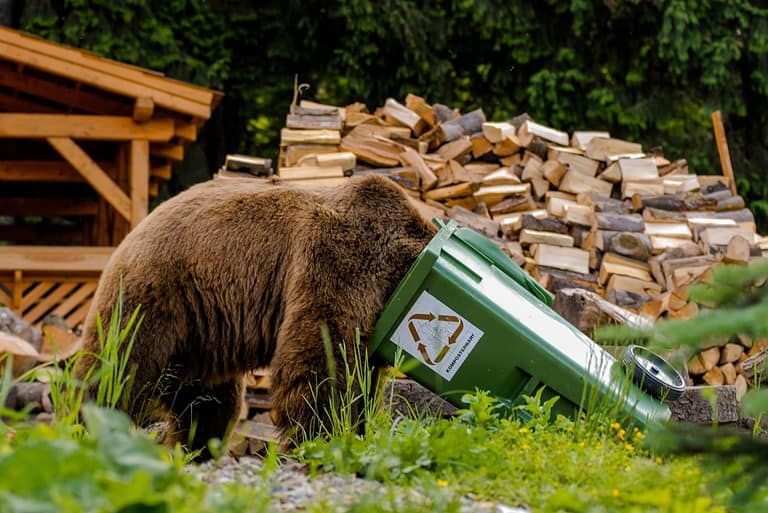
- Storing food properly, carrying out trash, cooking away from tents, and investing in bear bags or bear-proof boxes when camping.
- Reporting bear sightings to park rangers.
- Using binoculars or telephoto lenses to observe wildlife, rather than getting closer to them.