
Quick Take
- Male and female Gila woodpeckers forage the same cactus very differently, a difference that reveals a lot about how they survive in the desert. How they forage differently →
- Pecking into a saguaro cactus is only half the challenge. What's waiting inside forces the woodpecker to delay moving in. See the drying process →
- Once the woodpecker family moves out, the vacancy fills up quickly, and the list of takers is surprisingly long. Who moves in next →
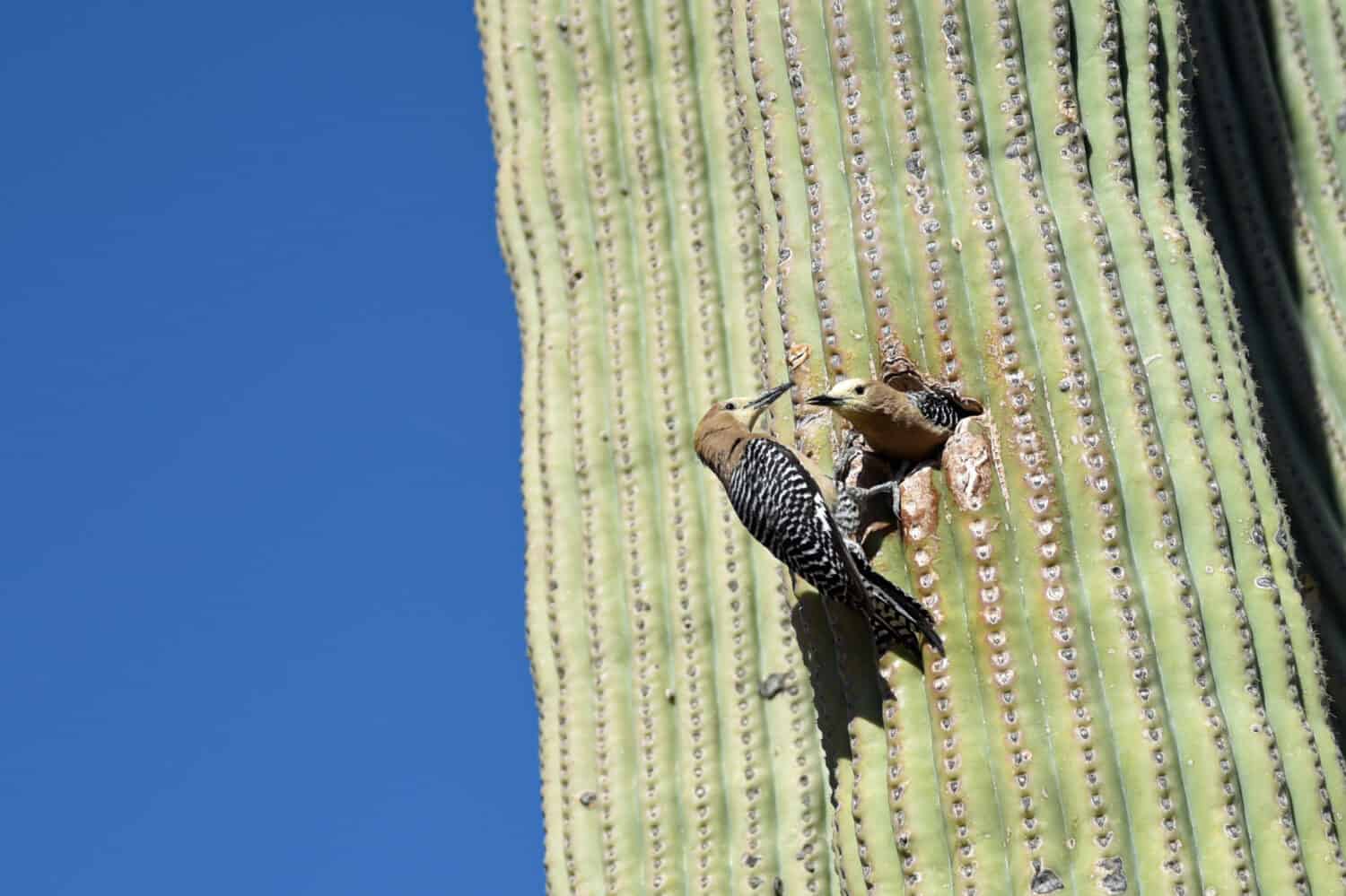
A brash, noisy woodpecker with zebra stripes down its back has found an unusual place to call home. The Gila woodpecker has developed a knack for thriving in hot and arid habitats where shelter is critical, even if it’s inside a cactus. Watch for yourself in the above YouTube clip how they create a comfortable place to raise their young without getting stabbed by the spines!
Where Do Gila Woodpeckers Live?
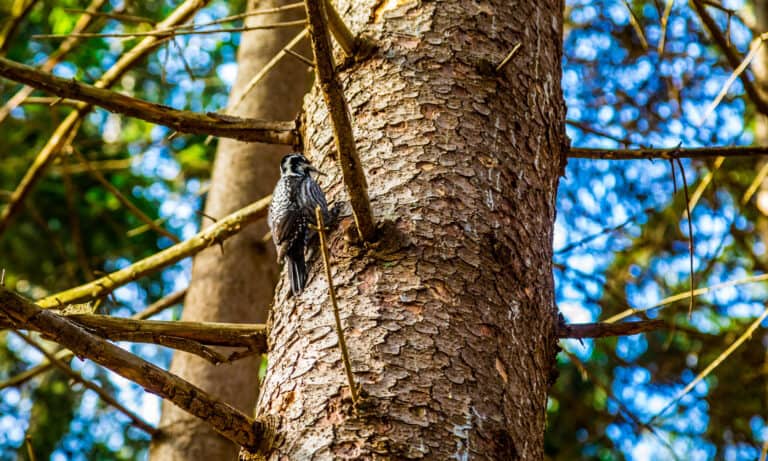
Gila woodpeckers (Melanerpes uropygialis) are brownish birds with black-and-white striped backs. They live in southeastern California, southwestern Nevada, southern Arizona, southwestern New Mexico, and south into central Mexico. These desert dwellers are often seen perching on saguaro cacti or in cottonwood trees in the early morning when it is cooler. If you live nearby, they may also visit your backyard feeding station.
Males forage for food on the trunk and main branches of a saguaro cactus, but the females focus on the periphery and decaying areas where they hunt insects. They are also happy to eat cactus fruits, mistletoe berries, and other seasonal fruits.
How Do Gila Woodpeckers Nest in a Cactus?
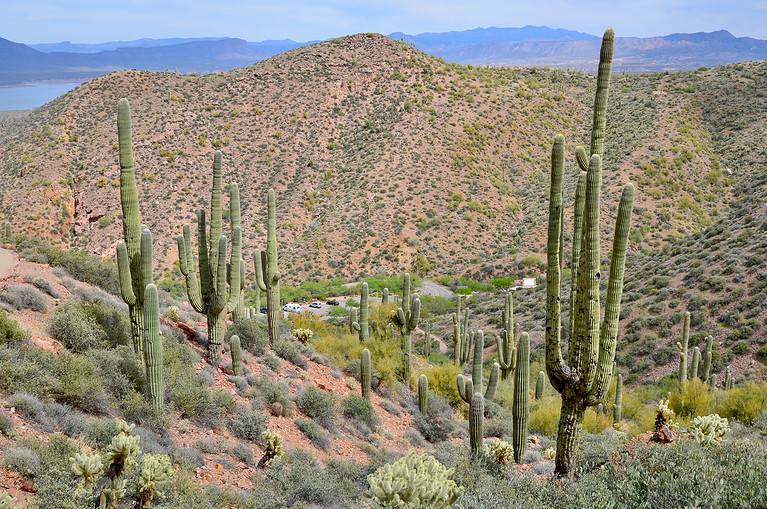
Most woodpeckers nest in dead trees by digging out a cavity with their beak. However, the Gila woodpecker lives in a landscape containing very few trees, so they have adapted to nest in the saguaro cactus instead. These plants are plentiful and tower above the desert, creating a safe place for the birds to raise their young and hide from predators like bobcats, coyotes, hawks, housecats, snakes, and foxes. All the woodpecker has to do is create a hole!
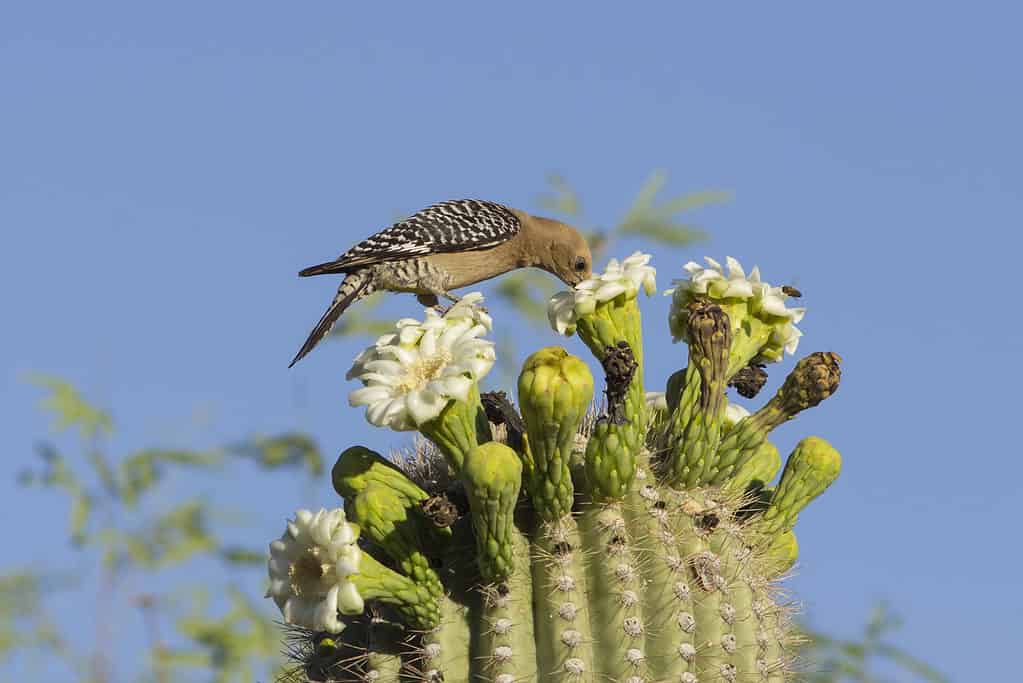
Gila woodpeckers mainly feed on insects.
©iStock.com/tntphototravis
Woodpeckers have very strong head and neck muscles and quite a long bill, so pecking out a cavity is not a challenge. However, past the thick outer skin of a cactus lies the inner pulp. This sticky and wet substance is not ideal to line a home. So, the woodpeckers wait for it to dry out before moving in.
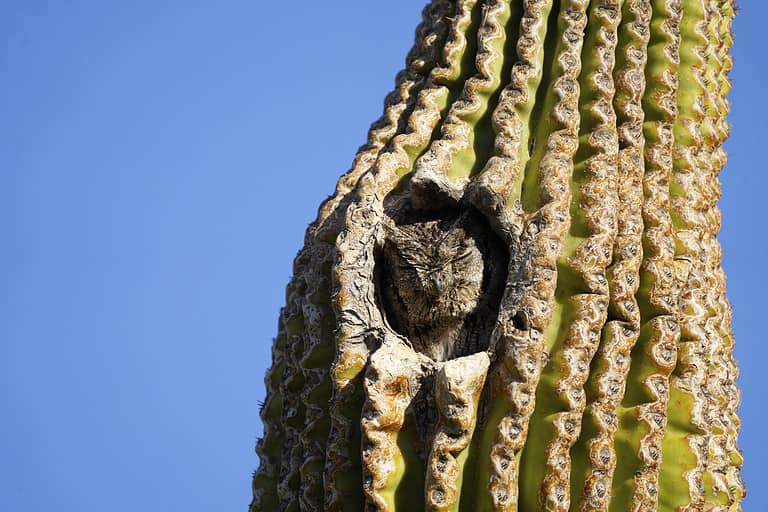
Once the woodpecker chicks have fledged and the family has vacated, the hole is reused by other animals like elf owls, pygmy owls, flycatchers, or cactus wrens.