
Quick Take
- Lion urine does more than simply warn rivals away. Its chemical makeup encodes a surprisingly detailed message that rivals can read without ever meeting face to face. Explore the chemical signals →
- Scent-marking isn't just a male lion's game, though lionesses do it for a completely different reason. See why lionesses mark →
- A lion's scent mark has an expiration date, and when it fades at the wrong moment the consequences can be deadly. Check the scent's lifespan →
- One weather event consistently triggers male lions to scent-mark more aggressively, and in doing so it reveals just how much they understand about their own territorial signals. See how weather affects marking →
Lions have a variety of ways of communicating with one another. Vocal communication and body language are common ways lions express how they feel about one another. But lions also use scent marking, in addition to roars, facial expressions, and tail movements. Lions scent-mark their territory, which can be the ground, by a body of water, or, as one lion showed, a tree, leaving strong messages for their rivals.
Male Lions Will Use Urine to Scent Mark
Male lions have a large territory to protect. However, they cannot be in every square inch of it at the same time. Therefore, they need to leave a message warning trespassers to stay away. This is done by scent marking.
Scent marking is a behavior in which a lion uses urine, feces, and oils near its anus to leave a scent that communicates its identity. This scent will inform other lions of the identity of the lion who scent-marked, their hierarchical status, and whether they are ready to mate.
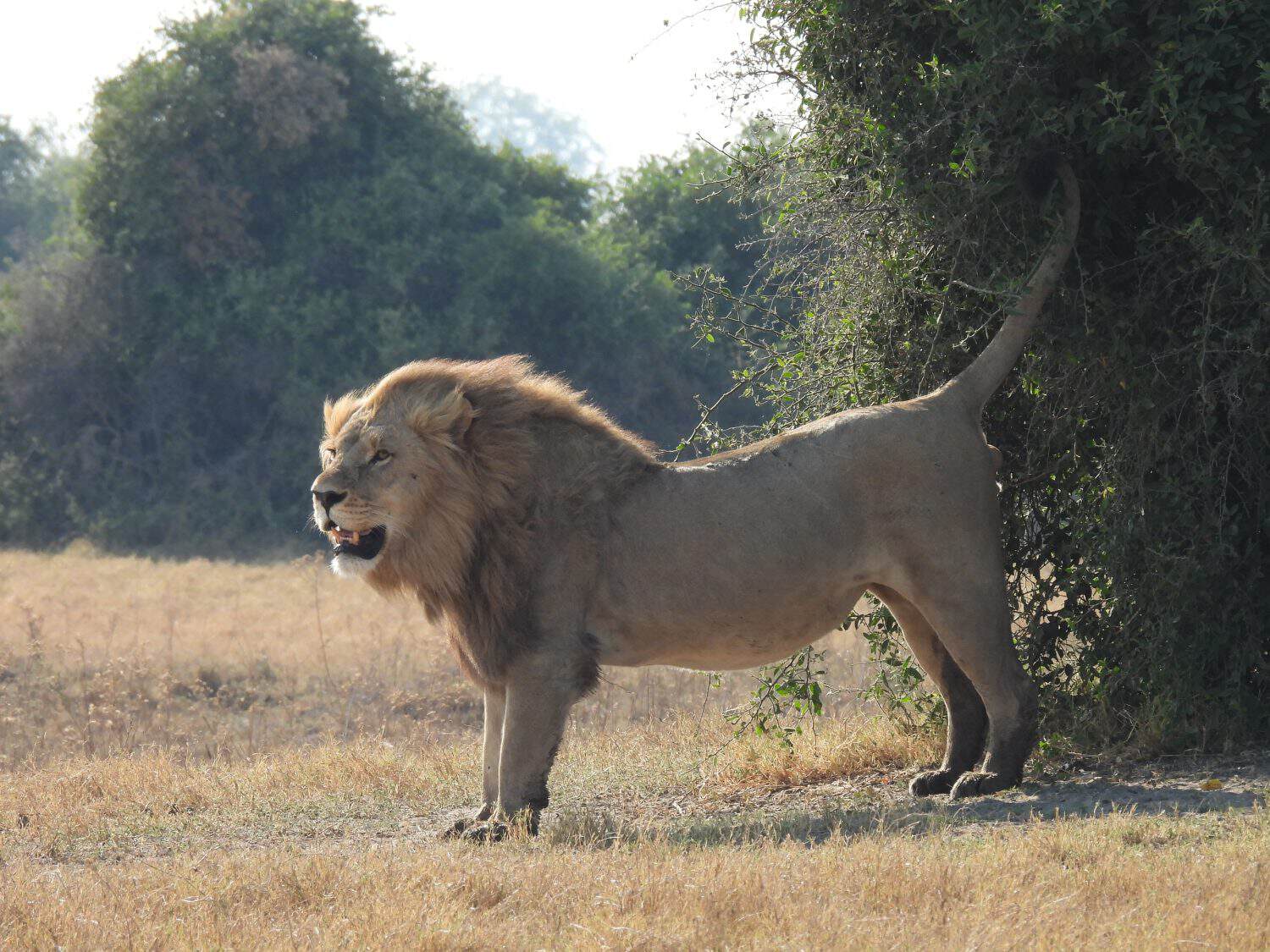
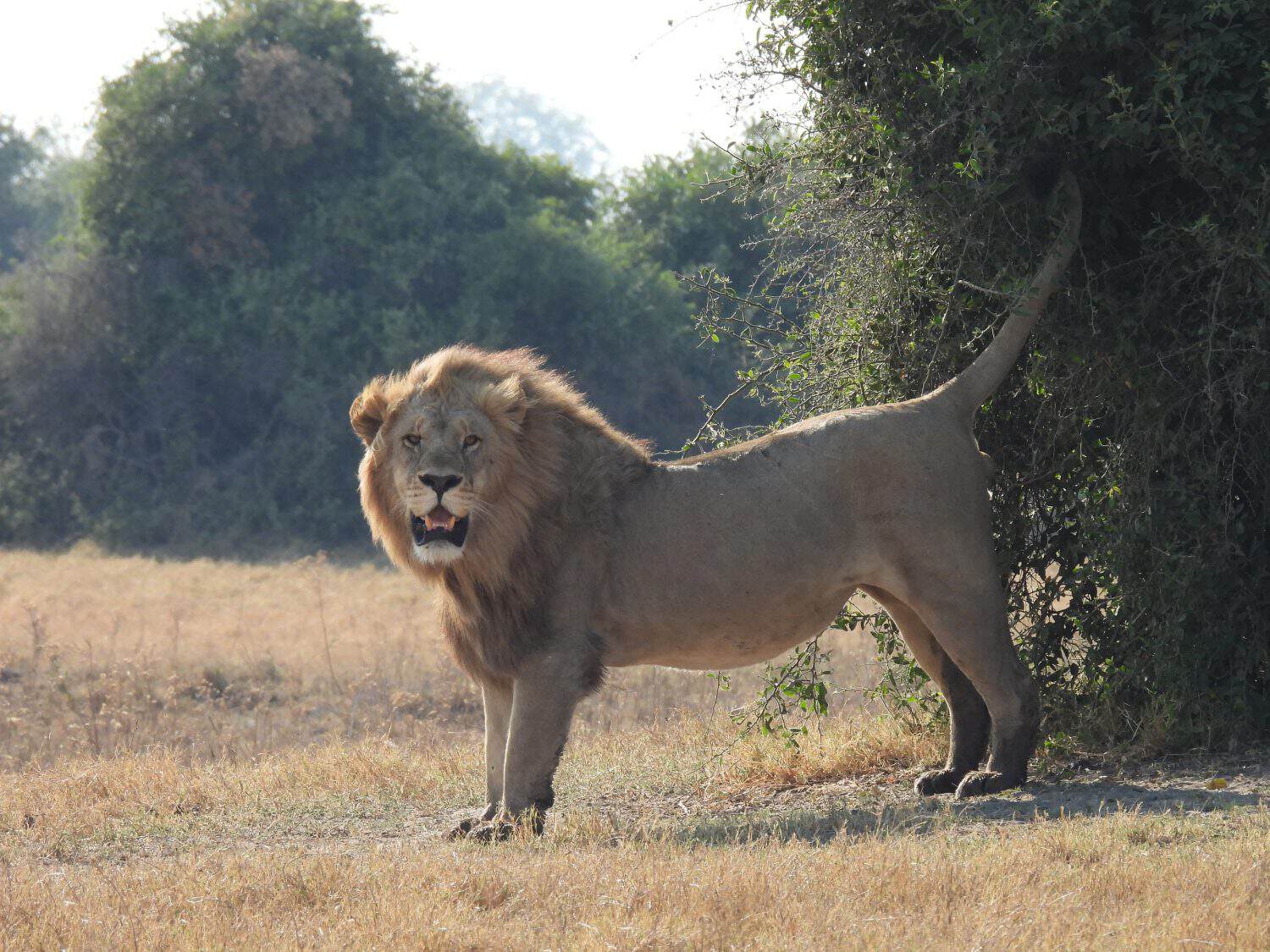
Male lions can use strong-smelling urine to scent-mark.
©Brian Stuart Nel/Shutterstock.com
In the YouTube video by Wild Wings Safaris, the lion is scent-marking using urine alone. However, the urine will have a strong odor thanks to its chemical makeup. The chemicals that make up the urine include:
- Fatty acids
- Pheromones
- Volatile organic compounds
- Lipids
In addition, the urine is very concentrated. This adds to the intense smell left behind after scent marking.
Why Do Male Lions Scent Mark?
Male lions understand that it is their job to protect their pride. While they will fight if another male lion attempts to take over territory, male lions would prefer to de-escalate any issues before they begin. This is where scent marking can come into play.
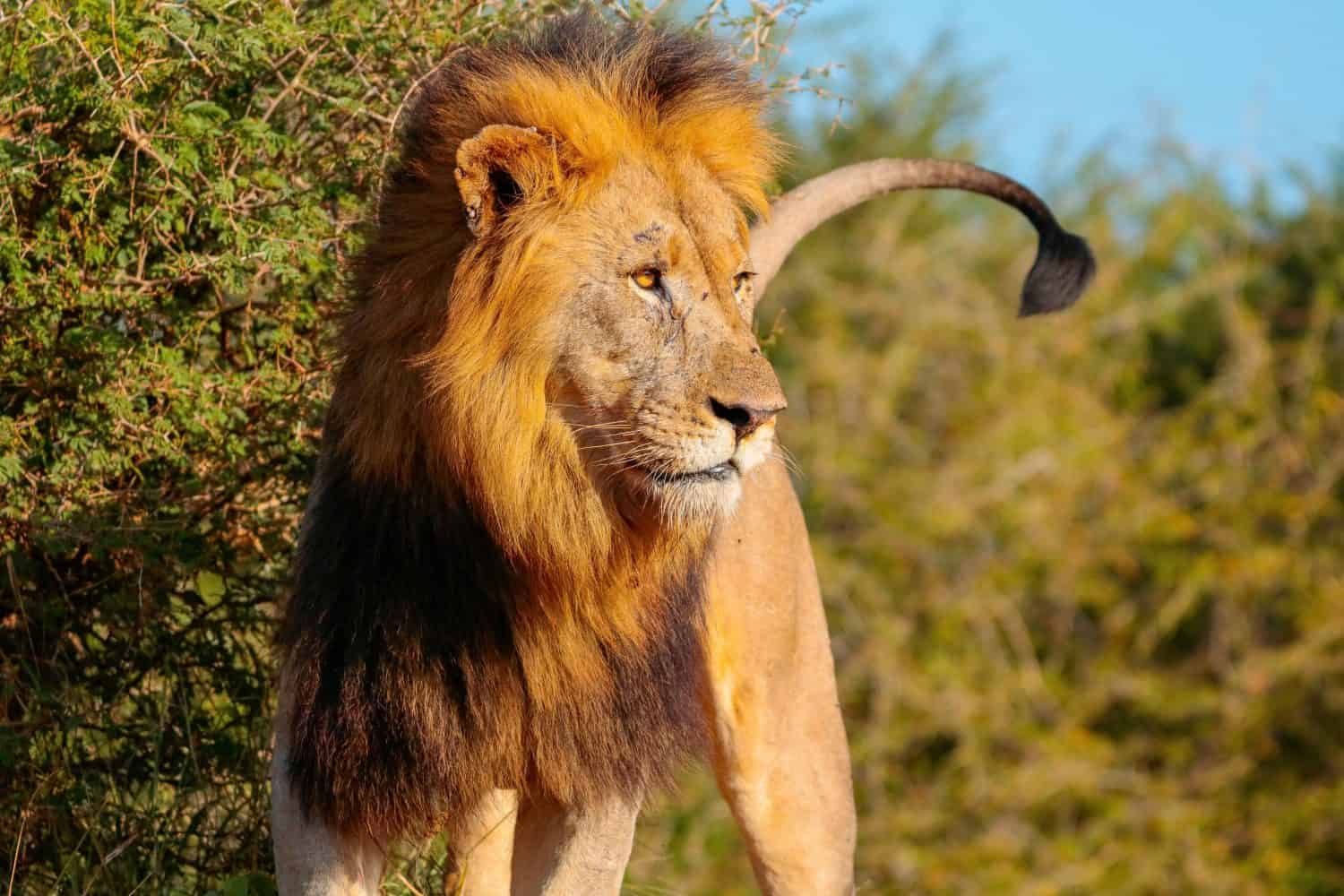
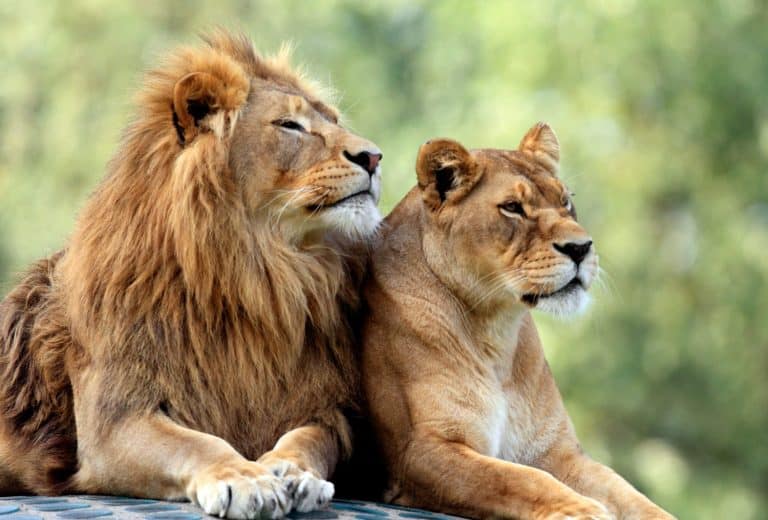
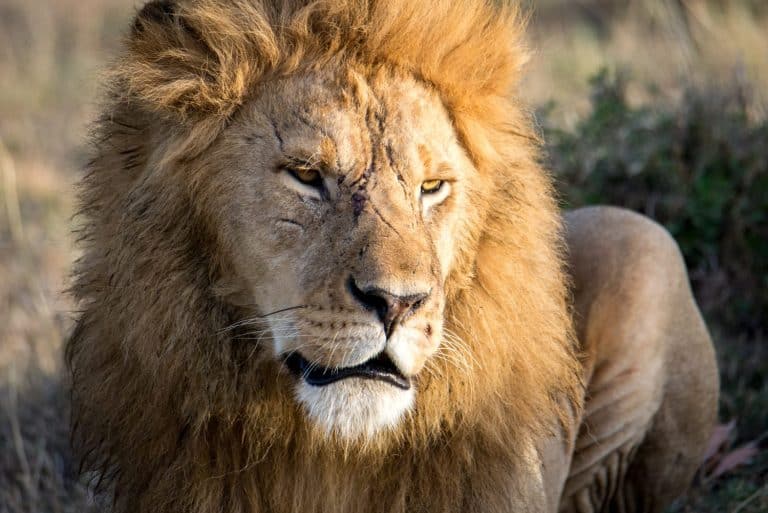
Male lions scent-mark to signal their territory, rank, identity, and more.
©Paolo Fra/Shutterstock.com
Male lions scent-mark their territory to communicate with other lions. Some of the things that are communicated with scent marking include:
- Territory boundaries
- Social ranking
- Identity
- Determining the location of interlopers
By both scent-marking and interpreting scent marks, male lions can potentially prevent negative interactions before they start. High-ranking male lions can make their presence known throughout their territory, which can span up to 100 square miles or more, while interlopers can avoid these areas. While this does not always work, in many instances it does, helping to keep the pride safe under the care of the highest-ranking male lion.
Female Lions Scent Mark Less Frequently
Male lions are not the only ones who scent mark; lionesses do as well, though less frequently and for different reasons.
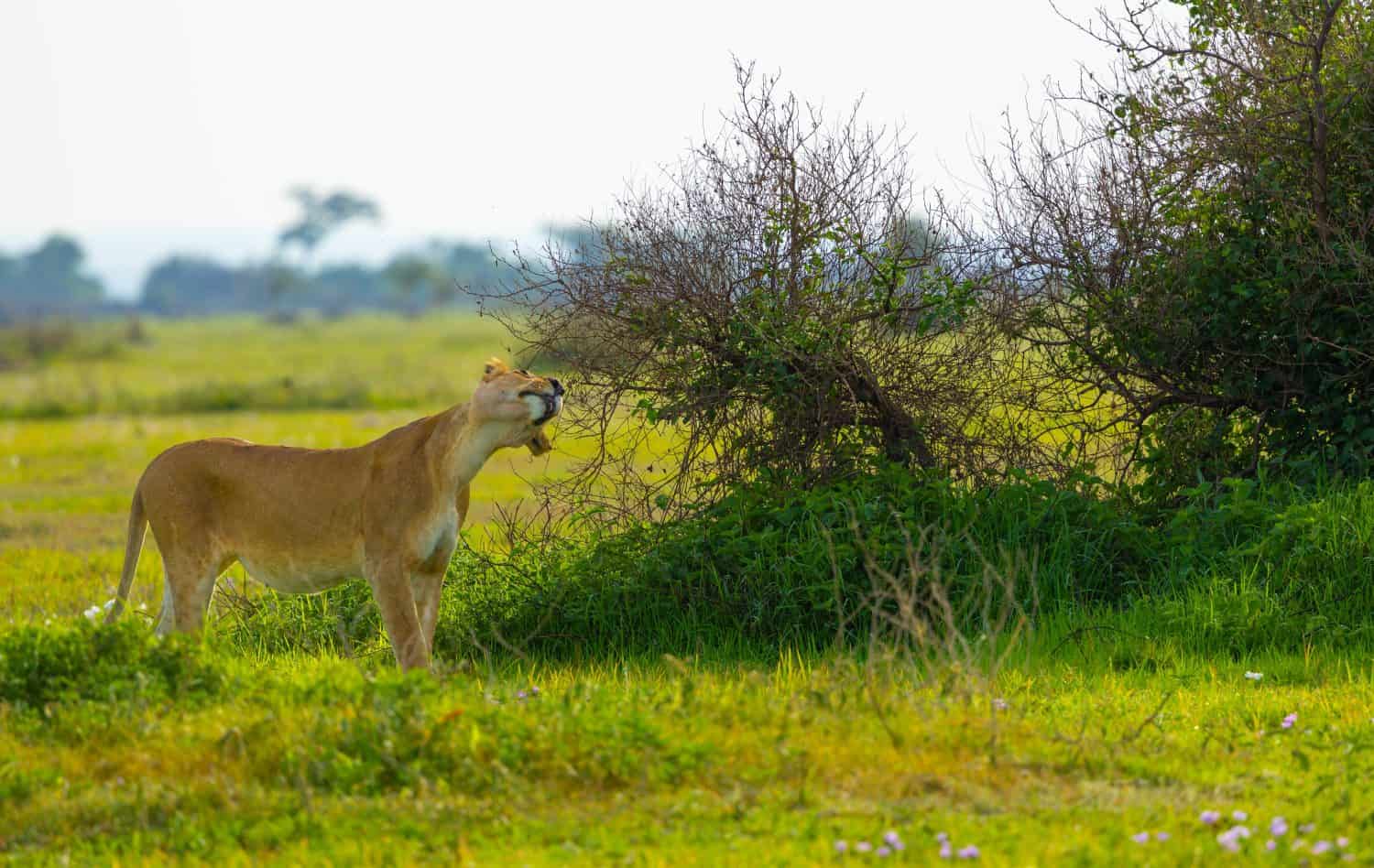
Female lions scent-mark to reinforce territory boundaries, but they typically do so during mating season.
©Tau5/Shutterstock.com
Lionesses most often scent mark during mating season, signaling to males where to find them. The scent left by lionesses is less potent than that of males. However, because lionesses also mark to reinforce territorial boundaries and for identification, it is still strong enough to communicate with other lions.
How Long Does the Scent Marking by Male Lions Last?
Scent marking is not a one-time event. To ensure their scent remains, lions will revisit previously marked locations and scent-mark again so that other lions in their territory are aware of their presence.
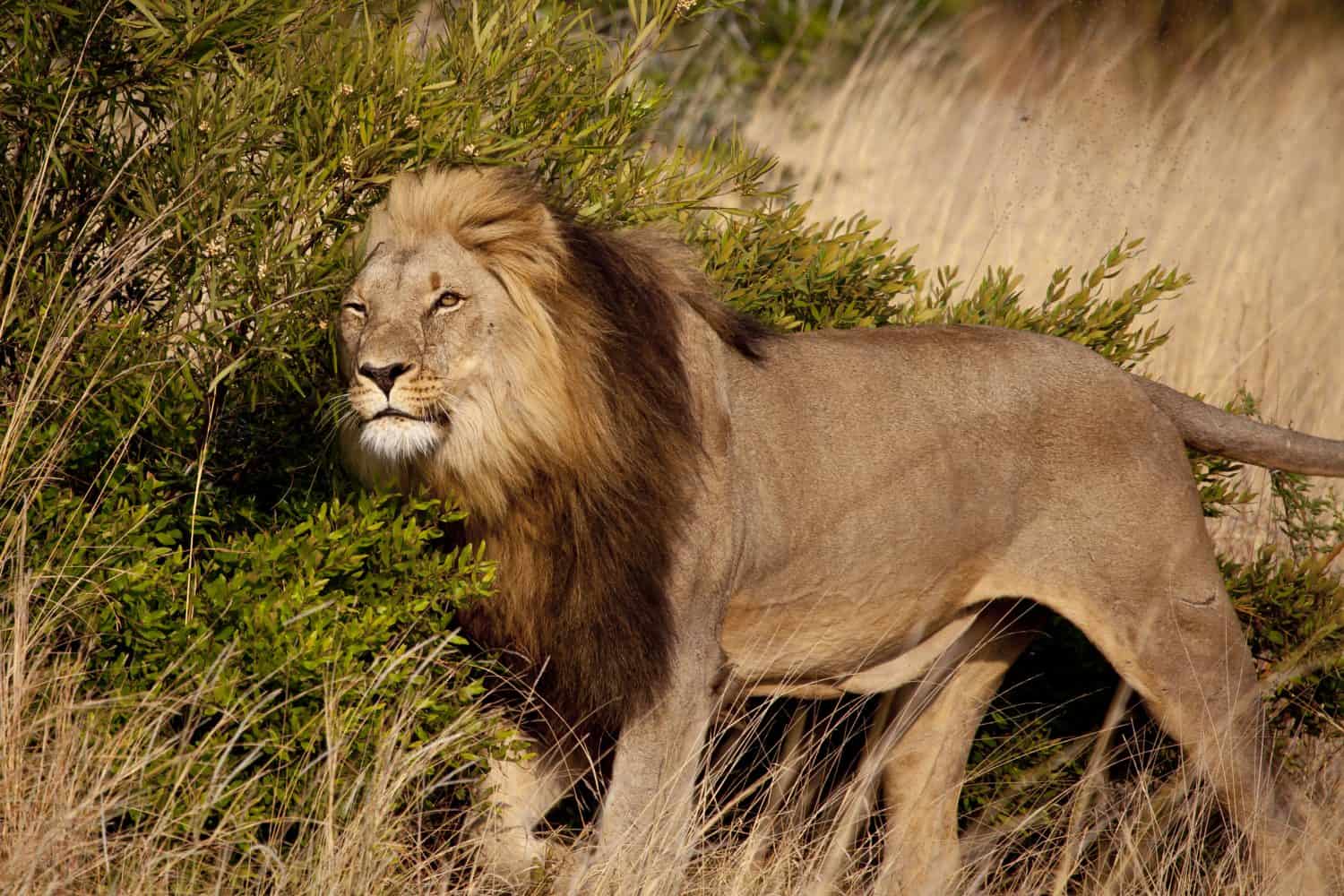
Scent marking odor lasts only a short time. Lions must scent-mark consistently to mark their territory and communicate with other lions.
©Shaun Norton/Shutterstock.com
In most instances, the odor left from scent marking will last for a short time. The duration depends on how the scent marking was done and the weather conditions. For example, if just urine was used to scent mark, the mark can fade within a couple of days. But if the lion were to scratch the ground or rub on foliage, the scent could last longer.
During the dry season, scent marking tends to last longer because it is not washed away. But when it rains, it is not uncommon to see male lions scent-mark more often. This suggests that lions understand that their markings do not last indefinitely. If they want to protect their territory and their pride, scent marking must be done frequently. If the dominant lion does not scent-mark frequently, he may be challenged by rivals, which could result in the loss of his pride and possibly his life.