
Quick Take
- Tiger claws aren't just weapons. They're a delivery system, and what they leave behind on a tree trunk carries a message most animals immediately understand. Discover the chemical signals →
- There are three distinct reasons a tiger drags its claws down a tree, and only one of them has anything to do with the claws themselves. Explore all three reasons →
- A single swipe on a tree trunk can stop a confrontation before it ever starts, and the reason that scratch mark does the heavy lifting is surprisingly counterintuitive. See how scratches deter rivals →
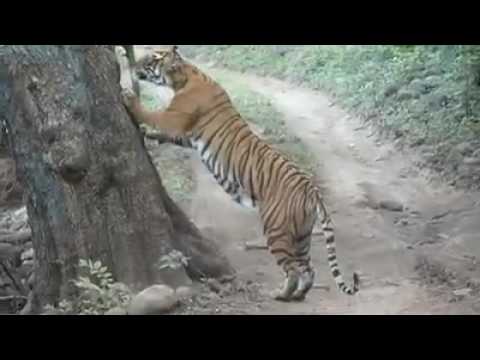
It’s hard to deny that even the fiercest big cat looks like a tabby when it engages in certain behaviors. Take this YouTube video of a tiger. It approaches a tree, uses it to stand up on its hind legs, and turns it into a scratching post. For a housecat, this exercise might be one of self-soothing. For a tiger, however, scratching a tree involves serious communication strategies.
Both housecats and big cats, such as tigers, share ingrained instincts. When it comes to scratching a tree, this tiger is likely expressing several social and physiological functions at once. Let’s learn more about this simple maneuver and how it can signal complex social, hierarchical, and physiological functions.
Like a Scratching Post
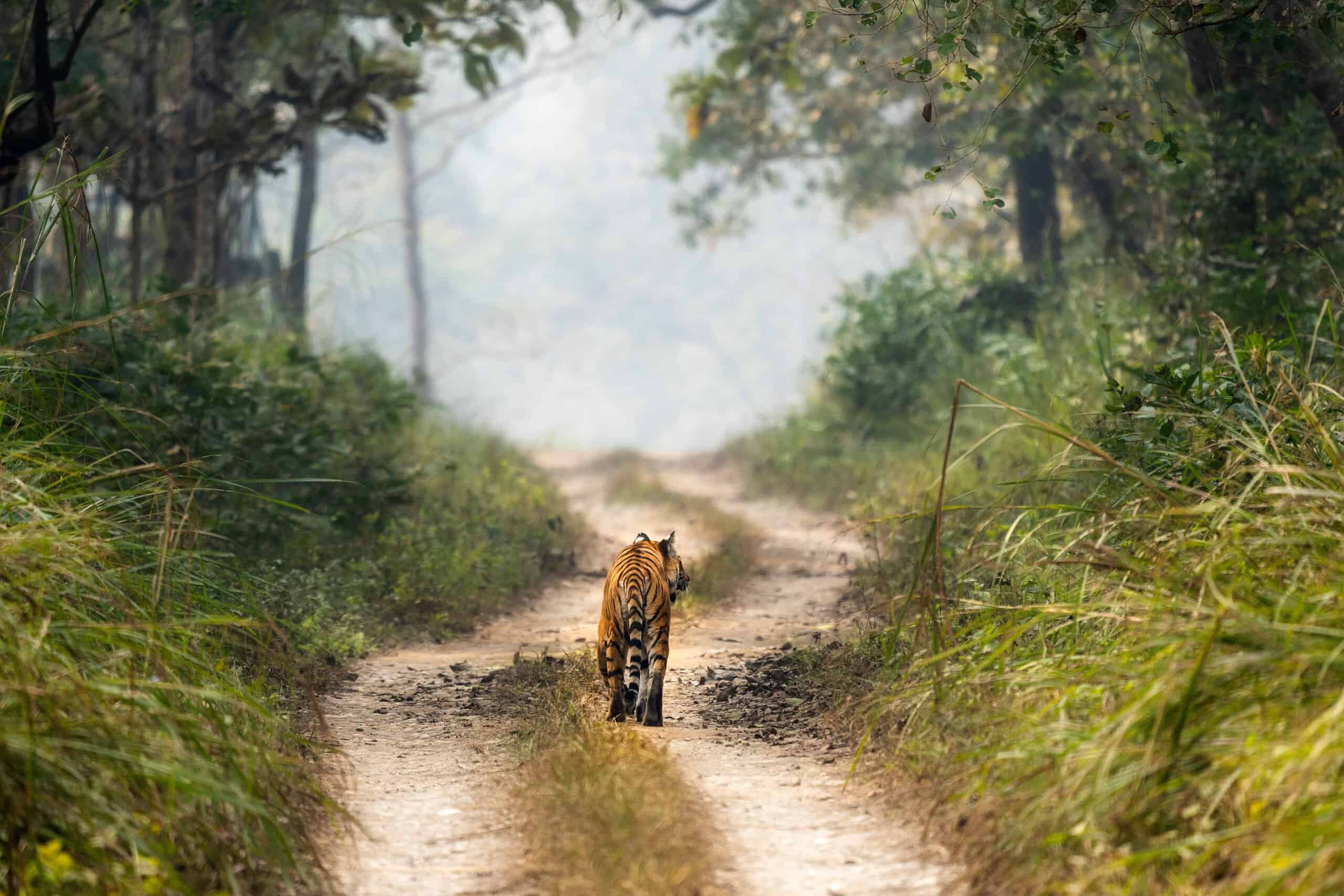
In this YouTube video, a tiger approaches a tree on the side of a trail. It braces itself against the tree’s trunk to stand up on its hind legs. From there, it gets to scratching, leaving several long claw marks in the bark as a crowd of people watches on in wonder. You can even hear some ‘oohs’ and ‘awws’ from the people watching.
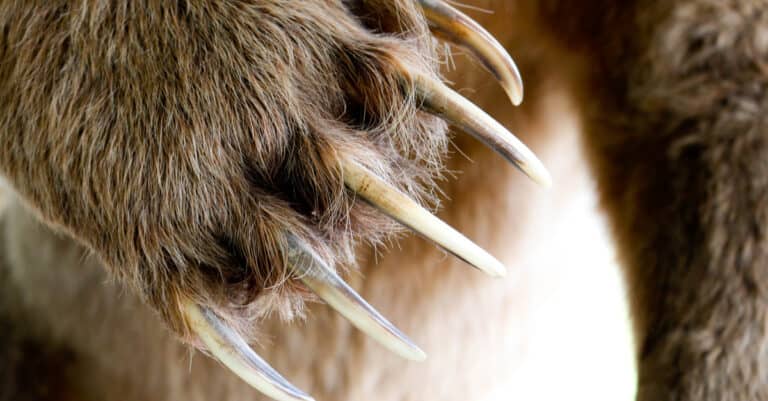
This incident, filmed in Ranthambore National Park in India, shows one of the most commonly exhibited instinctual behaviors of felines. While housecats use smaller objects as scratching posts, tigers are big enough to make quick work of full-sized trees. They have claws that grow up to four inches in length. Their front claws, in particular, are useful for holding prey and leaving scratch marks in trees. But what are those scratch marks for?
Special Delivery

Cats like tigers have special scent glands between their toe and paw pads that release pheromones when their claws scratch downward.
©YouTube/bbcearth
You may think this tiger is simply cleaning its front claws by scratching on a tree trunk. However, it is likely sending messages to other creatures, including other tigers in the area. For one, scratching functions as a chemical signal. Felines, even big ones, have scent glands between their toes and paw pads. By scratching downward, cats release pheromones. This tells other cats in the area exactly who has been there.
Another reason cats leave large scratches in trees is to signal their physical strength to potential rivals. With four-inch claws, a tiger can easily paint a picture of its size and power. This signals to any potential intruders just what they might be dealing with if they encroach on their territory.
Finally, cats also scratch posts or trees for hygienic purposes. While most of this behavior involves social signaling, cats are very clean animals. By scratching the bark of a tree, this tiger is sharpening its primary weapons while removing the dead sheath from the claw, leaving a fresh one in its place.
All Kitties, Great and Small
Scratching on posts or trees is a behavior shared by almost every member of the Felidae family. From domestic tabby cats to mountain lions or tigers, all cats instinctively scratch objects.
Most cats are pretty solitary, so they try to create territorial signposts and avoid conflict. As seen in this YouTube video, a tiger can leave a pretty big signpost without putting in much effort. A simple, dragged claw mark in a tree trunk prevents untold conflicts.