
Quick Take
- One color group of Harlequin poison frogs broke the most basic rule of frog acoustics, something scientists cannot fully explain. Discover the yellow morph exception →
- Human land clearing is rewriting how poison frogs talk to each other, leaving the frogs with no choice but to adapt. See how habitats reshape calls →
- Two frogs separated by less than a mile may be acoustically incompatible, and the stakes for their species are higher than you'd expect. Understand the reproductive stakes →
The world is vast, but our neighborhoods can seem remarkably small. Such is the experience of even the smallest creatures in the jungle. A separation of just a few miles can produce profound changes in behavior, temperament, and even physiology. It can even change the way animals communicate. Humans share more with the animal kingdom than we might care to admit. A new study shows that poison frogs share our tendency for regional dialects. It focused on the Harlequin poison frog in Santa Cecilia, Colombia.
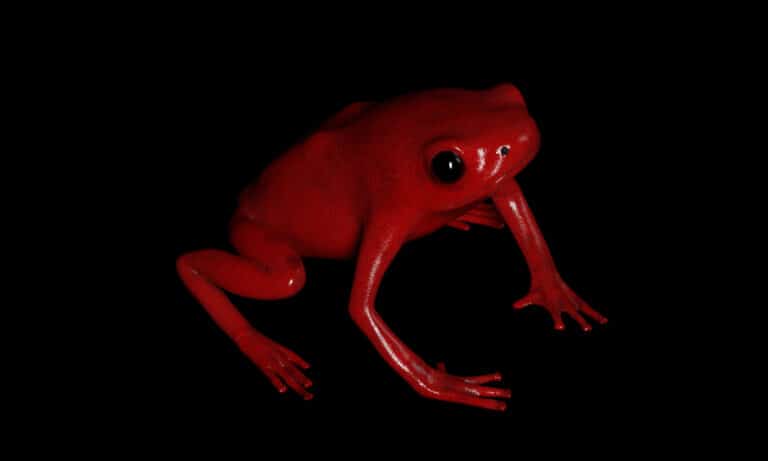
Scientists investigated the mating calls of 46 males from four color-distinct groups: red, white, yellow, and orange. They found that different color groups have unique calls that differ considerably from one another. For example, the yellow frog group exhibited calls with a much lower pitch than expected for their size. Let’s dive into this fascinating new study and what its authors learned about how mating calls differ between poison frog color groups in relation to body shape, temperature, and local environment.
Along the River
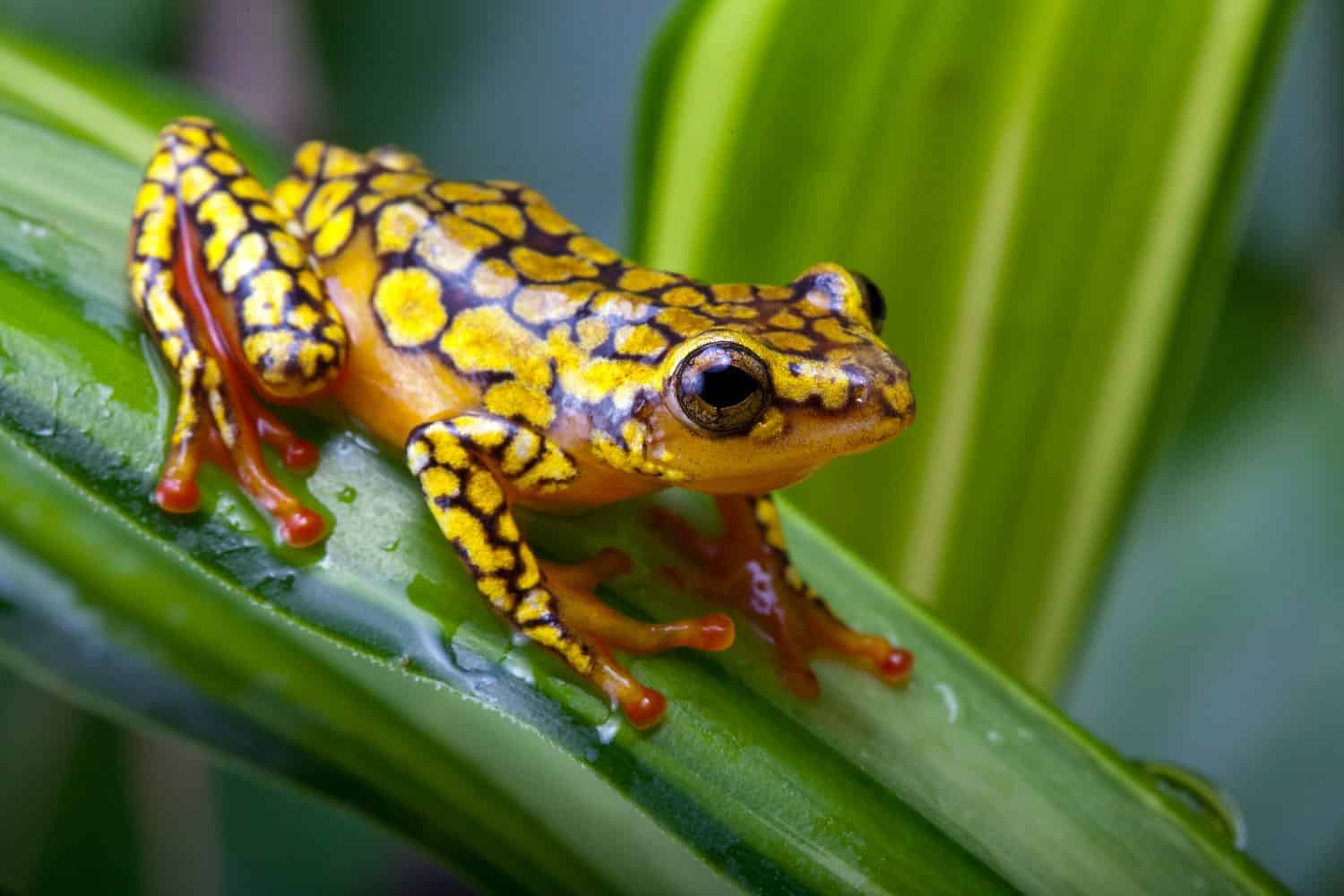
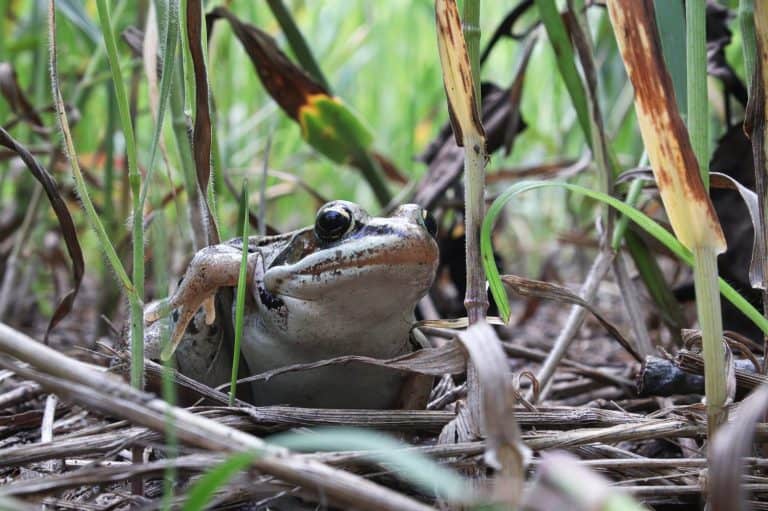
Harlequin poison frogs rely on vocal communication for reproduction, competition, and species recognition.
©Anneka/Shutterstock.com
The San Juan River begins on Cerro Caramanta in the West Andes. It runs approximately 240 miles and drains into a massive, 6,200-square-mile delta. Finally, it flows into the Pacific Ocean through Colombia’s northwestern Chocó Department. Near the settlement of Santa Cecilia live several types of Harlequin poison frogs. Each color morph lives at a different altitude along the river: the red at 400m, the orange at 800m, the white at 1000m, and the yellow at the highest altitude, 1200m.
Each of these Harlequin poison frogs (Oophaga histrionica) is tiny, measuring only 1 to 1.5 inches in length, and lives on the forest floor. Communication is integral for this species, facilitating reproduction, competition, and species recognition. Scientists have long known that even small spatial scales can produce considerable differences in communication styles, akin to regional dialect differences in human populations. The mechanisms driving these differences, however, remain poorly understood. To discover what produces these ‘dialects,’ scientists from various Colombian institutions studied Harlequin poison frogs living near the settlement of Santa Cecilia.
The Size of the Sound
The vocal timbre of frogs is typically determined by body size. Smaller bodies usually produce higher-pitched sounds, while larger bodies with heavier vocal cords produce deeper, more resonant sounds. The study affirmed this for the most part, as call frequency matched male body size.
The localized temperatures of the different altitudes along the San Juan River also played a role in call variation. Like all amphibians, frogs are cold-blooded, and Harlequin poison frogs are no different. Ambient heat modulates the activity of their muscles, including the vocal cords. When temperatures rise, call frequency increases; notes become shorter, and pulse rates speed up.
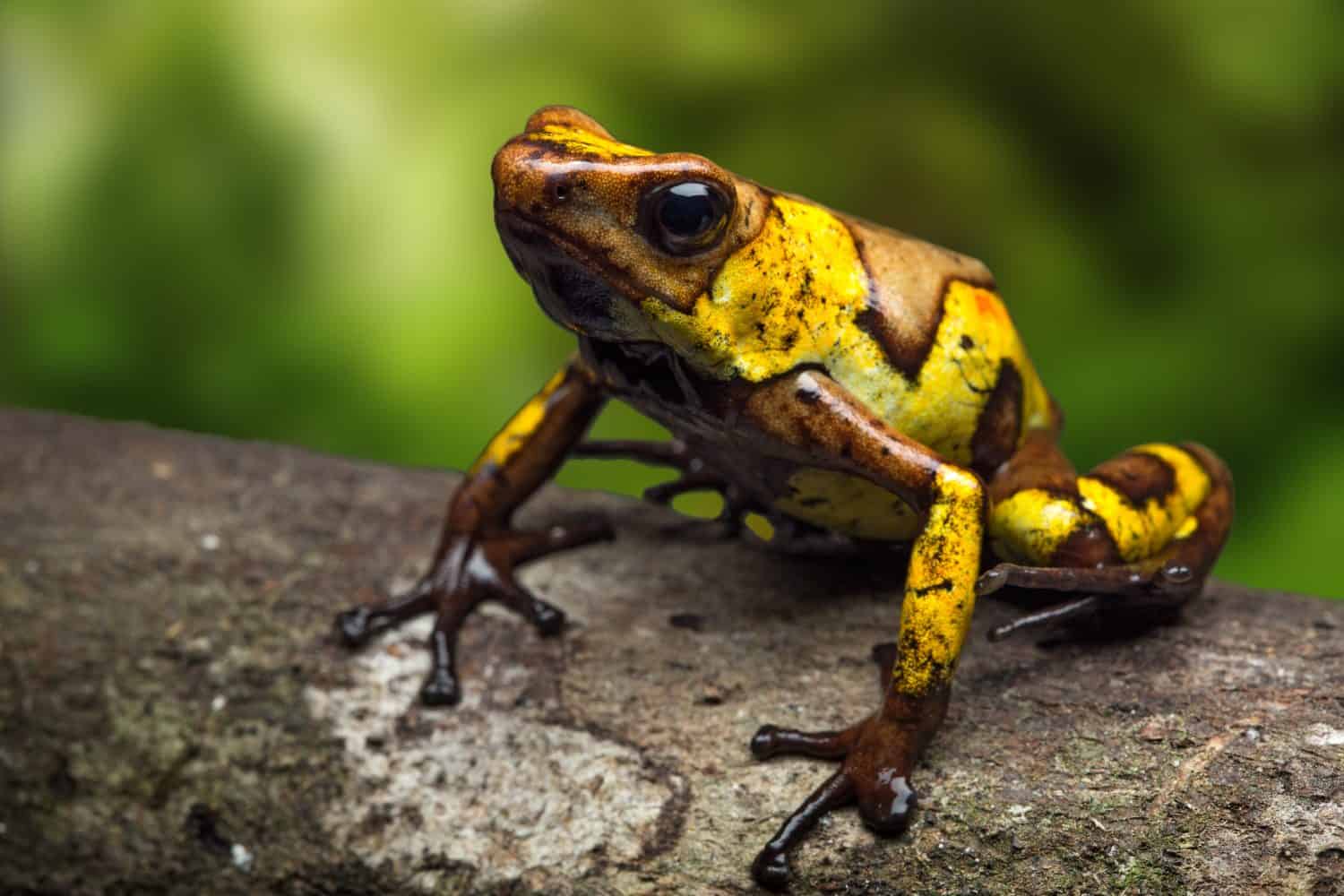
What surprised the researchers, however, was the calls of the yellow color morph Harlequin. Even with statistical models controlling for body size, yellow male Harlequin poison frogs produced calls with an unexpectedly low frequency. This represented an exception to the rule linking body size and call pitch. It also suggests that body dimensions are just one piece of the puzzle, with environmental differences driving physiological and behavioral modifications of the vocal tract.
Changing Environment, Changing Calls
The data collected by the researchers showed significant variation in calls depending on habitat. In the area surrounding Santa Cecilia, human disturbance has altered many traditional Harlequin poison frog habitats. This has converted what was once dense jungle into more open pastures. Researchers found that these changes were reflected in Harlequin calls.
While dense vegetation easily absorbs high-frequency sounds and scatters the rest, open, developed landscapes allow calls to travel farther. In the process, however, these wide open spaces also alter temperature and humidity.
Each color morph studied exhibited sharp variation in calls. The Harlequins simply had no choice, lest their calls fail to reach potential mates. Each morph had different environmental challenges and changes to reckon with, so they tailored their calls to cut through the variations in vegetative noise.
Vocal Survival
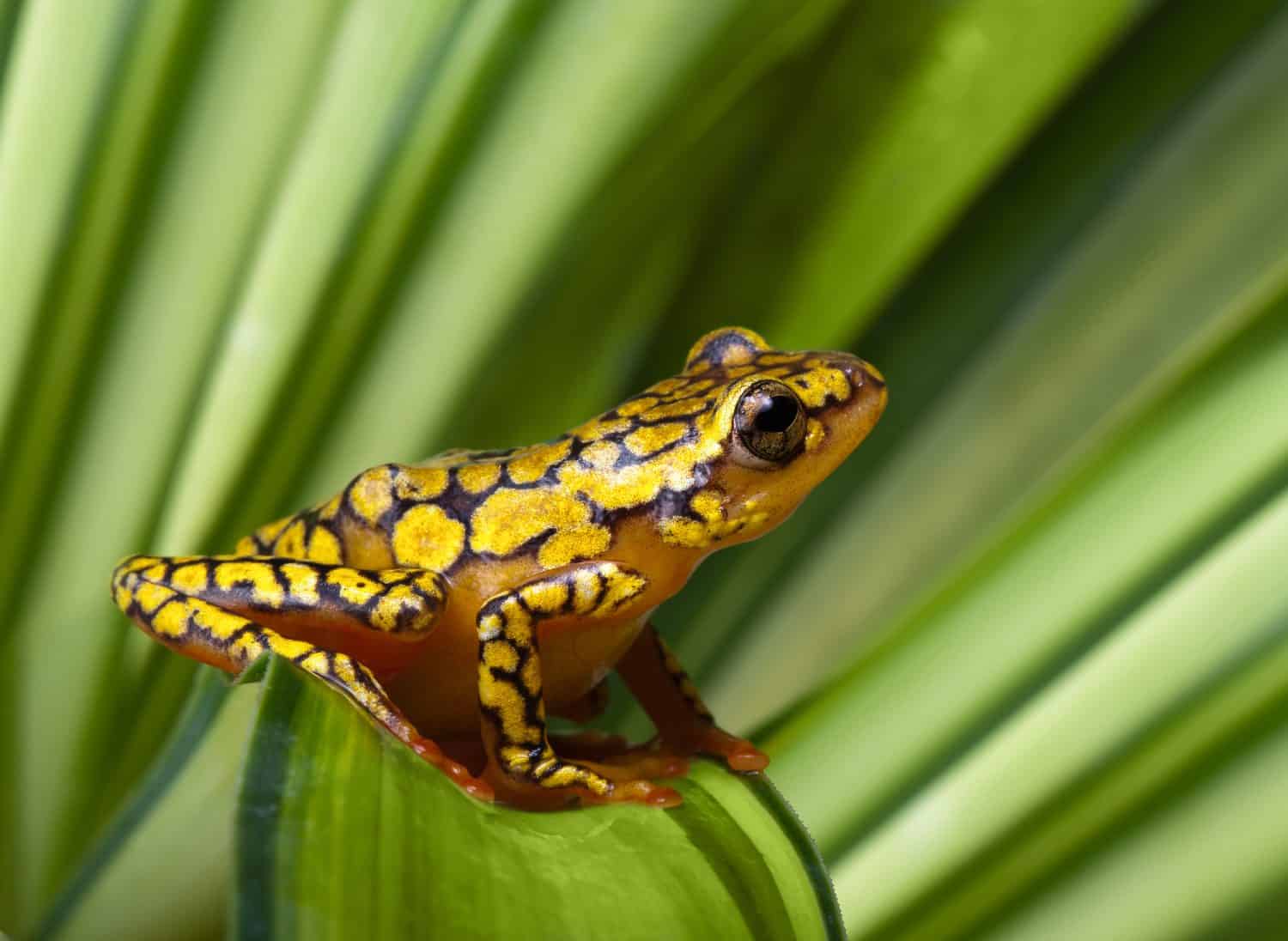
The IUCN currently lists Harlequin poison frogs as being “Critically Endangered.”
©Anneka/Shutterstock.com
Harlequin poison frogs can only survive through communication. Males have to make the right sounds to attract females, and females have to rely on these calls to pick suitable mates. If male calls from one part of the forest aren’t recognized by females in another part of the forest, genetic exchange between frog populations breaks down quickly.
Such vocal variation is a survival necessity, made all the more critical by the decline of Harlequin poison frogs. Due to habitat loss from deforestation, these frogs are disappearing at an accelerating rate. Indeed, the IUCN lists Harlequin poison frogs as being “Critically Endangered.”
The way you speak matters, but for Harlequin poison frogs, making the right call is a matter of life and death.