
Quick Take
- A chickadee's brain grows every autumn and then deliberately destroys itself come spring, and the reason why reveals something unexpected about the true cost of memory. See the seasonal cycle →
- Birds with the sharpest memories turned out to be the worst at something critical, a surprising finding linked to the same genes driving both traits. Explore the memory trade-off →
- Raising chickadees from harsh climates in cushy lab conditions was supposed to level the playing field. It didn't, and the implications go beyond birds. See the genetic evidence →
- Natural selection doesn't always favor a bigger brain, but for one tiny bird the calculus flips entirely. Survival data shows exactly why. Check the survival data →
Every autumn, mountain chickadees prepare for one of the harshest winters in North America by hiding thousands of individual seeds throughout the forest. Rather than storing food in a single location, each seed is tucked into its own hiding place. While this prevents other animals from stealing their food, it creates a massive challenge: months later, the birds must remember every single hiding place, even under deep snow.
For a bird that weighs barely half an ounce with a brain only slightly larger than a pea, this is quite impressive. Yet this remarkable memory isn’t simply the result of a naturally “smart” bird. Each fall, the chickadee’s brain undergoes dramatic seasonal changes, growing new neurons to support the immense spatial memory needed to survive the winter. Once spring arrives and food becomes plentiful again, much of that extra brain tissue disappears.
This annual cycle reveals an important truth about intelligence in the natural world: memory is incredibly powerful — but it also comes at a cost.
A Brain Built for Winter
Mountain chickadees rely on a specialized region of the brain called the hippocampus, which is responsible for learning and spatial memory. Every autumn, as the birds begin storing food, this region expands by up to 30 percent by growing new neurons, a process known as neurogenesis. This larger hippocampus allows them to remember thousands of hidden seed locations across vast mountain landscapes.
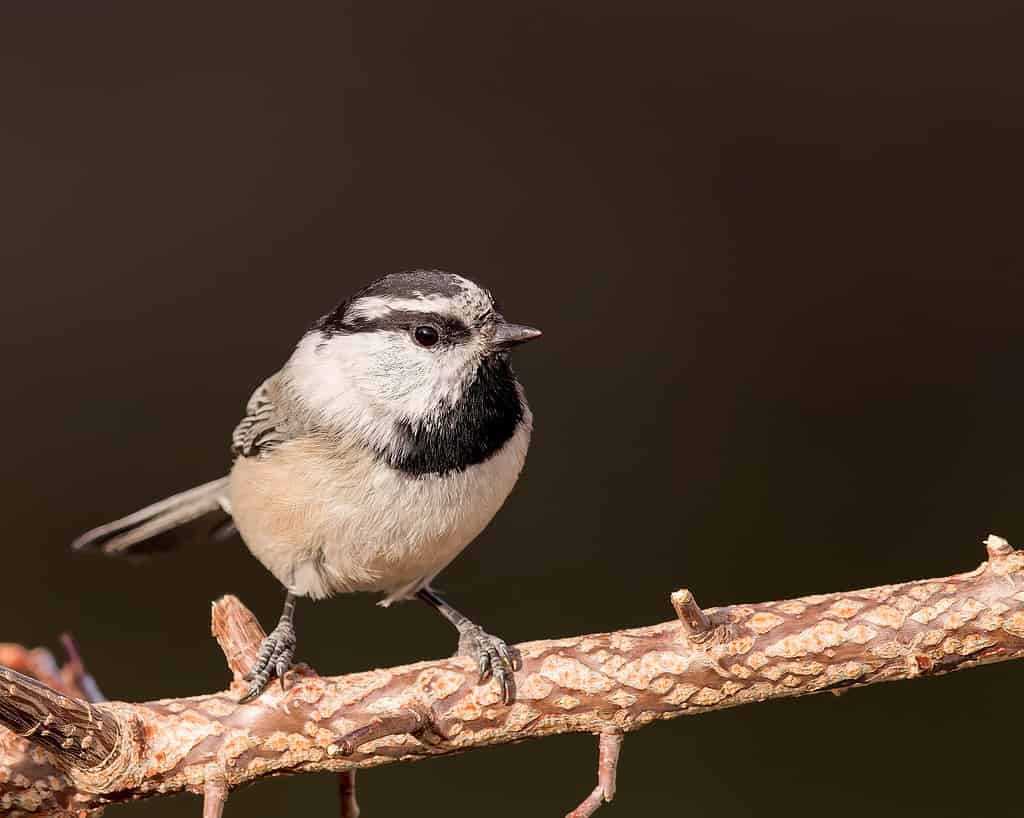
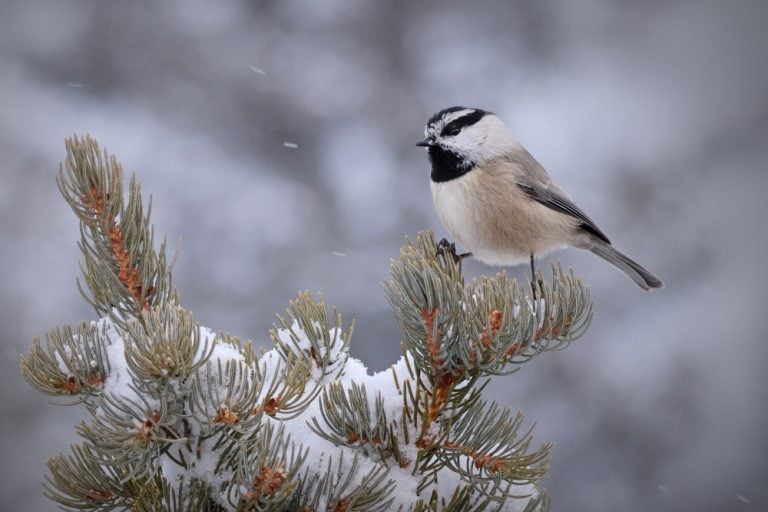
Mountain chickadees mainly live in North America’s coniferous montane forests.
©M. Leonard Photography/ via Getty Images
However, this process doesn’t produce the exact same results with every chickadee. Birds living at higher elevations or in regions with long, harsh winters, for example, score higher on spatial memory tests than birds from milder climates. They also have larger hippocampi containing more neurons.
To determine whether these differences were learned or inherited, scientists raised chickadees from different regions in identical laboratory conditions. Even when raised in the same environment, birds descended from harsher climates still developed larger hippocampi and stronger spatial memories. The findings showed that these traits are hardwired adaptations, shaped by generations of natural selection.
Genetic research also shows that many genes linked to superior spatial memory are directly involved in neurogenesis and neuron growth. These genes also help change brain connections within the hippocampus. Together, these genes help build the specialized memory system that enables chickadees to survive through the winter.
Memory Isn’t Free
Growing a larger memory center every autumn requires a tremendous investment. Brains are among the most metabolically expensive organs in the body. They demand large amounts of energy to build, maintain, and operate. Producing new neurons and supporting dense networks of brain cells requires valuable resources that could otherwise be used for growth, reproduction, or other essential functions.
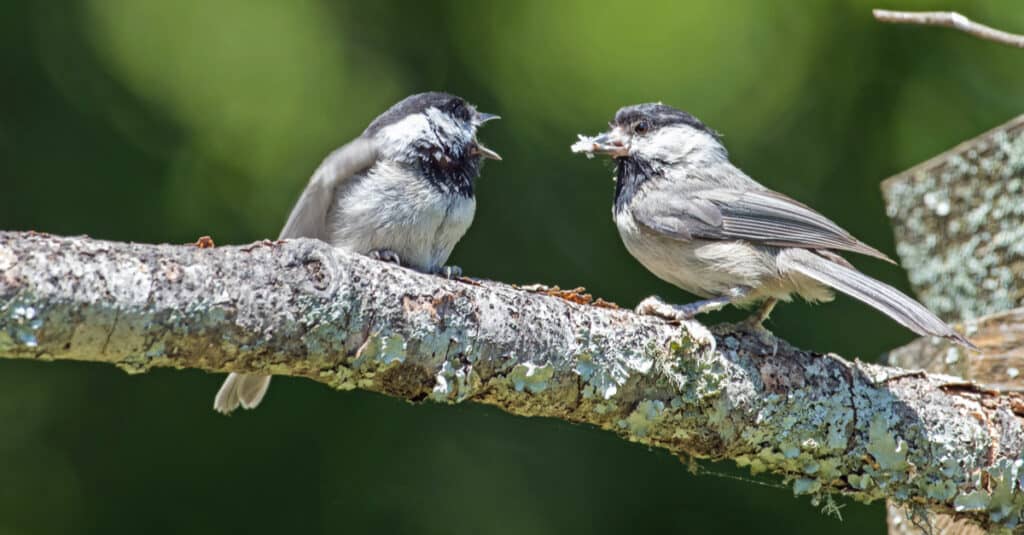
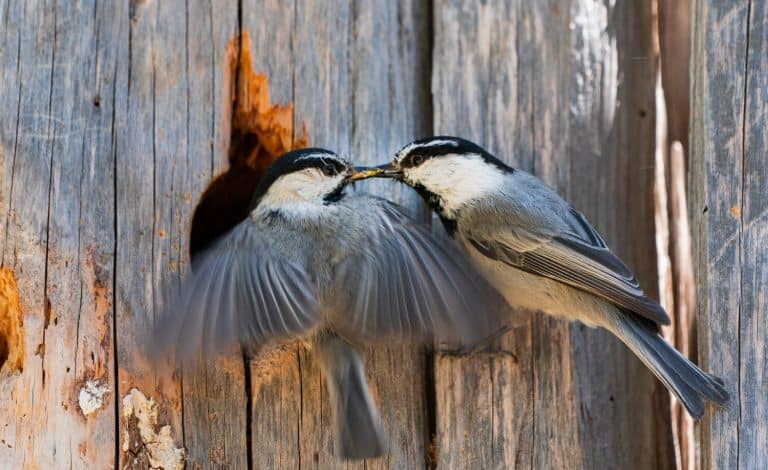
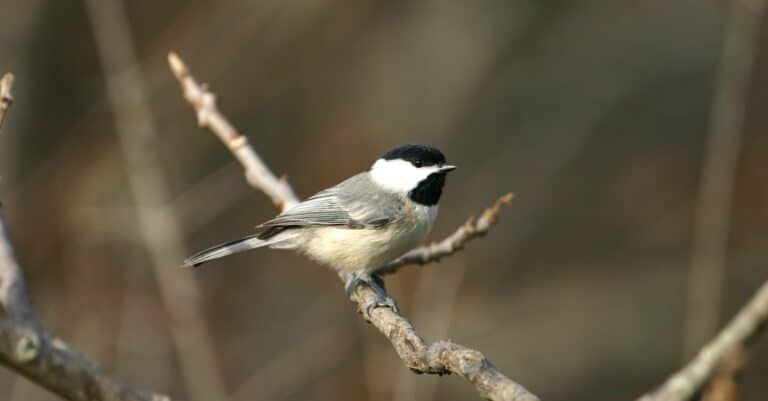
Chickadees often spend time with other bird species in mixed flocks.
©Tom Franks/Shutterstock.com
For many animals, the high energy cost of a larger brain simply isn’t worth the payoff. That’s one reason natural selection doesn’t always favor greater intelligence.
But mountain chickadees are different. Without an exceptional spatial memory, they would struggle to recover enough hidden food to survive months of freezing temperatures and deep snow. For these birds, the lifesaving benefit of recovering thousands of hidden seeds outweighs the heavy energy cost of growing extra brain tissue.
When Spring Arrives, the Brain Shrinks Again
While the chickadee’s winter brain is impressive, this enlarged hippocampus is not permanent. As winter ends and food becomes easier to find, the need for an extraordinary spatial memory declines. Rather than maintaining an oversized memory center, the brain prunes many of the neurons that were added during the fall. The hippocampus shrinks back to its normal size, reducing the energy cost of maintaining unnecessary brain tissue.

Chickadees are relatively active throughout the year.
©Wirestock Creators/Shutterstock.com
This seasonal remodeling illustrates just how expensive memory truly is. If those extra neurons no longer provide a survival advantage, maintaining them would waste precious energy. Instead, chickadees rebuild their memory system every autumn and scale it back each spring, investing in brain power only when the benefits outweigh the costs.
The Trade-Offs of a Powerful Memory
As remarkable as the mountain chickadee’s memory is, it also comes with limitations.
Researchers tested wild chickadees using automated feeders to measure both their spatial memory and their ability to adapt to changes. First, the birds learned where a food reward was located. Once they mastered that, researchers moved the food to a new spot to see how quickly the birds could adapt.
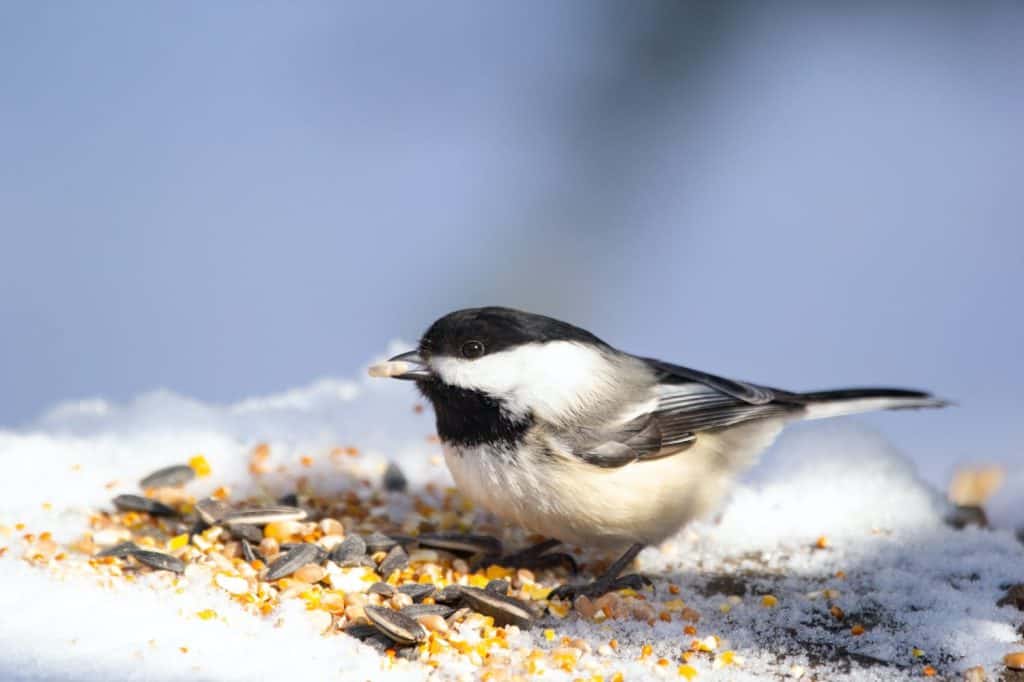
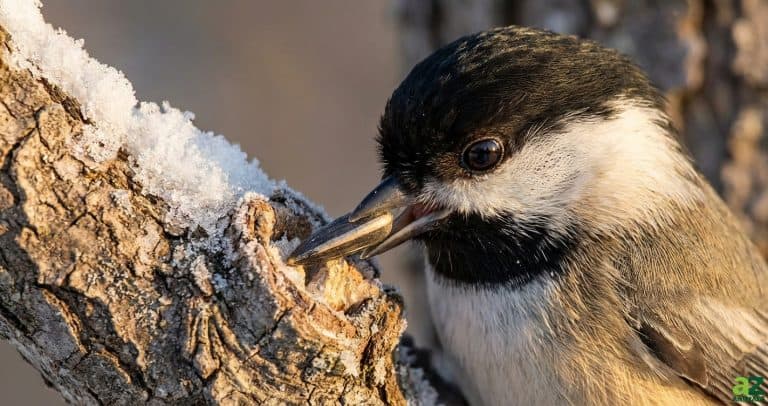
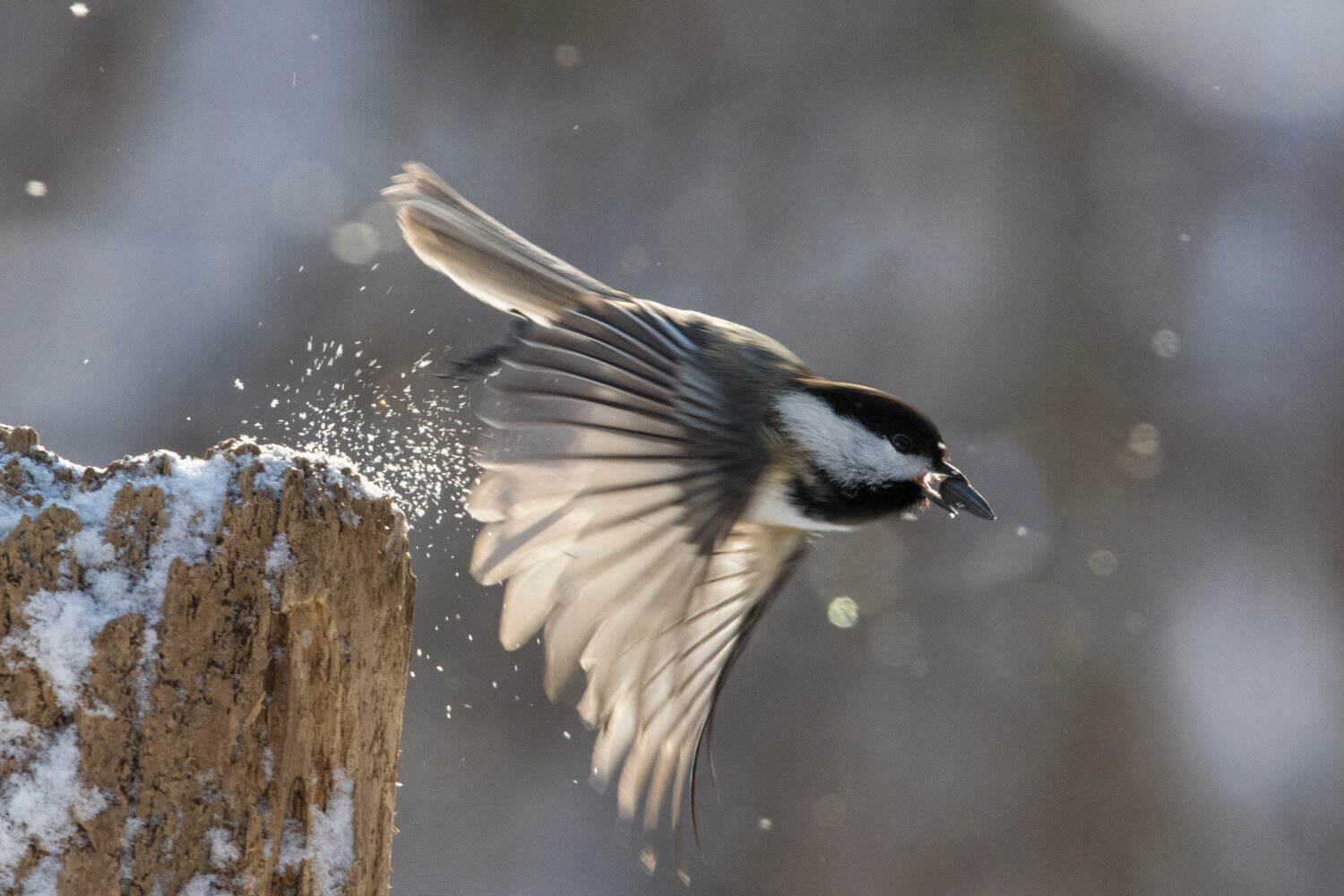
Chickadees eat a variety of food, from seeds and berries to caterpillars, insects, and animal fat.
©Saeedatun/Shutterstock.com
The results revealed a surprising trade-off: the birds with the strongest spatial memories were often the slowest to abandon old habits and learn the new rules. Genetic analysis showed that many of the same gene variants associated with exceptional spatial memory were also linked to poorer performance on these flexibility tests.
In a stable environment, long-lasting memories provide a major advantage. But if conditions change suddenly — like a severe storm burying traditional hiding spots — those same strong memories can become a liability. Birds might repeatedly search familiar locations instead of adapting quickly.
A Memory Worth the Cost
Long-term studies of wild mountain chickadees show that a superior spatial memory is a significant predictor of survival. This is especially true during their first winter. Young birds with poor spatial memory are far less likely to survive, while those with stronger memories have a higher chance. This increased survival gives these birds more opportunities to reproduce and pass down the genes that contribute to their extraordinary memory.

Mountain chickadees have a white stripe just above their eyes.
©Larsek/Shutterstock.com
Every autumn, mountain chickadees perform one of nature’s most remarkable neurological transformations. Their brains grow new neurons, expand their memory center, and prepare for the enormous challenge of remembering thousands of locations of hidden seeds. When spring arrives, they dismantle much of this system to conserve energy, repeating the cycle each year.