
Quick Take
- Dolphins foraging near manmade areas and ship trawlers may be producing significantly higher clicks and frequencies.
- These changes appear to be rooted in both environmental changes and dolphin social groups.
- Shorter clicks once signaled poor habitat health, but researchers discovered it may be for a hunting purpose.
- Researchers used passive acoustic monitoring during 83 sightings to evaluate how manmade structures impact dolphin hunting behaviors.
According to new research published in Frontiers in Marine Science, dolphins may be changing how they talk to each other. This study, led by researchers at Texas A&M University-Corpus Christi, found multiple, distinguishable differences in how dolphins use their clicks and whistles, depending on which environment they are foraging in. The differences uncovered show that dolphin adaptability exists in new ways and in locations all around the globe, not just in Texas’s nearby waters. Here’s what scientists learned about dolphin hunting vocalizations, and what it might mean for the broader species, as well as our influence on dolphins.
An Overview of Newly Discovered Dolphin Hunting Sounds
The research mentioned above focused first on common bottlenose dolphins, specifically in the Corpus Christi Ship Channel. This is a busy, deep-water commercial waterway connecting the Gulf of Mexico to the Port of Corpus Christi. Researchers wanted to further investigate this commercial area and how it might be influencing animals by using passive acoustic monitoring.
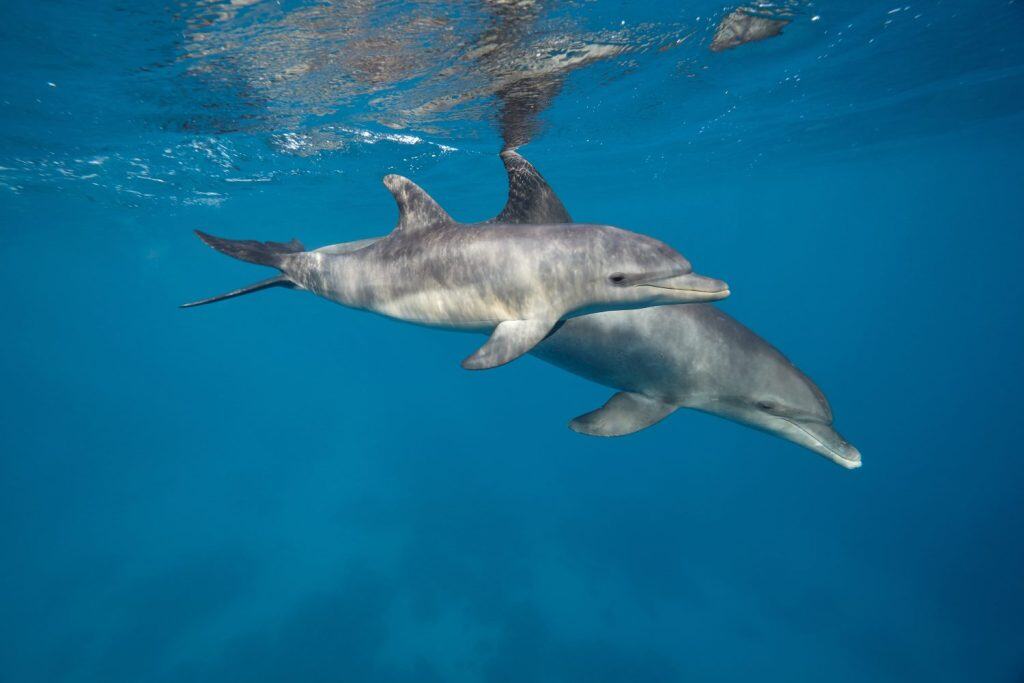
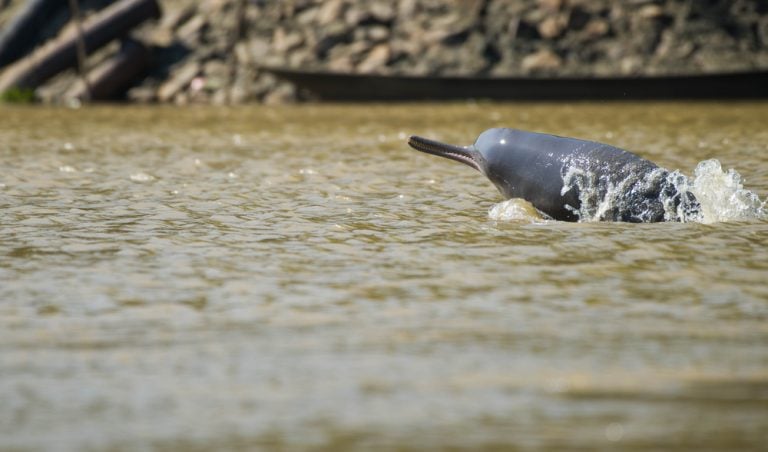
Dolphin dialects may be changing based on hunting and social groups.
©Tetsuo Arada/Shutterstock.com
The researchers compared dolphin vocalizations across two distinct foraging contexts: near active shrimp trawlers operating in the channel, and along seawalls near Port Aransas at the channel’s confluence with the Gulf. Both of these locations were chosen for a reason, as trawler noises attract dolphins as well as prey for them. The seawall is a less active location, but it still experiences some activity.
Over 83 total sightings recorded from May through September 2024, the team collected acoustic data on both the tonal whistles dolphins use for social communication and the echolocation clicks they use to find and capture prey. Both locations revealed different, fascinating insights.
Decoding the Echolocation Audio
According to the study, there were some clear differences between the two foraging contexts in the echolocation data. Dolphins closer to the trawlers produced clicks at significantly higher rates overall, but when that rate was adjusted for group size, the difference disappeared. This suggested to researchers that the elevated activity reflected how many animals were clicking collectively, not that each individual was clicking more rapidly.
However, the tonal qualities of the clicks revealed even more valuable information. Near trawlers, click trains were pitched significantly higher. This may help dolphins cut through the acoustic clutter created by trawling gear and the noise of dozens of other dolphins clicking nearby, which improves their ability to isolate a specific fish or shrimp.
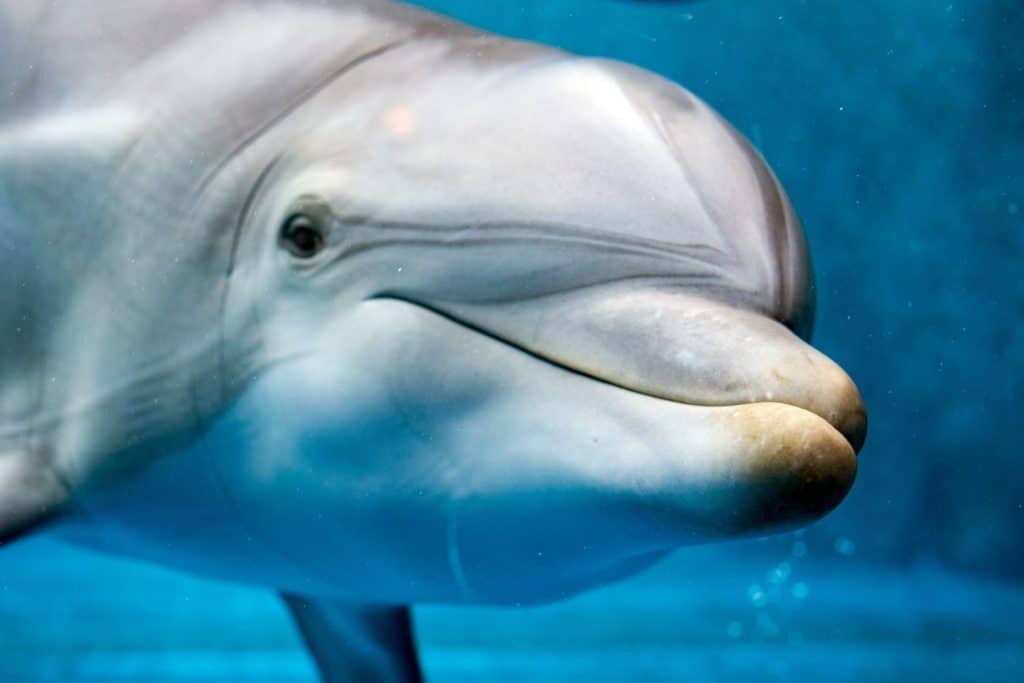
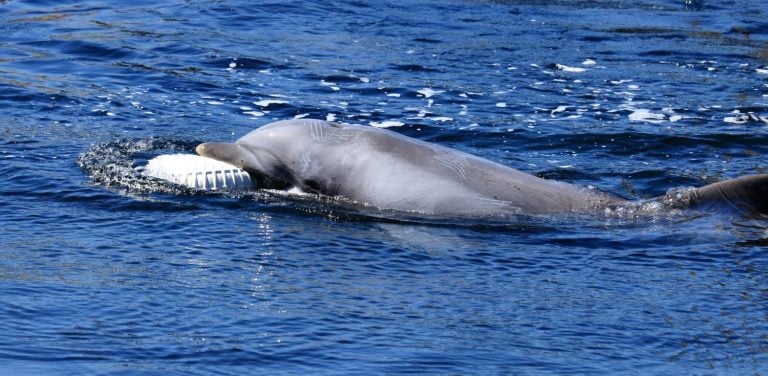
Different vocal sounds were produced by two distinct dolphin groups.
©Andrea Izzotti/Shutterstock.com
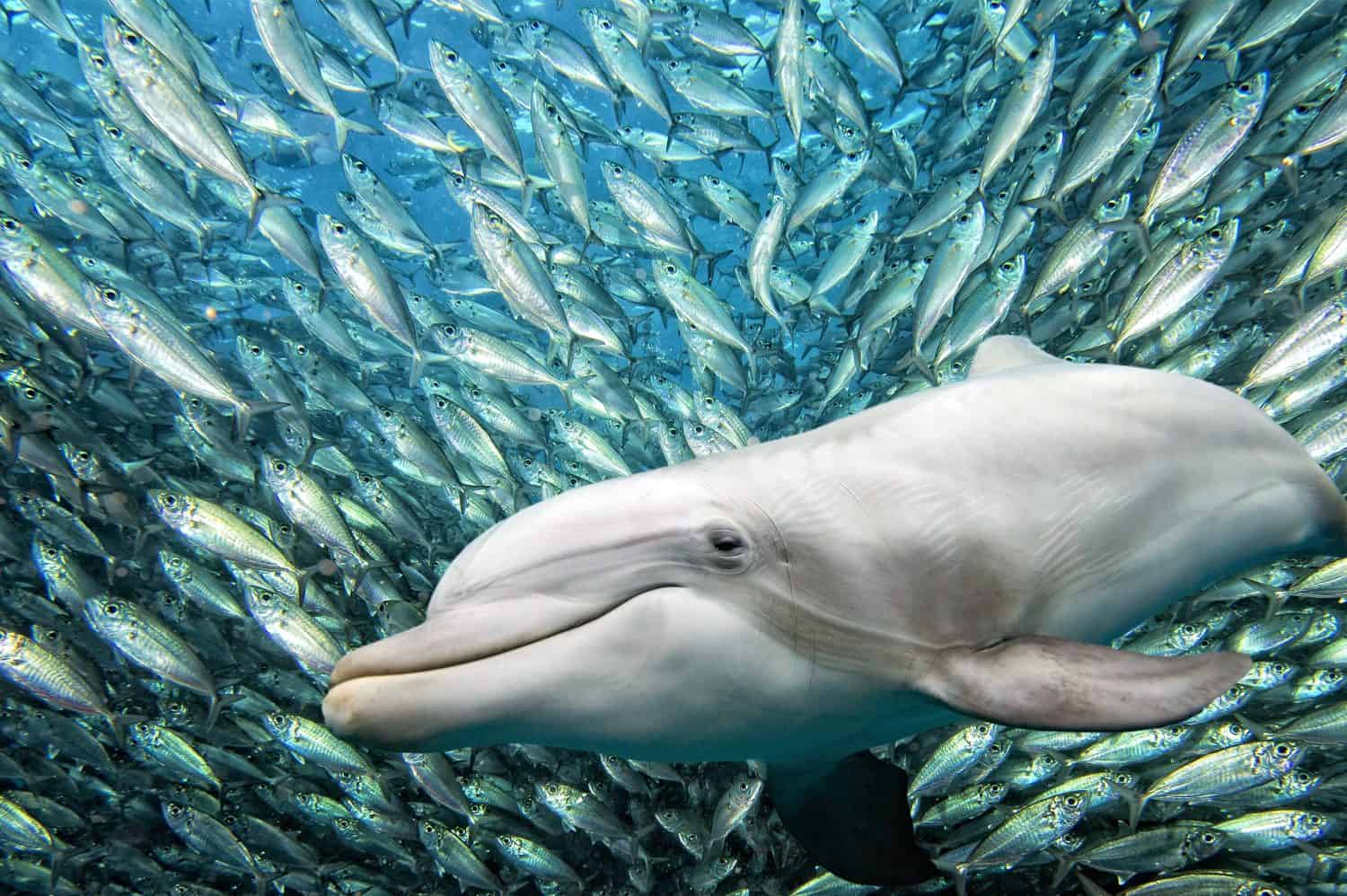
They also produced buzz clicks, an even more rapid type of click, at a significantly higher rate near trawlers. These fast sounds represent the acoustic signature of a dolphin closing in for a kill, which suggests that dolphins were repeatedly attempting to feed, using their advantage against the concentrated prey that trawler operations inherently provide.
Meanwhile, along the seawalls, click trains looked very different: they were much shorter, more variable, and significantly less frequent. The researchers described this pattern as consistent with exploratory echolocation, without zoning in on prey. While this may seem like an obvious trend given the abundance of shrimp around the trawlers, the research also suggests a social component.
What Was Learned About the Social Systems of Dolphins?
Whistles were observed alongside clicks in both locations during this research. These calls represent the tonal, frequency-modulated noises that dolphins use to maintain group cohesion and coordinate with one another. Raw whistle numbers from the study were higher near trawlers, which makes sense given how many dolphins were gathered in this location. However, the most insightful finding was in their whistle shape.
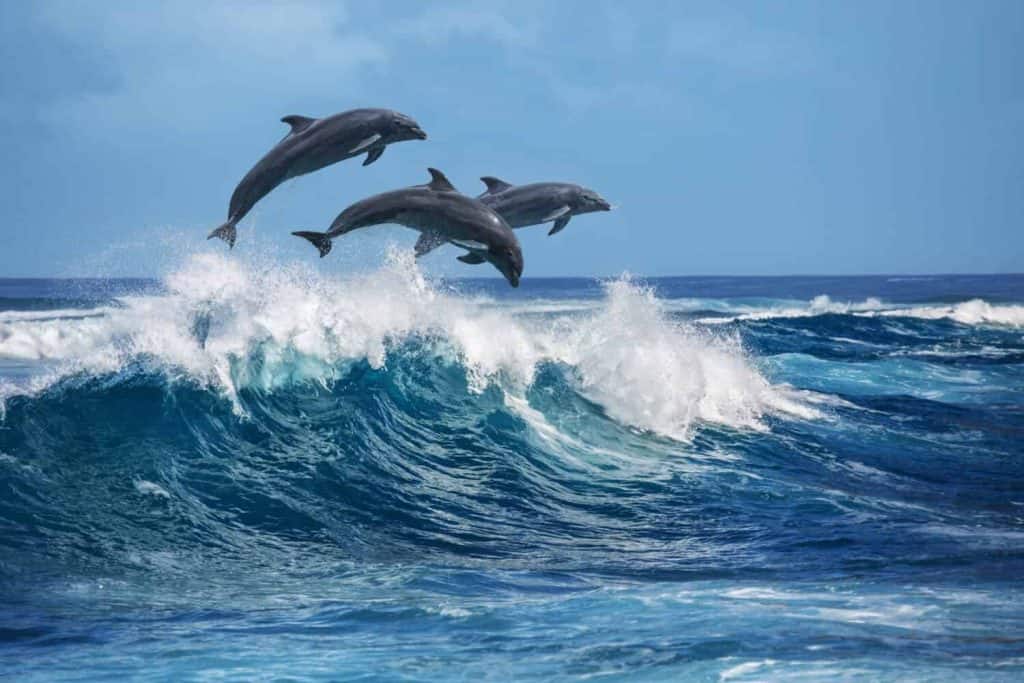
Calves may alter the vocal qualities of an entire pod of dolphins based on their calls.
©Willyam Bradberry/Shutterstock.com
Near trawlers, dolphins produced a wider variety of whistle contours; near seawalls, simpler contours were primarily present. The diversity of contour types near trawlers was closely related to group composition: the trawler pod included calves, who are often still developing their signature sounds through social learning and imitation, and mothers, who are known to adjust their whistle structures when communicating with their offspring.
Additionally, no individual dolphin photographed near trawlers was ever re-sighted near seawalls, and vice versa, although some dolphins were re-sighted multiple times within the same foraging context.
The two foraging communities appeared both acoustically and socially distinct, suggesting that these individual groups are developing what the authors of the paper described as localized vocal “dialects.”
Why Dialects May Exist Within Dolphin Communities
Passive acoustic monitoring has become one of the most powerful tools available for studying marine mammals without disturbing them, especially when it comes to dolphins. These devices are increasingly used to assess dolphin population health, stress responses, reactions to human activity, and the complicated ways in which they communicate. Because of these devices, scientists are better able to interpret the sounds dolphins make and understand their communication.
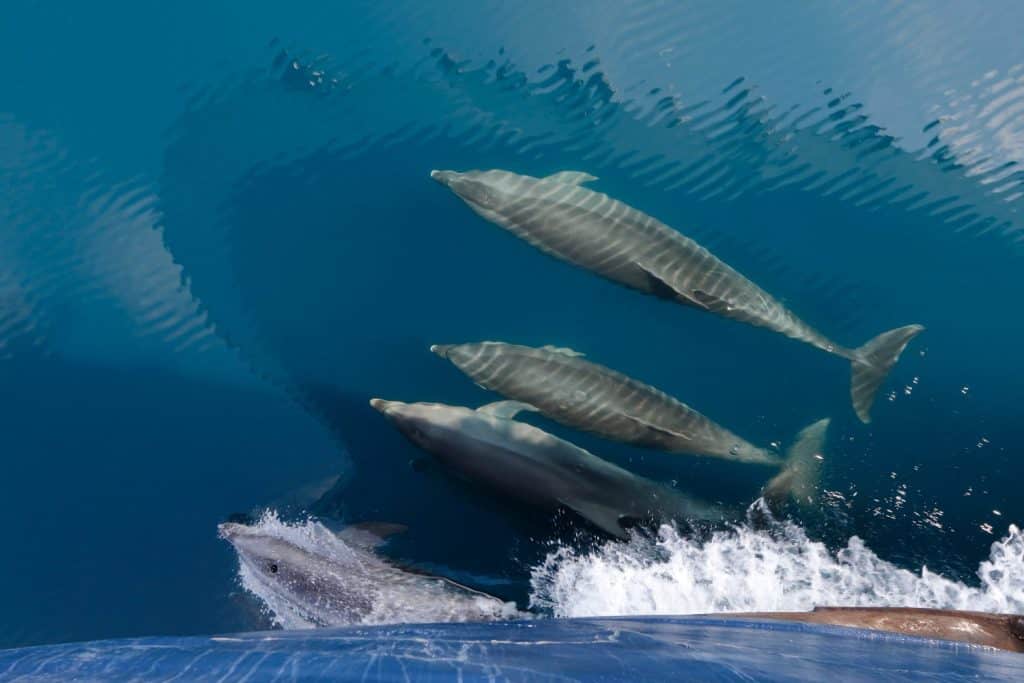
New research explores the intricacies of dolphin communication.
©Brian Lasenby/Shutterstock.com
Before this study, if a monitoring device near a seawall picked up shorter, more variable clicks, that was once considered to be reduced dolphin activity or poor foraging conditions. With this new research, it may simply be what exploratory hunting sounds like in that habitat.
Similarly, the dense buzz activity and elevated click frequencies near trawlers indicate a likely foraging opportunity, not a stress response as previously assumed. Context, the researchers argued, is everything, and assuming that dolphin acoustic behavior is the same across habitats is not accurate for future behavioral assessments.
Our coastal development may also be a factor, something this study helps establish. As manmade structures replace natural shorelines, marine mammals are being asked to navigate and hunt in acoustically new environments. This study suggests that dolphins are flexible enough to adjust their sounds based on manmade structures, but that flexibility needs to be accounted for when interpreting what underwater microphones record.
Dolphins May Be Adapting Their Vocal Qualities Because of Us
The dolphins found within the extremely active Corpus Christi Ship Channel appear to have developed context-specific acoustic sounds—changes in their vocal qualities due to our direct interference with their habitat. However, one study alone does not confirm this; much more research is needed to fully understand the phenomenon.
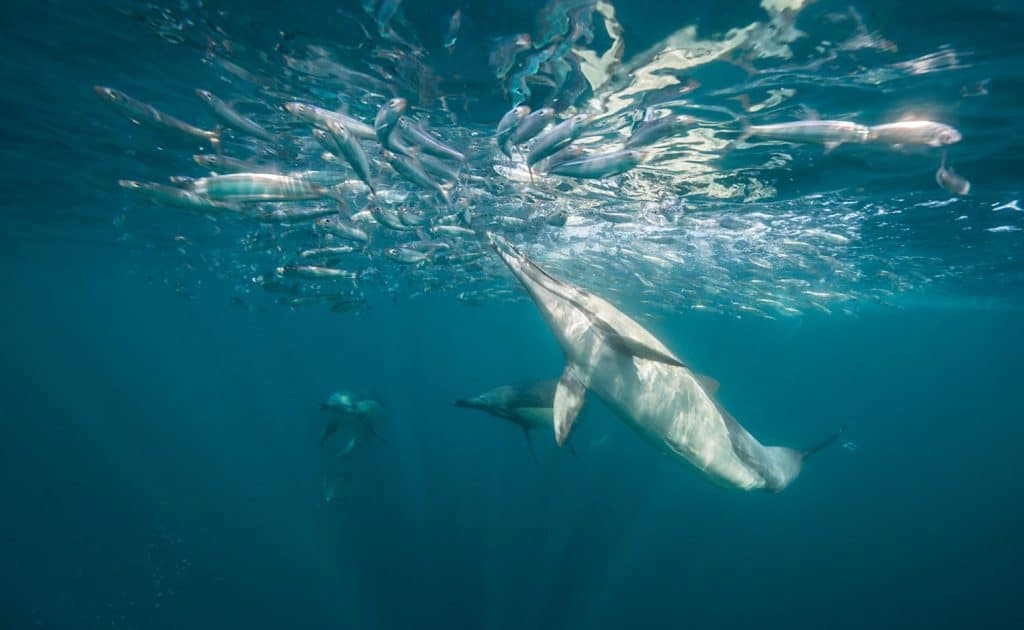
Human interference may be one reason why dolphins change their vocalizations in certain locations.
©wildestanimal/Shutterstock.com
The researchers called for continued acoustic monitoring to build more baseline data so that scientists can learn about the coastlines where dolphins have learned to live alongside human industry. With further research, we may learn more about dolphin dialects and their intricate ways of communicating in an ever-changing world.