
Quick Take
- Wood frogs may travel up to a half mile to the vernal pool they were born in before participating in the spring chorus.
- The Sackett v. EPA ruling stripped vital protections, leaving vernal pools vulnerable to total destruction.
- Drought conditions trigger an accelerated biological transformation despite the lack of vital water resources for wood frogs.
- Without vernal pools, the frogs that directly or indirectly depend on them will perish.
April showers bring May flowers. April showers also make frogs explode into a chorus after spring rain. These frogs are not simply croaking for communication. The loudest frogs are signaling that they are ready to continue their life cycle. This event occurs for several weeks, transforming the quiet winter forests into a hotbed of activity in the spring. Then, like a flash, the quiet returns as summer ushers in.
Spring Rains Bring Out Frogs En Masse to Mate and Lay Eggs
Wintertime temperatures are brutal for frogs. Were they to be exposed to the frigid elements, they would die. To survive, frogs go into a state of brumation, which allows them to conserve energy by slowing their metabolism and not moving until their bodies sense that temperatures are beginning to warm.
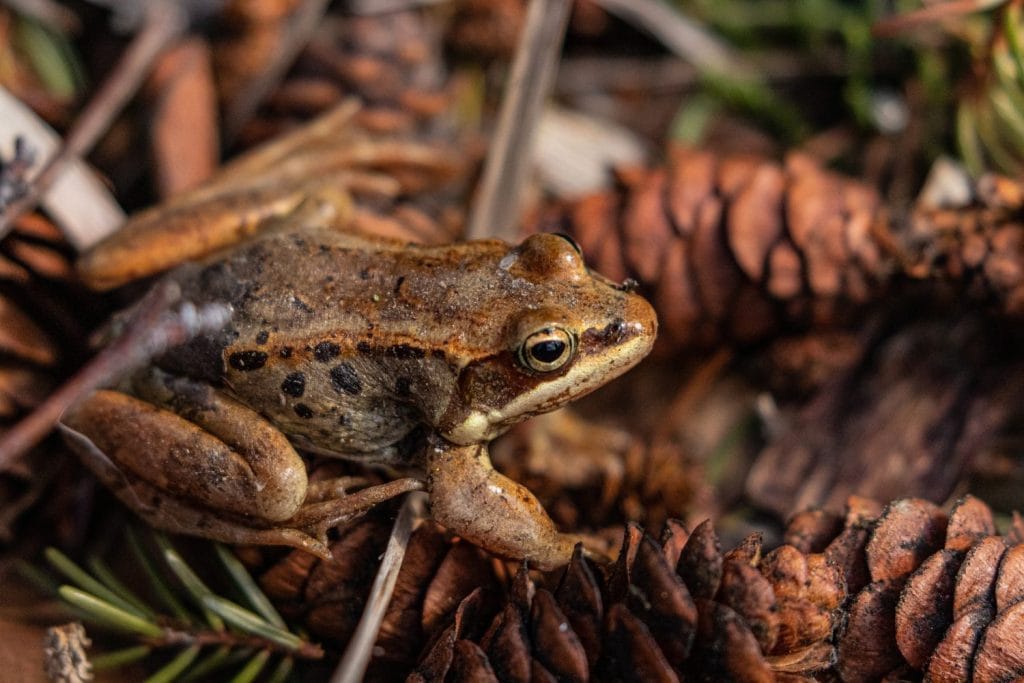
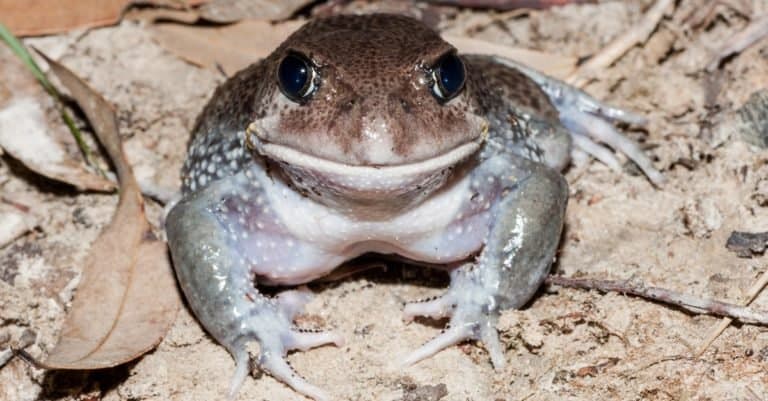
Frogs wake from winter brumation ready to find a mate with their loud singing.
©Bruce R. Allen/Shutterstock.com
Spring, with temperatures above freezing and warmer rains, is a good signal to frogs that it is time to emerge from brumation. However, this season also causes snow to melt and rain to collect as independent bodies of water. The water forms vernal pools. Though temporary, these bodies of water are incredibly important to the frogs that wake from brumation. Some cannot continue their lifecycle without it.
As frogs make their way to vernal pools, they have one thing on their mind: find a mate. Males sing their songs to woo females of their species. If mating is successful, the female will then lay eggs in the vernal pool. This process can take weeks for all the frogs to lay their eggs. This means the frog song will continue well into spring.
Which Frogs Are the First to Be Heard Calling?
As spring rains and snow melt fill vernal pools, frogs can be heard for several weeks as they return to their natal areas to lay eggs. Several frog species use vernal pools for this purpose. But there is one that consistently beats the others to the punch, being the first to lay eggs. This annual victor is the wood frog.
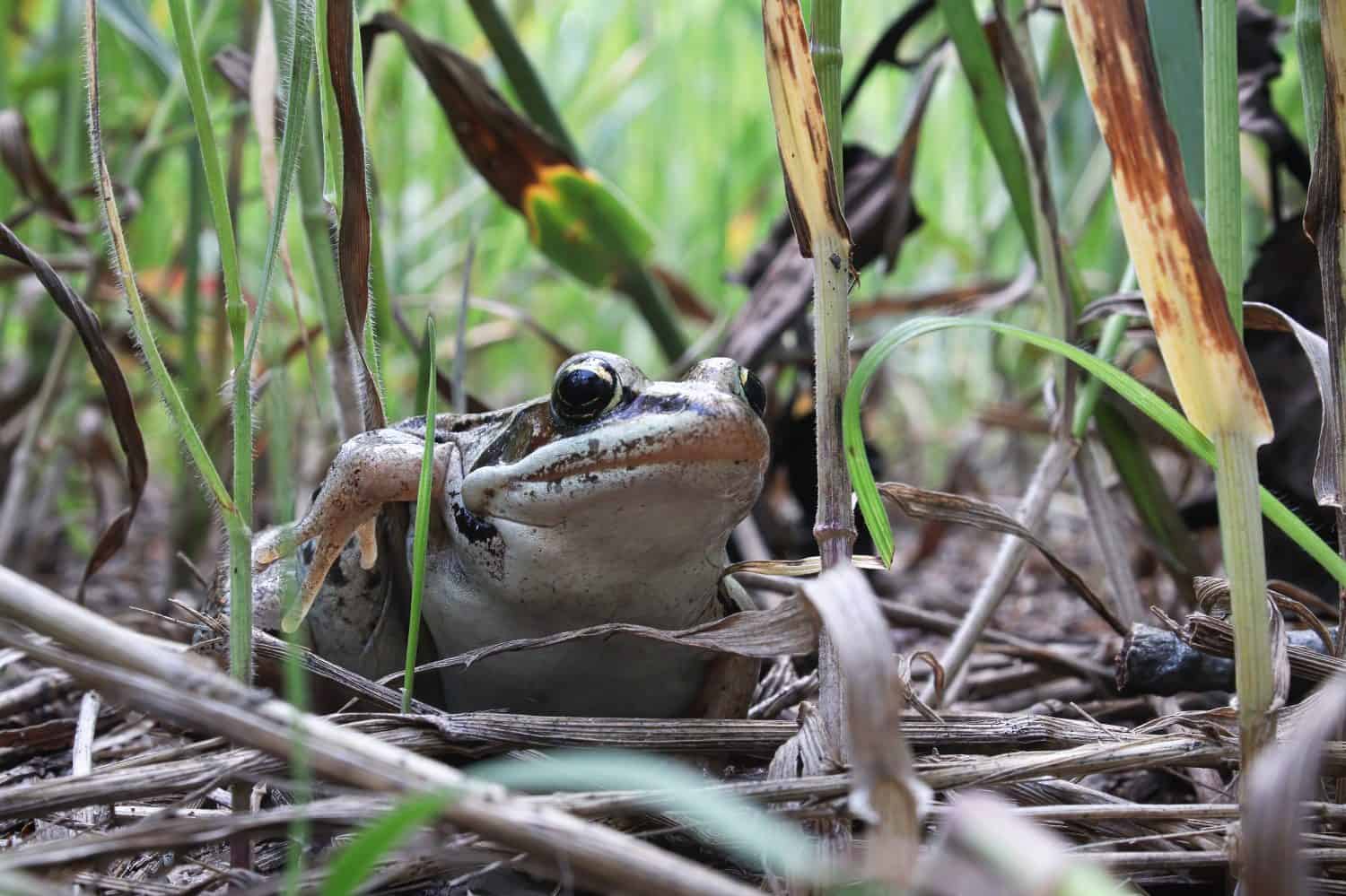
Warmer temperatures signal to the wood frogs that it is time to wake from brumation. As the frogs wake, they begin their journey back to the vernal pool where they were born. In some instances, this can be as far as half a mile.
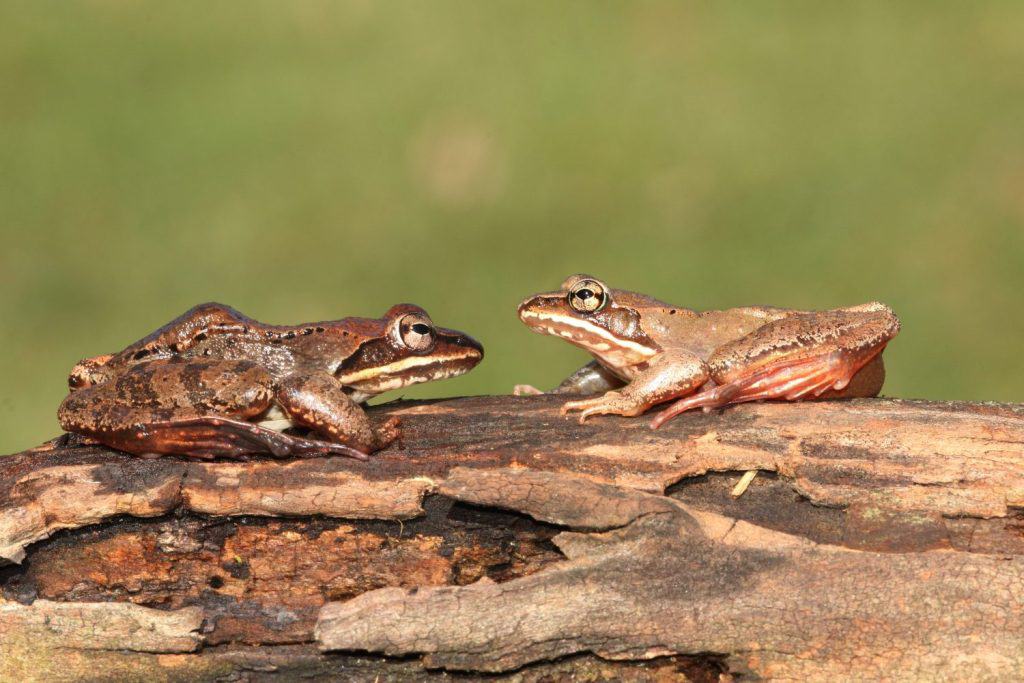
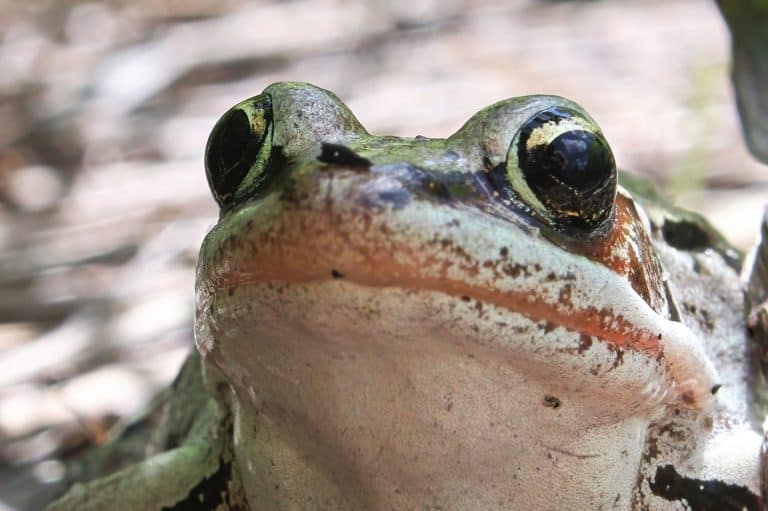
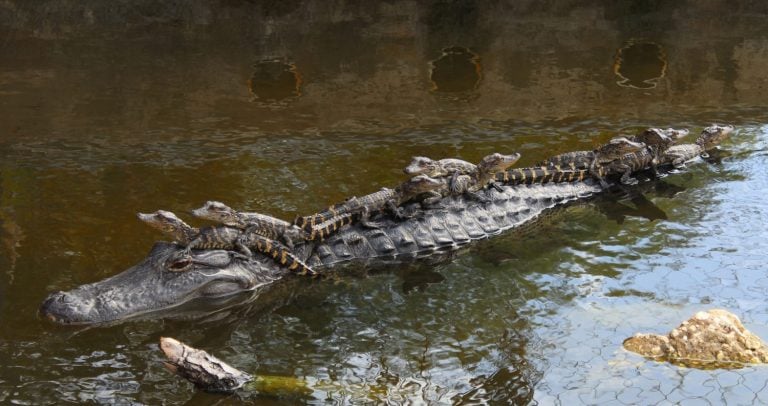
Wood frogs are the first to wake from brumation and sing their song in an attempt to continue their life cycle.
©Steve Byland/Shutterstock.com
The journey may be made during daylight hours, but the same cannot be said about mating, which occurs under the cover of darkness to avoid becoming prey. This is why the males calling for a mate are typically heard at night rather than during the day.
Once a mate is found and eggs are laid, the adults return to a solitary life. They can repeat the mating process one or two more times during their lifetimes, always returning to the same vernal pool to complete the life cycle.
Why Vernal Pools Are Important to the Survival of Frogs
Vernal pools are a temporary body of water that evaporates by summertime. These pools, which last only a few months, are essential to the survival of several frog species. These particular species are known as “obligate species.” Without vernal pools, frog species would be unable to complete their life cycles and would cease to exist.
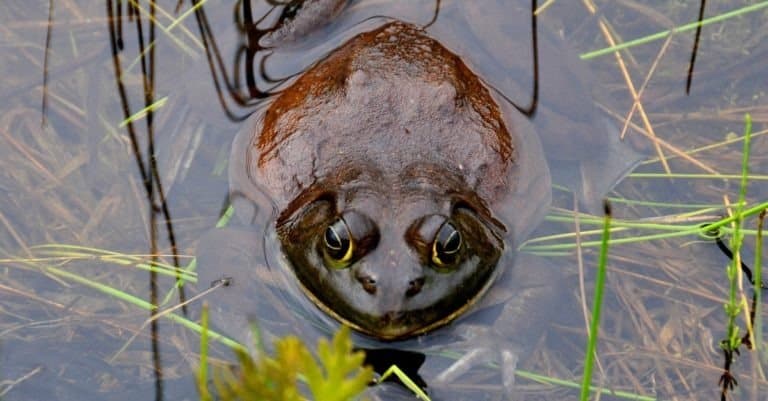
Frogs like the wood frog, spring peepers, and bull frogs head to vernal pools over the course of several weeks to lay eggs. These eggs mature into tadpoles before becoming juvenile frogs.
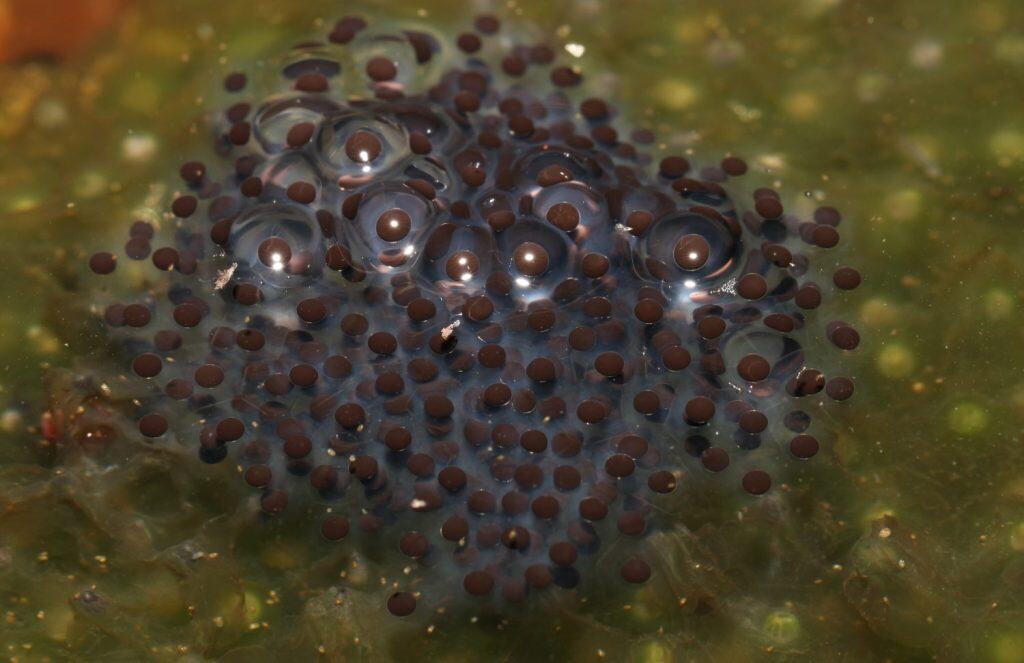
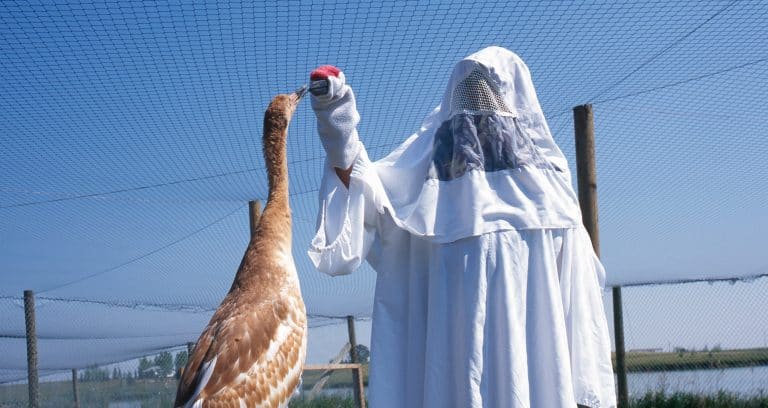
Frogs that lay eggs in vernal pools are “obligate species,” which cannot complete their life cycle without the vernal pools.
©Michael Benard/Shutterstock.com
The beauty of vernal pools is the fact that they are only seasonal. It is for this very reason that frogs lay their eggs in them. Predators that require water to survive, such as fish, do not live in vernal pools. This creates a safer environment from which the frogs can complete their metamorphosis than rivers or streams.
However, vernal pools are still risky environments. Predators such as birds, raccoons, skunks, and even bears will target eggs and tadpoles. Therefore, the larger the vernal pool, the safer developing frogs are from predation and the better their chances of survival.
What Happens to the Frogs in Years of Drought?
Years of drought can have devastating effects on frog species that use vernal pools, either directly or indirectly. If the pools are too shallow, species do not lay eggs. Instead, they may wait until the following year to try again. Frogs that do risk the livelihood of their offspring.
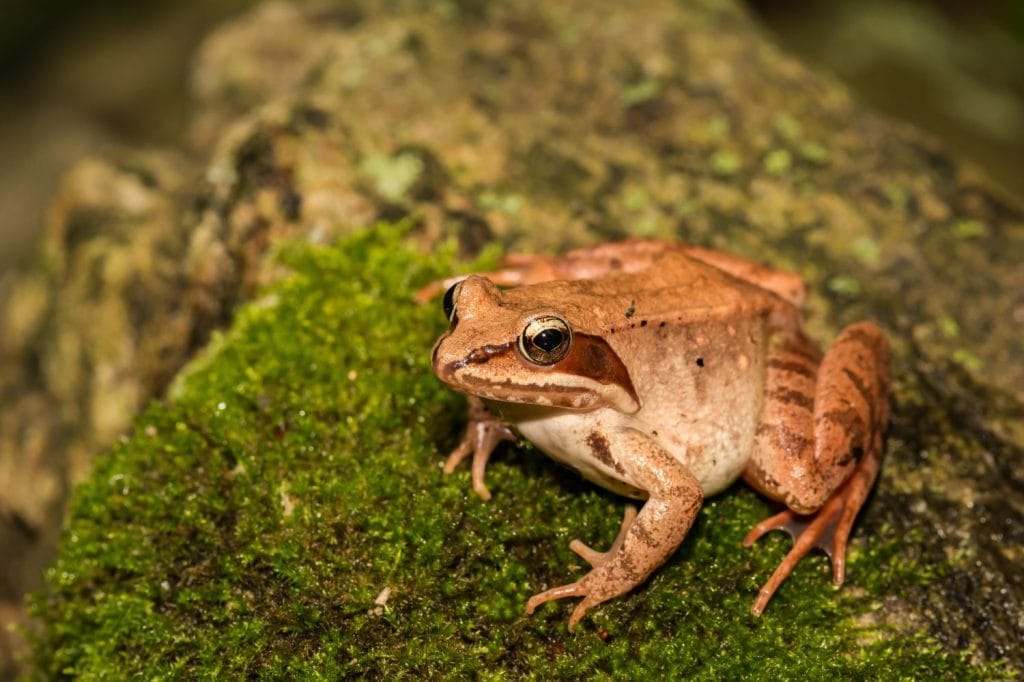
During years of drought, when smaller vernal pools are created, wood frog tadpoles can metamorphose more quickly. However, they will never be as large as wood frogs that developed in non-drought years.
©Jay Ondreicka/Shutterstock.com
Interestingly, wood frogs have adapted to drought conditions. According to a 2021 study published in the journal Oecologia, when vernal pools are low or begin to dry out too quickly, wood frogs speed up their development. The tadpoles will metamorphose quicker, developing into juvenile frogs that are no longer reliant on water to survive.
These juvenile frogs will never grow to be the size of the wood frogs that were afforded the time to develop when water was plentiful in vernal pools. There will also be fewer surviving juvenile frogs when vernal pools dry up quickly. However, those that do survive will have a lifespan akin to that of larger wood frogs. Therefore, in terms of drought conditions or climate change, all may not be lost for these amphibians.
“Silent Springs” Are Leading to the Decline of Frog Species
Vernal pools have been disappearing from the U.S. landscape for decades. As weather patterns change, there are years when frogs are not fortunate enough for their eggs to survive. Either there was not enough water in the vernal pool to last until young frogs were ready to emerge from their watery nursery, or frogs were unable to lay eggs because enough water never accumulated.
Climate change has affected how often vernal pools fill. However, it is humans who have led to “silent springs,” or empty vernal pools across the nation. In California, 90% of the vernal pools have disappeared. The number of vernal pools and the acreage they cover in New York have declined significantly over the last several decades. Pennsylvania has had over 50% of its vernal pools backfilled. These stories are not uncommon to other states. It is the deliberate destruction of vernal pools that has led to the decline of frog and other amphibian populations that will cease to exist if vernal pools vanish.
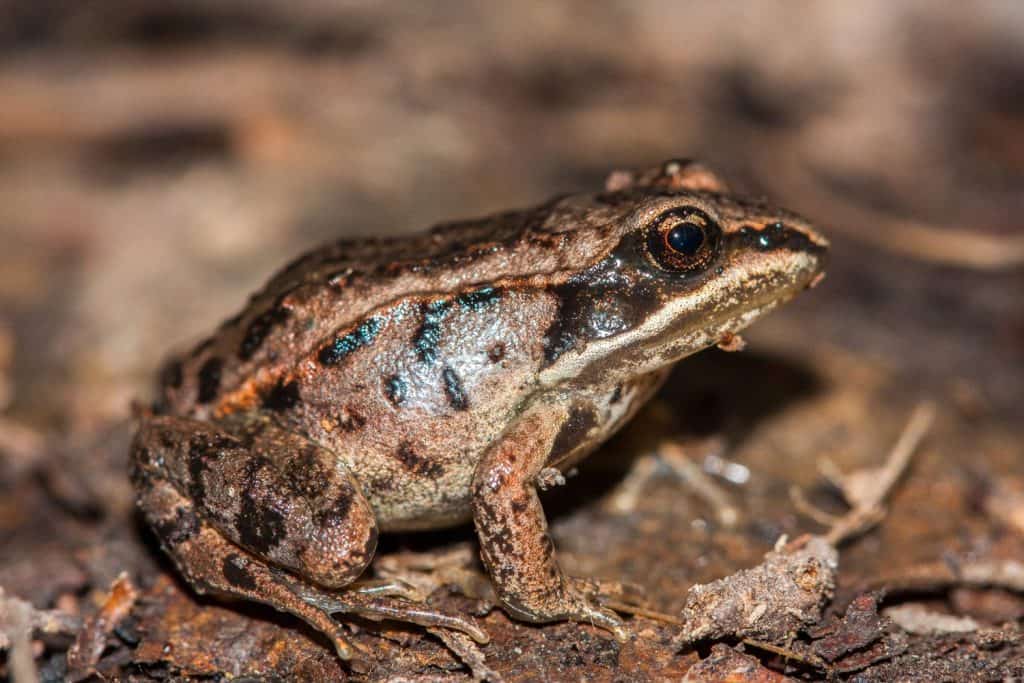
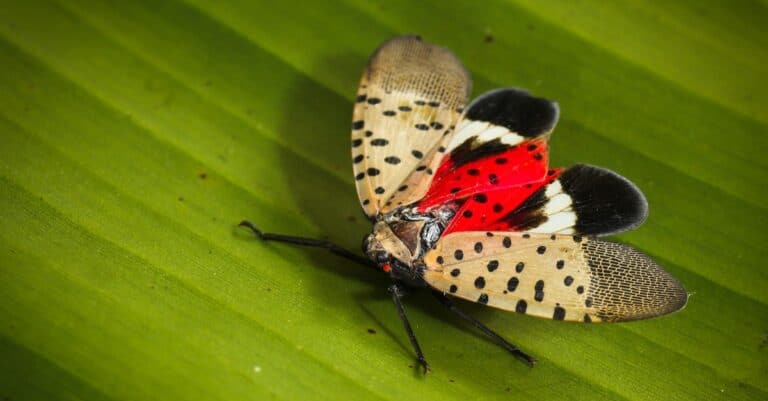
As vernal pools are disappearing, so are the frogs that use them either directly or indirectly.
©Viktor Loki/Shutterstock.com
Several factors have led to the decline of vernal pools. They include:
- Habitat loss
- Habitat fragmentation
- Change in water hydrology
- Degradation of water quality
- Substrate change
- Vegetation change
Vernal pools continue to lose protection. The U.S. Supreme Court decision in Sackett v. EPA changed the definition of “waters of the United States.” In 2023, many vernal pools were no longer considered “jurisdictional” waters of the U.S. because they did not connect to a navigable waterway. Consequently, the protections that these waters once had were lost.
As these essential pools continue to be drained or filled in, the nurseries that once existed for frogs disappear forever. Frogs return to the specific pools they were born in, while bypassing other suitable pools in the process. If their original vernal pools no longer exist, they do not lay eggs and frog populations decline. This is why it is imperative that states recognize these seasonal areas of water as more than murky depressions in the ground. Without a change in outlook, these crucial breeding grounds may completely disappear, along with the wildlife that depend on them.