
Quick Take
- Cows have individual vocalizations that can identify the emitting cow across contexts.
- There is no solid evidence for regional cow accents; claims stem from anecdotes and media, not peer-reviewed research.
- Humans struggle to hear cow call differences without analysis; studies show animals recognize individual calls, not regional accents.
I love accents. They’re a fascinating element in the human diversity stew, helping us identify where in the world a person comes from, right down to a specific region. England, for example, has a fairly recognizable accent—but even within that relatively small country there’s the Cockney of East London, the Scouse of Liverpool, the Geordie of Newcastle, and host of other variations. Depending on the person, some accents are pleasing to the ear, some are not. Me, I’m originally from New England, so I find the thick Boston accent to sound poetic, but there are certainly many who find it abrasive. Accents are so ubiquitous in society we probably don’t think much about them. But here’s something I never considered: Do animals have accents?
Take the humble cow. When you imagine a cow, you probably see a calm bovine in a field letting out that deep sound we all associate with this animal: Moo. Like a dog’s bark or a cat’s meow, cows make this same sound no matter what country that cow happens to reside in. They don’t speak English, French, Spanish, Japanese, etc. depending on where they live. But do they have accents? But what if a cow in Boston sounded different from a cow in Texas? Does a cow in New Zealand sound “drawlier” than one in Scotland? Tales like this have circulated widely on the internet and in the press for nearly two decades. Some farmers swear they can hear differences, and some researchers have weighed in with hypotheses. So, what does actual science say about cows, accents, and whether cows themselves understand any of this?
What Is a “Moo” Anyway?
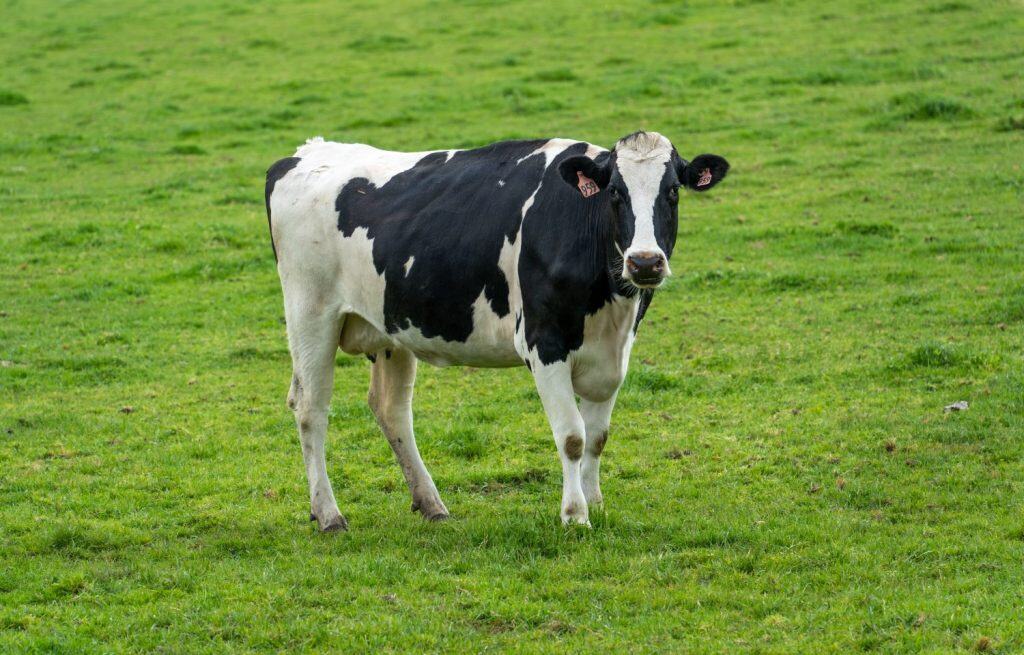
Cows make many sounds–not just the classic moo we all tend to associate with them.
©Wirestock Creators/Shutterstock.com
The word moo is onomatopoeic. English speakers wrote it because it sounds like the noise cows make. In other languages, the cow sound is rendered differently (e.g., meuh, muu), depending on how listeners perceive it.
Before we get into accents, it helps to understand what a cow’s vocalizations actually are. Biologically, these sounds result from air pushed through the vocal folds and shaped by the mouth and nasal passages. The resulting sound varies in frequency (how high or low it is), amplitude (loudness), and timing. Different situations and states (e.g., distress vs. calm) produce acoustically different moos.
Cows produce several kinds of sounds: low rumbles, high calls, and the classic open-mouth moo we all recognize. These sounds serve as vocal communications with other cows, often conveying social information:
- A low, calm rumble when a cow is near its calf.
- A louder, higher-pitched call when separated or in distress.
- Vocalizations to signal hunger, isolation, or excitement.
These “moos” aren’t words in the human sense, but rather contact calls—sounds used to maintain social bonds and coordinate behavior within a herd. They function much like such calls in other social animals, like the bleat of a sheep or the whistle of a dolphin. And while we may not necessarily think of them as “contact calls,” humans do this as well—like saying “mm-hm” or “uh-huh” to maintain conversational connection without adding new information.
How Do Scientists Study Cow Vocalizations?
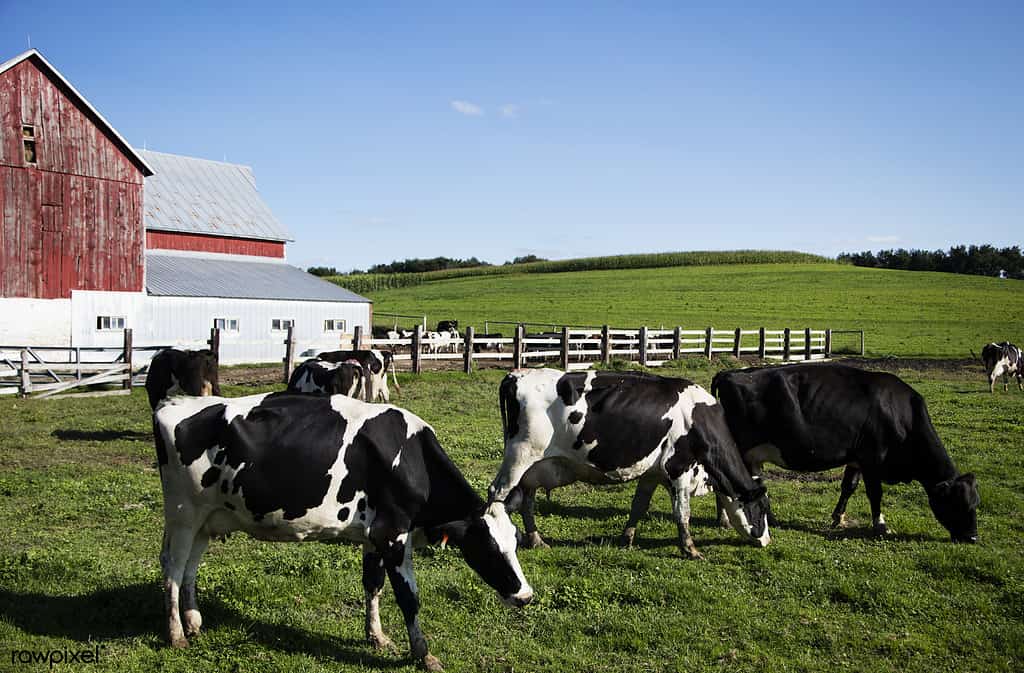
Individual cows do indeed make vocalizations that are unique to them.
Animal behavior researchers use acoustic analysis tools to record and measure sound. These analyses look at parameters like pitch, duration, frequency variation, and amplitude to characterize calls. Like studies of bird song or whale calls, scientists can compare these features across individuals and situations.
In cows, researchers have identified consistent individual differences, which means individual cows can be acoustically distinguished from one another across situations like feeding or isolation.
In a 2019 Scientific Reports study, researchers recorded 333 high-frequency vocalizations from a group of Holstein-Friesian heifers under different emotional contexts and found that specific acoustic features remained stable enough that statistical models could identify the emitting cow above chance levels. In laymen’s terms, this means cows have something like distinct voices, similar to how individual humans have recognizable voices, even if they all produce what we simply call a “moo.”
But does that qualify as an accent?
Did Scientists Find Regional Cow Accents?
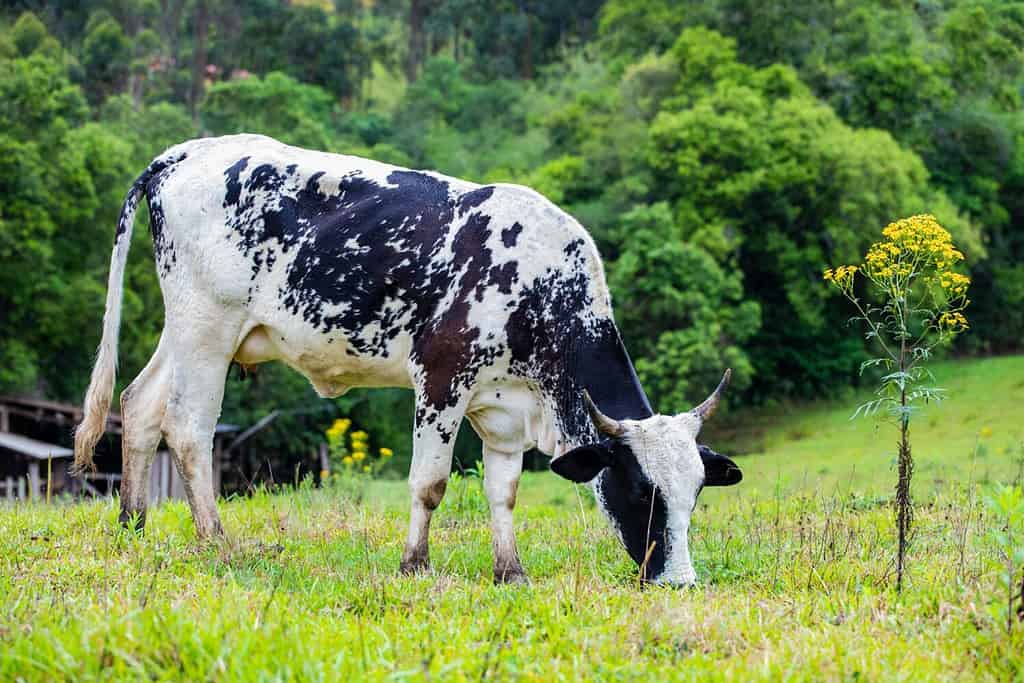
The idea of cow accents was popularized in part by reports from farmers who claimed they could hear these accents with their naked ear.
©difgomez/Shutterstock.com
Where the idea of cow accents came from
In 2006, widespread media stories—often traced back to a British cheesemakers’ group and comments from a phonetics professor—suggested that cows’ moos might vary regionally. Many headlines claimed cows in southwestern England had a “Somerset drawl.” Farmers reported hearing subtle differences between herds in different counties.
Those anecdotes did spark interest and public fascination, but they were not grounded in robust scientific evidence of true geographic dialects. Recent fact-checking by science communicators concluded that in the strict sense of dialects, the evidence for regional accents in cows is extremely limited or unproven. The original “cow accents” story was amplified by media without solid research to back up the claims.
So do cows really have regional accents?
While it’s fun to think about, there is no widely accepted published scientific study showing that cows in different countries or regions have systematically different acoustical patterns attributable to geographic “accents.” Most of the accent talk comes from farmers’ subjective impressions and press coverage rather than peer-reviewed acoustic research.
In other animal species, such as songbirds or whales, researchers have actually documented group-specific vocal patterns—dialects. It’s not impossible that cows could have similar patterns, but convincing evidence of regional cow dialects has not been demonstrated scientifically.
Okay, So They’re Not Technically Accents, but…
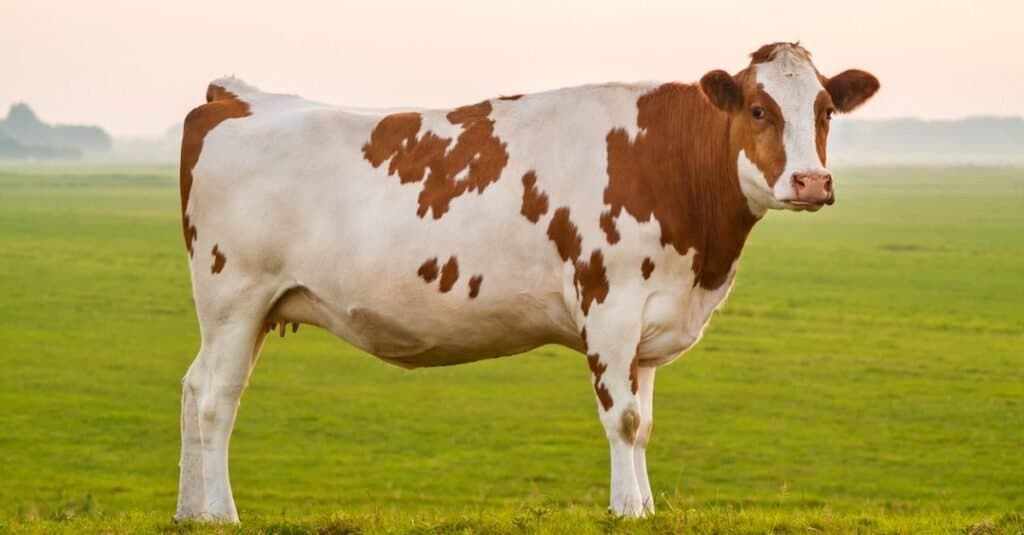
Research shows cows differentiate the individualized vocalizations of other cows.
©iStock.com/DutchScenery
Can Humans Hear the Difference?
Humans are good at perceiving speech differences among other humans because we’ve evolved to attend to those cues. In cows, researchers have measured acoustic features statistically, but our ears are generally not sensitive or trained enough to reliably detect subtle distinctions between individual cows’ moos unless we study recordings carefully. Farmers might think they hear differences, but that’s not the same as scientifically validated evidence of regional accent patterns.
Can Cows Hear the Difference?
Here’s where research does support something interesting: cows can recognize individual vocalizations. Studies show that calves can recognize their own mother’s calls and differentiate them from calls by other cows, even without visual cues, suggesting that cows can discriminate among voices acoustically.
Likewise, acoustic individuality in cow calls is stable enough that other cows could use those cues to identify familiar individuals, the same way social animals use contact calls to maintain group cohesion.
However, this individual recognition is not the same thing as perceiving a “regional accent.” They are separate phenomena; one is about individual identity, and the other is about group differences in vocal patterns.
How Do Cows Actually Use Vocal Differences?
Cows do use their voices meaningfully:
- Mother and calf bonding: Newborn calves quickly learn their mother’s unique calls, and mothers respond preferentially to their own calves.
- Emotional state: Studies show cows change pitch and pattern depending on hunger, separation, or excitement, signaling their needs to herd mates.
- Individual identity: High-frequency calls carry enough consistent traits that statistical models can classify which cow is calling based on vocal parameters.
These patterns show that cow vocalizations are not just random noise, they are structured signals with social functions.
The Verdict: Not Accents, but Still Pretty Cool
©brandtbolding/iStock via Getty Images
Accents add color and flare to human speech. Think of some of the most famous movie lines. Are we still quoting “Say hello to my little friend” from Scarface if it wasn’t said in that Cuban accent? Is Good Will Hunting’s “My boy’s wicked smaht” as fun to say without that harsh Boston-ness? Without the iconic Austrian accent, does Arnold Schwarzenegger ever even become a star? How much fun would it be if this happened in cows?
The idea that cows have regional accents in the way humans do is an entertaining thought, but sadly the scientific evidence for this is weak or absent. But their vocalizations are still fascinating. They use distinct calls to recognize each other, communicate emotional states, and keep social bonds strong within the herd. In other words, each “moo” carries meaningful information. It may not be “Say hello to my little friend,” but its pretty impressive for an animal we usually just think of as quietly grazing in a field.