
Quick Take
- Mountain lions lack the ability to roar, and the reason why reveals a surprising anatomical secret that separates them from lions and tigers. See the anatomy →
- Hearing a mountain lion scream nearby doesn't necessarily mean you're in danger, though your instinctive reaction might be exactly the wrong move. Get the safety tips →
- The scream isn't just terrifying. It serves a very specific biological purpose that keeps the species alive. Discover the purpose →
- Baby mountain lions sound nothing like what you'd expect from an apex predator. Hear the cub sounds →
While hiking in the forest, you hear a piercing scream that causes your hair to stand on end, sending shivers down your spine. It is a bone-chilling scream that can only come from a fully grown mountain lion. A person wailing in agony, a nightmarish ghoul, the call of the wild—there are many ways to describe the distinct scream of a mountain lion. These majestic creatures possess an unmistakable sound, which we’ll be exploring, along with a video that captures their vocalizations. Follow along to experience the scream of a mountain lion and learn about the science behind it.
Why Do Mountain Lions Scream?
Mountain lion screams are a part of mating rituals. The hair-raising scream helps the females attract potential mates. Since mountain lions have large territories, it can be challenging for them to determine when a female has gone into heat, so things have to get loud.
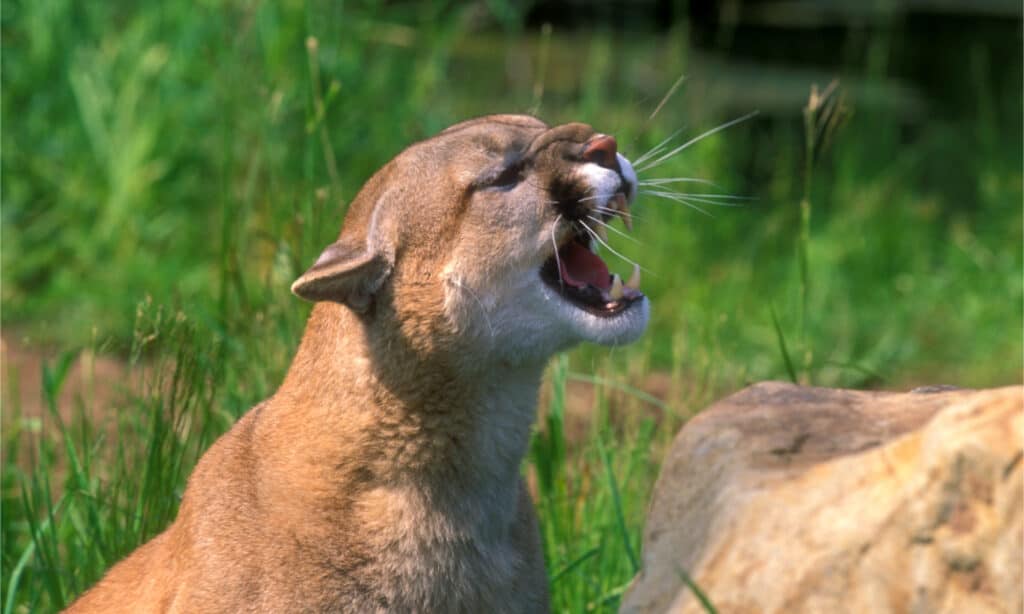
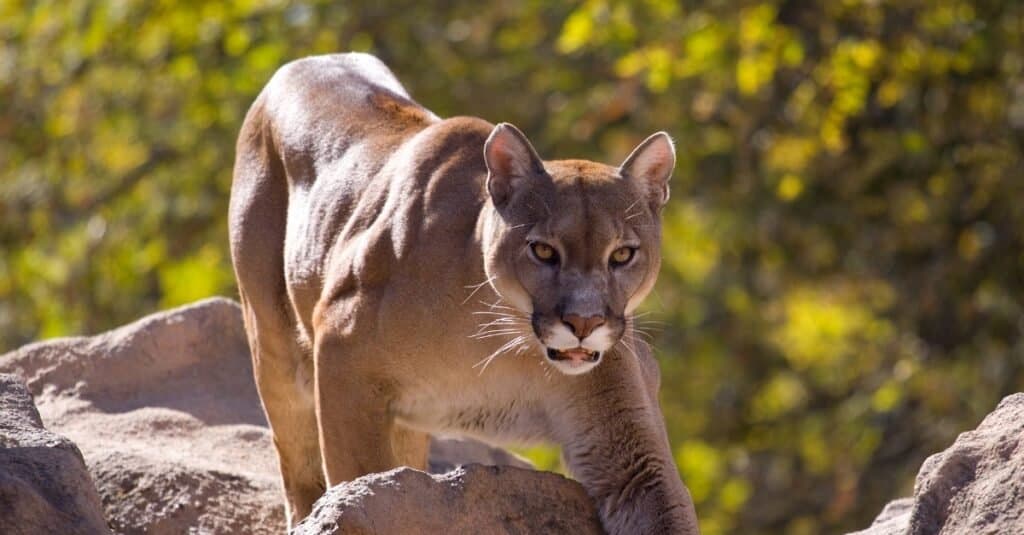
Loud screams help mountain lions communicate over vast distances.
©Chris Alcock/Shutterstock.com
Female mountain lions signal their availability to potential mates by screaming.
Do males scream? Yes, but less often. Male screams are usually associated with territory disputes and keeping rivals away from potential mates.
Reproduction and Mating: Connection Between Scream Vocalizations and Breeding Season
When is mountain lion mating season? Breeding can happen any time of the year. Mountain lions don’t have a specific breeding season. After a gestation period of around 84 to 98 days, a litter of one to six young is born. The often blue-eyed cubs weigh just under a pound at birth and have camouflaging black spots, which fade as they mature.

Mountain lion cubs are usually blue-eyed and weigh a little less than a pound.
©critterbiz/Shutterstock.com
Mountain lion cubs feed on their mother’s milk and gradually transition to solid food between five and seven weeks. Once they reach this stage, the tiny cubs begin hunting small prey like skunks and rabbits. As they grow and mature, they progress to hunting larger animals like deer and elk.
Encountering a Mountain Lion: Safety Tips and Precautions When Hearing Their Scream
You’d think mountain lion screams are common, right? Not really. These calls are mostly associated with mating. The likelihood of hearing a scream is low unless you’re near a female in heat. If you hear a mountain lion scream, stay calm and immediately retreat to a safe location. Don’t crouch down since this can make you appear vulnerable. And don’t run since this will engage the cat’s predator-prey drive. If you don’t have eyes on the cat, be cautious of your surroundings as you head toward safety.
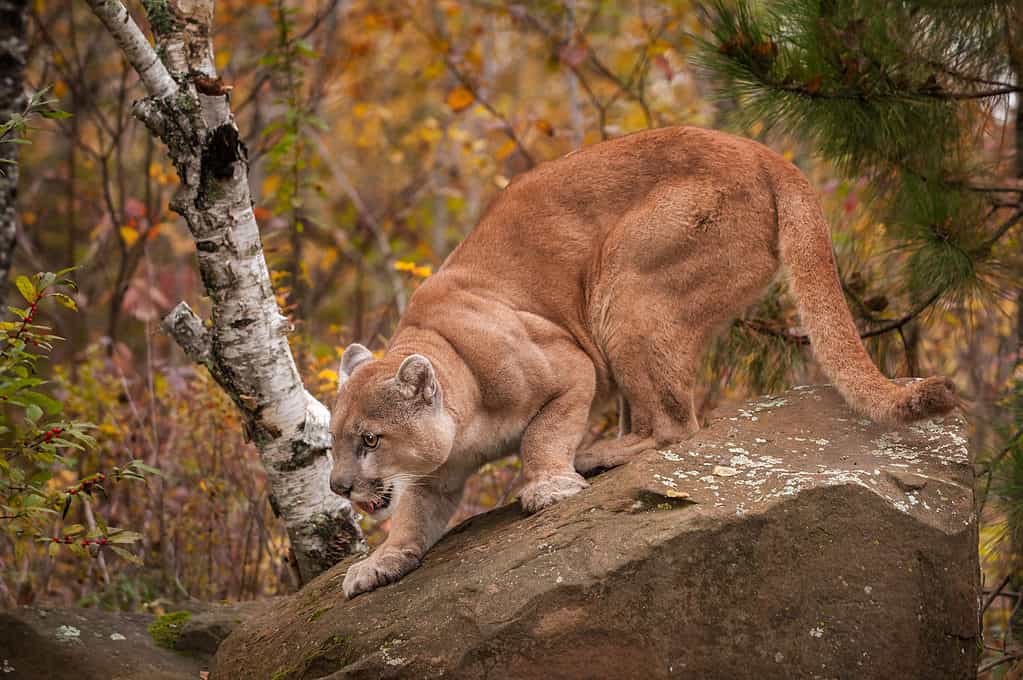
If you encounter a mountain lion, stay calm, avoid running, and don’t crouch down.
©Holly Kuchera/Shutterstock.com
Hiss vs. Purr
Mature mountain lions use growls, hisses, and spits to express dissatisfaction. If you ever encounter a hissing mountain lion, beware. When a mountain lion hisses, it’s a warning sign to back off.
Mountain lions purr when they’re happy and relaxed. To stay safe, never approach a mountain lion, no matter how they’re behaving.
Chirping and Whistling
Baby mountain lions sound like little birds calling out to their mother. The chirps and whistles are more prevalent during the earlier months of the kittens’ lives. As young lions grow older and stronger, their diet transitions from their mother’s milk to smaller prey.
Mountain Lion Larynx
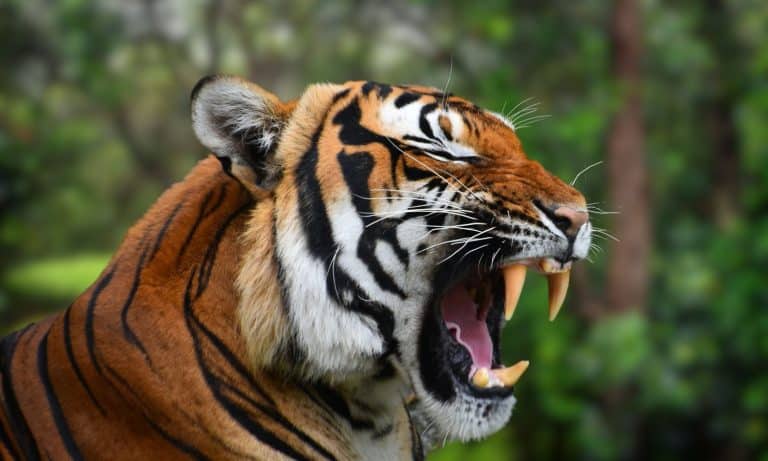
Roaring cats like lions, tigers, leopards, and jaguars have specially shaped vocal cords, a layer of soft fat, and a partially flexible hyoid bone that together allow them to roar. These anatomical features are absent or differ in the larynx of non-roaring cats.
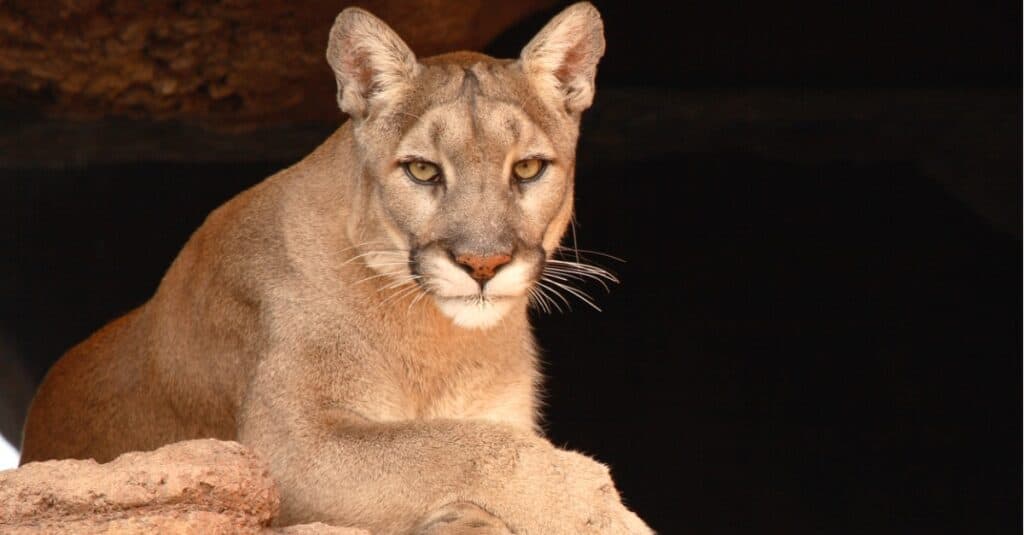
Mountain lions hMountain lions have vocal cords similar to smaller cats; this is why they can’t roar.
©iStock.com/gatito33
Roaring cats have longer, thicker vocal folds, giving their sounds a deeper pitch and greater resonance.
Non-roaring cats like mountain lions, pumas, cheetahs, clouded leopards, and bobcats have vocal folds similar to those of smaller cats. These cats can’t roar because their vocal folds have a different structure, resulting in less efficient sound transfer.
Mountain lions are distributed throughout the Western United States, with established breeding populations in 15 to 16 states.
©iStock.com/SandmanXX
The Sound of a Mountain Lion Scream
Mountain lions might be unable to roar, but they can produce an unforgettable scream. It is this scream that enables their species to continue to exist. The distinctive scream of a mountain lion serves as a mating call for females and a territorial warning for males. Females scream to attract potential mates, while males use their screams to deter rivals.
Listen to a mountain lion scream for yourself in the video below.