
Quick Take
- Female Photuris fireflies use their light to mimic other firefly species, attracting unsuspecting males, ambushing them, then eating them.
- The Photuris firefly consumes males of other firefly species to steal their protective steroids (lucibufagins).
- Male Photuris fireflies often use their light for mating purposes, but they are not primary hunters like females.
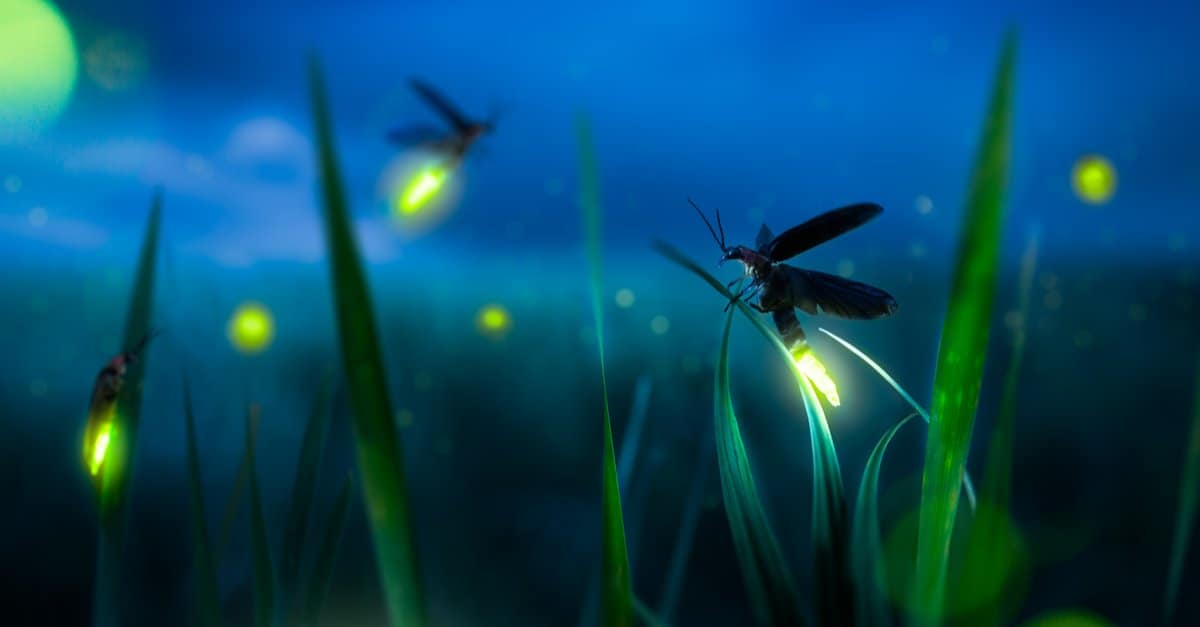
Of all the intriguing insects out there, the Photuris firefly has always been one of my favorites. This “femme fatale” uses light as a weapon, mimicking the specific flashing mating signals of other firefly species. When the hopeful male arrives for a date, he becomes dinner.
Scientifically speaking, this deceptive tactic is an act of survival. When the female firefly consumes its prey, it doesn’t just absorb nutrients—it inherits protective steroids, aiding in its safety against predators.
Looking to learn more about this species of firefly and its deadly trickery? We speak with a pest control professional about this legendary lightning bug.
What Is the Photuris Firefly?
The Photuris firefly, also known as the “femme fatale” of lightning bugs, is a predatory firefly that eats its “mates.” “Breakfast” by Dove Cameron is essentially their theme song. The female fireflies of this genus use their light to impersonate other firefly species and attract mates. Once the unsuspecting males approach, the females ambush, kill, and consume their victims.
“All fireflies use light, but only Photuris fireflies use light to kill,” says Nicole Carpenter, pest control professional and the President at Black Pest Prevention, a local Charlotte (NC) pest control company. “While other firefly species use light to attract mates for reproduction, Photuris fireflies use it to kill and eat them. They ‘call’ under the pretext of mating signals, but their intent is always to kill.”
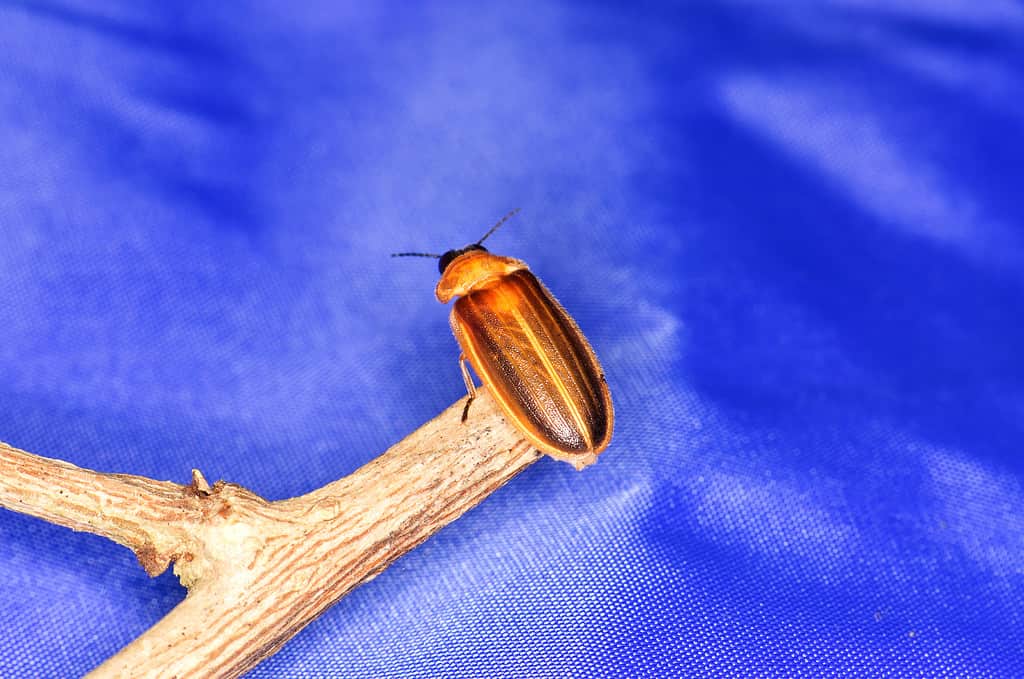
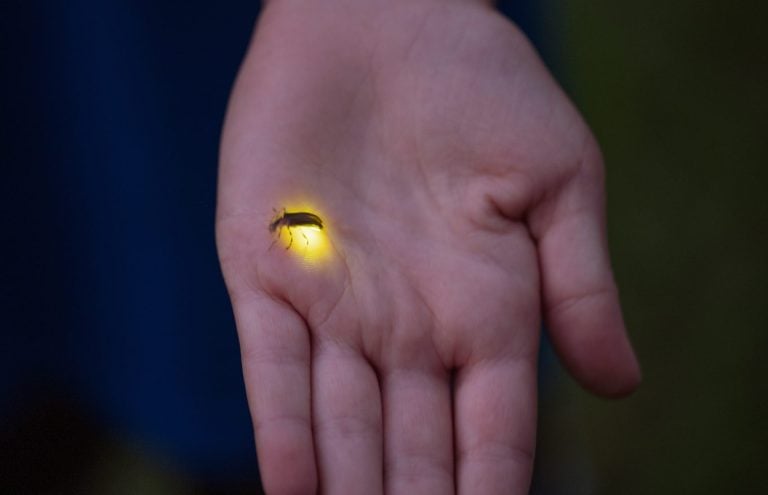
The Photuris pennsylvanica is one of the firefly species in the genus Photuris.
©iStock.com/Hlib Serbskyi
Not all Photuris fireflies are females, but females are the only ones of the genus to use their light to lure and eat their prey. However, the males of this genus do still use their light as a form of mimicry purely for mating purposes. In fact, they attempt to attract the predatory females of the genus for mating, as this is their primary role.
Female Photuris fireflies, on the other hand, are the main hunters of the genus. They typically target lightning bugs of other species, primarily the genus Photinus, which is likely the type of fireflies we’re used to seeing in North America. When these poor, unsuspecting males follow the light of the predatory Photuris female fireflies, they intend to mate—not to become dinner.
“Males think they are responding to a potential mate, but Photuris uses this light deceptively and ambushes them instead—a ‘femme fatale’ in the world of bugs,” says Carpenter.
All fireflies use light, but only Photuris fireflies use light to kill.
Nicole Carpenter, pest control professional and President of Black Pest Prevention
Why Photuris Fireflies Prey on Other Lightning Bugs
Contrary to popular belief, Photuris fireflies don’t just prey on other lightning bugs as food sources. In fact, they often do so to obtain their defensive toxins. Also called “lucibufagins,” these toxic steroids help deter larger predators, like birds, spiders, and bats. Photuris females do not naturally produce these steroids and must steal them for self-protection.
“Hunting with deceptive light is not the only way Photuris fireflies can hunt, but it’s the most common way they obtain food because other fireflies are rich in nutrients, while [being] easy to lure without a chase,” Carpenter explains. “By killing other fireflies, they also ‘steal’ their poison that they use then for protecting themselves from predators. Since nature didn’t give Photuris fireflies the ability to produce these toxins themselves, nature had learnt them to acquire them.”
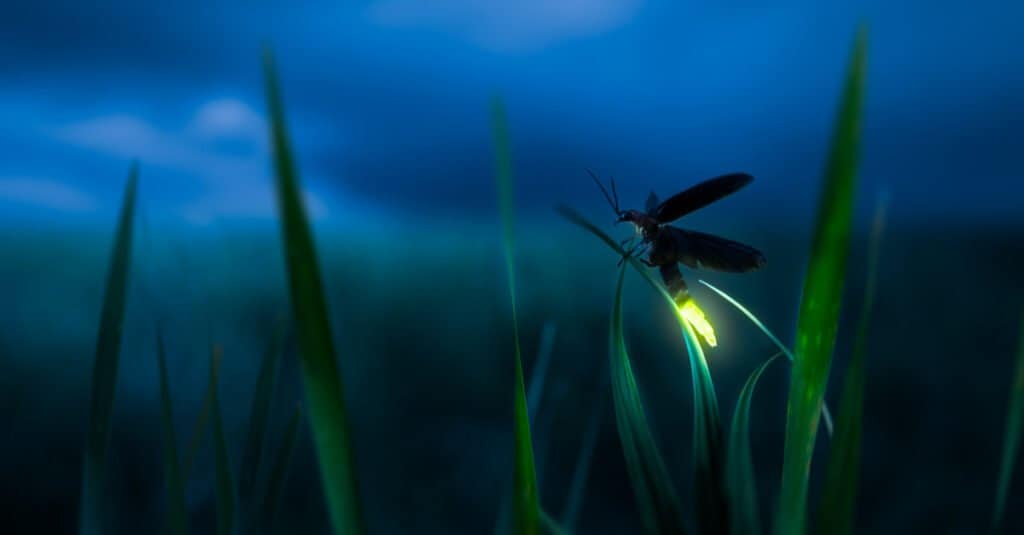
Not all species of firefly have the ability to produce light.
©Fer Gregory/Shutterstock.com
According to early research on lucibufagins, this defensive steroid in lightning bugs is often enough to kill a lizard. This is why many experts advise pet owners against feeding their reptiles lightning bugs. Lucibufagins are unpalatable and poisonous to the Photuris firefly’s predators.
When Photuris fireflies kill and eat other fireflies, however, this steroid does not harm them. Rather, it gives them the power and resilience to deter predators.
“Even though using deceptive light is not the only way Photuris fireflies know how to get food, this one is still the most effective because it satisfies all the demands of this species—high-nutrient food and protective toxins that almost no other prey, except for other fireflies, can provide,” Carpenter says. “While Photuris fireflies use light to hunt, they also use it for normal mating, and another firefly never knows whether the signal means courtship or danger.”
Photuris fireflies don’t just prey on other fireflies, however.
“Sometimes Photuris fireflies, especially larvae, hunt snails and other soft-bodied insects, which they kill by crawling to them and injecting paralyzing fluids,” Carpenter adds.