Quick Take
- Preventing total extinction necessitated a successful recovery from a remnant population of only 1,000 bison.
- The Homestead Act of 1862 turned 160-acre parcels into logistical obstacles for natural herd movement.
- Nebraska passed over the bison for state mammal status in 1981 in favor of the white-tailed deer.
- Native communities maintained seasonal movements specifically to reconcile riverbank agriculture with the bison’s path.
Nebraska never named the plains bison as its official state mammal, yet this large grazer remains central to the state’s frontier story. Long before sod houses, barbed wire, and steel plows reshaped the land, immense bison herds guided travel, trade, and survival across the Plains. Native nations built their seasonal movements around these animals, while the grasslands responded to the steady rhythm of grazing and migration. When railroads and homesteaders arrived, the sudden loss of bison mirrored the swift conversion of open prairie into fenced farms and towns.
Although Nebraska selected the white-tailed deer as its official mammal in 1981, the plains bison still holds symbolic power. It represents the earlier prairie world that existed before large-scale settlement, a world shaped by grass, fire, weather, and movement. The bison’s story links Nebraska’s ecological past to its cultural memory, showing how much the state changed in a single lifetime.
A Prairie Powerhouse: Plains Bison (Bison bison bison)
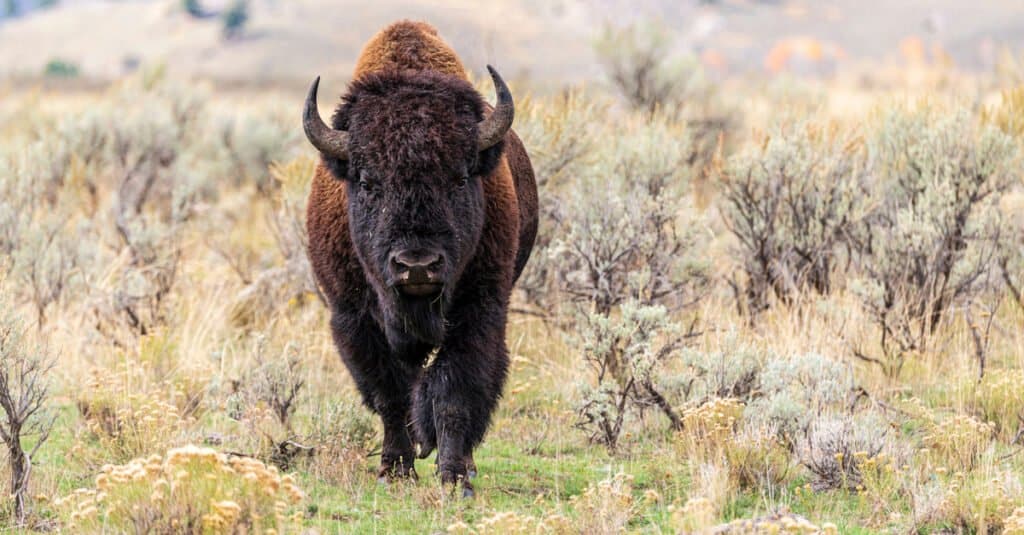
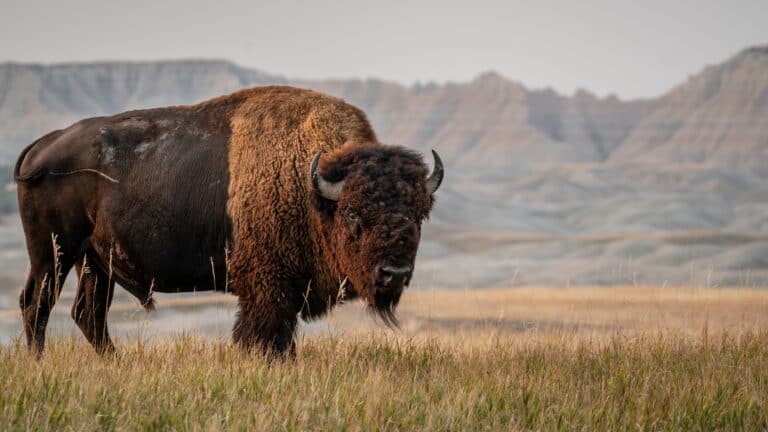
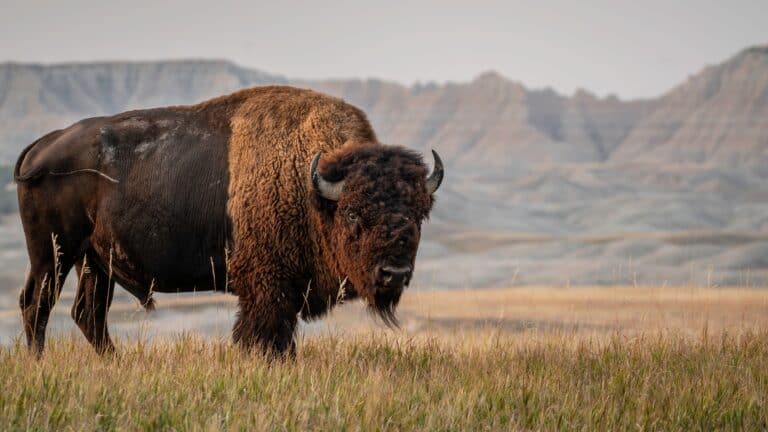
Plains bison are large powerful herbivores.
©Grey Mountain Photo/Shutterstock.com
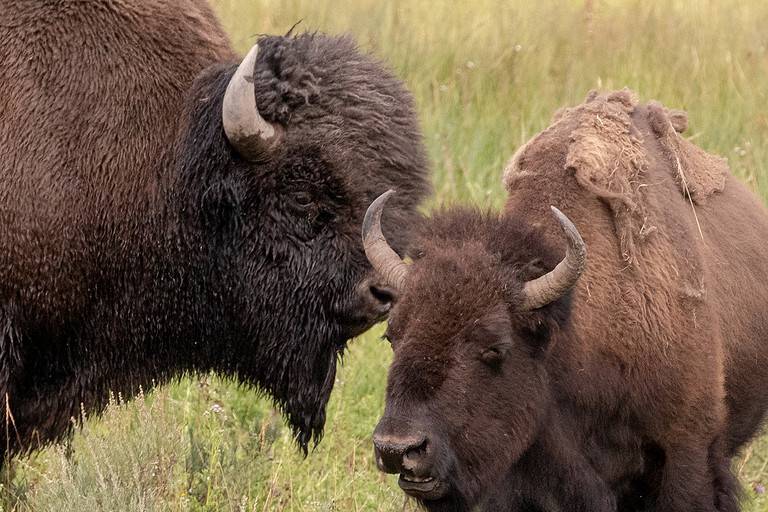
The Plains bison (Bison bison bison) is one of the most recognizable animals of the North American Great Plains. These large, powerful herbivores once roamed the region in massive herds, shaping the land through their daily movements and grazing. Plains bison can be told apart from the larger wood bison by their more rounded shoulder hump and thicker hair on their front legs. Adults can weigh up to 2,000 pounds, yet they are surprisingly agile, able to run fast and turn quickly when needed.
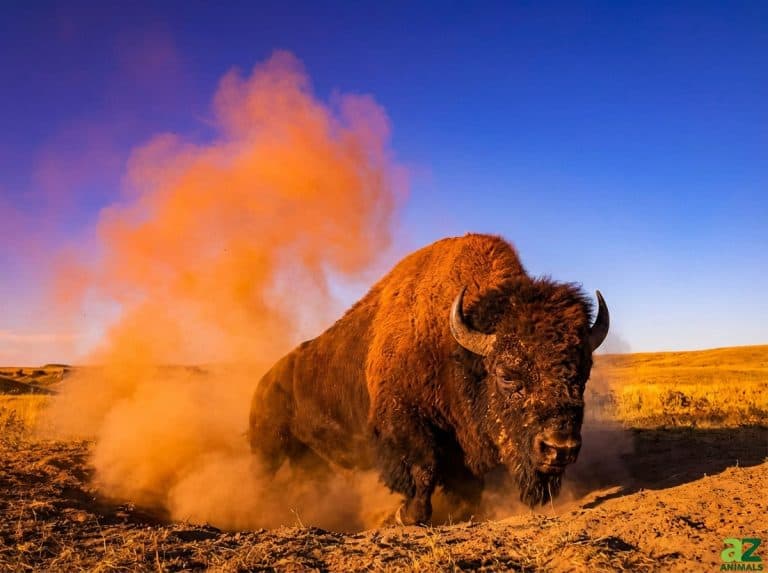
Bison play an important role in keeping prairie ecosystems healthy. As they graze, they prevent any one plant species from taking over, which helps maintain a mix of grasses and wildflowers. Their habit of rolling in the dirt, called wallowing, creates shallow pits that collect rainwater and provide shelter for insects and small animals. Once pushed close to extinction, Plains bison are now protected in parks and preserves, where they remain a powerful symbol of the American landscape and a reminder of the plains as they once were.
Native Nations and a Bison-Centered Life
For Native peoples across present-day Nebraska, the plains bison supported daily life in practical and spiritual ways. Tribes such as the Pawnee, Ponca, and Lakota organized seasonal routines around planting crops near rivers and traveling to hunt bison at certain times of year. This system balanced farming with mobility, allowing communities to draw food and materials from multiple landscapes.
Nearly every part of the bison had a purpose. Meat fed families and could be dried for later use. Hides became clothing, blankets, and tipi covers. Bones and horns were shaped into tools, weapons, and ceremonial items. Beyond these uses, bison held deep cultural meaning. Stories, songs, and ceremonies honored the animal’s role in sustaining life. When settlers entered Nebraska, they encountered a landscape already shaped by generations of Native knowledge tied closely to bison migrations.
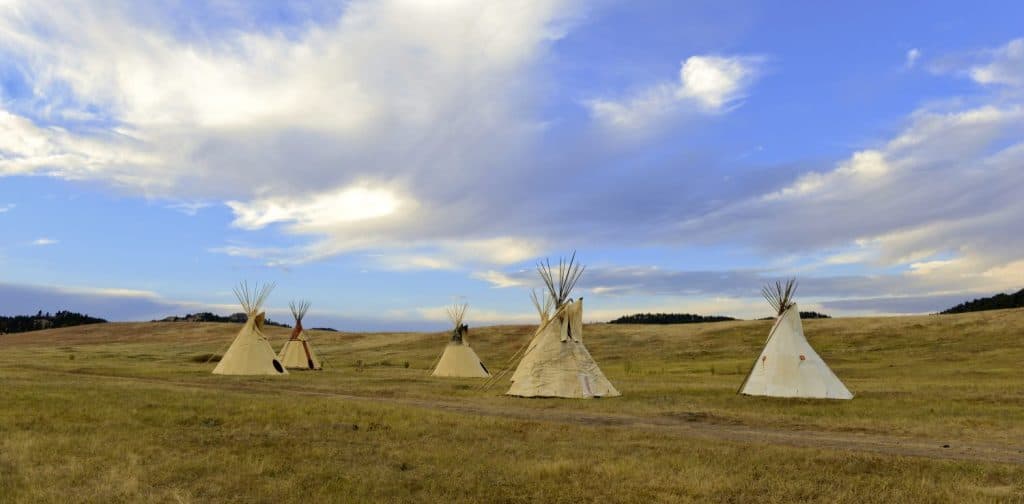
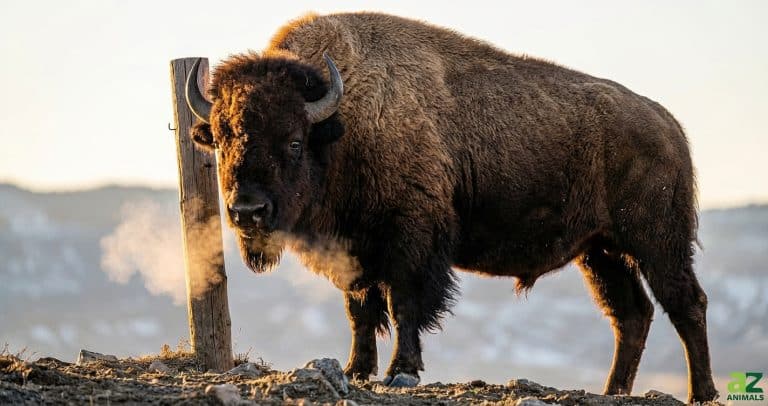
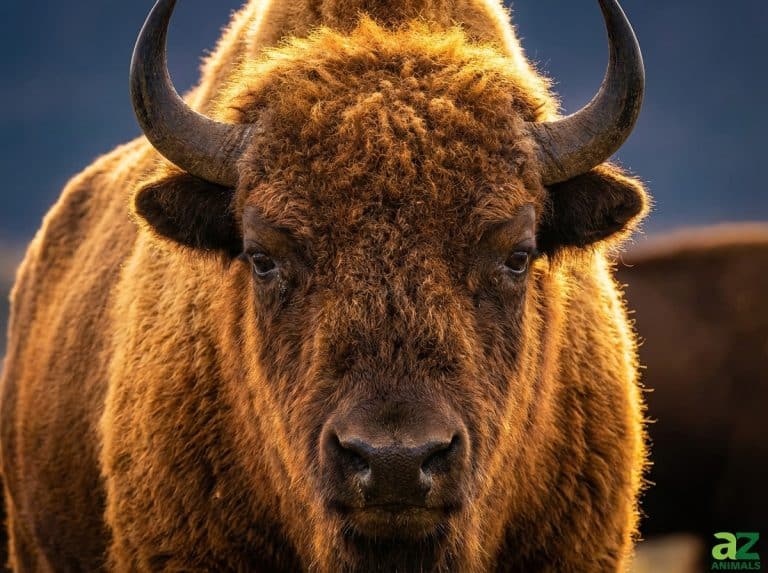
Bison were a central pillar of the economy and society of indigenous tribes on the Great Plains.
©nyker/Shutterstock.com
Homesteads and a Transformed Prairie
The Homestead Act of 1862 accelerated change across Nebraska’s open country. The promise of 160 acres drew settlers eager to farm and claim land. As homesteads spread, bison came to be seen as competitors rather than partners in shaping the prairie. Ranchers worried about shared grazing and the spread of diseases such as Texas tick fever and brucellosis between wild and domestic herds.
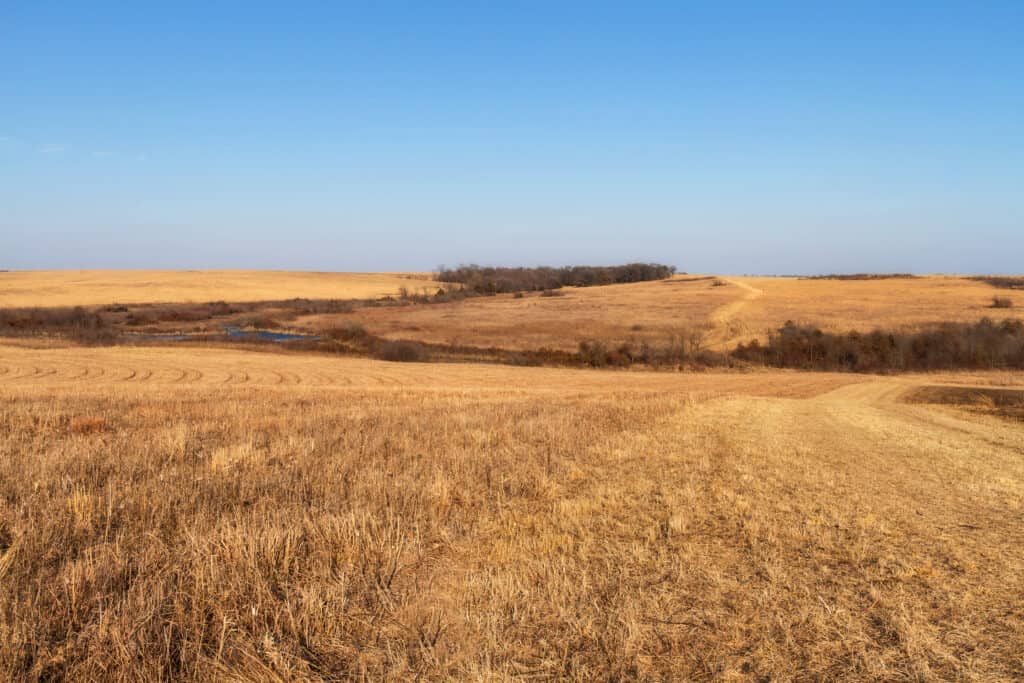
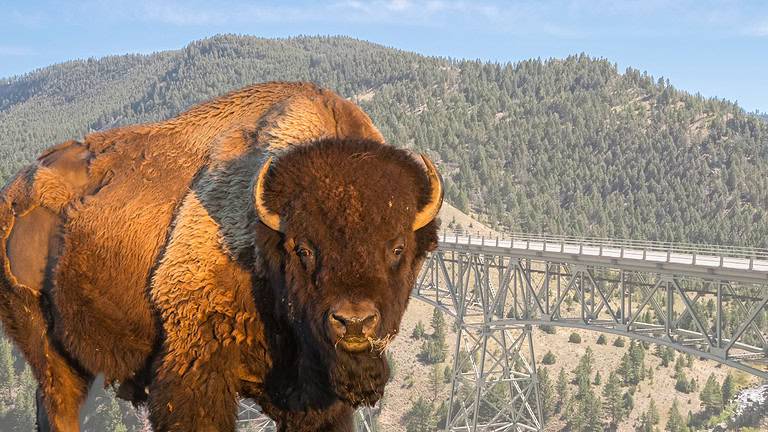
Open grasslands that once supported roaming bison were gradually divided as homesteads spread across Nebraska.
©TommyBrison/Shutterstock.com
Government policies and local practices favored cattle and fenced land over free-ranging grazers. Settlers also gathered bison bones left behind after large-scale hunts, selling them for fertilizer and industrial processing. These bone collections removed the final physical traces of the herds. As farms replaced grasslands, the disappearance of bison became a quiet backdrop to more familiar frontier images of sod houses, windmills, and plowed fields.
Government Policy and Control of the Plains
The loss of bison cannot explain Nebraska’s frontier history without addressing federal policy. Government officials understood that bison supported Native independence by providing food, clothing, and trade goods. As treaties were negotiated, revised, or broken, the removal of bison weakened Native communities and increased dependence on government rations.
Railroads, military forts, and land laws worked together to open the Plains to settlement. The near elimination of bison removed a major obstacle to fencing, farming, and permanent towns. When people describe frontier expansion as progress, the cost included not only cultural disruption but also the destruction of an ecological system built around free-moving herds. Nebraska’s landscape was reshaped through policy as much as through plows.
From Collapse to Conservation
By about 1880, plains bison numbers had dropped from tens of millions to fewer than 1,000 animals scattered across the continent. A small group of ranchers, conservationists, and tribal leaders stepped in to prevent complete loss. They gathered surviving animals into protected herds and began arguing for legal safeguards.
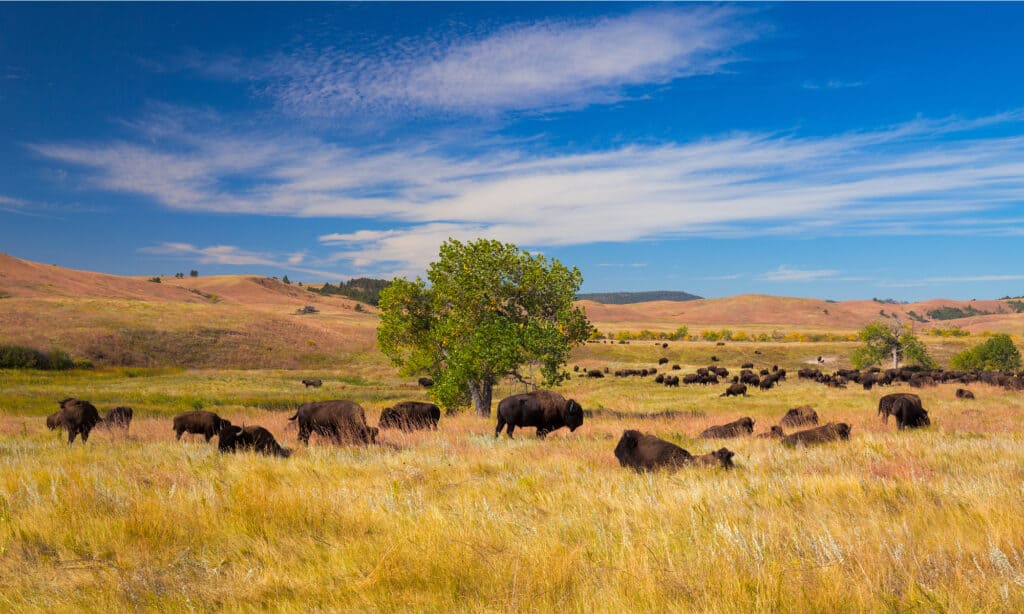
Modern bison herds descend from a small number of survivors preserved through early conservation efforts.
©Anh Luu/Shutterstock.com
Over time, national parks and wildlife refuges established managed bison populations. Some herds traced their ancestry to animals preserved in places such as Yellowstone. Conservation efforts focused on balancing grazing pressure, disease control, and genetic diversity. In Nebraska, restored herds became part of broader prairie conservation projects aimed at protecting native grasses, birds, and soil health. These bison no longer roam freely across the Plains, but they still play a role in maintaining prairie ecosystems.
Fort Niobrara and Nebraska’s Living Herds
Fort Niobrara National Wildlife Refuge offers one of the clearest connections between Nebraska’s frontier past and its present. Located along the Niobrara River, the site began as a military post tasked with overseeing nearby Native reservations and frontier activity. Over time, its purpose shifted from military control to wildlife management.
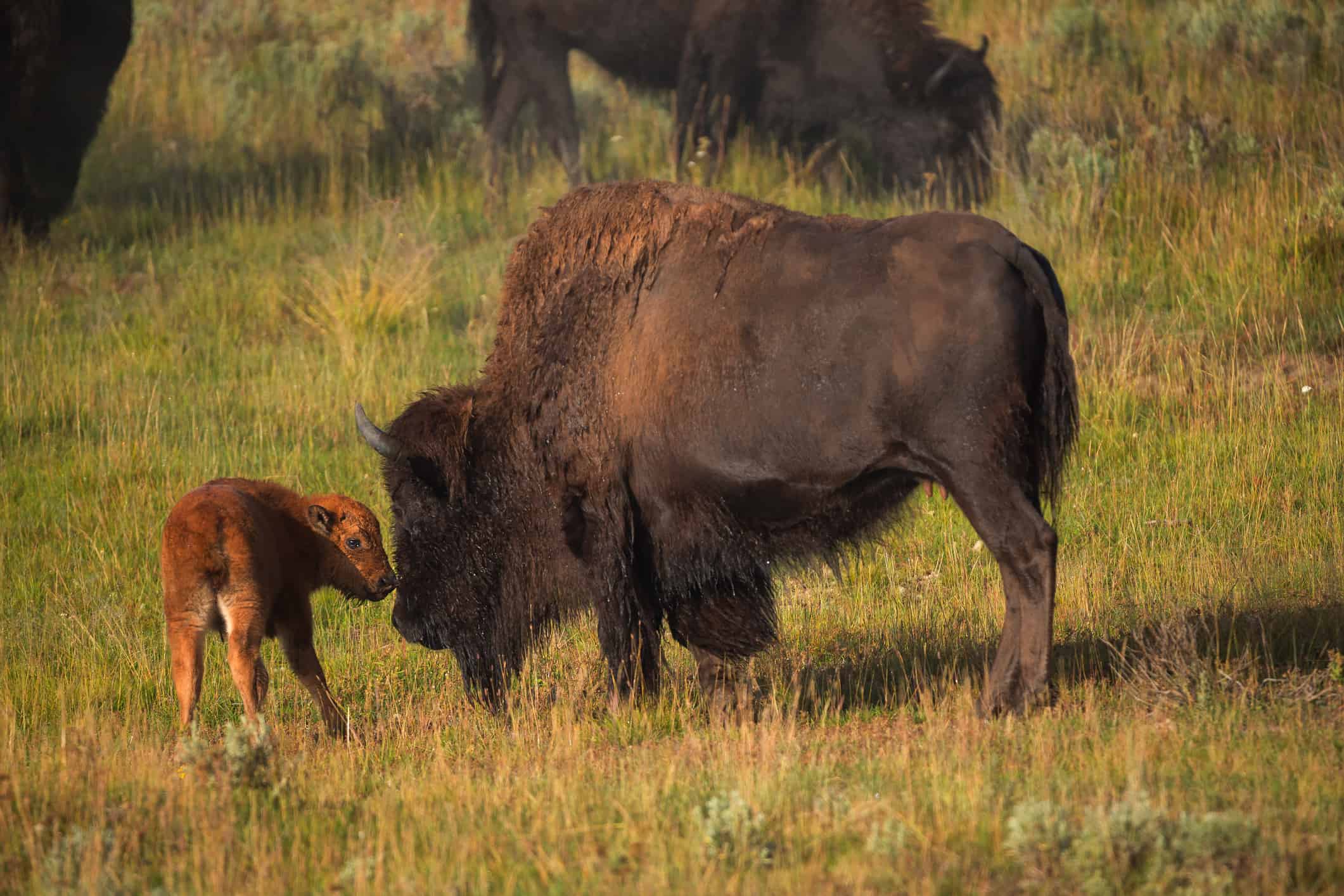
A bison cow and calf illustrate how managed herds help carry Nebraska’s prairie legacy into the present.
©iStock.com/Bill_Vorasate
Today, roughly 350 plains bison live on the refuge’s sandhills and mixed-grass prairie. Managers move the herd seasonally to prevent overgrazing and limit the spread of invasive plants. Visitors driving refuge roads or floating the river often see bison grazing against a backdrop of grassland and bluffs. Although fences and planning now shape their movement, the herd still reflects the earlier prairie landscape that once covered much of Nebraska.
Seeing Bison in Nebraska Today
People interested in seeing plains bison in Nebraska can visit several managed sites where herds support conservation goals. Fort Niobrara National Wildlife Refuge remains the most prominent location, offering opportunities to view bison from vehicles and designated observation areas. Seasonal conditions affect visibility, with cooler months often providing clearer views as animals graze in open areas.
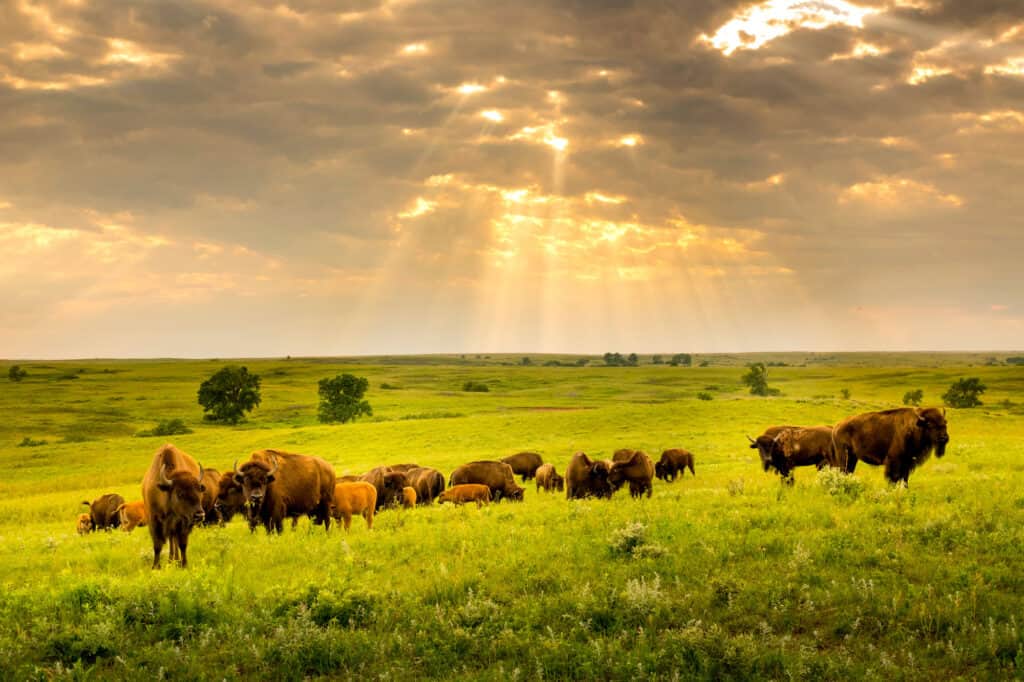
Managed bison herds, including calves, are part of conservation programs across Nebraska’s prairies.
©Ricardo Reitmeyer/Shutterstock.com
Additional bison can be found on tribal lands and private conservation ranches across the state. These herds often participate in prairie restoration programs that mirror natural grazing patterns. Visitors should respect posted rules, keep safe distances, and remember that bison are large, unpredictable animals. Observing them in Nebraska offers a chance to connect with the state’s ecological past while supporting ongoing conservation work.
Symbolism Without State Status
Nebraska officially named the white-tailed deer as its state mammal in 1981, reflecting woodlands, river corridors, and modern hunting traditions. The plains bison, however, continues to carry symbolic meaning tied to earlier eras. It points to open grasslands, Native lifeways, and the first waves of settlement that reshaped the region.
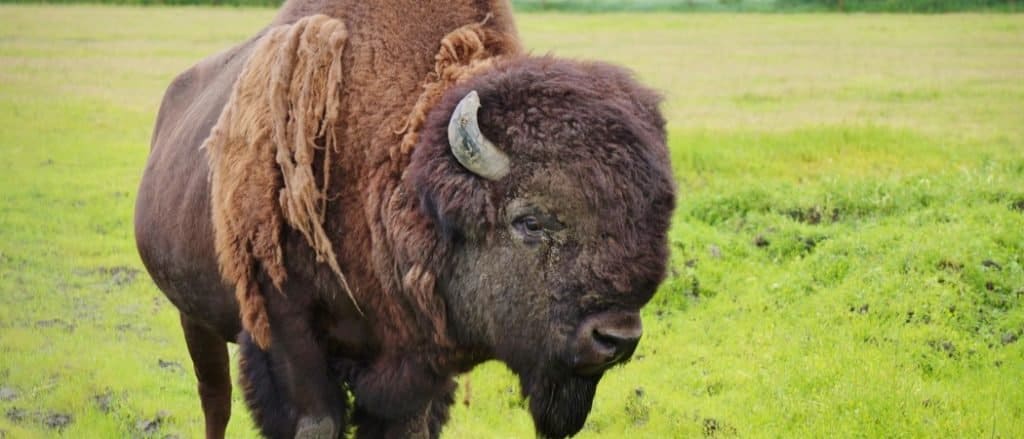
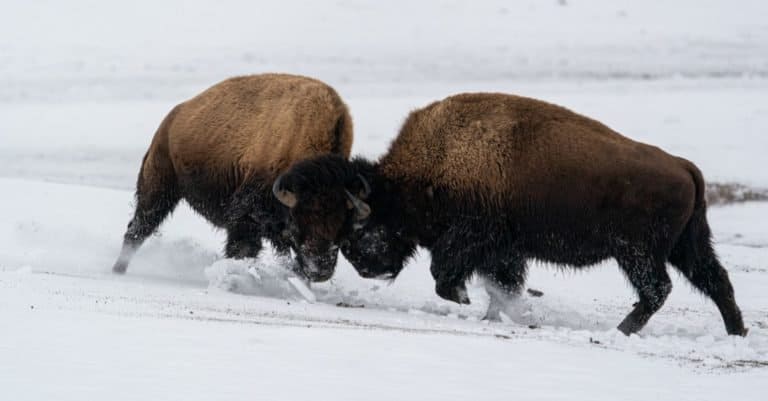
Long after its disappearance from daily life, the bison endures as a symbol of memory, loss, and resilience.
©EQRoy/Shutterstock.com
Nationally, the bison gained recognition in 2016 when it became the national mammal of the United States, sharing symbolic standing with the bald eagle. In Nebraska, bison images appear in museums, artwork, and tourism materials alongside wagons and farm scenes. While state law grants no official title, public memory still links the animal to endurance, loss, and rapid change on the Plains.
Why the Plains Bison Still Matters
The plains bison story remains important because it reflects how quickly landscapes and societies can shift. Nebraska’s frontier history includes Native nations adapting to broken migration patterns, settlers converting grass to crops, and conservationists working to restore damaged ecosystems. Modern bison herds show us that parts of the prairie can recover, even in a state shaped by agriculture.
For residents and visitors alike, bison grazing on Nebraska grasslands connects present-day towns and highways to a deeper past. The animal stands as a reminder that the state’s identity formed through interaction with the land, and that choices made during the frontier era continue to shape Nebraska today.