
Quick Take
- By 1889, fewer than 1,000 bison remained in the wild, a shock that spurred early conservation action.
- Restoring bison to tribal lands is a form of cultural renewal and strengthens food sovereignty.
- By the early 1900s, a few dozen bison remained in Yellowstone, and policy shifted to treat them as wild animals.
- Read on to discover how herd restoration and traditional hunts reconnect Indigenous cultures with the land.
How the Plains Bison Became Wyoming’s State Mammal
The official designation of the bison as Wyoming’s state mammal came in 1985. That year, the state legislature passed a bill adding a state mammal, state fish, and state insect to law. Lawmakers saw value in recognizing an animal that already meant a great deal to residents. Because the bison symbol appeared everywhere in state imagery, the idea met little controversy in the legislature. Educational materials began listing the bison as the state mammal, and students learned the symbol as part of history and civics lessons.
What is a Plains Bison?
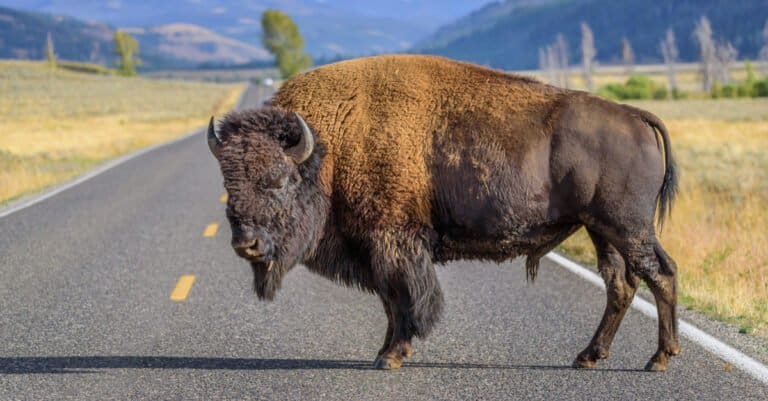
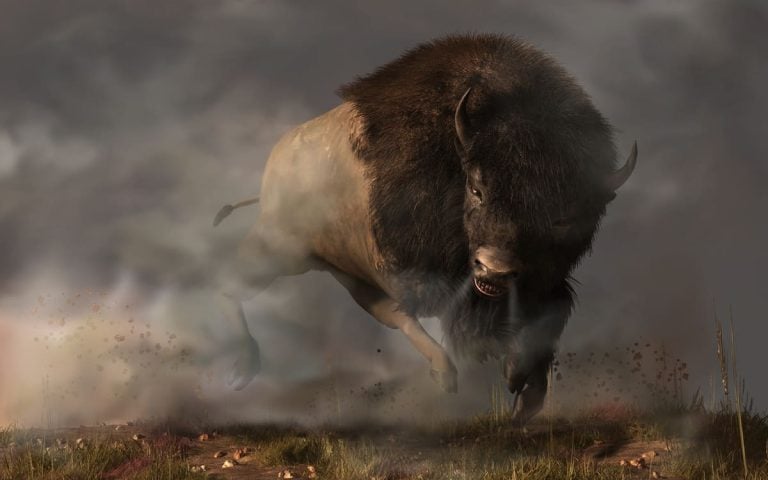
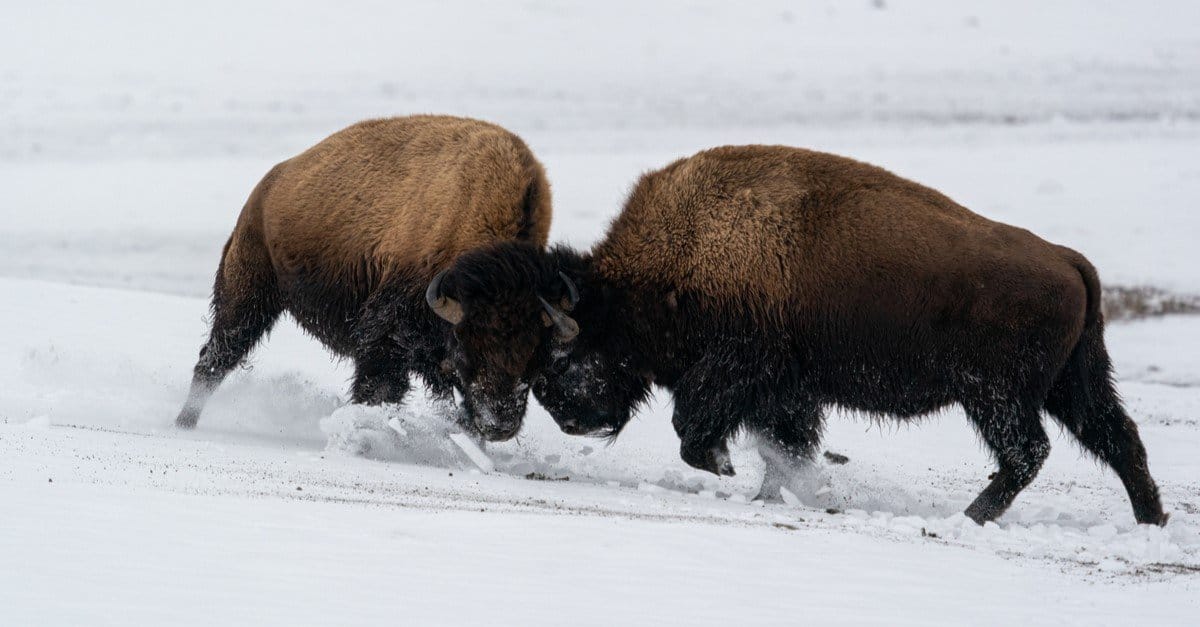
The plains bison (Bison bison bison) is one of two types of American bison, with the other called the wood bison. Even though it is smaller than the wood bison, the plains bison is still the largest land mammal living in North America. Bulls can weigh up to around 2,000 pounds and reach about six feet at the shoulder. These animals wander across grasslands in search of food, eating grasses and sedges for many hours each day. Bison have heavy heads, short curved horns, and a big shoulder hump formed by strong muscles. Thick fur protects them from harsh winter weather, and during breeding season, males bellow, roll in dust, and spar with each other to compete for mates.
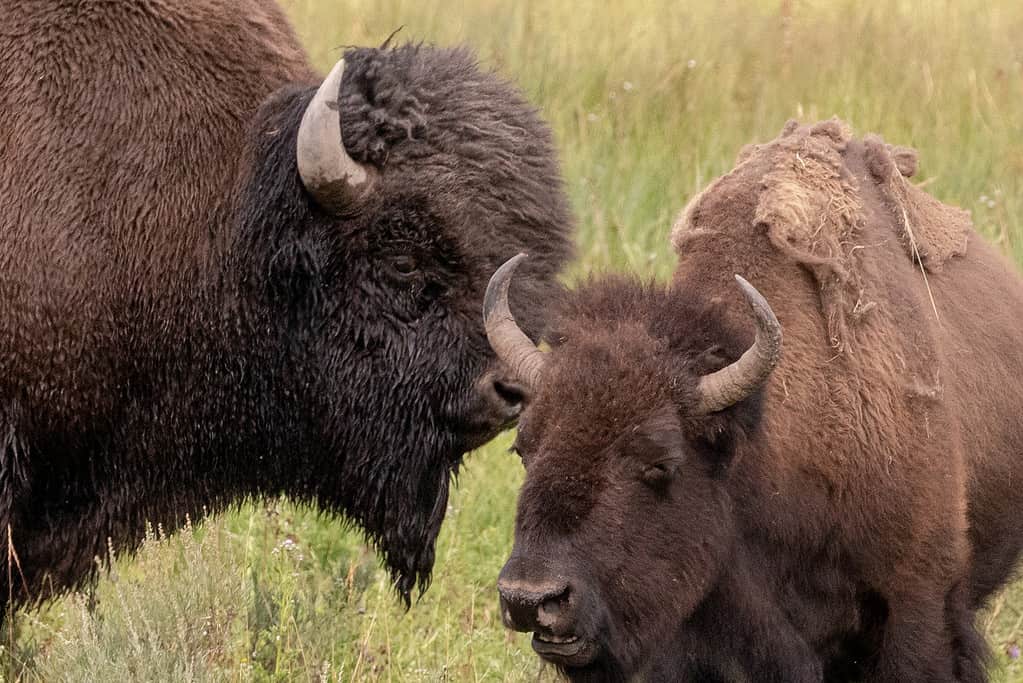
Bison played a central role in the culture and economy of Plains Indians.
©iStock.com/htrnr
Bison and Indigenous Cultures of the Plains
Thousands of years before outsiders arrived, indigenous peoples made bison central to life. Nations such as the Eastern Shoshone, Northern Arapaho, and Cheyenne used nearly every part of the animal. Bison provided meat for food, fat for warmth and cooking, and hides for clothing and shelter. Bones and horns were made into tools, weapons, and everyday items. Groups hunted bison in organized drives and later on horseback, following herds across plains and valleys. Beyond practical uses, bison appear in songs, stories, and ceremonies as powerful beings associated with generosity, endurance, and balance with the land. Restoring bison to tribal lands today is often seen as cultural renewal and a way to strengthen community and food sovereignty, not just wildlife management.

Near Extinction on the American Frontier
Before European settlement broadened across North America, plains bison numbered in the tens of millions. Their range extended from northern Mexico to parts of Canada. By the late nineteenth century, settlers, commercial hunters, and the expansion of railroads drove the mass killing of bison for hides, meat, and sport. Some reports estimate that by 1889, fewer than 1,000 bison remained in the wild. This loss damaged Indigenous economies and cultures that had depended on bison. A few ranchers, tribal leaders, and early conservationists began efforts to protect the few remaining animals, setting aside land and starting herds to prevent complete disappearance. Those small beginnings led to later conservation actions that helped the species survive and recover.
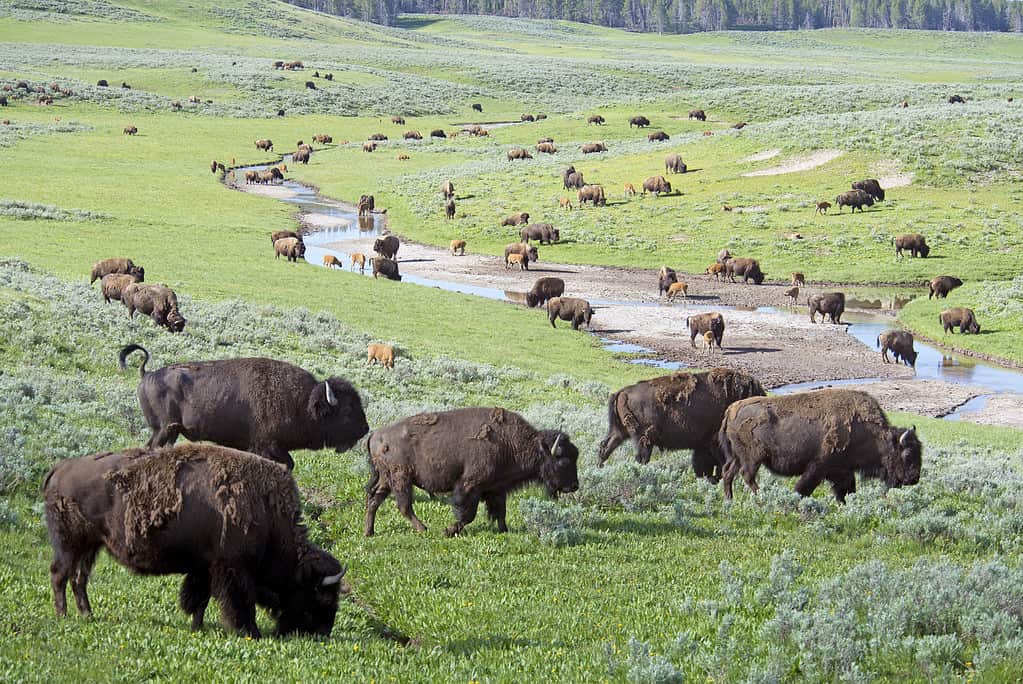
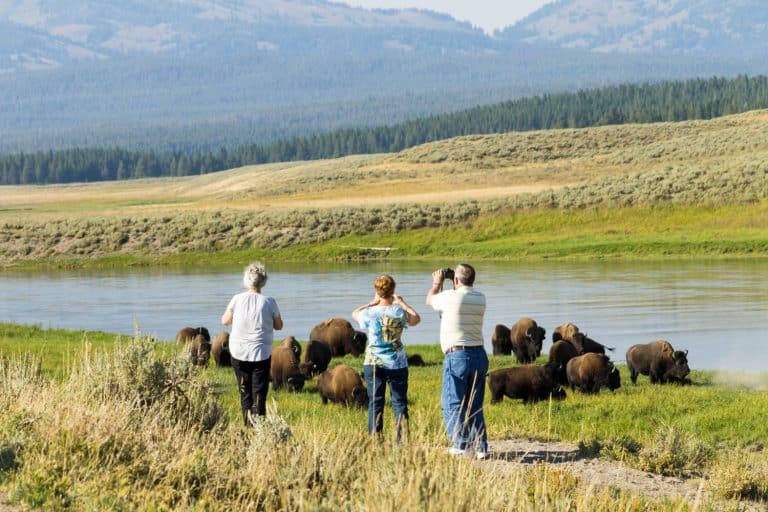
This is Yellowstone National Park, where bison have recovered into a herd of over 5,000.
©iStock.com/Betty4240
Yellowstone National Park and Bison Recovery
Wyoming’s story with bison cannot be separated from Yellowstone National Park. Yellowstone was created in 1872, and bison never completely disappeared there, even when populations plummeted. By the early 1900s, only a few dozen bison were left in the park. The federal government brought in bison from private herds to boost numbers and managed them in fenced pastures. Over the twentieth century, park policy changed to treat bison as wild animals, allowing them to roam more freely. Today, Yellowstone hosts the largest public herd of plains bison in the United States, numbering up to 5,400 animals.
There are now roughly half a million bison in the United States. Most live on private ranches or managed lands, while only a small fraction roam in conservation or semi-wild herds on public, tribal, or protected landscapes. About 85,000 a year are slaughtered for meat, which is leaner than beef and increasingly popular among health-conscious consumers, though it remains a niche product compared to chicken or beef. Other bison are intentionally used for conservation, as their grazing patterns help restore grasslands and support native plants and wildlife. Tribal nations also raise bison to rebuild cultural traditions, food sovereignty, and spiritual ties to the animal. In addition, bison support tourism and education in parks and preserves, with additional uses for hides and fiber.
Bison Imagery on Wyoming’s Flag and Symbols
Today, even people who never see a live bison in Wyoming encounter its image often. The state flag, adopted in 1917, shows a bison carrying the state seal, representing local wildlife and the strength of ranching and rural life. The familiar bucking horse symbol sometimes appears with bison imagery in tourism materials, linking cowboy culture with the animal that once dominated the plains. Towns like Buffalo and features such as the Buffalo Bill Reservoir remind residents and visitors of the bison’s historical place.
Why Wyoming Chose the Bison Over Other Animals
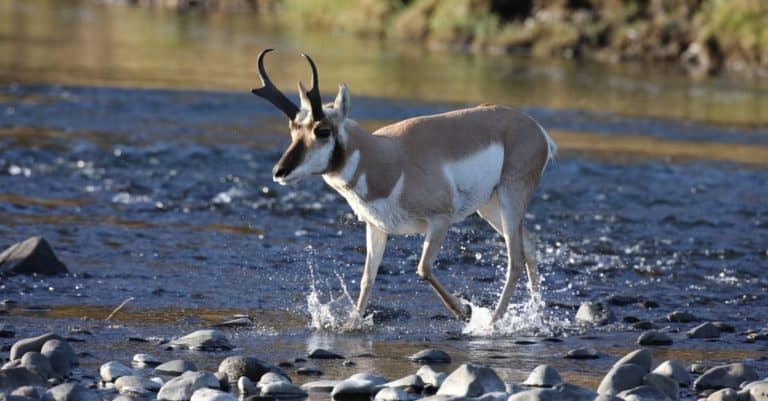
When officials considered what animal to choose, many options existed. Wyoming hosts well-known species such as pronghorn, wolves, and elk. Still, none held the shared history, cultural depth, and association with the state that bison did. Bison appear on the state flag and connect deeply with Indigenous nations and frontier history. Economically, bison ranching and tourism contribute to local identity, albeit on a smaller scale than cattle or the energy sector, but they remain important to communities. Naming the plains bison as the state mammal recognized its longstanding place in Wyoming’s story and aligned the state with a national movement to conserve and honor this species.
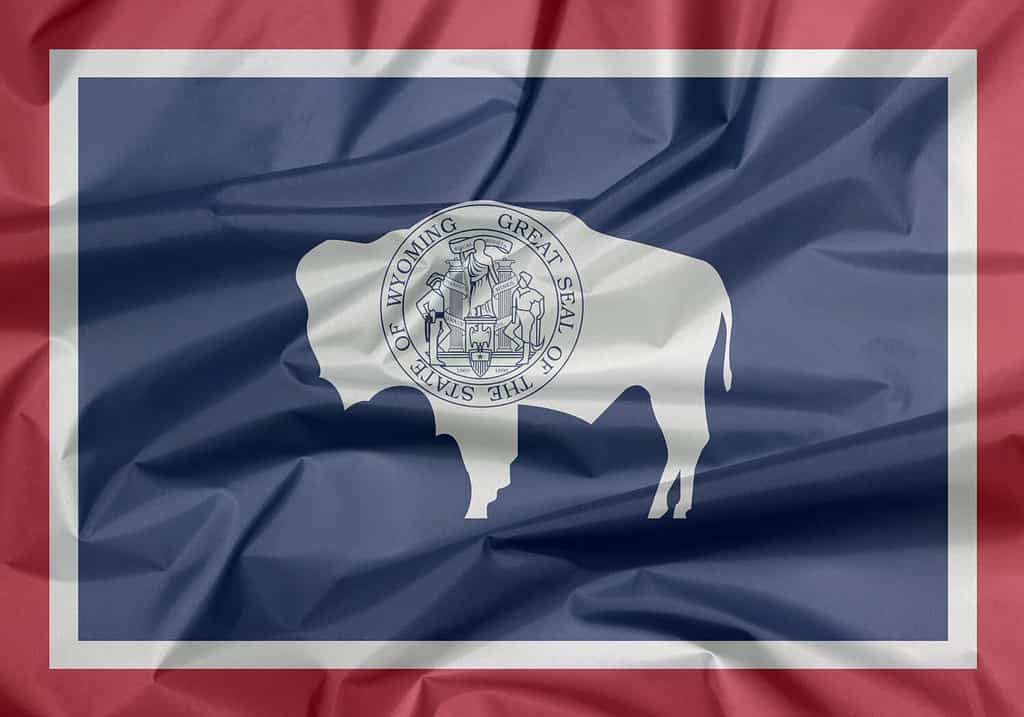
Wyoming’s flag features the state seal, the national colors, and a bison silhouette representing the state’s native animal.
©au_uhoo/Shutterstock.com
What the Plains Bison Represents Today
For many in Wyoming, bison signify more than a large animal. Their heavy bodies, strong necks, and winter-hardy coats suggest toughness and self-reliance in a place known for strong winds and deep snow. Herds moving across open prairies evoke openness and wide skies that people associate with life in the state. The species’ survival through near extinction and later recovery stands for resilience and second chances. When leaders and conservation groups speak of bison today, they often share themes of honoring sacrifice, respecting wildlife, and managing land so people and nature can flourish. The plains bison has come to represent the core values that people want to see reflected in Wyoming’s communities.
A Living Symbol of Wyoming’s Past and Future
More than forty years after becoming the state animal, the plains bison remains tied to Wyoming’s identity and future. Visitors still seek them out along park roads and open basins, while tribal nations rebuild cultural and economic connections through herd restoration and traditional hunts. Scientists and land managers see bison as partners in grassland recovery, even as debates over land use continue. More than a symbol, the bison reminds Wyoming that conservation is not finished business, but a choice renewed with care, cooperation, and long memory.