
Quick Take
- Pufferfish can increase to three times their size within seconds.
- Turtles may be able to recover from a pufferfish’s neurotoxin, but there is no antidote for tetrodotoxin.
- Symptoms that present after a turtle comes in contact with a pufferfish include paralysis, dizziness, feelings of extreme relaxation, respiratory distress, or even death.
- Caribbean sea turtles have been observed eating pufferfish, which can result in the turtles ingesting neurotoxins that induce a dangerous state of relaxation.
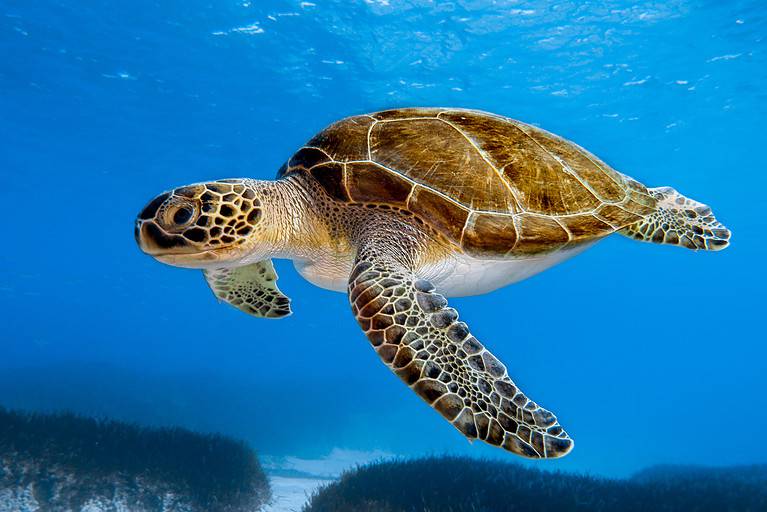
Turtles are not the fastest of movers on land, but in the water, they have amazing reflexes. A turtle in a fish tank showed just how swift it could be when it decided to attack a pufferfish. Little did the turtle know that its plans for a fish meal would be foiled by the pufferfish, leaving the turtle both hungry and seemingly confused by the confrontation.
What Happened After a Turtle Tried to Eat a Pufferfish?
A YouTube video featuring a turtle and a pufferfish has sparked the interest of thousands. The video’s popularity is not because the two creatures are cohabitating peacefully. Instead, it concerns the pufferfish’s reaction when the turtle attacks.
A turtle and a pufferfish are shown together in a fish tank. The pufferfish becomes cornered by the turtle, who is clearly interested in making the fish a meal. With lightning-fast reflexes, the turtle grabs hold of the pufferfish, who appears to be out of its league. But that is when the tables take an interesting turn.
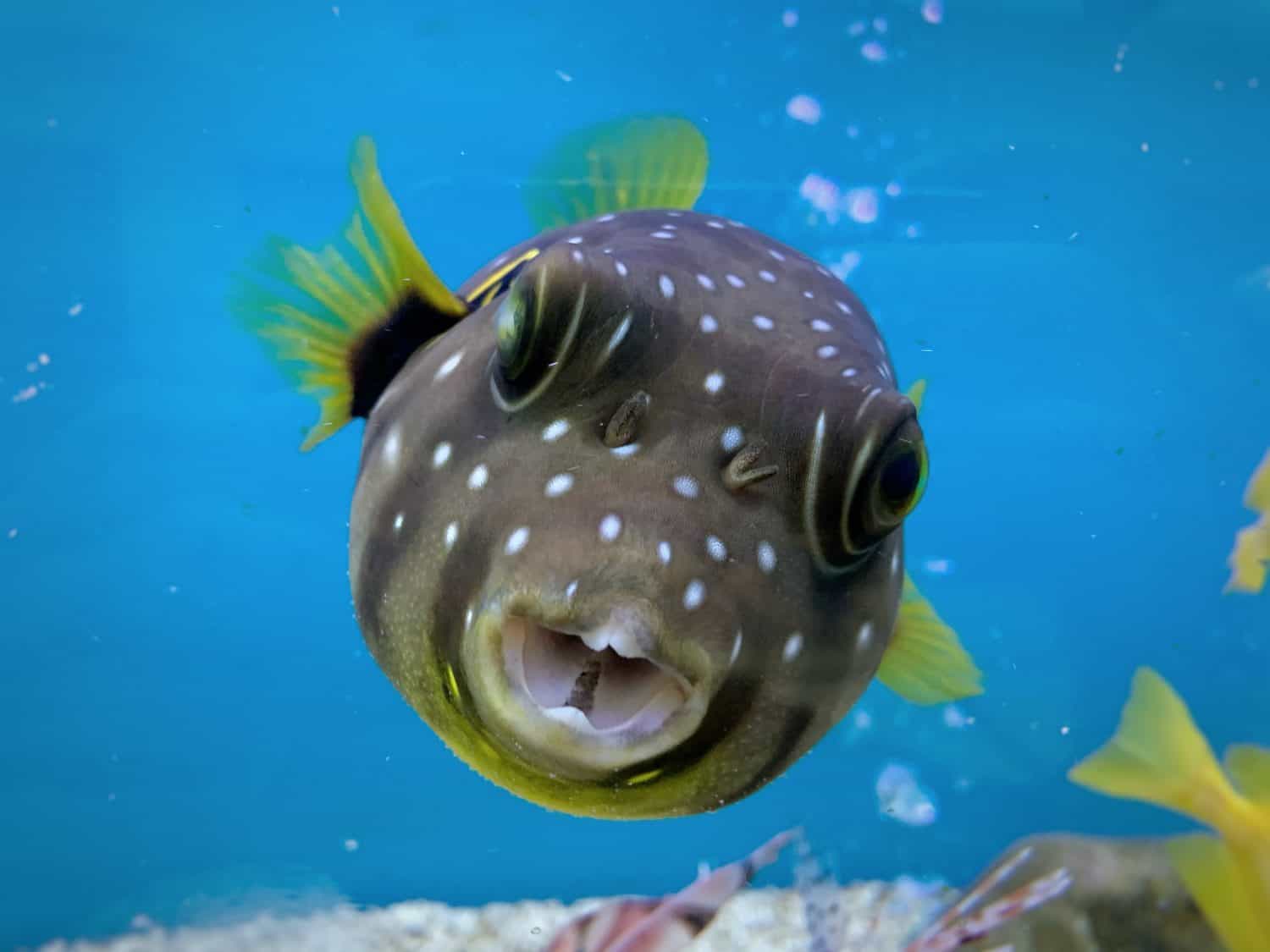
Just as quickly as the turtle struck to grab the pufferfish, the pufferfish blew up to three times its size. By doing this, the turtle has no choice but to let go of the pufferfish. Not only is it too large to swallow, but its circular shape also makes it difficult to hold onto. The pufferfish is released by the turtle and left to float.
Are Turtles Immune to Pufferfish Neurotoxin?
There are some sea creatures that are immune to the tetrodotoxin pufferfish secrete when they are in danger or are attacked. Animals such as tiger sharks, some sea snakes, and triggerfish have been observed eating pufferfish without apparent ill effects. Turtles of any variety do not fall into this category. They are not immune to pufferfish tetrodotoxin.
The outcome for the turtle in the video is not known. The pufferfish in the tank with the turtles could be considered a non-toxic species. This means the skin does not pose a threat, but the internal organs still have some toxicity. If this were the case, the turtle would have had no problems.
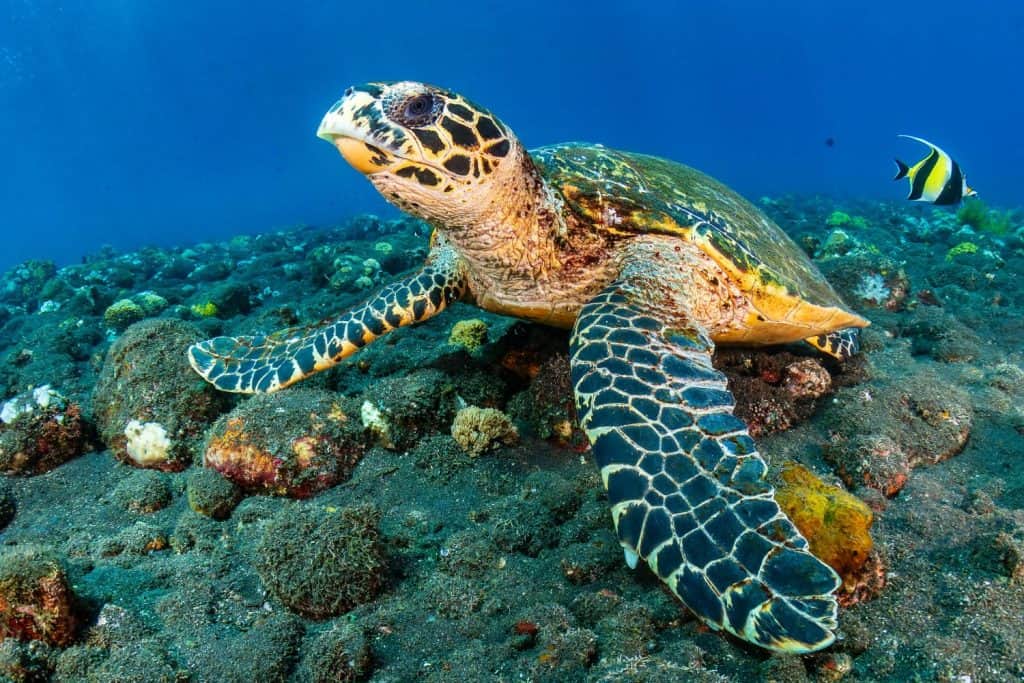
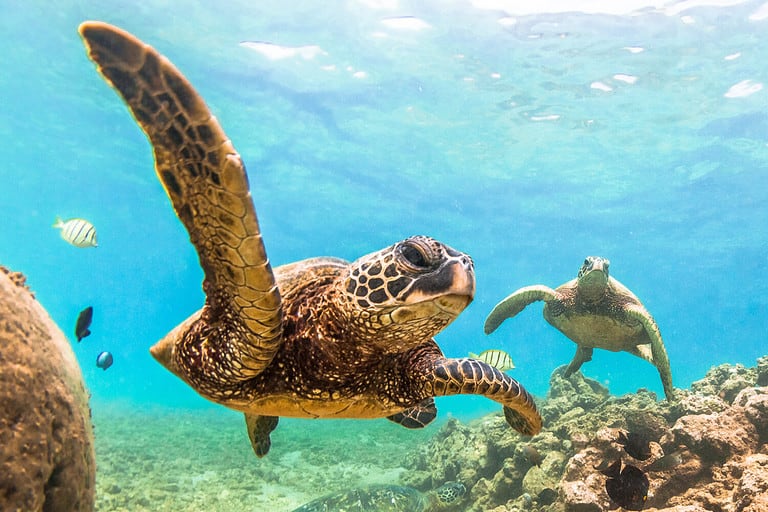
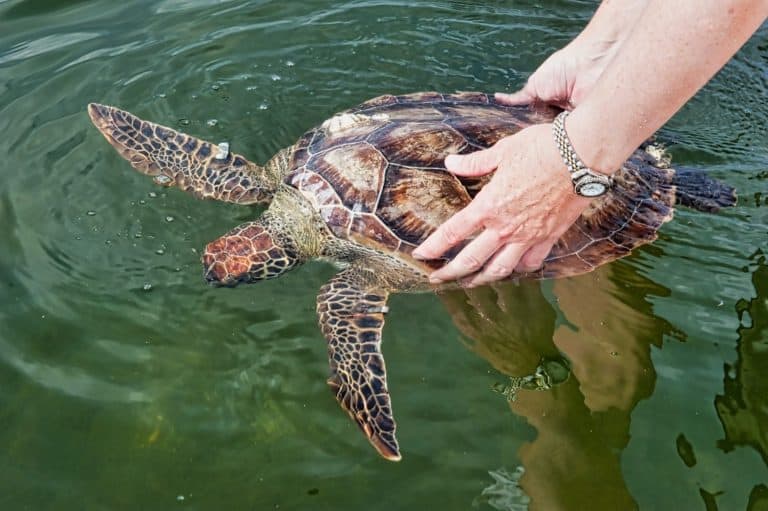
Turtles are not immune to a pufferfish’s tetrodotoxin.
©Richard Whitcombe/Shutterstock.com
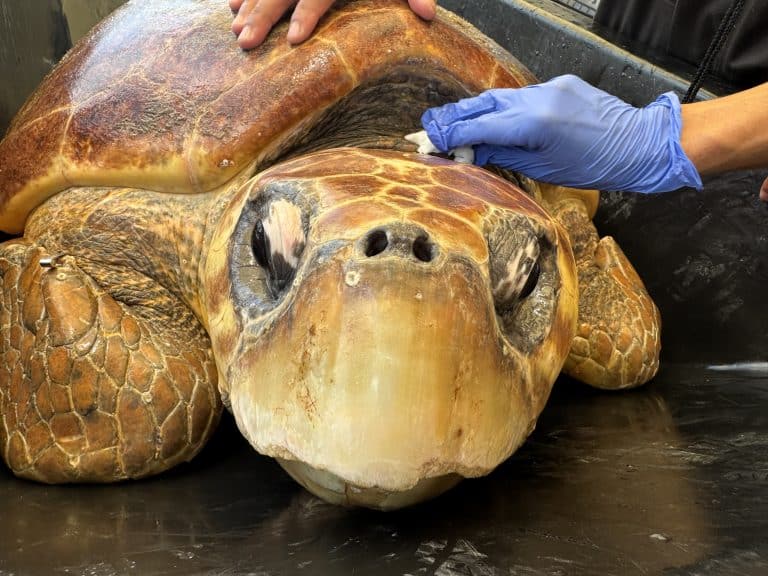
On the other hand, if the pufferfish was toxic, it is very likely that the turtle swallowed at least some of the pufferfish’s neurotoxin. Consuming the neurotoxin would cause the turtle to suffer from paralysis, respiratory distress, and potentially even death if not treated by a veterinarian. It should be noted that there is no antidote for tetrodotoxin. But in some cases, turtles have been known to survive encounters with pufferfish.
How the Pufferfish Made Itself Expand
As seen in the video, the pufferfish tripled in size in a matter of seconds. This is a powerful defensive mechanism that keeps the fish from being eaten, as many predators are unable to fit the fish in their mouths. The pufferfish is then able to float off and begin the process of deflating so that it can again swim as it normally would.
Pufferfish react to danger by expanding themselves. The fish have to want to inflate themselves. It is not an uncontrolled response from the body. They sense a chemical change in the water or see danger approaching. This is when they gulp large volumes of water into their stomachs. The stomach is incredibly stretchy, allowing the pufferfish to double or triple its size in the blink of an eye.
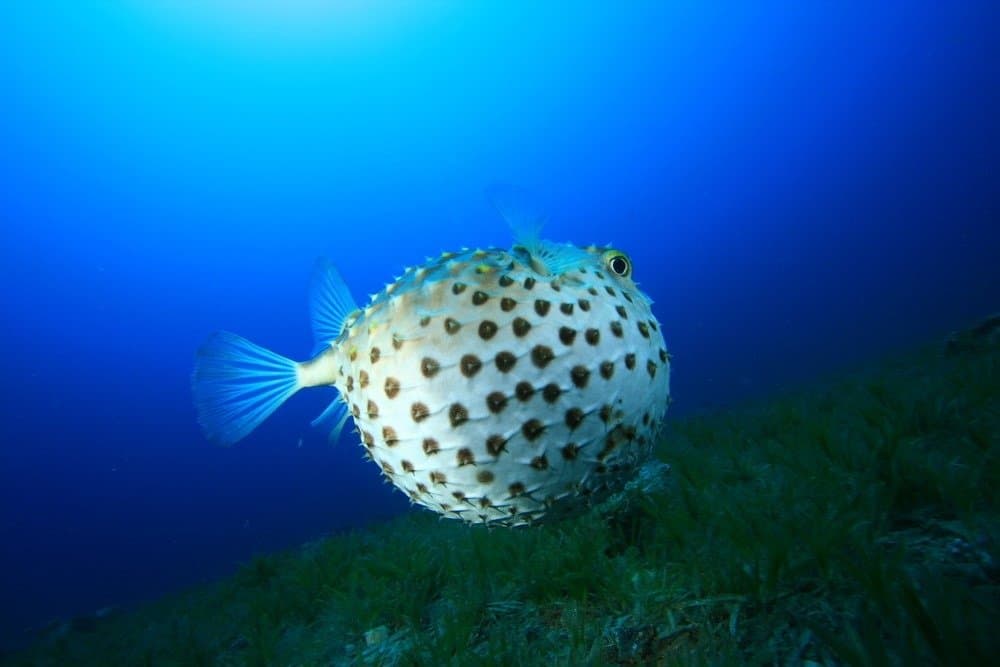
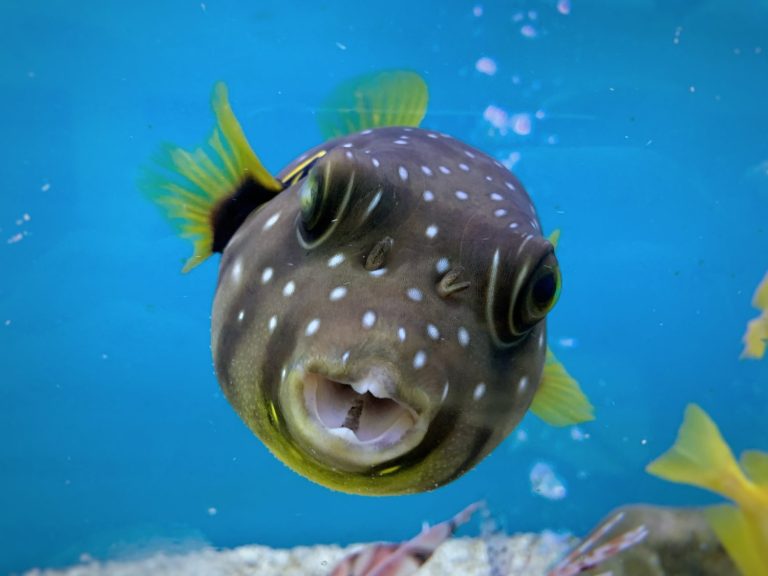
Pufferfish can expand to two to three times their size thanks to large volumes of water and bones that expand.
©Rich Carey/Shutterstock.com
It is not only the stomach that causes the increase in size. The pufferfish’s bones expand as well. The bones are loosely articulated, and there are fewer ribs. The pufferfish also becomes circular in shape. Between its rapid expansion and shape, most predators will let a pufferfish go and try their luck with another animal to fill their stomachs.
What Would Have Happened If the Turtle Swallowed the Pufferfish?
If the pufferfish was not quick enough to inflate itself before the turtle swallowed it, the turtle would have been subjected to all the tetrodotoxin that the pufferfish contained as it was digested. Depending on the pufferfish, this could lead to several outcomes. Some of the most common include:
- Paralysis of muscles
- Dizziness
- Tingling in the mouth
- Poor coordination
- Respiratory failure
- Death
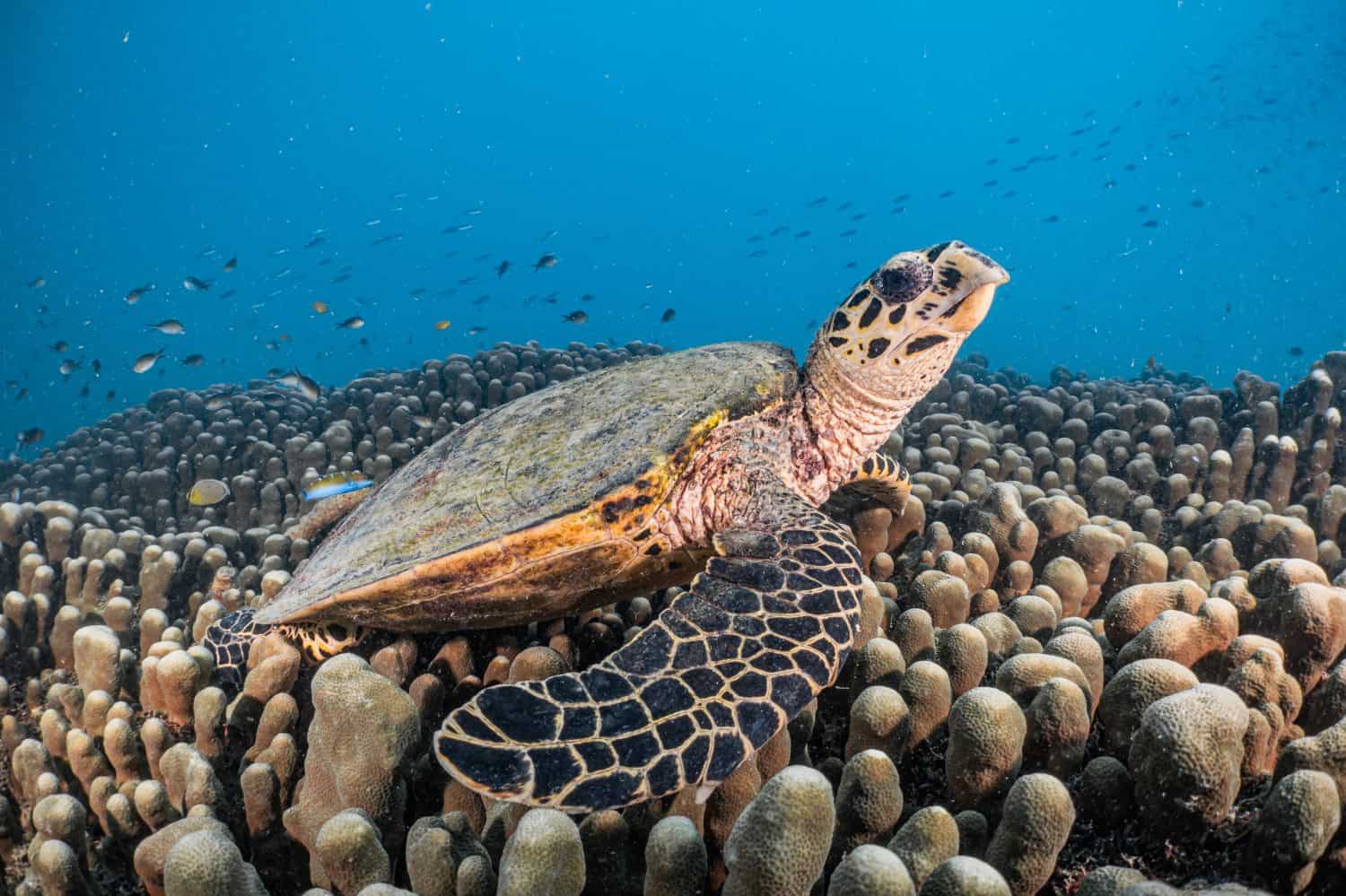
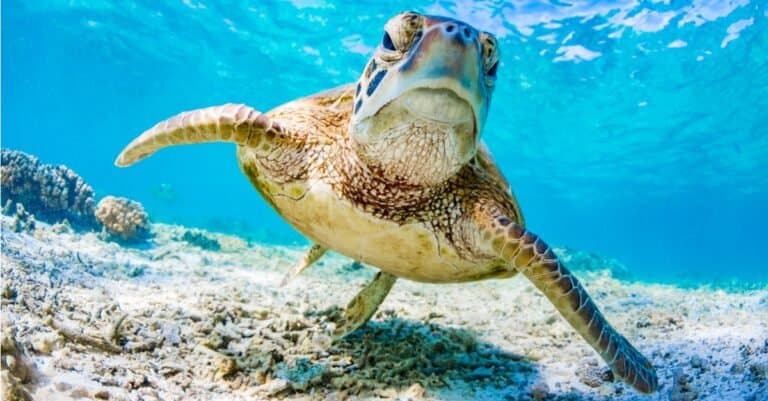
If turtles eat pufferfish, they can develop paralysis, poor coordination, respiratory failure, feelings of being high, and even death.
©Kitjapat Film/Shutterstock.com
It is reported that some sea turtles simply cannot turn down eating pufferfish in the Caribbean. Why this is remains a mystery to scientists. However, scientists have reported that some sea turtles appear to be on a high from the neurotoxin saxitoxin that causes them to become very relaxed and lie at the bottom of the sea floor.
If these turtles can remain underwater for long periods and do not consume a large amount of neurotoxin, they may survive until the toxin clears their bodies. But this relaxation can also cause the turtles’ death, as they are physically incapable of swimming to the surface for air. Consequently, conservationists sometimes rescue sea turtles in the region that have been poisoned by pufferfish neurotoxins. While there is no antidote, if only a small amount of neurotoxin is consumed, turtles can recover within 24 to 48 hours, with no side effects from consuming pufferfish.
Why Pufferfish and Turtles Do Not Make Good Tankmates
The Instagram video showed a very small tank for the turtle and the pufferfish to live in together. But the video does raise the question of whether, under any circumstances, a turtle and a pufferfish could live together harmoniously. The answer is no.
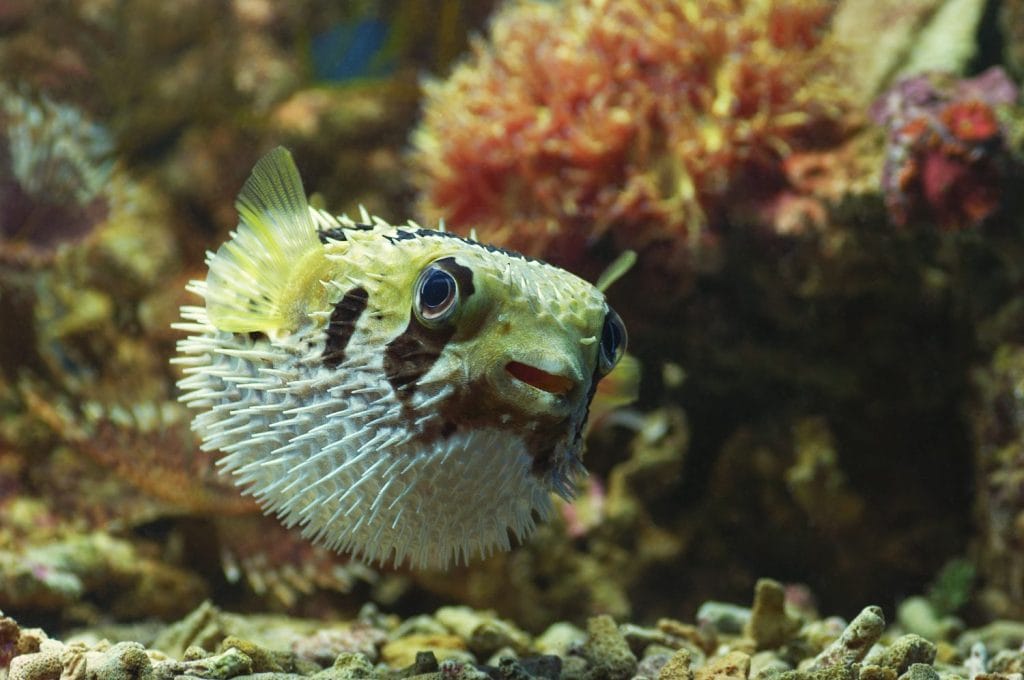
Pufferfish and turtles should remain in separate tanks to keep both safe and healthy.
©Shutter Etha/Shutterstock.com
From the standpoint of temperaments, both turtles and pufferfish can tend to be cantankerous. It is not unheard of for pufferfish to nip at turtle flippers, while turtles, if large enough, may be tempted to eat the pufferfish. Having both in the same tank would not end well for at least one of the animals.
If behavior were not an issue, the water would be. This is because turtles are messier than fish are. Between their excrement and the food, which had high nitrate and ammonia levels, the water would pollute so quickly that it would need to be changed continuously to keep both creatures happy. Therefore, if tempted to get both a turtle and a pufferfish, keep them in separate tanks. This is the only way to ensure that both the turtle and the pufferfish will live their healthiest lives possible.