
Quick Take
- The blue-ringed octopus has extremely potent venom, capable of killing a human victim.
- These octopuses contain a neurotoxin known as tetrodotoxin, one of the strongest toxins in marine animal venoms.
- A single bite from a blue-ringed octopus contains enough venom to kill multiple adult humans within minutes, making treatment imperative.
- Full paralysis and respiratory failure can occur after a bite.
- There is no antivenom; ventilator support is one of the best treatments.
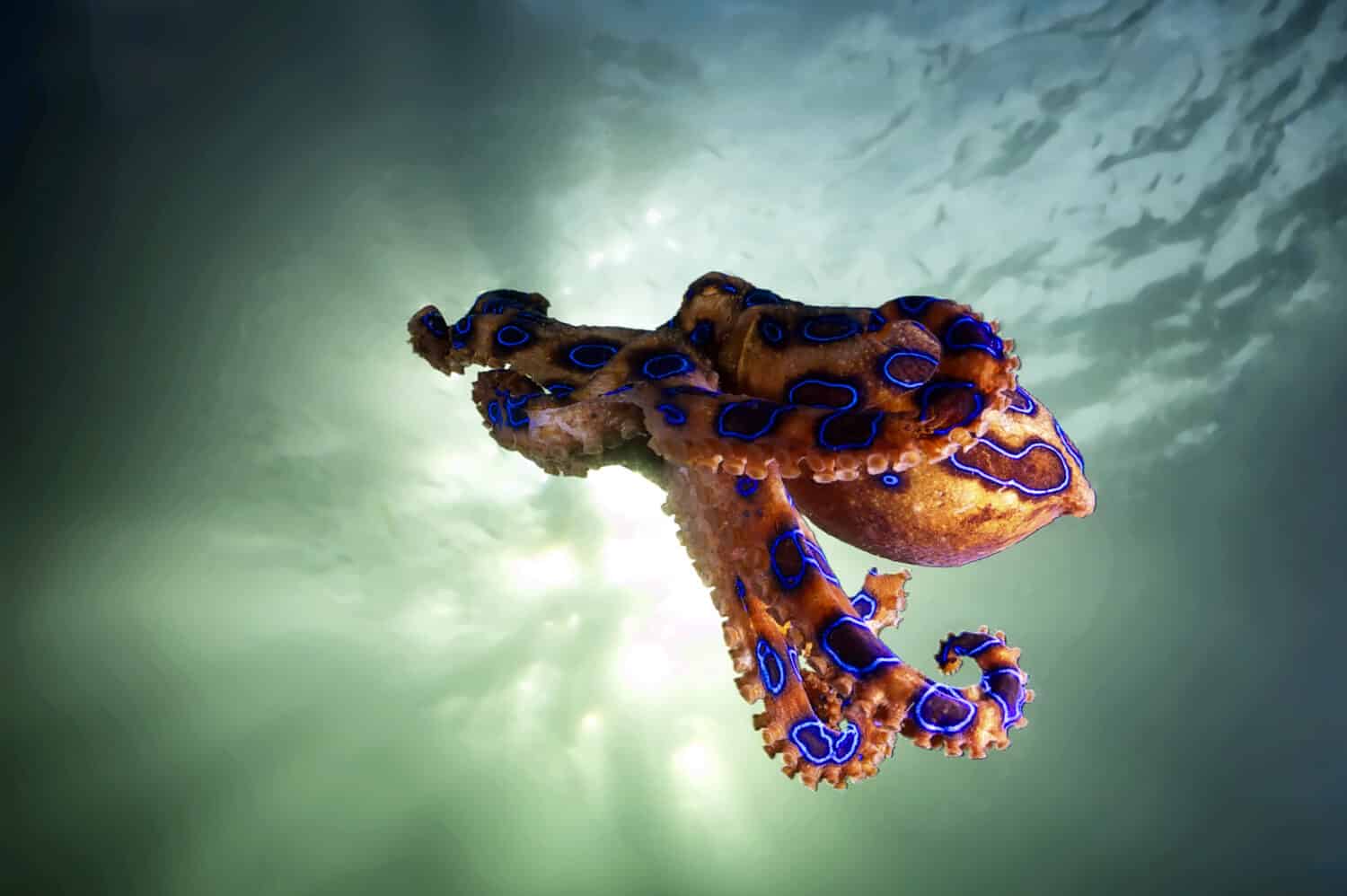
Being bitten by a strange animal can be extremely scary, especially since so many species use venom against their prey. One such animal is the blue-ringed octopus. While octopus venom is not typically dangerous, the toxin of the blue-ringed octopus stands out, as it can harm humans. This Instagram post by @unbfacts features the blue-ringed octopus, and details that there are very few treatment options for bites. Read here to learn about these octopuses’ terrifying venom.
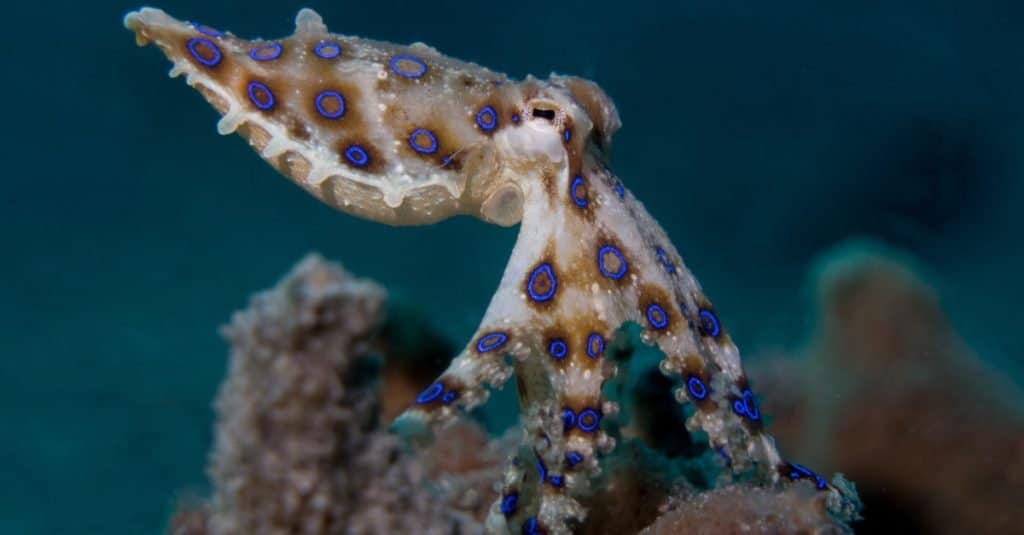
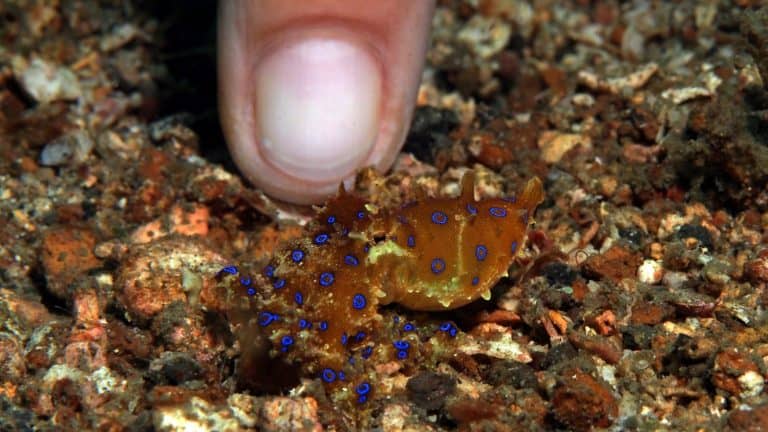
Blue-ringed octopus holds significant venom that is lethal.
©Sascha Janson/Shutterstock.com
Blue-Ringed Octopus Bites
The blue-ringed octopus has an extremely potent venom that can be lethal for humans if not treated. These octopuses contain a neurotoxin known as tetrodotoxin. This is the same toxin in pufferfish, and it is one of the strongest toxins in marine animal venoms. Despite their tiny size, about the size of a gold ball, their bites pack a punch and are extremely dangerous. A single bite from a blue-ringed octopus contains enough venom to kill multiple adult humans within minutes, making treatment imperative. Tetrodotoxin blocks the sodium channels in nerve cells, which causes rapid paralysis to muscles needed for breathing. This means victims can be awake and conscious while unable to respirate.
Symptoms are quick onset, often appearing within minutes. Early signs include tingling, nausea, sweating, and general weakness. As the venom progresses, paralysis begins to spread, leading to difficulty speaking and breathing. At its most severe, full paralysis and respiratory failure occur, and can lead to death very quickly. This makes treatments extremely important, so what are they?
Bite Treatments
Unfortunately, there is no effective antivenom for the blue-ringed octopus. Because of this, there is no way to neutralize the toxin directly. Rather, treatments are needed to help support the victim. Treatment specifically requires respiratory support since the paralysis makes it impossible to breathe. Like the post states above, ventilator support is one of the best treatments. The toxin typically stays in the body between 12 and 24 hours as the body metabolizes it. Ventilators help maintain a flow of oxygen, with many victims surviving a bite thanks to this medical intervention.
Thankfully, bites are rare, with only a few people being bitten a year on average. The blue-ringed octopus is typically not aggressive. However, if handled incorrectly or stepped on, they may bite. They do not live in the United States; they inhabit coral reefs in the Pacific and Indians Oceans from Japan to Australia. Thanks to modern medicine, even without an antidote, a handful of effective treatments prevent deadly bites from occurring.