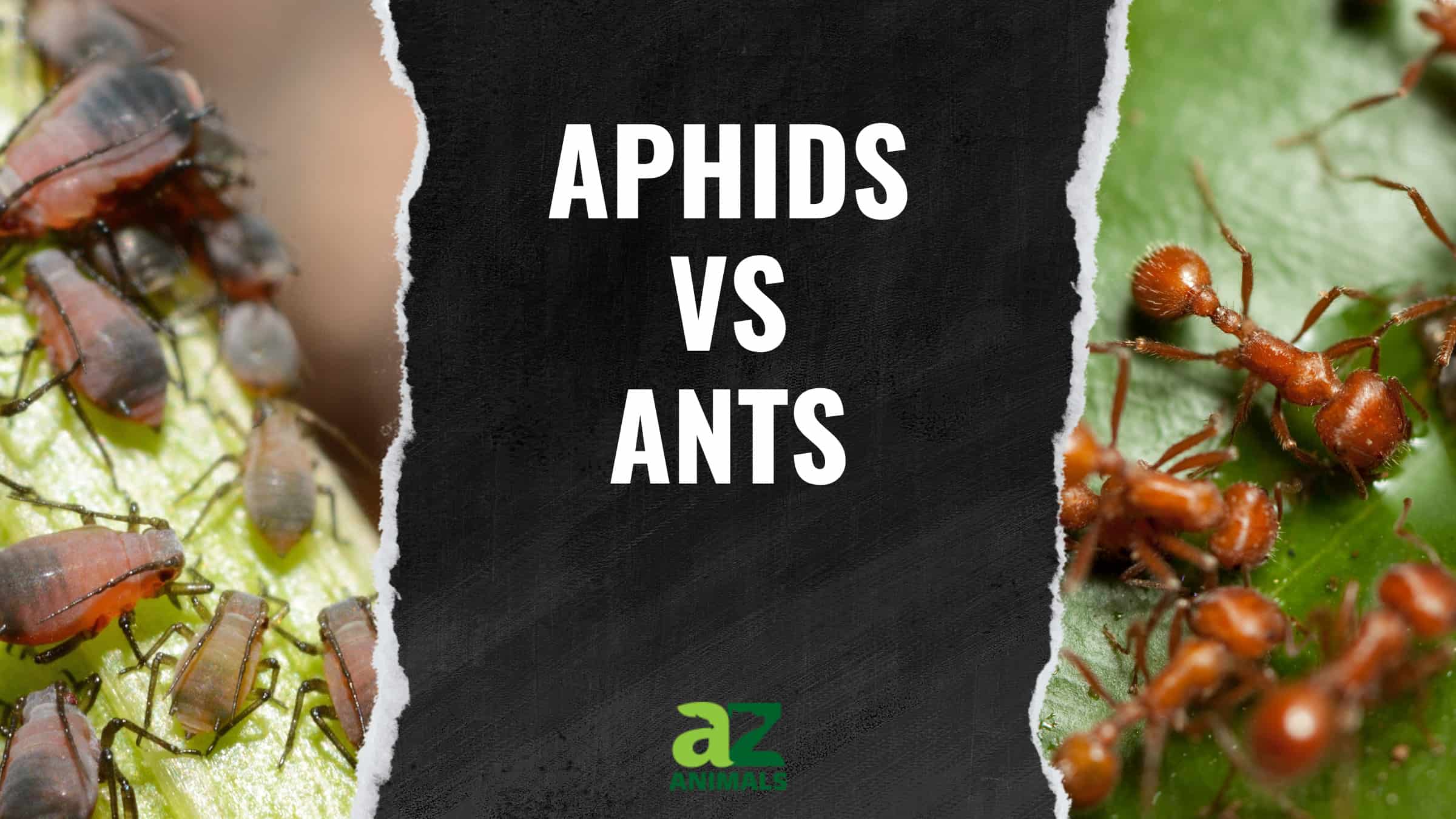

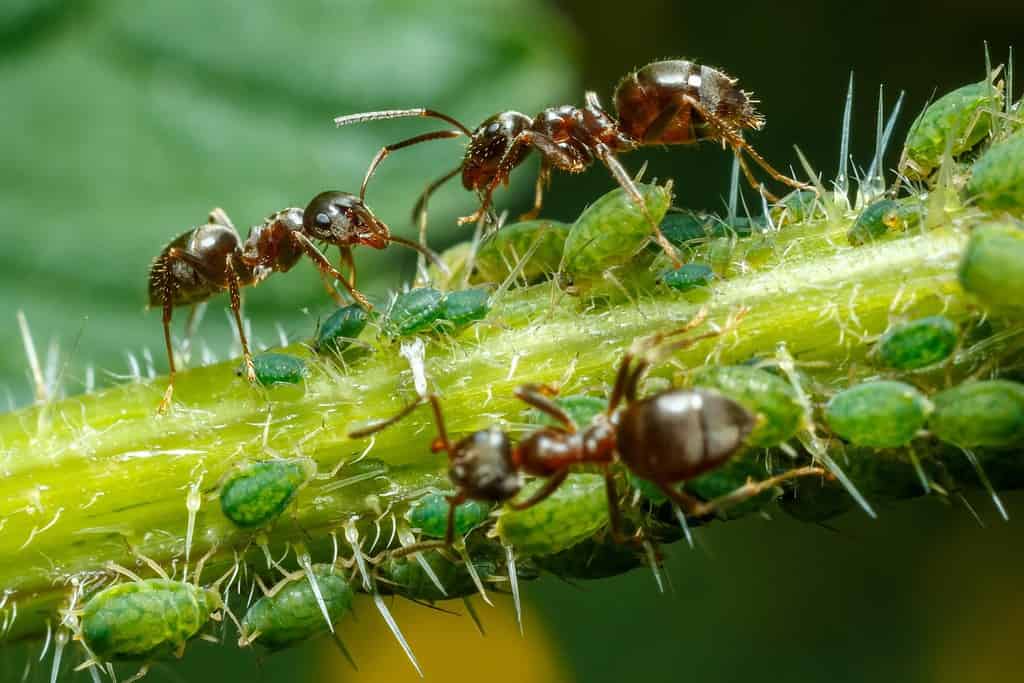
In nature, there are countless insects crawling around on every continent on planet Earth. Among them are aphids and ants, who have quite a unique connection. According to a study done by researchers at the Royal Holloway University of London, the University of Reading, and Imperial College London, ants and aphids have a somewhat symbiotic relationship. Aphids produce a substance called honeydew after eating plant material. This sticky, sugary byproduct is a dietary staple for certain ant species, and therefore, many of them do their best to keep aphids nearby. However, it seems that aphids need some convincing to stay around. Scientists found that ants secrete a chemical through their feet that significantly slows down aphid movement when they tread over the same area.
One of the researchers who worked on this paper, Tom Oliver, stated “We believe that ants could use the tranquilizing chemicals in their footprints to maintain a populous ‘farm’ of aphids close to their colony, to provide honeydew on tap. Ants have even been known to occasionally eat some of the aphids themselves, so subduing them in this way is obviously a great way to keep renewable honeydew and prey easily available.” Because of this unique relationship, many people associate these two insects with one another. Let’s explore four key differences between ants and aphids that will help you distinguish these two insects.
1. Size Differences
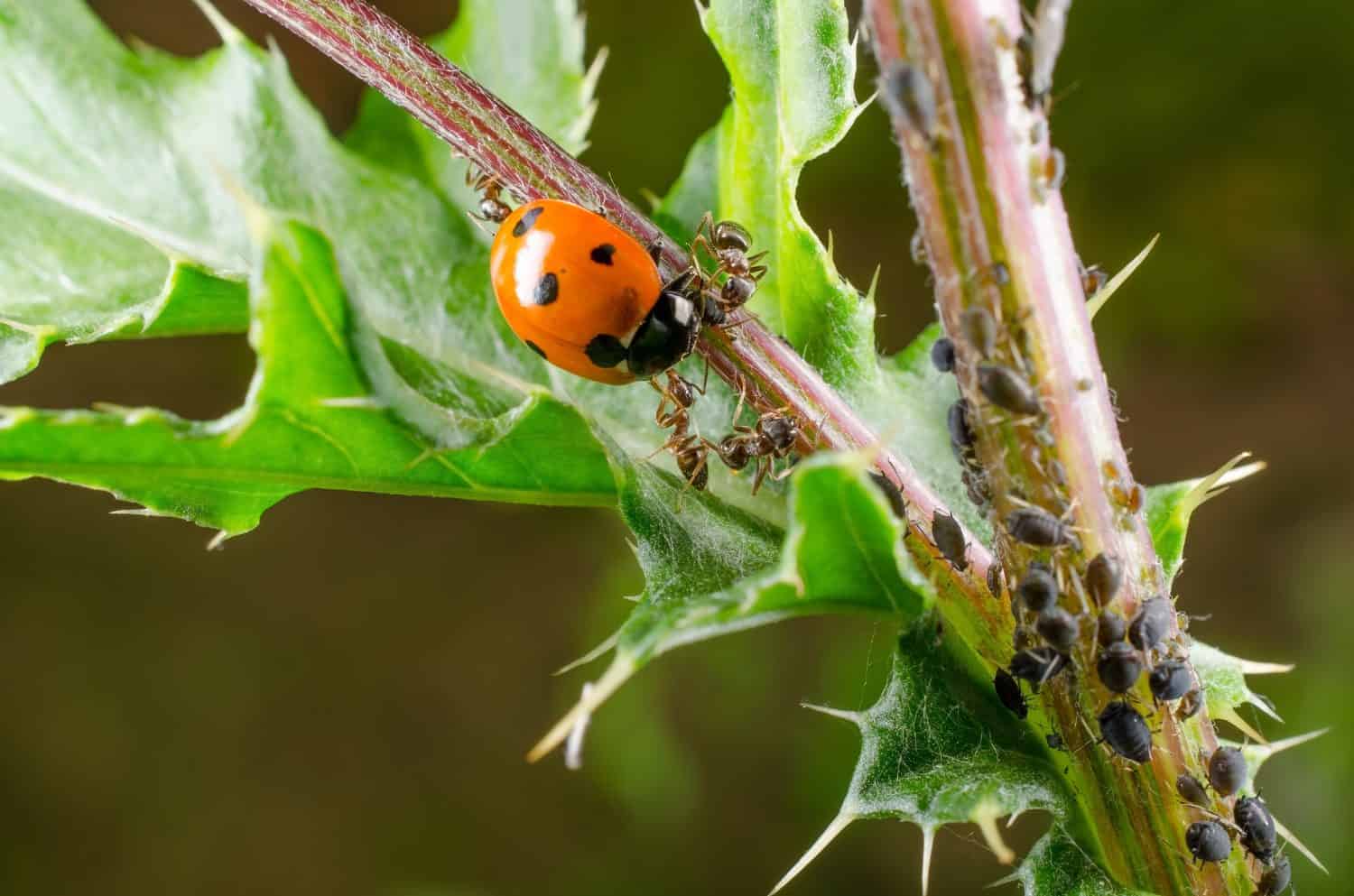
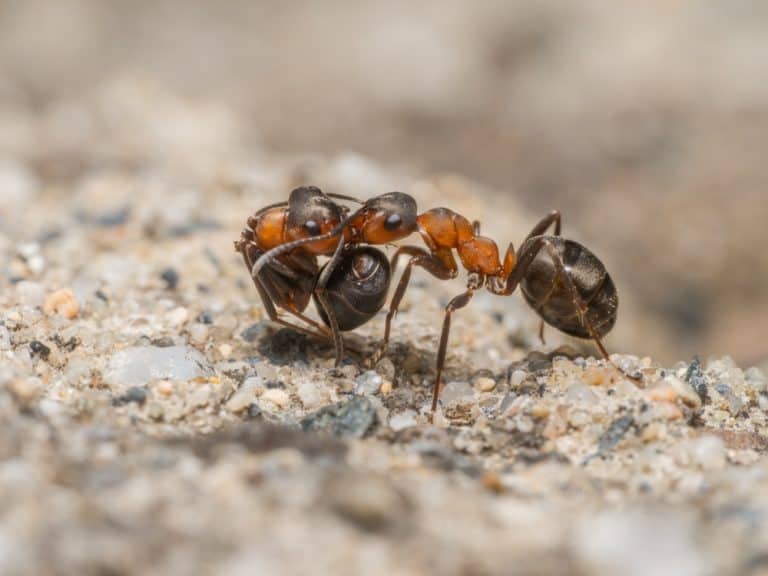
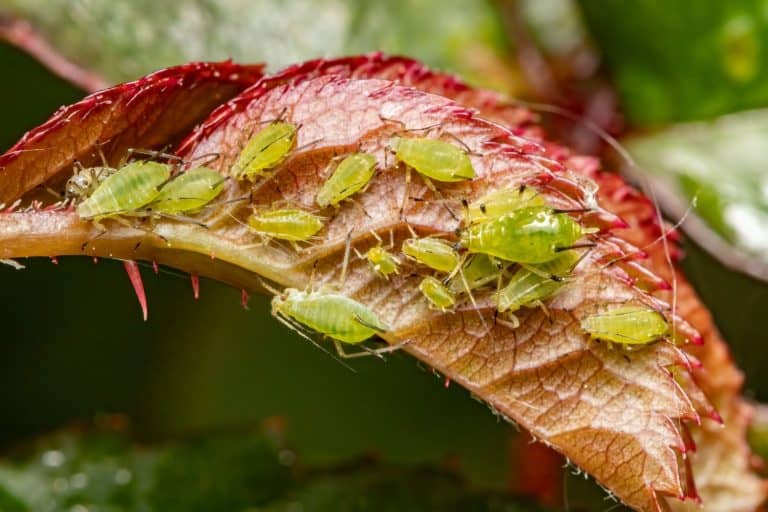
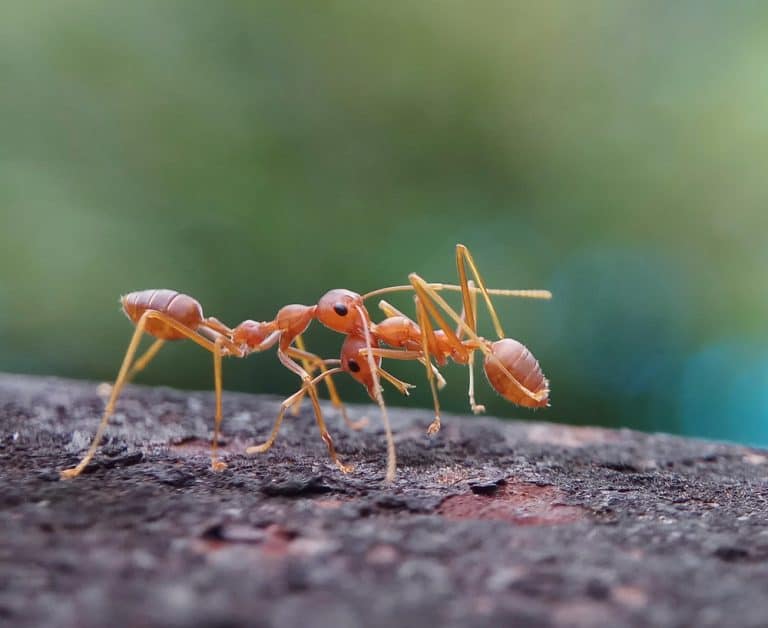
Ants will protect aphids from predators like ladybugs.
©PHOTO FUN/Shutterstock.com
To humans, both aphids and ants might seem incredibly tiny. However, when comparing the two side by side, it is quite obvious that ants are significantly larger than aphids in terms of size. Many ants will grow to be somewhere between 3 and 25 mm long, while even the largest aphids typically won’t grow to be over 6 mm in length. This large size difference is beneficial when considering the symbiotic relationship these two insects share. Ants offer aphids protection from other larger insects in exchange for their honeydew. This is unless the ants decide that they would rather eat the aphids themselves!
2. Physical Differences
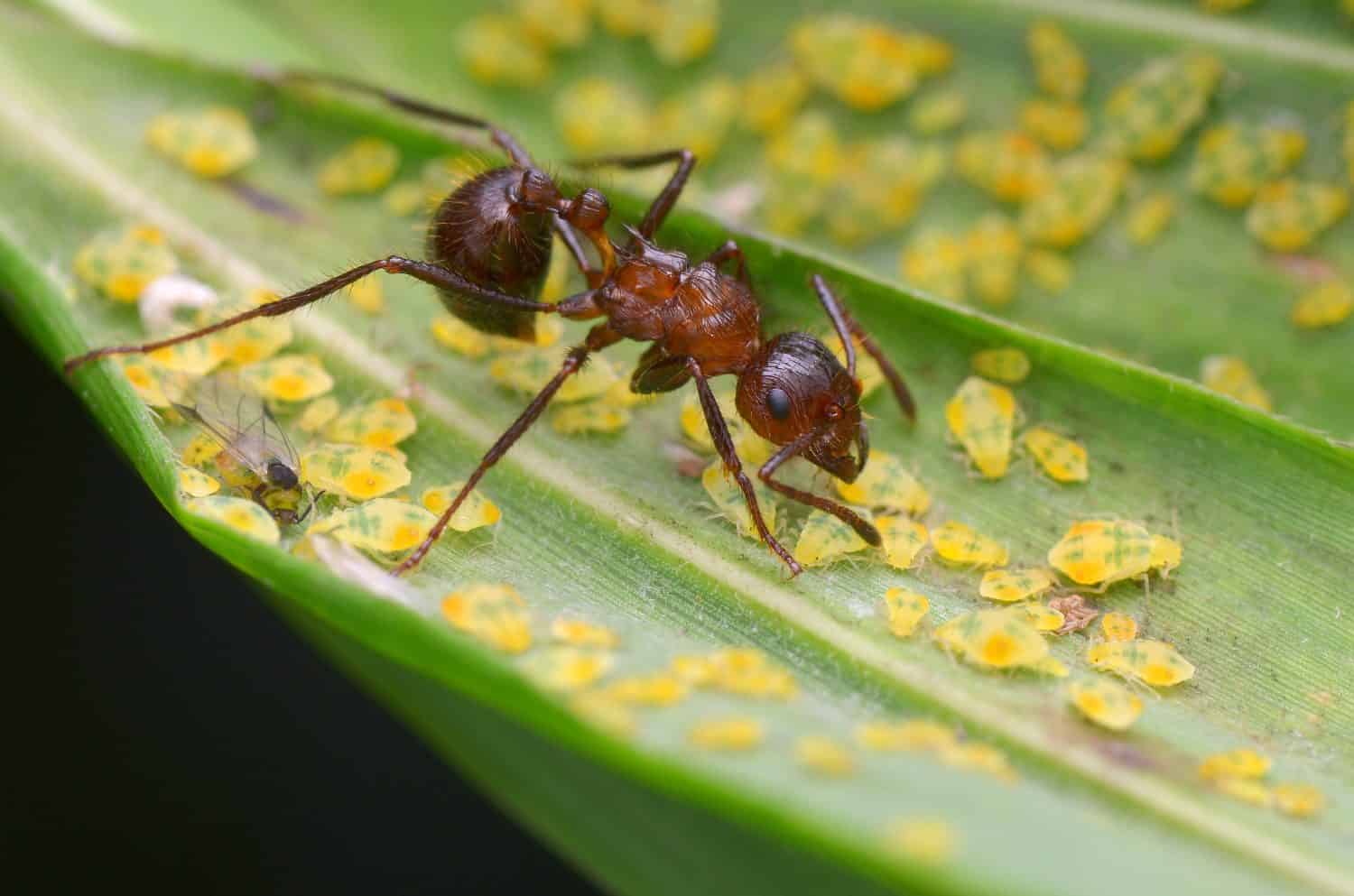
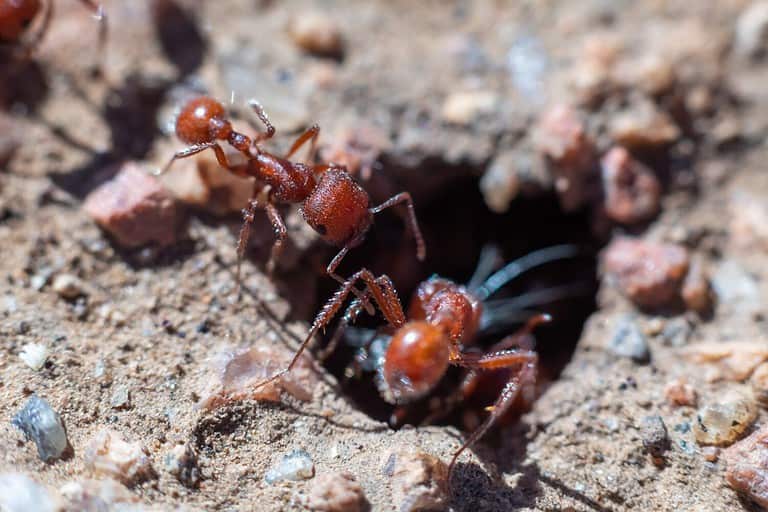
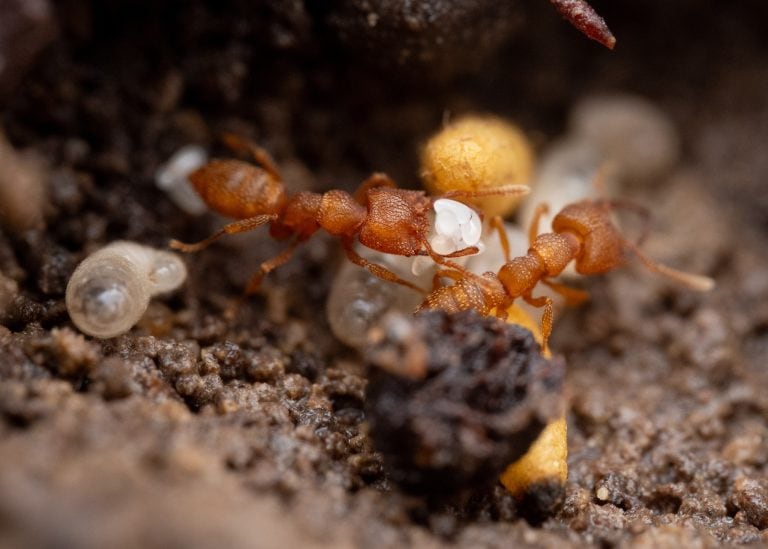
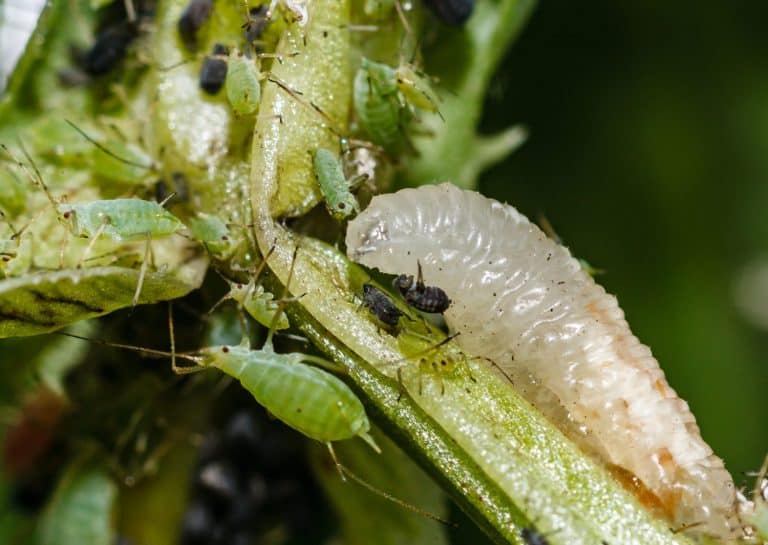
Aphids have a short lifespan, and many only live to be about a month old.
©SIMON SHIM/Shutterstock.com
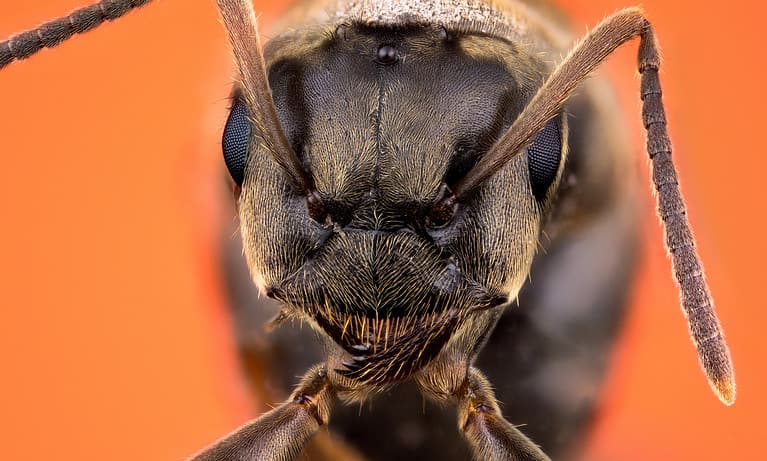
Beyond size, these two insects have a number of physical differences. Aphids have rounder, softer bodies, and generally lack strength. Sadly, even a strong breeze is enough to blow them away in many cases. In contrast, ants are much more formidable physically as they have large bodies and strong muscles. In fact, these insects are some of the strongest animals relative to their body size on planet Earth. According to researchers at Ohio State University, ants are able to withstand over 1,000 times their own weight.
3. Behavioral Differences
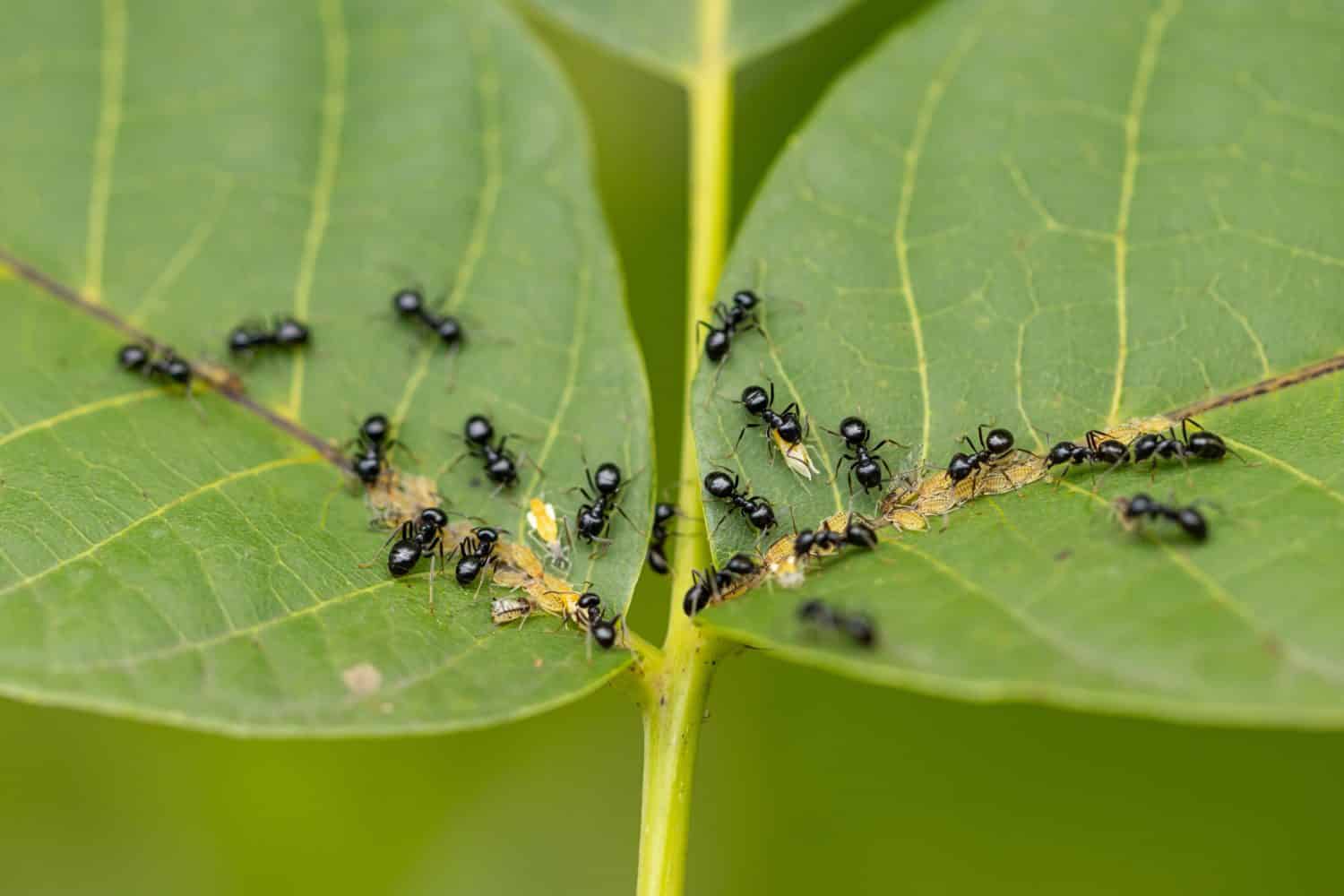
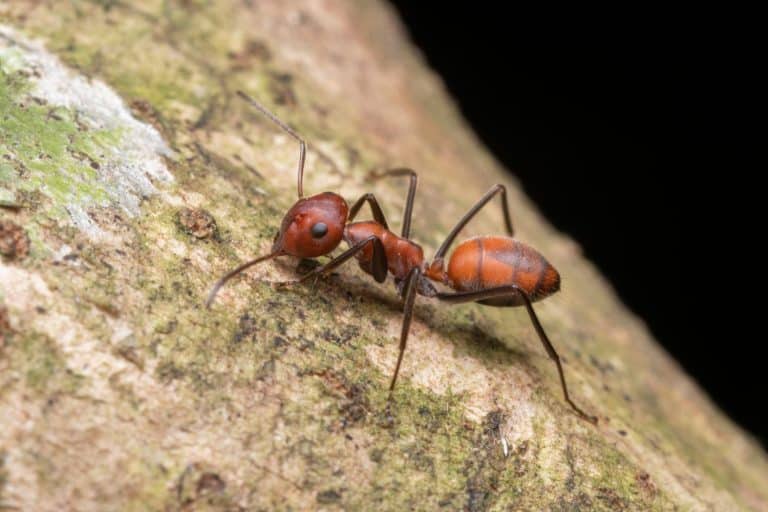
Although ants typically eat the honeydew that aphids produce, they have also been observed eating aphids themselves.
©BERNATSKAIA OKSANA/Shutterstock.com
Ants are social insects who spend much of their lives working to improve the lives of their colonies. Throughout the day, ants forage for food, tend to their larvae, protect their colony from threats, and help clean up their nests. However, these insects are able to squeeze in a bit of time to eat and nap throughout their working day. Not every member of the colony is allowed to mate, that duty is left up to queen ants and their male drones. Although aphids are often found living in densely populated communities, not all aphid species express coordinated social behavior like ants.
4. Classification Differences
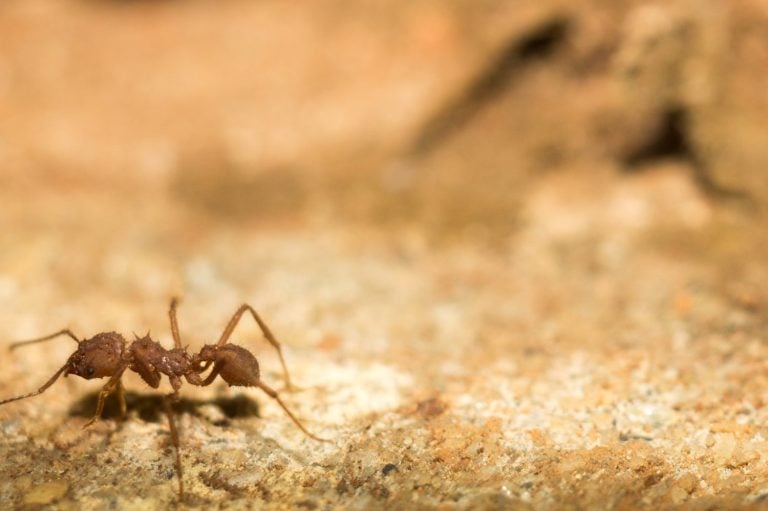
Some queen ants can live to be decades old.
©Szasz-Fabian Jozsef/Shutterstock.com
Both aphids and ants belong to the class Insecta, but this is the only similarity they share as far as classification is concerned. Aphids and ants are members of two completely different insect orders. Ants belong to the order Hymenoptera, and they are related to insects such as hornets, wasps, and bees. Within this order, every ant belongs to the family Formicidae which is comprised of roughly 15,000 different species. Aphids are considered “true bugs,” and they are members of the order Hemiptera. The presence of piercing-sucking mouthparts characterizes this order. These insects are related to cicadas, stink bugs, and bed bugs. Within the order Hemiptera, aphids belong to the family Aphididae which encompasses about 5,000 different species.
Final Thoughts
Although aphids and ants might share a strong connection in the wild, they are wildly different in many ways. Even at a glance, many people are able to make a distinction between these insects as they have several visible distinctions. However, their behavior, capabilities, and role in nature vary greatly as well. In this case, you might say that opposites attract, and it appears that both aphids and ants benefit from the differences they have.
Summary Table Of Aphids vs. Ants: 4 Key Differences
| Difference | Aphids | Ants |
|---|---|---|
| Size | ~ 0 – 6 mm | ~ 3 – 25 mm |
| Appearance | Small, rounder, softer bodies | Strong, angular bodies |
| Behavior | Somewhat social behavior | Highly organized social behavior |
| Classification | Aphididae | Formicidae |