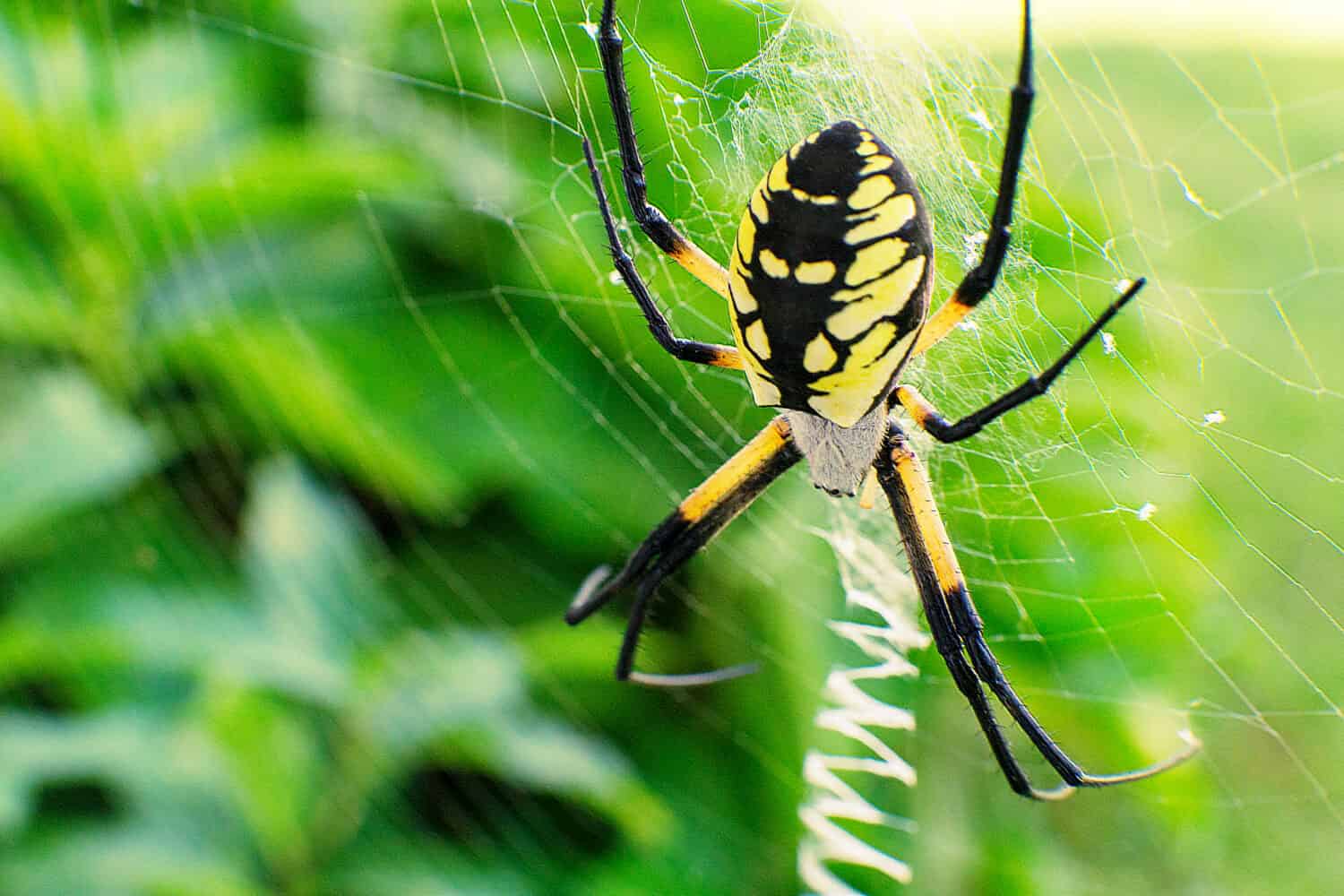

The further south you go, the bigger the bugs. Heat has a dramatic effect on the growth rate of some species, and North Carolina is home to some of the largest insects in America. From beetles to spiders the size of your hand (or bigger), there seems to be no limit to how large an eight- or six-legged creature can get. When it comes to bugs that look like they could take you on in hand-to-hand combat, these ten deserve a place in the ring.
Eastern Hercules Beetle
Not only is the eastern Hercules beetle one of the largest bugs in North America, but it’s also one of the heaviest. These beetles have bright tan or yellow-green bodies with black spots and legs. Their most notable feature is the horn at the top of their heads, ‘which is an extension of the exoskeleton used for combat between males. This horn is used to show dominance over other male beetles during mating fights. Females do not have horns and are slightly smaller in size.
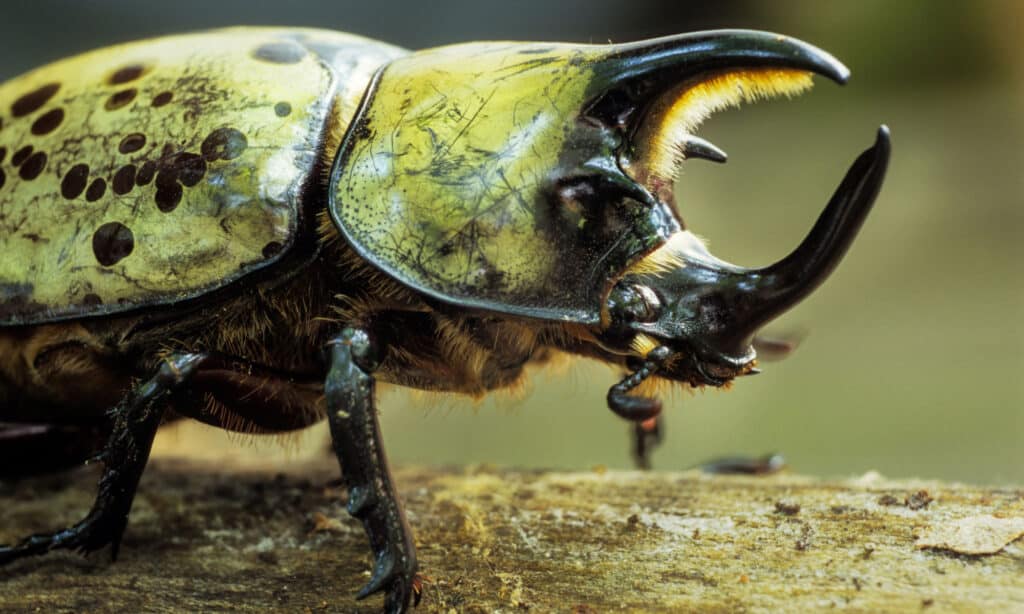
The eastern Hercules beetle is a formidable bug.
©Gerry Bishop/Shutterstock.com
Despite their Herculean size, these beetles are not carnivores. Their diets consist primarily of rotting wood and other decomposing organic matter. They may look scary, but they belong to the Scarabaeidae family, which also includes harmless dung beetles, June beetles, and Japanese beetles. Most of the time, these beetles are only looking for a safe place to lay eggs and a tasty piece of bark to eat. This makes them great composters, and rotting wood is their preferred food source.
| Size | Up to 3 inches long |
| Habitat | Under rotting logs or decaying wood |
| Danger Level | None, although their pointy feet might tickle |
Cicada
One large and noisy bug is the cicada of North Carolina. These insects make their presence known each summer with a loud, chirp-like hum. Many even believe the decibel level of their vocalizations can indicate the weather. They remain underground until it’s hot enough to burrow to the surface, and typically disappear by the end of summer.
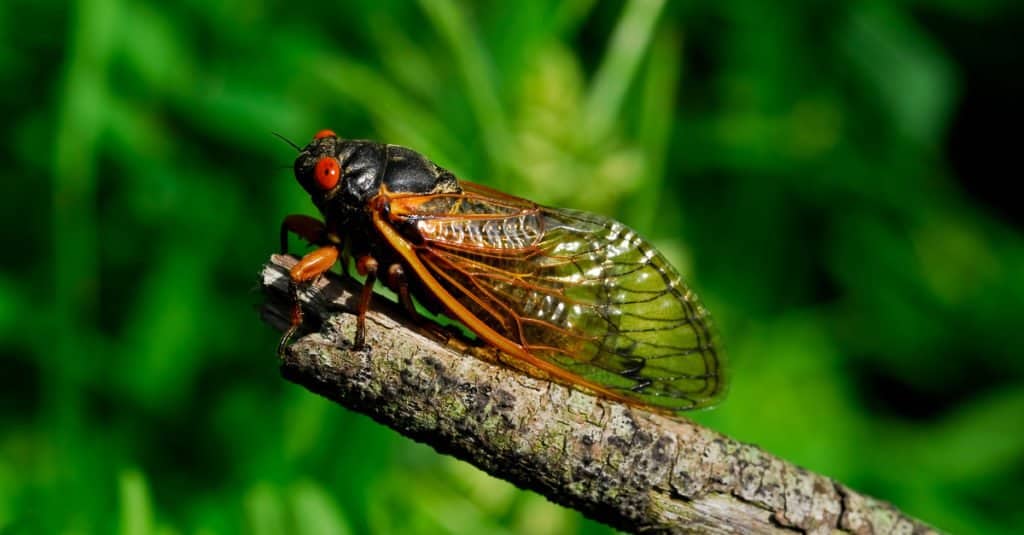
Cicadas spend a lot of time underground.
©Georgi Baird/Shutterstock.com
Some species of cicada emerge annually, while others emerge every 13 or 17 years. They remain underground until it’s hot enough to burrow to the surface, and typically disappear by the end of summer. Despite their large size, cicadas are primarily known for their loud chirping and their habit of accidentally flying into objects, including people. This may seem aggressive, but in reality, they’re just clumsy. They have long tubes instead of mouths for drinking sap, which is typically what they’re after.
| Size | Up to 2.5 inches, with a wingspan that can reach up to 3–4 inches depending on the species |
| Habitat | Underground, and trees after they emerge |
| Danger Level | Underground, trees, when they emerge |
Cicada Killer
Where there are cicadas, there are cicada killers. These large wasps have one goal: to kill and eat cicadas. These predatory insects are capable of bringing down an adult cicada with one sting. While hunting, a cicada killer stings its prey, effectively immobilizing it. The wasp then carries the paralyzed cicada back to the nest, where it’s fed to the larvae.
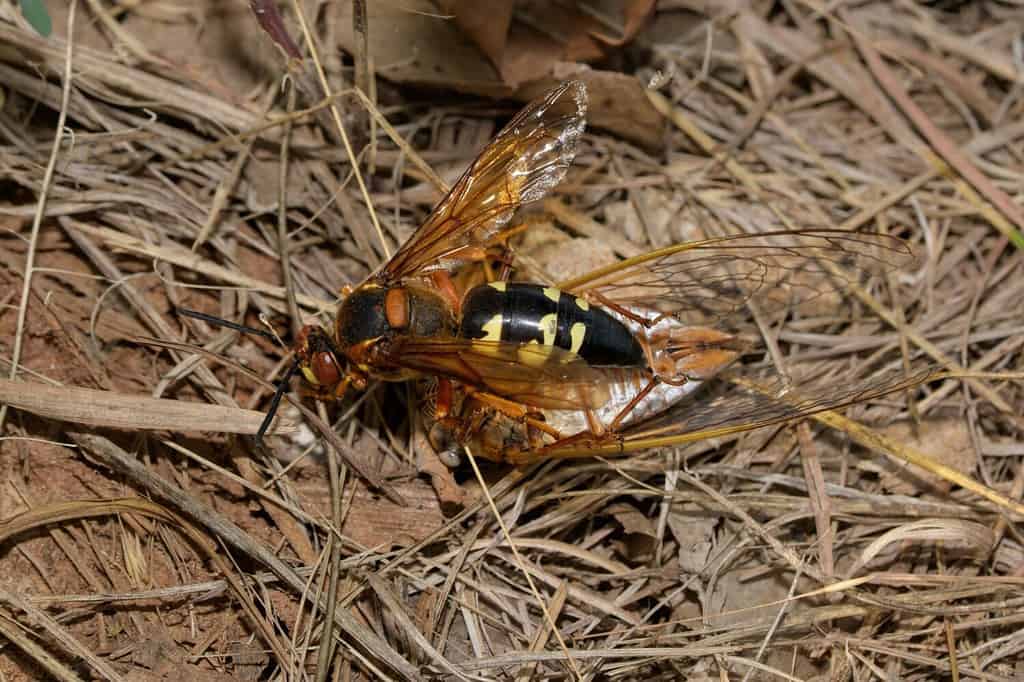
The cicada killer looks like a yellowjacket.
©Sari ONeal/Shutterstock.com
Cicada killers resemble other wasps, particularly the yellowjacket. They build nests underground, which can sometimes be mistaken for those of yellow jackets, another ground-dwelling insect. However, cicada killers are mainly active during July and August (the same time cicadas emerge). The lifespan of a male is several weeks, while a female can live up to a month. Their time as adults is short-lived, but terrifying if you happen to be a cicada.
| Size | Up to two inches |
| Habitat | Underground nests |
| Danger Level | Can sting if distrubed or feeling threatened |
Wheel Bug
The wheel bug is a species of assassin bug, and this large insect is no joke. This is one insect you might want to steer clear of, as it lives up to its name. These insects are easily identified by the wheel-like spokes on their backs, along with long legs and red antennae. The cog-like wheel on its back is how this insect was named, but it has nothing to do with its purpose in your garden.
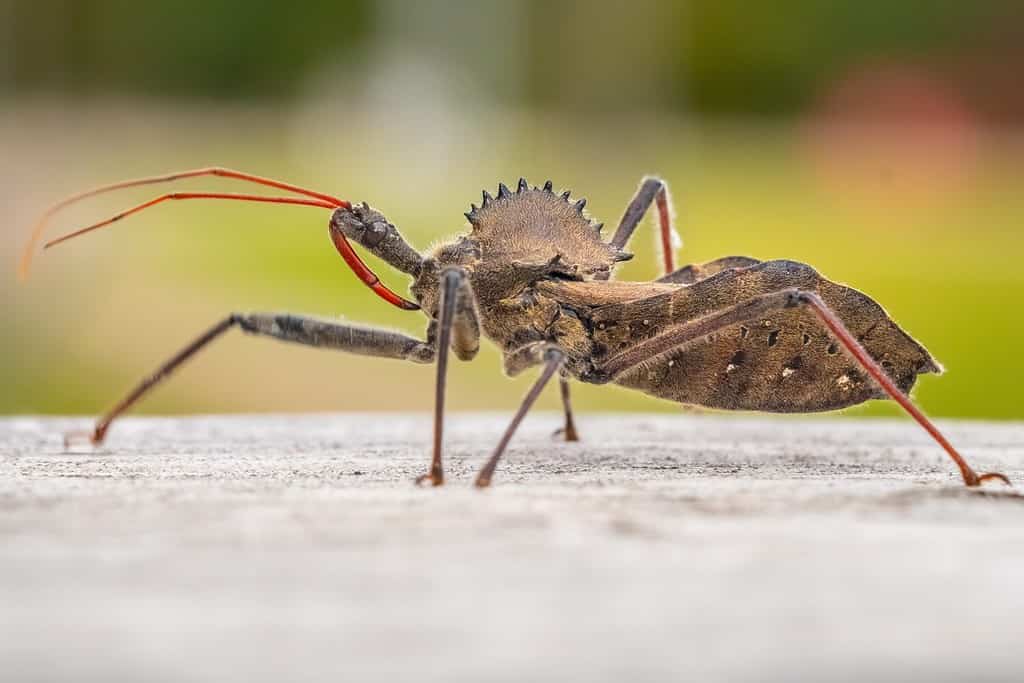
The wheel bug’s bite can be painful.
©samray/Shutterstock.com
Despite their reputation, assassin bugs like the wheel bug are incredibly beneficial to the ecosystem. They prey on pests and can help keep crops free of harmful insects. That said, handling them is not recommended; their bite can be quite painful. They release a toxin that paralyzes and kills small prey, but a bite can still be extremely painful for a full-sized adult.
| Size | 1.5 inches long |
| Habitat | Gardens, plants, sometimes near light fixtures at night |
| Danger Level | Moderate; pain from a sting can cause burning and soreness for several days |
Carolina Wolf Spider
It’s no secret that spiders can grow to monstrously large sizes. The Carolina wolf spider is one such species. This spider is one of the state’s most iconic, with perfect brown camouflage and a large, furry body complemented by long legs. Its appearance only looks threatening, as this arachnid is more likely to scuttle away from you before it attempts to bite you.
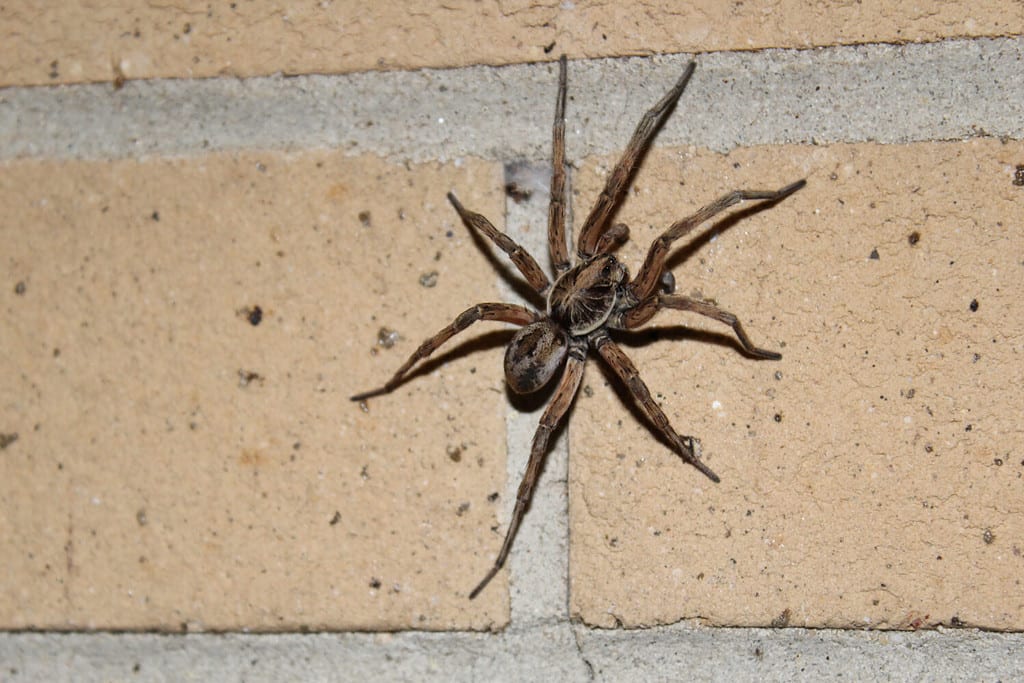
Wolf spiders are fast-moving creatures.
©Clayton Nichols/Shutterstock.com
Wolf spiders are also among the most beneficial spiders in North Carolina. They efficiently keep the mosquito population down and will do wonders if they hang out on your porch or backyard deck. They might be big, but that just means they can eat even more pests than the average house spider. These spiders are also incredibly fast and will dart out of sight before you even realize you’ve seen one.
| Size | Up to 1.4 inches |
| Habitat | Dark spaces, crevices, under rocks or logs |
| Danger Level | Low; the pain level of a bite is similar to a bee sting, but they are non-aggressive |
Eastern Giant Swallowtail
The Eastern giant swallowtail is one of the largest butterflies in North America. They’re found throughout North Carolina and are often seen at the height of summer, fluttering around gardens. Their black and yellow wings are iconic and are often associated with summer and butterfly gardens. While their larvae can sometimes disrupt a tree’s natural growth, they’re entirely harmless to humans.
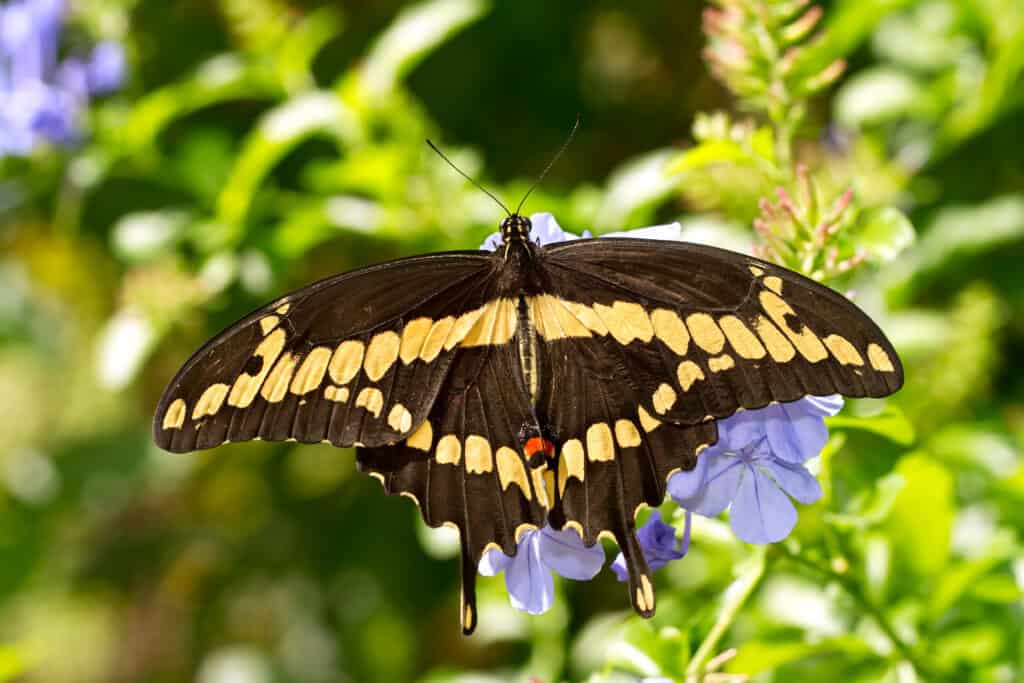
You may find an eastern giant swallowtail in a field of wildflowers.
©Lorraine Hudgins/Shutterstock.com
They are elusive butterflies and rarely interact with humans. However, if you are one of the few to hold a swallowtail, consider yourself lucky. Swallowtails are excellent pollinators and, like bees, are essential to the survival of many plant species. Their large wings enable them to cover great distances, making them a vital part of the ecosystem.
| Size | Up to 6.25 inches |
| Habitat | Gardens, open meadows, fields with wildflowers |
| Danger Level | None |
Cecropia Moth
North Carolina is also home to the largest native moth in North America, the cecropia moth. With wings that feature bright orange, red, black, and white coloring, this fuzzy insect is a delight to spot in the wild. They easily dwarf any butterfly species in the area, boasting the largest wingspan of any moth on the continent.

Cercropia moths are harmless to humans.
©Cathy Keifer/Shutterstock.com
However, seeing one of these moths is relatively rare since they only live for a couple of weeks. Their primary goal as adults is to lay eggs and continue their reproductive cycle during their short lifespan. Cercropia moths are also nocturnal, and most people stumble upon them at night near porch or yard lights. Adult moths do not eat, so if you see one, it’s likely looking for a mate.
| Size | Up to 7 inches |
| Habitat | Hardwood forests |
| Danger Level | None |
Carpenter Ant
Carpenter ants are among the largest ant species in North America, and they’re commonly found throughout North Carolina. They look intimidating, but unless you’re a piece of wood, carpenter ants probably won’t be interested in you. Often mistaken for termites, carpenter ants use wood differently. Rather than eating it, they use it to build their nests.
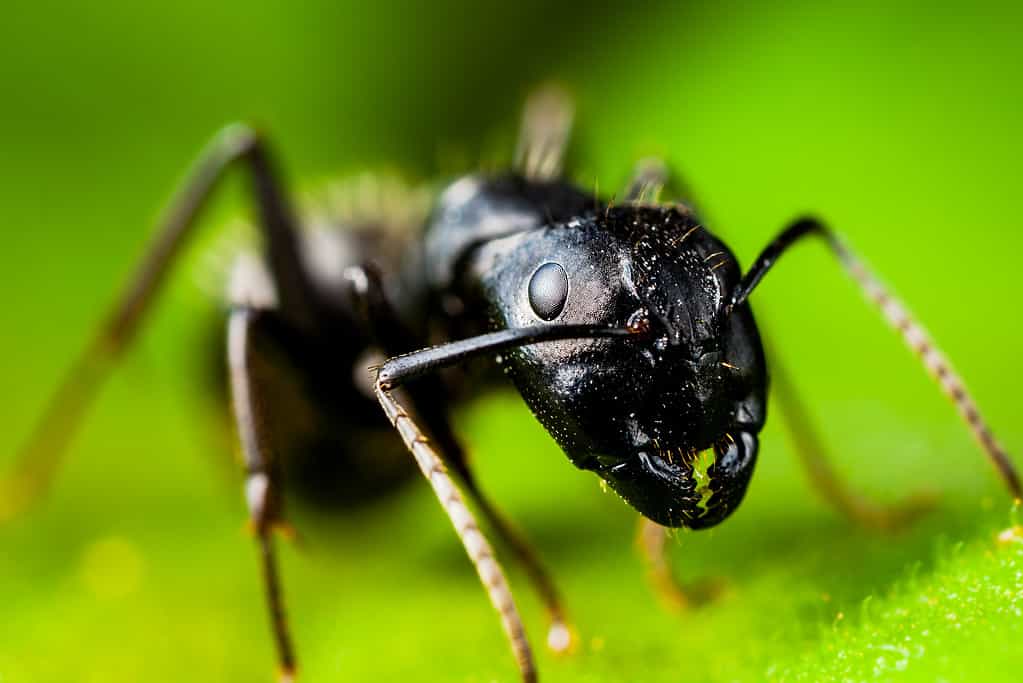
The carpenter ant can severely damage wooden structures.
©Denis Vesely/Shutterstock.com
Their jaws are powerful enough to excavate tiny pieces of wood, which are then carried back to their construction site. A colony of ants can cause severe damage to a wooden structure, but this typically occurs only in rare cases, usually when the structure is already compromised. Carpenter ants are master builders, utilizing the tunnels they excavate to construct elaborate nests.
| Size | Up to half an inch |
| Habitat | Logs, wood framing, tree stumps |
| Danger Level | Low; they can bite if threatened |
Black and Yellow Garden Spider
One of the most well-known orb weavers in North America is also one of the largest in North Carolina. The black and yellow garden spider, also known as a writer spider, is a beautiful addition to any garden. This spider uses mimicry to fool predators into believing it’s toxic or venomous; in reality, it’s harmless.
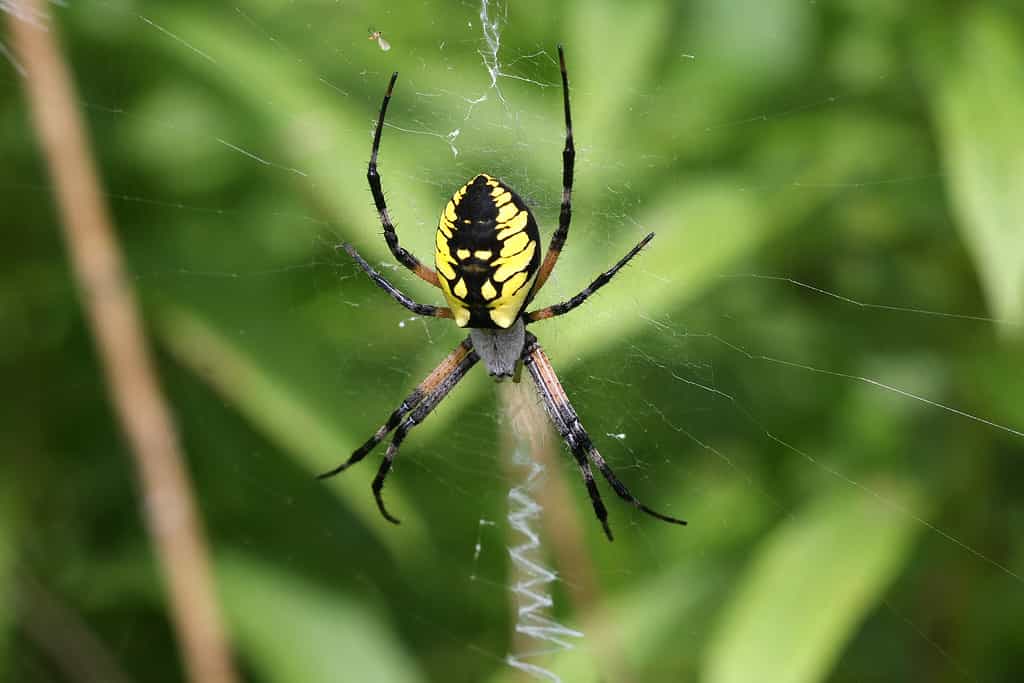
The black and yellow garden spider has a pretty straightforward name.
©Ron Rowan Photography/Shutterstock.com
This spider is a master predator when it comes to pests and mosquitoes. Its large webs trap many insects that would be bothersome to people or plants, making it highly beneficial to have around. However, its size can be intimidating to those who are unfamiliar with its gentle nature. This spider is non-aggressive and not prone to biting, making it one of the gentlest species of arachnid in North Carolina.
| Size | Up to 2 inches, including leg span |
| Habitat | Gardens with tall plants, hedges, tall grass |
| Danger Level | Low; they can bite if severely threatened |