
Quick Take
- The "thorns" on your garden plants might already be sending messages you'll never hear, and scientists have found a way to eavesdrop on them. Hear their hidden signals →
- Male treehoppers don't just compete for mates. Some steal a rival's entire courtship, and females never know the difference. See how rivals steal courtship →
- When a treehopper mother senses danger, she doesn't fight alone. Her distress signal pulls in allies from completely different species. Meet the cross-species allies →
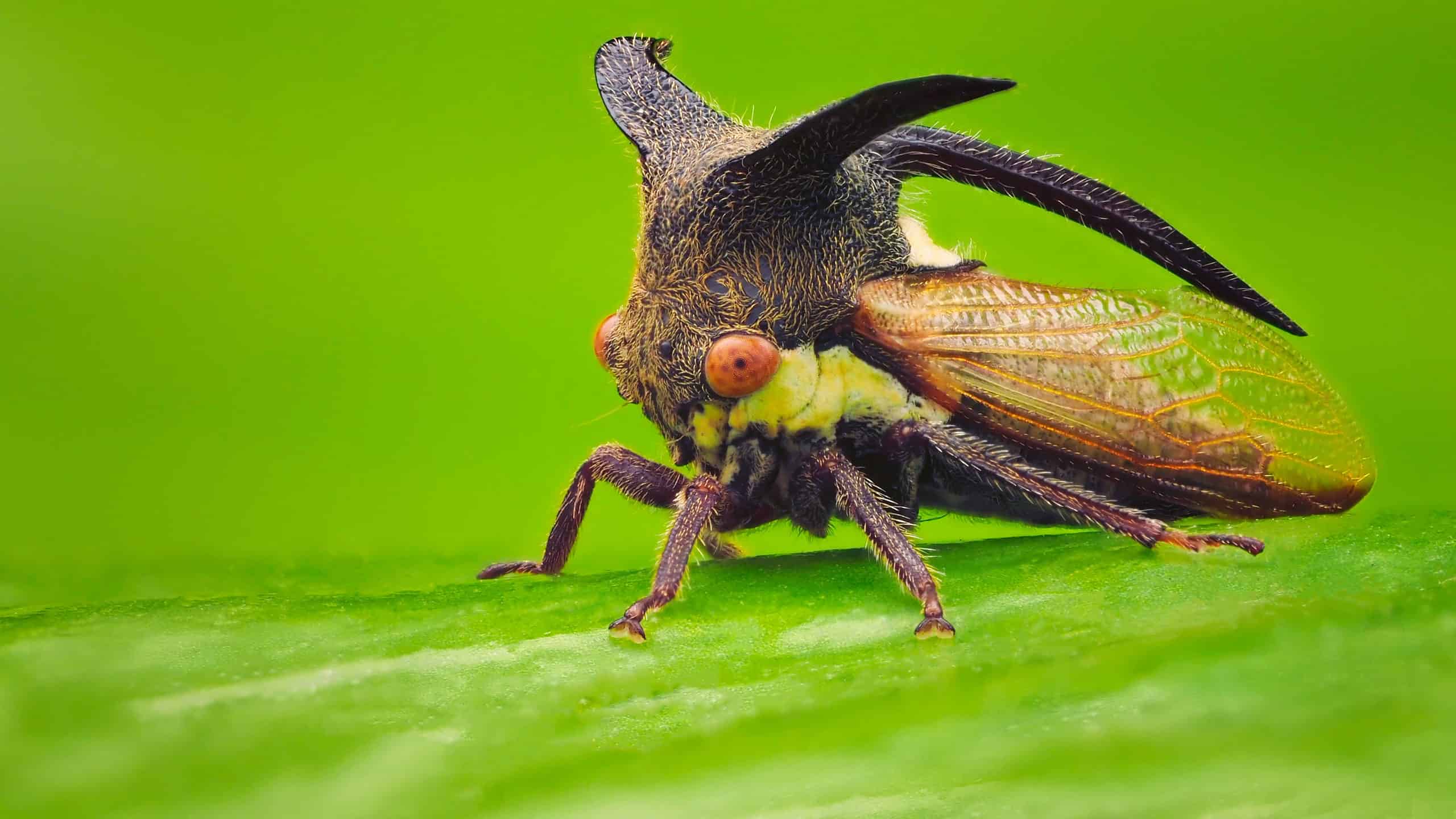
The tiny green bugs you see hopping from leaf to leaf in your garden are more specialized than you think. Treehoppers are masters of survival, effortlessly blending into their surroundings, but they’re also highly effective communicators. It’s nearly impossible to find them due to their camouflage, but their fellow treehoppers always know exactly where they are.
A combination of unique vibrations and wing fluttering can deliver coordinates in seconds, a crucial capability for their survival. With the help of plant stems that also serve as a food source and a little support from their friends, treehoppers are an evolutionary wonder.
Treehoppers Send Morse Code Down Plant Stems
These sap-sucking insects don’t need cell phones to message one another. To the untrained eye, these two-centimeter insects appear like thorns or briars on a plant stem. They stay well-hidden until it’s time to communicate, and then something incredible happens. These “thorns” begin to tap, moving their legs quickly as if sending out Morse code. And in a way, that’s exactly how they communicate.
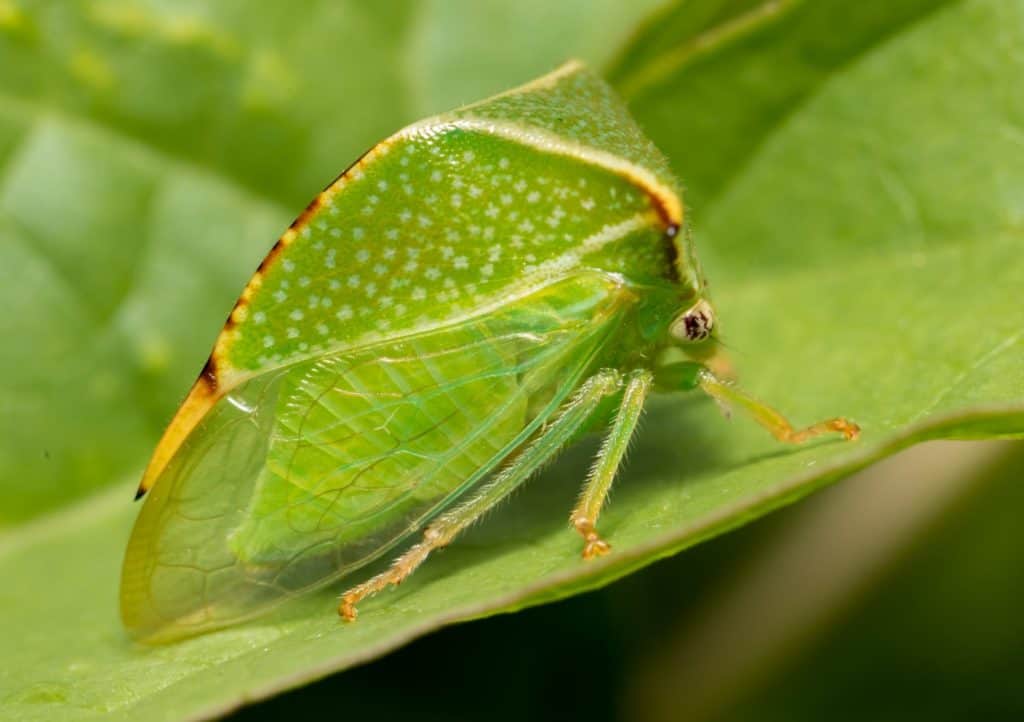
Treehoppers blend in with their natural habitats and hide in plain sight.
©J.J. Gouin/Shutterstock.com
We will never be able to hear the tiny tap-tap-tap of a treehopper with our own ears. But scientists have found other ways to decode these top-secret messages. By attaching a speaker to the plant the insects are gathered on, researchers have been able to record the rhythm of the tapping. This sound never reaches the open air because vibrations from the taps are sent directly down the plant’s stem.
What scientists have recorded is nothing short of an evolutionary masterpiece. While we don’t understand treehoppers’ language, they do send out vibrational signals that communicate things such as danger. When a stem full of treehoppers is lightly disturbed, the insects tap in synchrony, signaling down the entire line that a threat may be near. This unique method of messaging is akin to humans sending a message over Wi-Fi. It’s efficient and arrives quickly thanks to the way sound travels down hollow plant stems.
Mating Calls Turn into Romantic Duets
When a male is ready to find a mate, he uses his abdomen to send out specific vibrations to nearby females. In the treehopper world, this is the equivalent of a male trying a cheesy pick-up line. When the message reaches a female, she decides whether she’s impressed by the male’s efforts. If not, she simply leaves him on “read” and doesn’t respond.
A female who is intrigued by a male’s rhythmic taps responds with a low-frequency tap of her own. Her response serves two purposes. The first is to lock in a mate and secure the match, and the second is to tell the male where she is located.
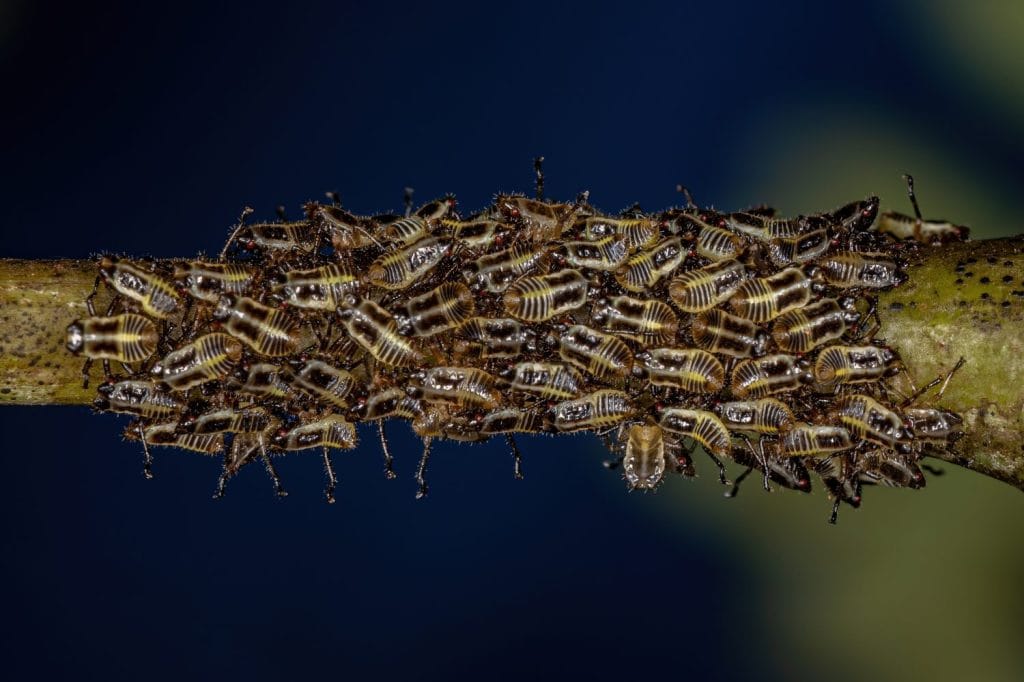
Treehopper nymphs are vulnerable, but their mothers protect them with everything they have.
©Vinicius R. Souza/Shutterstock.com
However, this romantic duet is not as innocent as it seems. Some treehoppers eavesdrop on the taps of other males. This reveals the competition and lets the treehopper know if there’s another male with a better “song.” Unbeknownst to females, there’s a competition of tapping raging around them. Some females may never even realize they were enchanted by a treehopper that stole another’s song.
Even Treehopper Nymphs Learn to Communicate
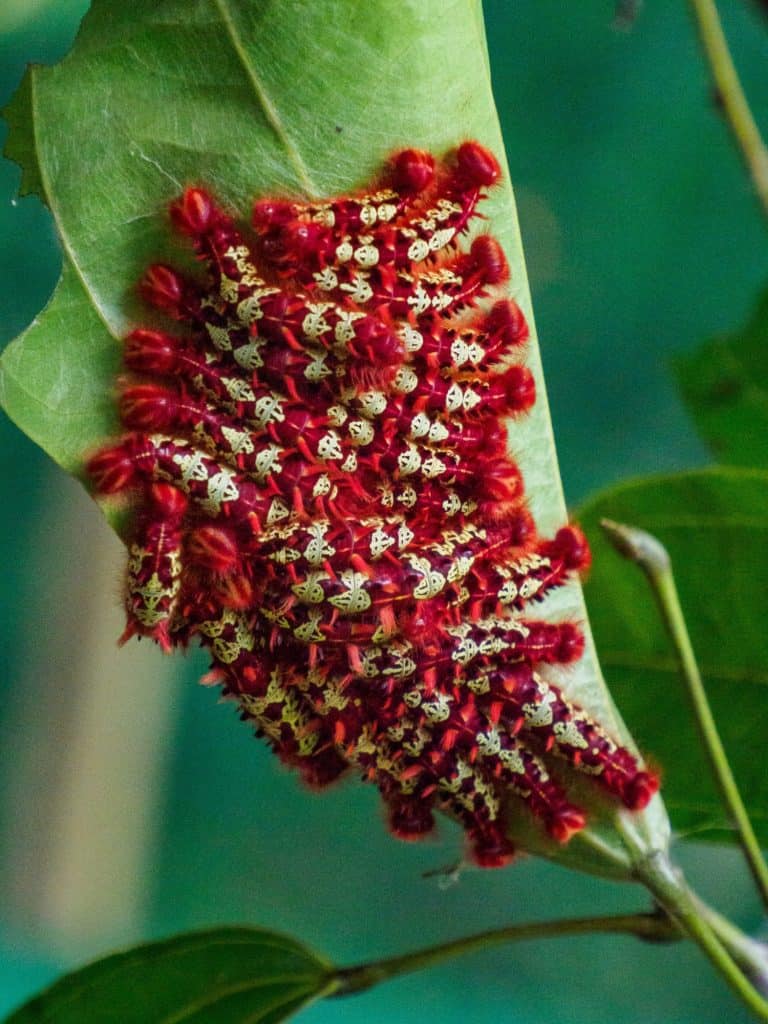
This language of vibrations is taught at an extremely young age. Treehoppers can have anywhere from dozens to more than hundreds of offspring per year. They remain huddled together in groups on branches and leaves until they’re mature enough to go off on their own. However, this also leaves them extremely vulnerable to predatory attacks. Unlike most insects, adult treehoppers do whatever they can to protect their young.
When they sense danger, adult treehoppers signal to their nymphs the same way they might communicate with a mate. Nymphs respond in kind, sending vibrational pulses that help their mother determine the threat’s location.
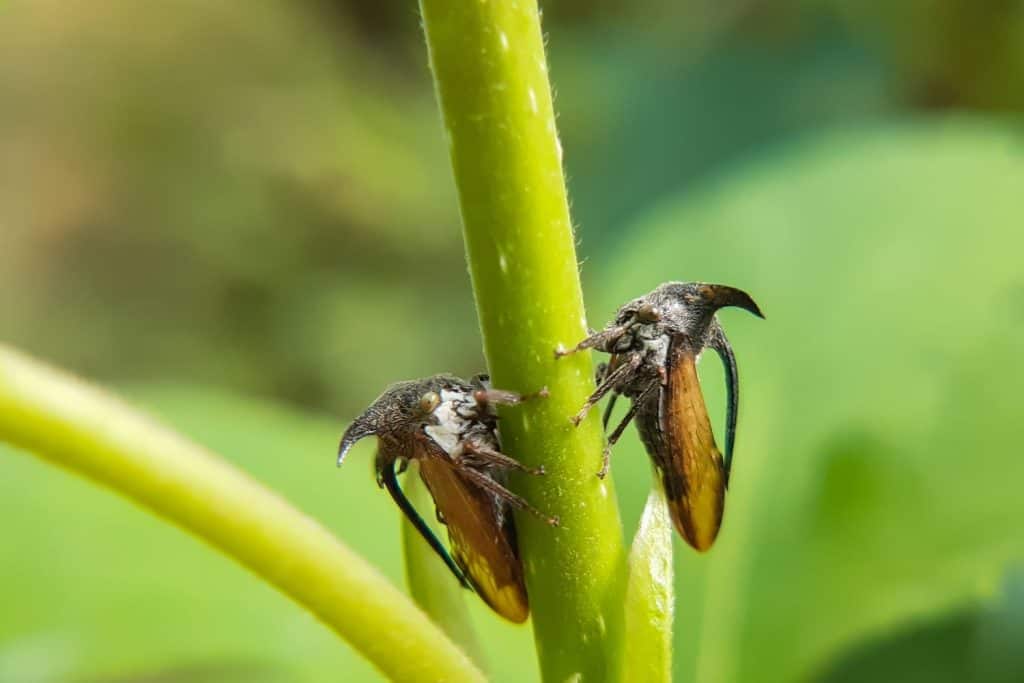
Mutual aid from a few insect friends often keeps treehoppers safe.
©Jitender kumarj/Shutterstock.com
Once the threat is found, the mother uses whatever methods she can to defend her young. This is typically a combination of flurried wings, hind-leg kicks, and aggressive charging. It’s not always successful, but it is effective against many predators. Studies show that without their mother’s fierce protective instincts, treehopper nymph survival rates would be extremely low.
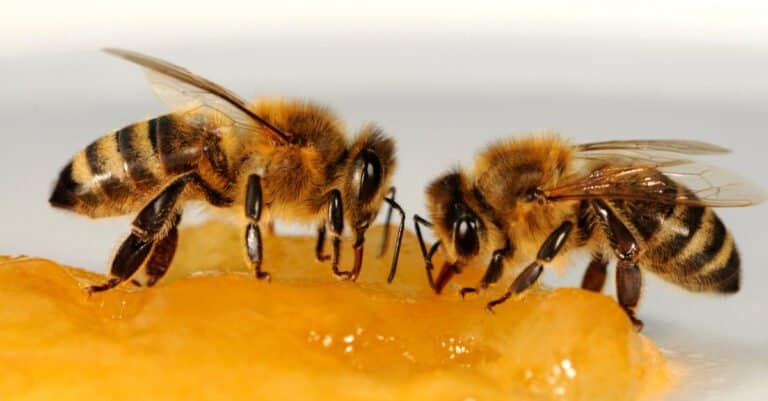
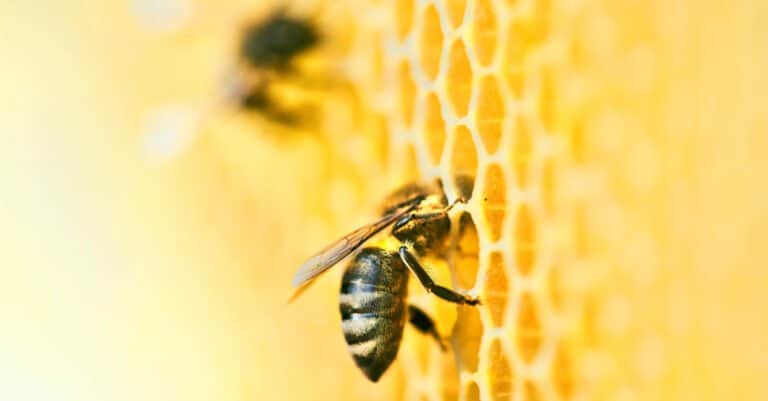
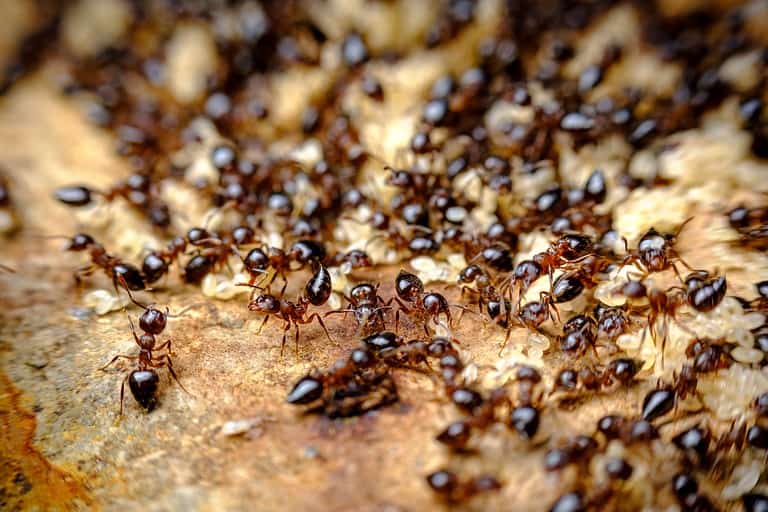
What’s more fascinating is that treehoppers sometimes recruit the help of other nearby insects. These other insects come to her aid when she sends out danger signals. Ants, in particular, are well-known for protecting treehopper nymphs. In return, treehoppers leave behind honeydew for the ants to harvest, making the relationship mutually beneficial. Nearby bees also sometimes come to aid treehopper nymphs for the same reason. There are also rare reports of stingless bees that dive-bomb predators trying to eat treehopper nymphs. They too are rewarded with honeydew. However, this is not a commonly documented occurance.