
Quick Take
- Albinism doesn't just change a cobra's color. It triggers a chain of survival disadvantages that make every day a death sentence. Explore the survival odds →
- Factory workers spared this cobra while killing the others, and its survival may come down to one visible clue. See how it was spared →
- Researchers aren't certain albinism is the answer, and the tests needed to find the truth reveal just how little we understand about color mutations in venomous snakes. Read the testing details →
Monocled cobras (Naja kaouthia) are one of the world’s most venomous snakes. They’re common in Dhaka, Bangladesh, and often enter industrial and urban areas. Commercial and residential development is shrinking their native habitats, so human-cobra encounters are on the rise.
The most recent encounter left several factory workers in Derma with a harrowing experience. They found not one, not two, but three monocled cobras in the building where they worked. However, one of them was different. Most of these snakes are tan and black, with characteristic patterning on the back of their heads and backs. But one was so different that it was almost mistaken for another species—and it was pink.
A Mysterious Monocled Cobra Stumps Researchers
Corralling snakes is not uncommon in Bangladesh. Demra is no stranger to these reptiles, considering its industrial areas border the Balu and Shitalakshya Rivers. Ponds and small lakes dot the region, and many low-lying wetlands provide hunting grounds for cobras. As these areas develop further, they begin to encroach on the natural habitats of monocled cobras.
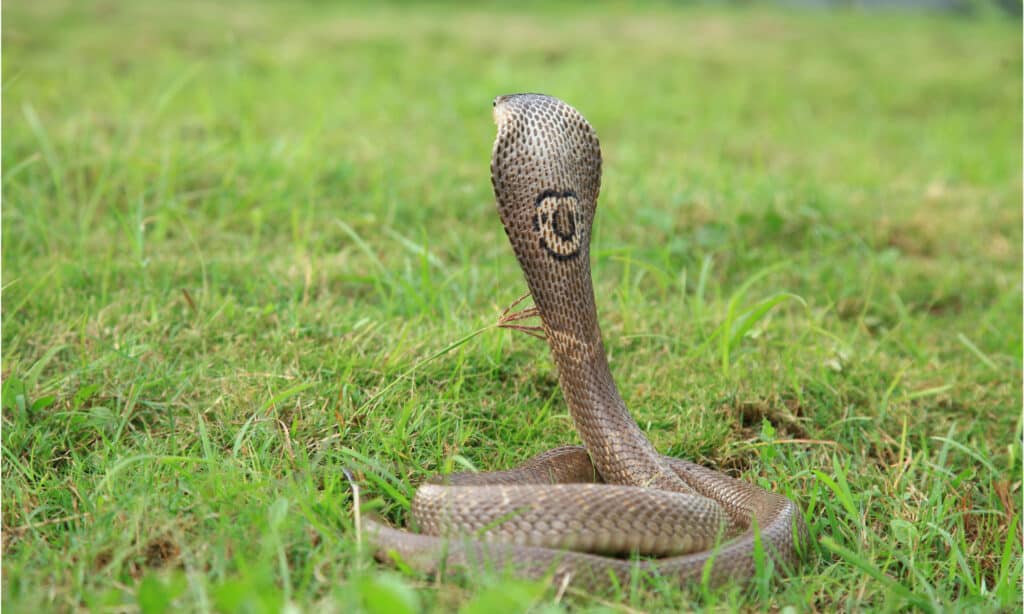
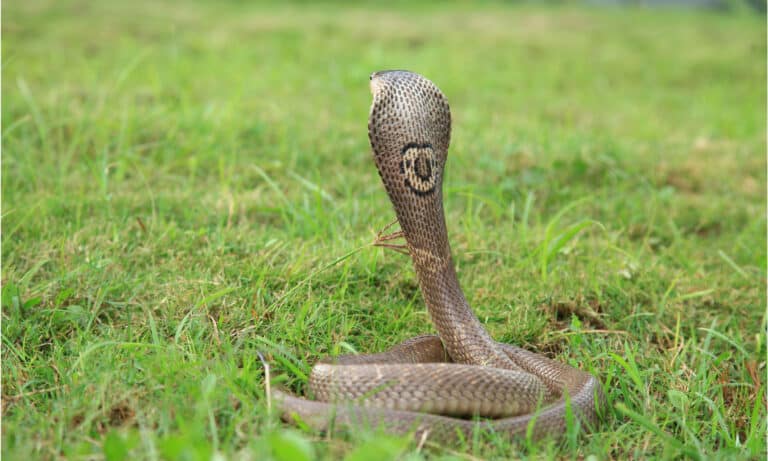
Monocled cobras get their name from the monocle-shaped design on the back of their hoods.
©iStock.com/ePhotocorp
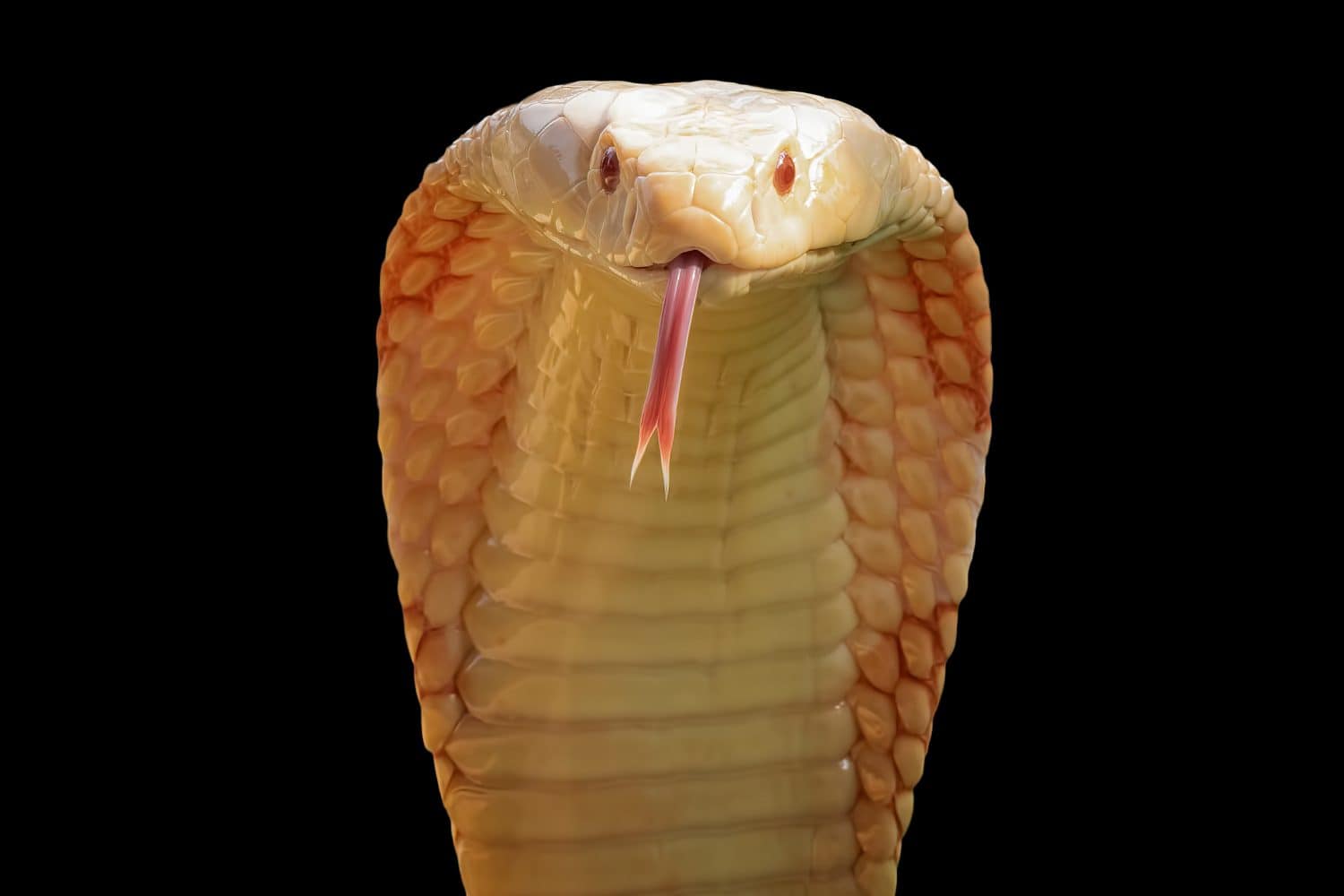
But when employees at a Demra insulation factory found multiple snakes, they were quite surprised. Two of the monocled cobras were easy to identify, but the third was pink, had light-colored eyes, and was only about a foot long.
- Native range
- Parts of India, China
The juvenile was undoubtedly a cobra, but its appearance led officials from Bangladesh’s Wildlife and Snake Rescue Team (WSRTBD) to worry something was wrong. In a statement to The Business Standard, wildlife rescuer Saif Roudra said the cobra may have albinism.
How Does Albinism Affect Snakes?
Albinism results from a genetic mutation that prevents an animal from producing melanin. In snakes, melanin is crucial for the patterns and colors that help them camouflage. A cobra’s earth tones help it blend in with its surroundings, typically forest floors, leaf litter, or underbrush.
Camouflage is especially important for juveniles, which typically have bolder patterns than mature snakes. This evolutionary trait protects them when they’re young, and their colors become more muted as they age. Mature cobras are more likely to rely on aposematism, hissing and using their hood display to intimidate prey or large predators.
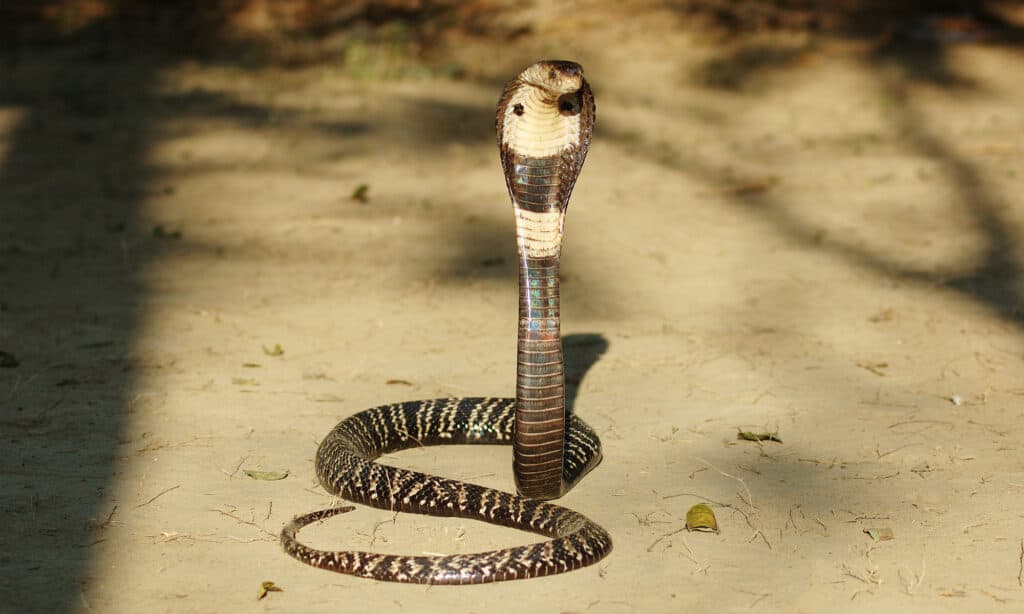
Mature monocled cobras have brown, gray, or black bodies with repeating patterns that help them blend in with their surroundings.
©iStock.com/Koushik Bhattacharjee
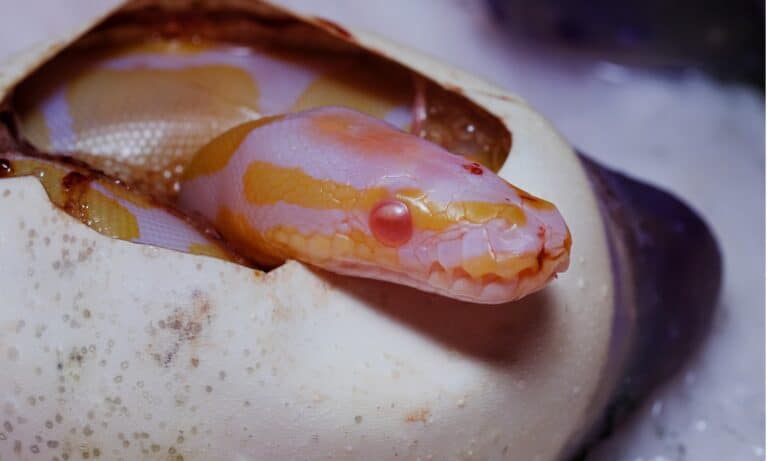
But for an albino monocled cobra, camouflage is not an option. Wildlife experts believe the one found in Demra shows classic signs of albinism. Its pink color is one of two albino classes: tyrosinase-negative (T-) and tyrosinase-positive (T+). One results in no melanin production, while the other produces low levels of melanin that give the snake some color. But in both cases, the outlook is grim.
Snakes with albinism, particularly cobras, easily stand out in the wild. They are easy targets for predators, and it is extremely difficult for them to escape once predators see them. This monocled cobra’s light-colored eyes also imply light sensitivity. Most cobra eyes are dark because melanin filters light, but in an albino cobra, it doesn’t. Additionally, its light-colored scales are vulnerable to the sun’s UV rays, which can cause sunburn and other sun damage during the day.
The Pink Cobra May Have a Second Chance
Although experts could not determine the pink cobra’s age from size alone, they believe it’s still young. Factory workers killed the two monocled cobras due to the threat they pose to humans but may have given the third one a second chance at life.
Despite its potent venom—which consists of postsynaptic neurotoxins, cardiotoxins, and myotoxins/cytotoxins—the potentially albino cobra was relocated. It will be studied at the Venom Research Centre, where experts can learn more about its condition.

At the Venom Research Centre, experts can learn more about the pink cobra and where it came from.
©Ton Ponchai/Shutterstock.com
To determine whether the pink cobra has albinism, experts may conduct vision, light-sensitivity, and genetic tests to determine the cause of the snake’s unusual appearance. Some questioned if the pink cobra could be a new species, but given the rate of monocled cobras in Demra, it’s highly unlikely. Additionally, photographs taken at the time of discovery show the snake had difficulty shedding, further pointing to albinism.