Quick Take
- Green bettas don't actually contain any green pigment, which raises the question of what you're really seeing when you look at one. See how green appears →
- Some of the rarest betta colors exist precisely because breeding them causes a hidden genetic problem that ethical breeders refuse to ignore. Explore the ethical dilemma →
- A betta's color can change months after you bring it home, and the reason has nothing to do with water quality or stress. See the marble gene effect →
- The foods you feed your betta can unlock colors that pet-store conditions kept hidden, but it often takes new owners by surprise. Unlock hidden colors →
There are over 75 species in the genus Betta, also known as fighting fish due to their aggressive and territorial behavior. These fish are native to Southeast Asia and are considered one of the most popular and commercially important ornamental fish in the world. Betta splendens is the most commonly seen species in the hobby, but B. imbellis, B. smaragdina, and hybrids are also popular. Today, most bettas are captive-bred rather than wild-caught. Hobbyists also selectively breed bettas to exhibit certain traits or color patterns. In this article, we’ll discuss betta genetics and take a look at some rare and uncommon betta fish colors.
Betta Fish Genetics
Domestication brought changes in bettas’ colors and morphology. Betta fish come in so many vibrant colors and patterns due to hundreds of years of selective breeding, as well as bettas’ multi-layered natural pigment. Breeding for color is a complex process due to overlapping pigment layers, dominant and recessive genes, and mutations that can cause unpredictable changes in the pigment.
Betta fish have four layers of pigment and reflection cells called chromatophores. The fourth or bottom yellow layer consists of xanthophores, which contain yellow, orange, or red pigments made of carotenoids and pteridines. The third layer, or red layer, is made of erythrophores, which contain red and orange pigments. The second layer is the black layer, which consists of melanophores with melanin to produce dark brown or black shades. Melanophores can also redistribute pigment to control a fish’s color changes. The iridescent top layer contains iridophores that are light-reflecting cells made of stacks of thin protein plates. They reflect blue-green light, giving fish their blue, green, turquoise, and metallic sheens.
DNA determines how the pigment and reflection layers will interact to produce the base color, as well as the pattern. Genes that produce the marble or koi pattern can cause colors to change over time. Bettas can also have up to six known eye colors, including black, white, yellowish-brown, yellow, brown, and light blue.
Rare and Uncommon Betta Fish Colors
Now that we’ve discussed how betta fish genetics work, take a look at some rare and uncommon betta fish colors, as well as why these colors are harder to find.
Green
Bettas do not have green pigment. What appears to be green is caused by light reflecting off the blue iridescent scale layers on a yellow or dark base. This is why they can appear turquoise or forest green depending on the light. Green bettas are rare because achieving a stable, metallic green is difficult to breed consistently.
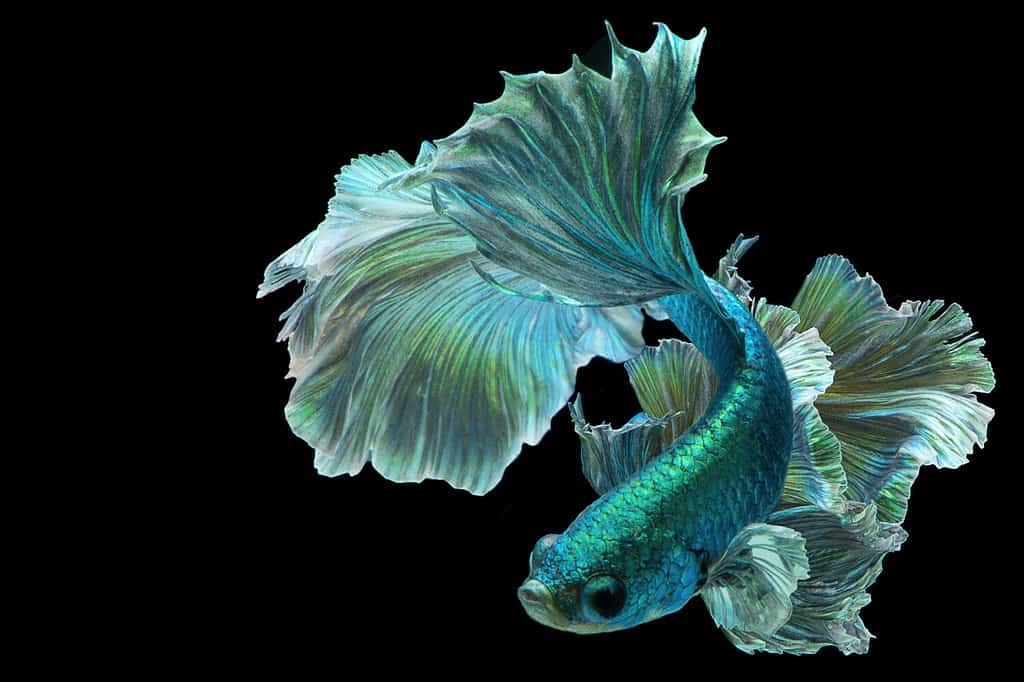
It is difficult to consistently breed metallic green bettas.
©Digital Art StudioTH/Shutterstock.com
Orange
Solid or “super orange” bettas are uncommon because the genes for a vibrant, solid orange are recessive. Developing a solid orange requires advanced, multi-generational, selective breeding to suppress marbling that could cause the fish to develop dark blotches as it ages. So, a stable orange betta is much more difficult to find.
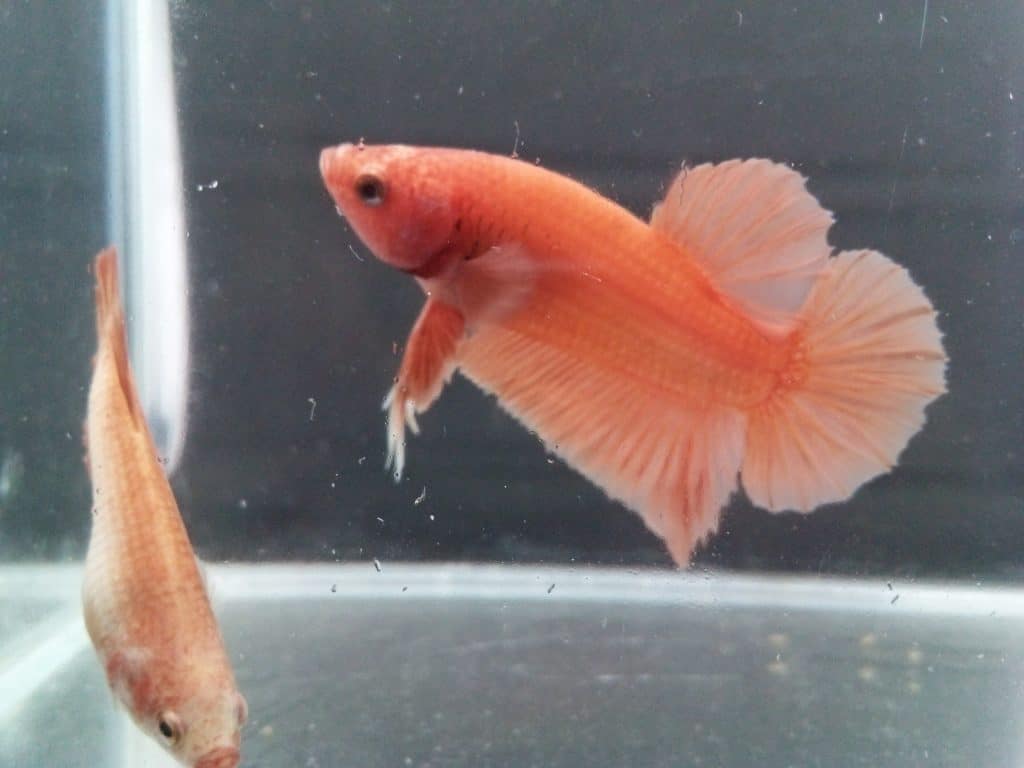
The genetic traits required for a vibrant, solid orange are recessive.
Yellow
A true, solid, uniform yellow with no red or black flecks on the body or fins is uncommon and highly sought after. High-quality fish are often referred to as “super yellow.” Yellow is a recessive trait and can require many generations to eliminate red or black pigment from the line.
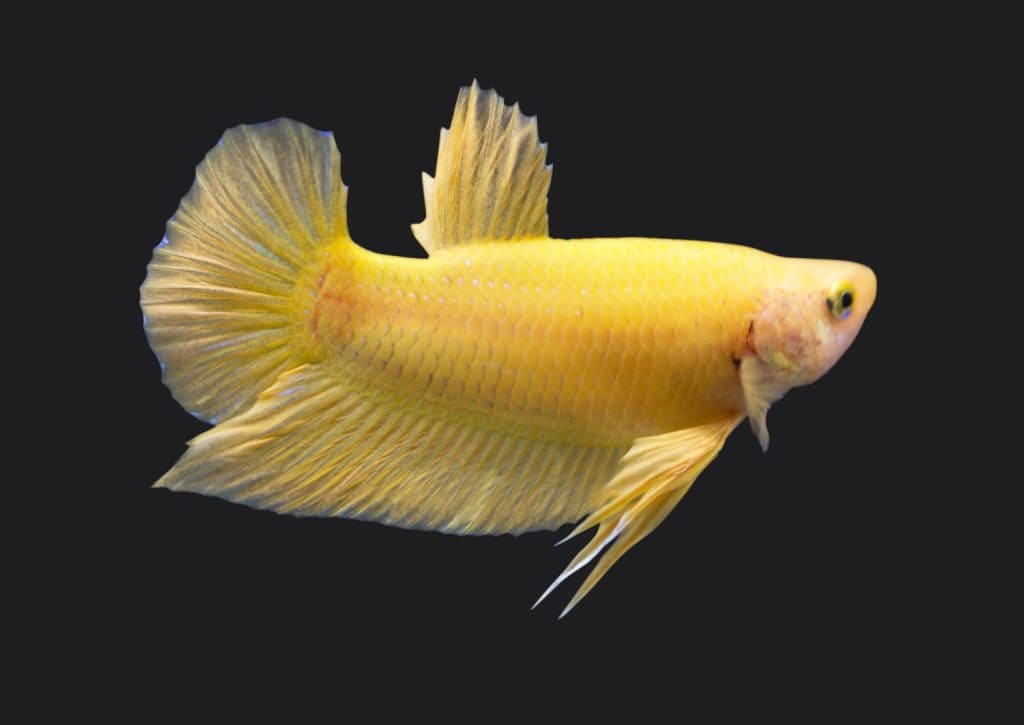
A true, solid, uniform lemon yellow is hard to find, as most have red or black speckling.
©happymay/Shutterstock.com
White
True white bettas are hard to find because opaque white in bettas can be unstable. This is due to the interference of the marble gene. As mentioned above, the marble gene is often present in betta bloodlines and can cause color changes throughout a fish’s life. A bright, white betta could develop colored patches months later. Pure white bettas are often called “platinum” or “super white.”
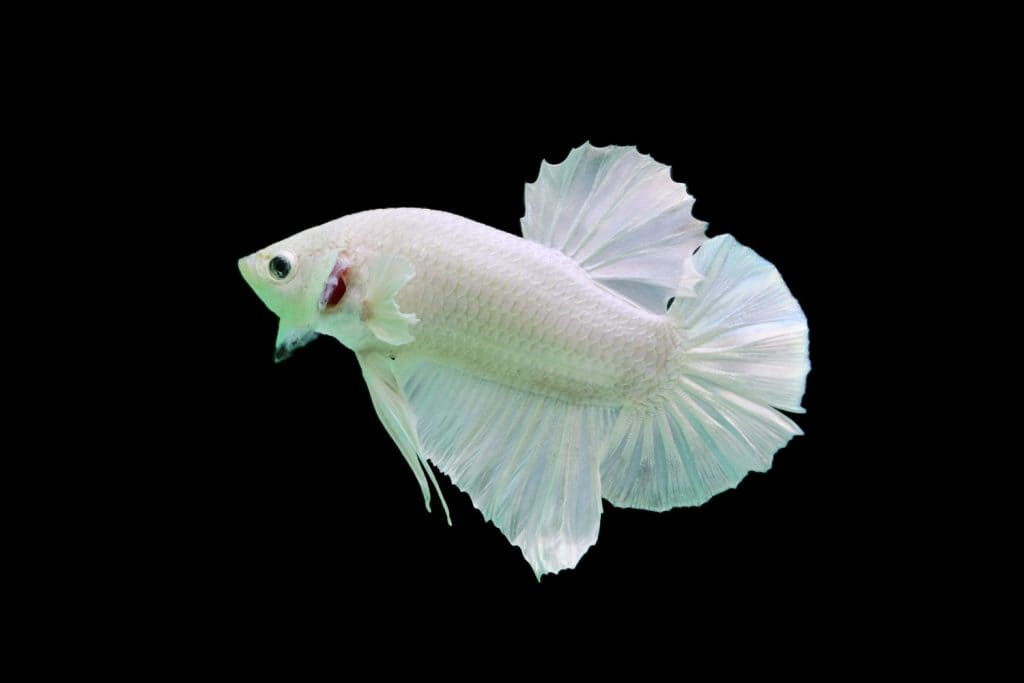
True white bettas with no colored patches, translucent fin edges, or yellow undertones are hard to find.
©rhodyway/Shutterstock.com
Black
Black bettas, especially black Melanos with the deepest, darkest, solid black bodies, are rare. Female Melano bettas are frequently infertile, which makes breeding true lines difficult. Black patterned bettas, such as the Black Samurai, which has a metallic white or silver mask over a dark black body, are also uncommon and sought after by collectors.
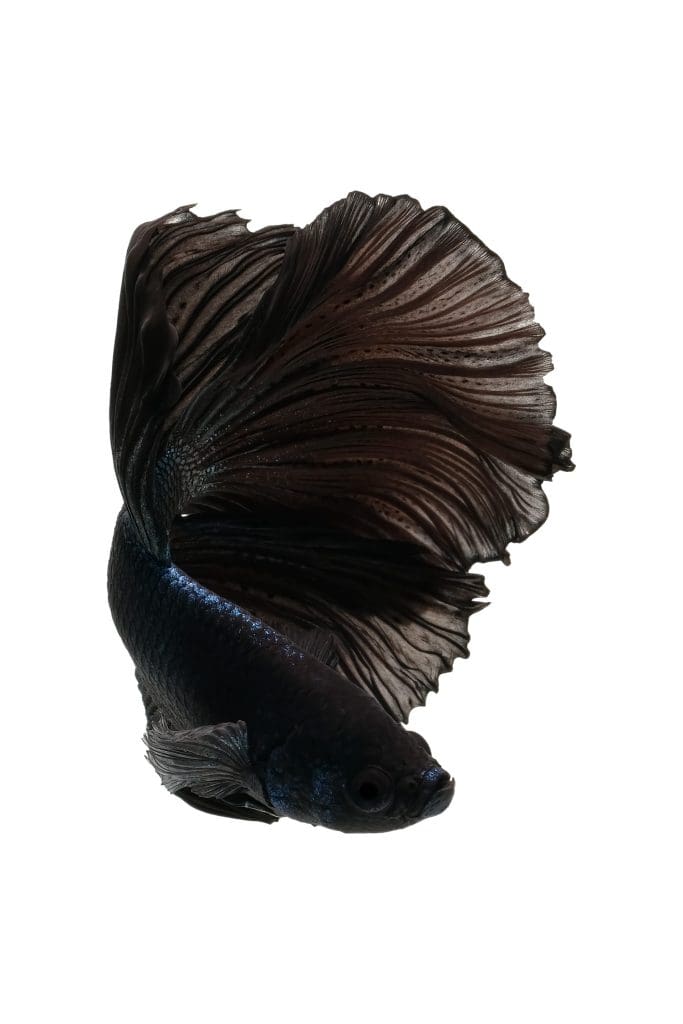
Black bettas are rare because the females can be infertile.
©Tu.Kulaya/Shutterstock.com
Purple
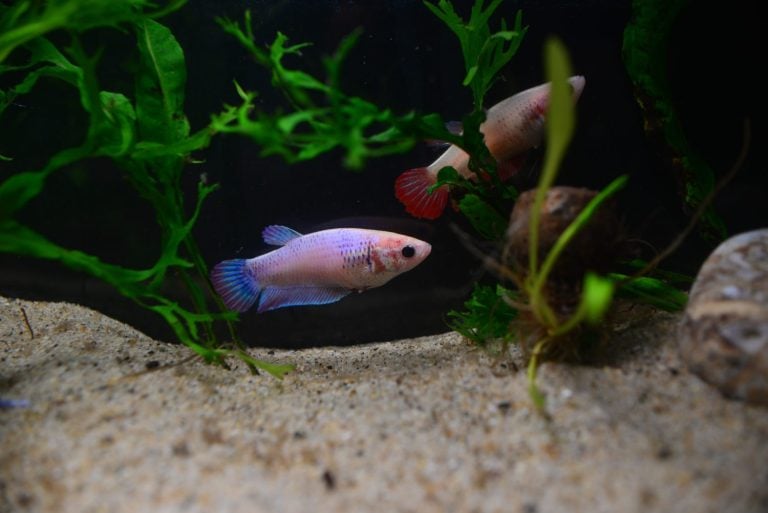
True purple bettas are very rare because bettas do not have purple pigment. They may appear violet in certain lights due to the layering of blue structural iridophores over red pigment cells. Most purple bettas are actually lavender with a pink or grey undertone; mauve, which is a dusty purple over a steel blue base; or copper-violet, which has a metallic sheen.
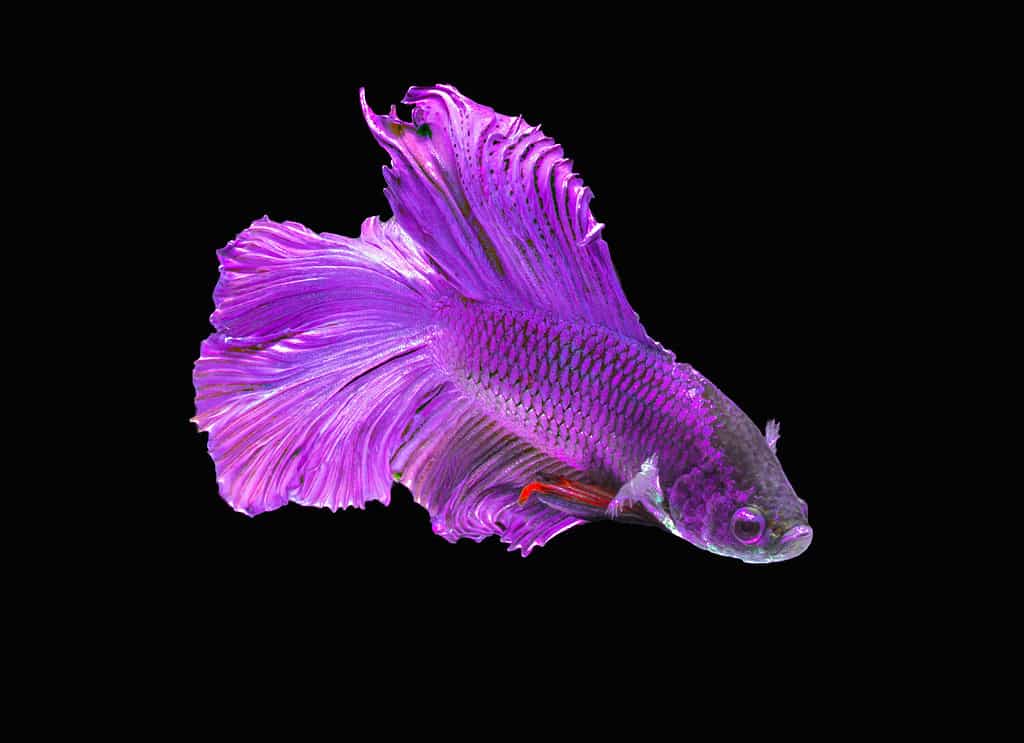
It’s difficult to breed a perfect purple, making the purple betta fish one of the rarest.
©GracePhotos/Shutterstock.com
Albino
True albinism requires a complete lack of melanin and other skin pigments. Albino bettas must also have pink or red eyes with no dark coloration. Their eyes are sensitive to light, which can lead to degenerative vision loss or blindness, making it more difficult for them to survive. Ethical breeders also refuse to breed for albinos.
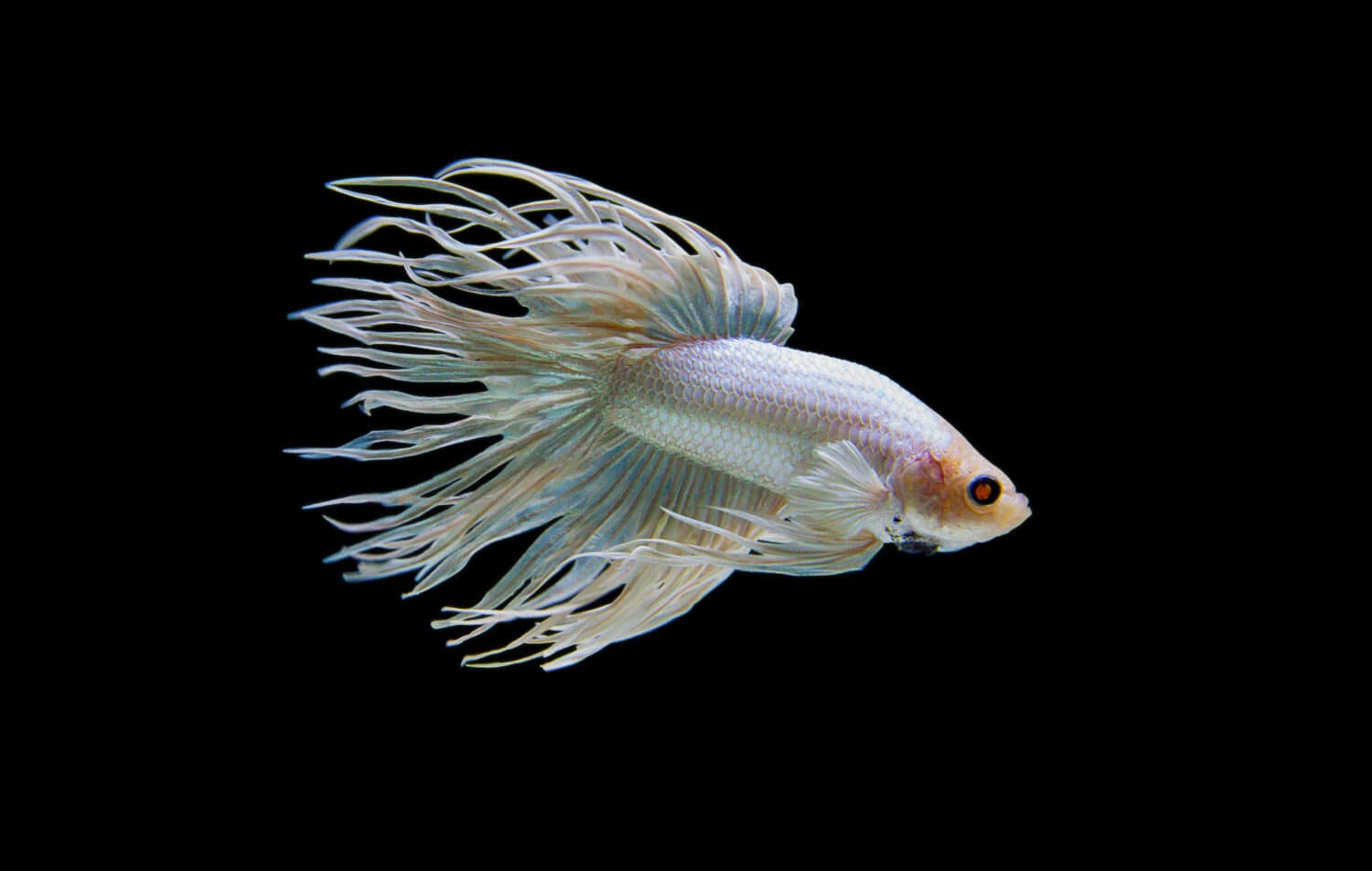
While it is very rare, albino bettas with a complete lack of melanin do exist.
©Do Thanh Binh/Shutterstock.com
Betta Fish Patterns
Betta fish genes also influence patterning. Specific modifier genes dictate whether the layers of specialized cells in the skin are expressed as a uniform color or whether the color will be restricted to certain parts of the fish’s body.
Here are some common or popular betta fish patterns you should know about:
- Bi-color: The body is one color while the fins are a completely different secondary color
- Grizzle: The body and fins are speckled or mottled dark and light colors, giving the fish a salt-and-pepper-like appearance
- Solid: The fish is a single uniform color across its body and fins
- Multicolor: The fish has three or more distinct colors across its body and fins
- Koi: Patchy, overlapping layers of red, black, and white or orange over a light base
- Cambodian: A pale or flesh-colored body with bright, solid-colored fins that are typically red
- Marble: A blotchy appearance that can unpredictably change as the fish ages due to a genetic trait
- Dalmatian: A light base color with dark spots, similar to the dog breed
- Dragon scale: Thick, metallic, opaque scales that contrast against a darker base color
- Butterfly: The fins are a solid base color closest to the body, transitioning to a distinct, broad band of clear or contrasting color at the outer edges
- Alien: A dark, iridescent body with a metallic sheen and distinct dark scale edging
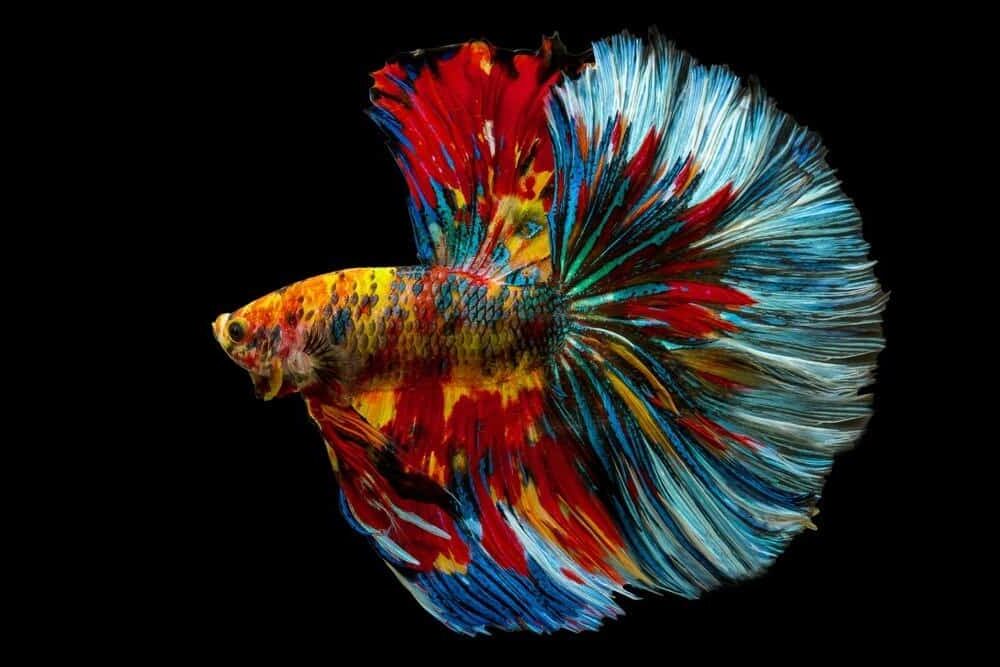
A multicolor fish has three or more distinct colors across its body and fins.
©Mr. Witoon Boonchoo/Shutterstock.com
Betta Fish Care and Improving Their Color
If you recently purchased a betta fish online or at a pet store and their colors aren’t as striking as you expected, don’t worry. Bettas from pet stores or online sources may have experienced stress in low-quality conditions. However, when you place them in a well-maintained home aquarium with suitable decorations, their colors may become more vibrant. Here are some tips to provide your betta fish with the best care.
- Tank Size: They require at least a 5-gallon aquarium so they have room to swim and it is easier to keep the water clean. Always house bettas alone.
- Temperature: Use a small aquarium heater to ensure they have warm water between 76°F and 82°F, with between 78°F and 80°F being optimal.
- Filter: Choose a gentle filter to help keep the water clean, like a sponge filter, so the current does not damage your betta’s long fins.
- Water Conditioner: Treat all tap water with a dechlorinator before adding it to the tank to remove harmful chemicals.
- Maintenance: If you have a filtered 5-gallon or larger tank, change 20% to 25% of the tank’s water every week.
- Hides: Betta fish need hiding spots to feel safe, reduce stress, and encourage activity in their tanks.
You can also enhance their colors by providing them with the right foods. A diet rich in high-protein foods like brine shrimp, bloodworms, daphnia, and krill can help bring out their natural colors. Experts recommend feeding 3 to 4 high-protein, betta-specific pellets once or twice a day. Only feed what the fish can eat in one to two minutes, and remove any leftover food.
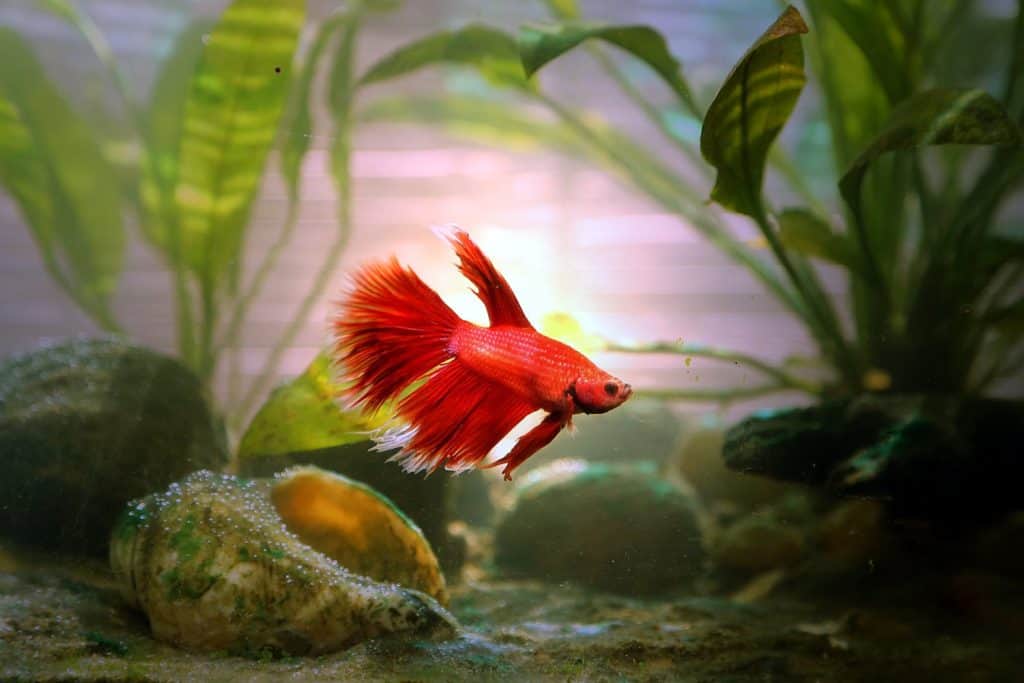
Bettas require at least a 5-gallon aquarium so they have room to swim.
©MANU PARADY/Shutterstock.com
Betta Fish Breeding
Breeding for specific colors and patterns is extremely complicated and unpredictable for beginners because bettas’ complex genetics. Mixing different tail types or colors often results in irregular fin shapes and inconsistent color patterns. You can also run the risk of breeding undesirable traits. Pairing identical types (such as two Halfmoon bettas) also preserves established ethical breeding standards set by groups like the International Betta Congress.
Tank Preparation
Use a 10-gallon tank with a water depth of 6 to 8 inches. Ensure the temperature is 78°F–80°F and the pH is around 6.5–7.0. Add floating plants, or even a piece of bubble wrap, at the water’s surface to support the male’s bubble nest. Provide plenty of hiding spots in the tank. Ensure your sponge filter is on very low flow or even turn it off during spawning so the water current does not disturb the bubble nest.
Couple Preparation
Choose healthy fish between the ages of 6 and 8 months of similar types or colorations. Keep the male and female in separate containers, but ensure they can see each other for several hours each day. Feed them extra portions of high-protein live or frozen foods, such as bloodworms, blackworms, or brine shrimp until the female has a plump appearance and a visible white ovipositor spot under her abdomen. This should take 1-2 weeks.
The Spawning Process
Put the male into the breeding tank first. He will claim territory and build his bubble nest under the leaves or bubble wrap. Then, place the female in a breeding net box inside the tank so the male can get used to her presence without being aggressive or fighting with her. The male will flare his fins and circle the female if he intends to court her.
When the male completes a thick bubble nest and the female exhibits vertical breeding stripes and a willingness to approach the male, then you can release her into the open water. Be sure to supervise their interaction. Some chasing is normal, but remove the female immediately if the male becomes aggressive, to prevent injury or death. If the female is receptive, the male wraps his body around her, sometimes even turning her upside down. This causes the eggs to be released. Then they are fertilized, and the male places the eggs in the bubble nest. Remove the female immediately after spawning finishes.
Caring for the Fry
Betta fish eggs hatch within 24 to 48 hours after fertilization. The fry will hang vertically with their tails sticking out, as they still have the egg-yolk sac. Once the fry are free-swimming in 3–4 days, remove the male so he does not eat them. To learn more about caring for betta fish young, check out our article on betta fish eggs.