The monocled cobra is among the most dangerous snakes in the world.
The monocled cobra, also known as the Indian spitting cobra, produces a lethal amount of venom that acts quickly to target the nervous system of its victim. While not quite as well known as the Indian cobra, it is nevertheless fairly common throughout South Asia. This species should be avoided at all costs.
4 Monocled Cobra Amazing Facts
- The reproductive season of the monocled cobra usually takes place near the end of the year. After mating, the female can lay anywhere between 16 and 45 eggs per clutch in a small burrow. The eggs take about two months to hatch. The juveniles will have fully functioning venom glands from the moment they emerge from the eggs. They have about two weeks before their yolk sac is exhausted and they must begin to hunt for themselves.
- The monocled cobra is preyed upon by eagles and king cobras. However, very few predators will ever want to take a chance by attacking this dangerous snake.
- The monocled cobra is most active during the hours around sunset, when they come out from their hiding spot to hunt for food.
- Due to the snake’s ability to spit venom, it is also given the alternate name of Indian spitting cobra.
Where to Find Monocled Cobras
The monocle cobra is found in grasslands, forests, shrublands, swamps, and agricultural fields throughout South Asia where they have a plentiful diet. They spend a lot of their time hiding in burrows and holes to avoid predators and come out at sunset to hunt for food. Here is a complete list of the countries where they can be found:
Scientific Name
The scientific name of the monocle cobra is Naja kaouthia. Naja is derived from the Sanskrit (a South Asian language) word for snake. Kaouthia is likewise derived from a Bengali word that simply means monocle. The monocled cobra was once considered to be a subspecies of the spectacled cobra, but after further analysis, it was later elevated to its own species. It is closely related to the Indian cobra, Egyptian cobra, and other types of cobras in the same genus.
Population & Conservation Status
According to the IUCN Red List, the monocle cobra is considered to be a species of least concern. Population numbers are unknown, but they do appear to be decreasing in some parts of its range, perhaps due to habitat loss and deliberate hunting. It is still thought to be very common and widespread.
How to Identify the Monocled Cobra: Appearance and Description
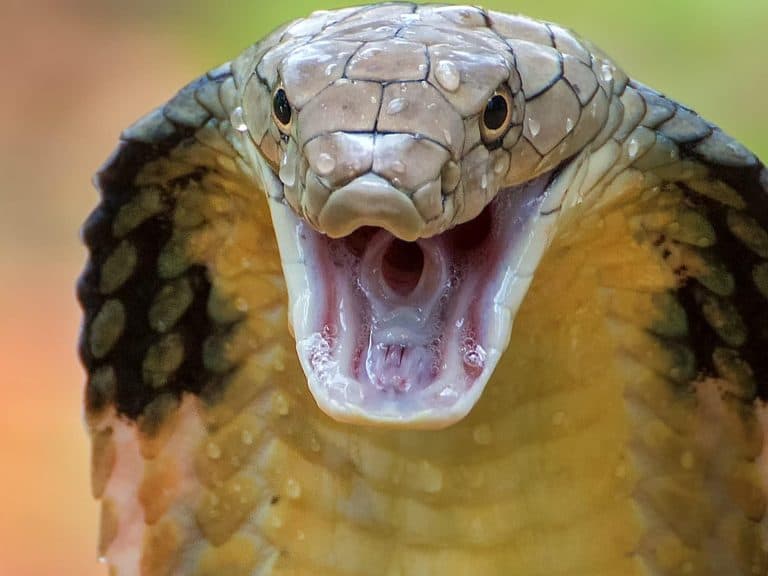
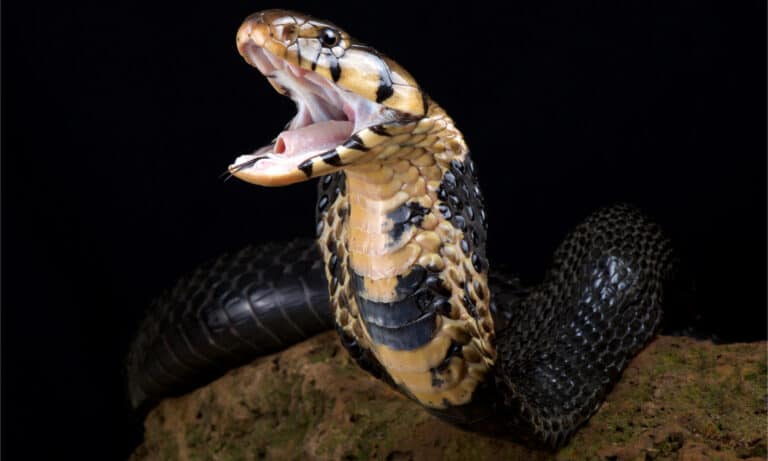
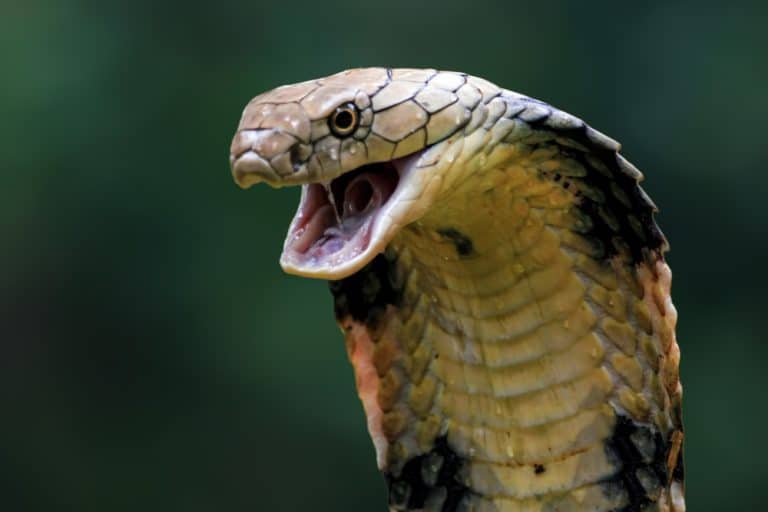
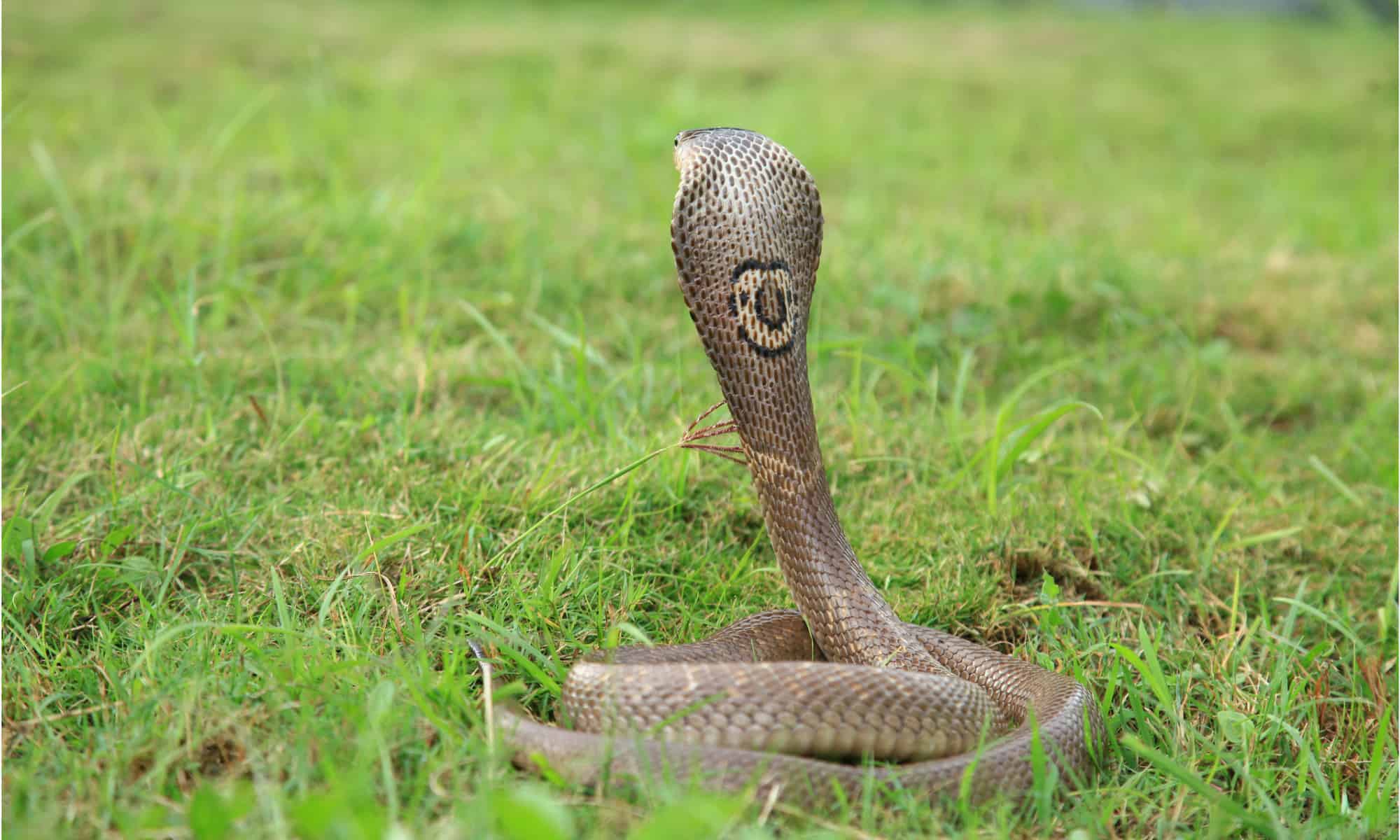
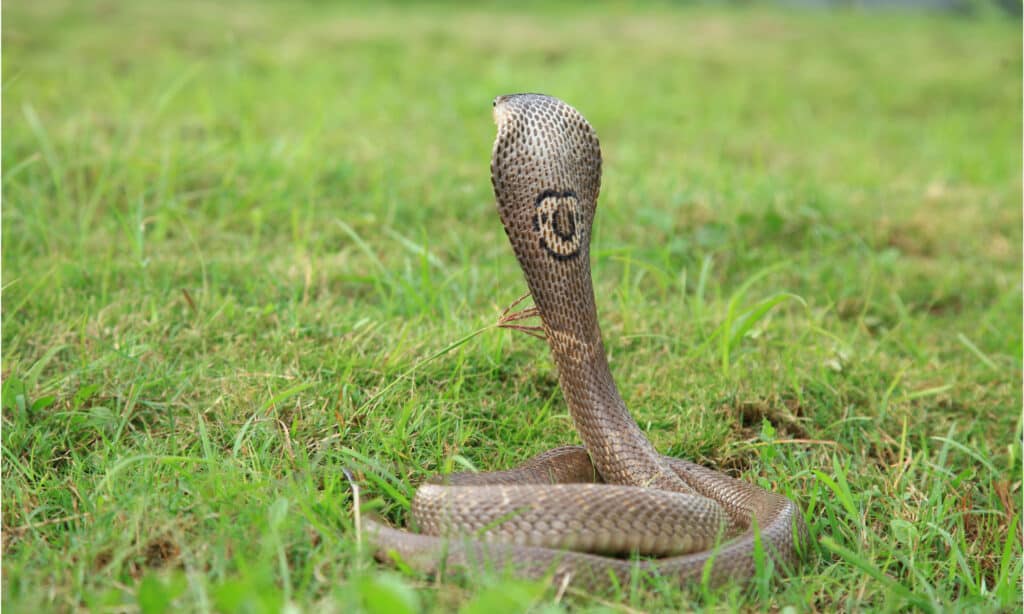
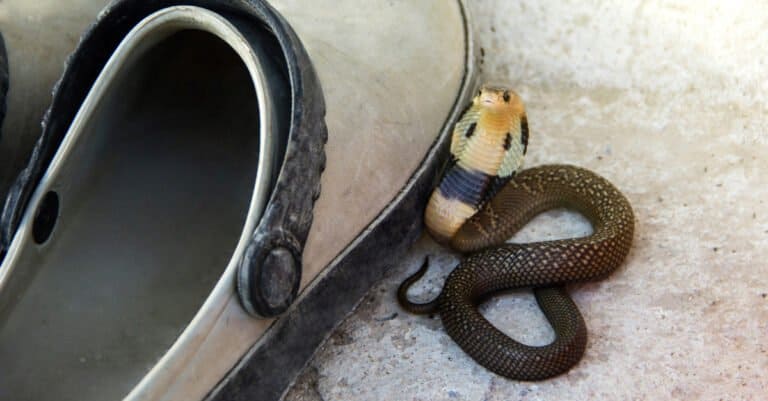
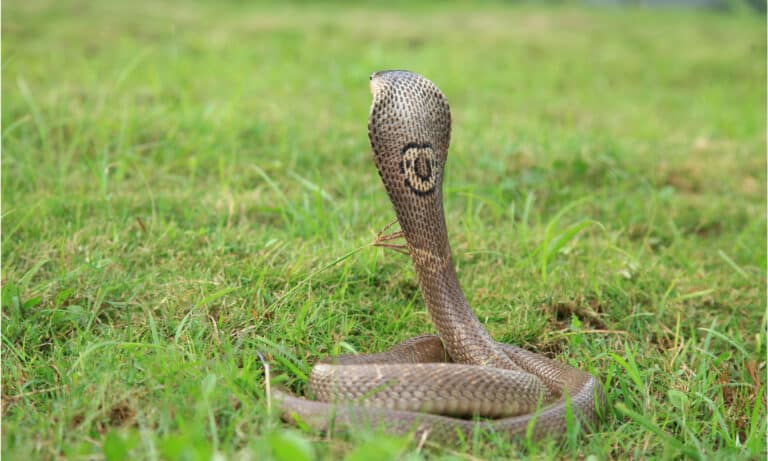
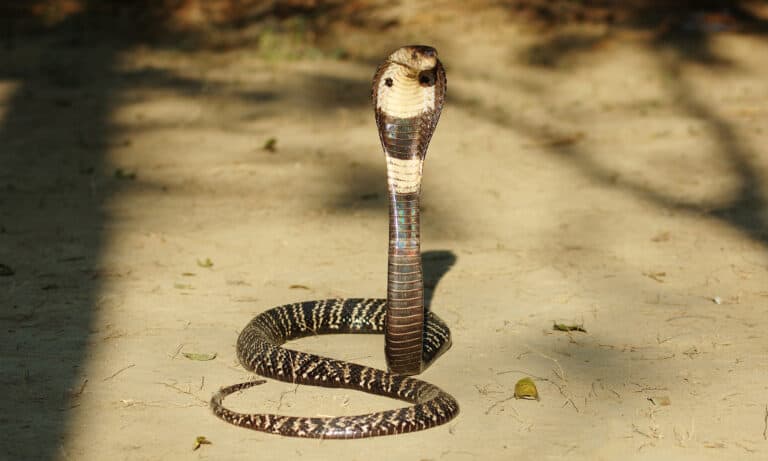
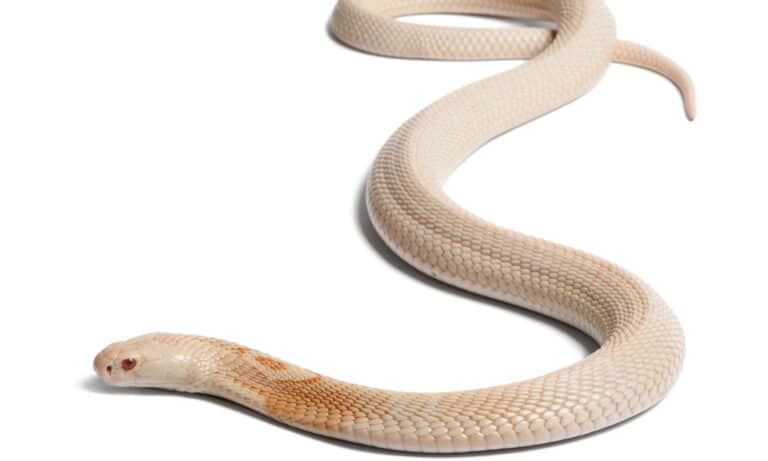
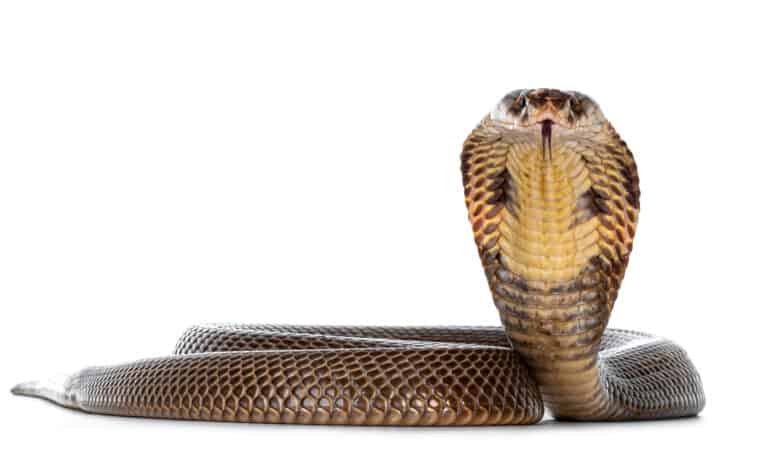
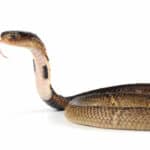
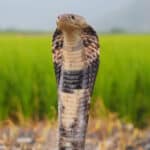
The monocled cobra is characterized by a long gray or brown body which may or may not have pale yellow crossbands along the entire length. The belly is usually a paler version of the back color. The most distinctive feature is the round monocle-shaped on the back of the hood. It is comprised of a dark-colored inner circle and a pale outer circle. The monocled cobra normally grows about 4 to 5 feet long, but the maximum size is about 7.5 feet. In addition to the normal color scheme, there are also several unique and rare color morphs, including albino and leucistic.
Here is how to identify the monocled cobra:
- Long body measuring up to 7.5 feet in size
- Hooded neck with round monocle-shaped pattern on the back
- Brown or gray skin sometimes accompanied by pale crossbands
- Pale underside
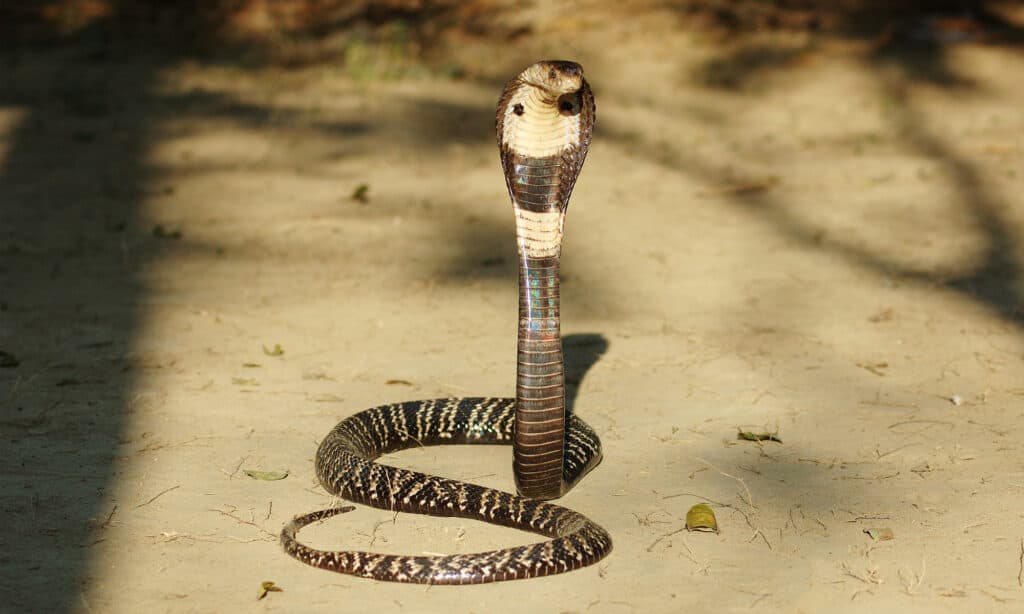
Monocled cobras have long gray or brown bodies, and some have pale yellow crossbands along the entire length.
©iStock.com/Koushik Bhattacharjee
Monocled Cobra: How Dangerous Are They?
The monocled cobra is considered incredibly dangerous. The venom acts faster than almost any other snake in the world, although the potency varies based on where they’re found. Pain, numbness, paralysis, drowsiness, and muscle problems can begin to take effect almost immediately. If it bites into a major vein, death can sometimes occur in a matter of a single hour without proper medical treatment (although most cases usually take much longer). The victim will eventually die from respiratory failure or cardiac arrest. Some populations also have the ability to spit their venom into the air toward their target.
Monocled Cobra Behavior and Humans
The monocled cobra should be avoided at all costs. They are highly aggressive and dangerous to people. When directly threatened, they will rear up, spread the hood out wide, and begin hissing loudly. They will bite quickly and then attempt to run away toward the safety of their hiding spot. Fortunately, the chances of encountering this cobra while walking out in national parks are relatively low, but deaths have been known to occur with some frequency for local habitants. The monocled cobra is responsible for the highest fatality rate of any snake in all of Thailand.
Similar Animals
Monocled Cobra Pictures
View all of our Monocled Cobra pictures in the gallery.

Ton Bangkeaw/Shutterstock.com
Sources
- Reptiles Magazine / Accessed May 2, 2022
- Khaosok / Accessed May 2, 2022