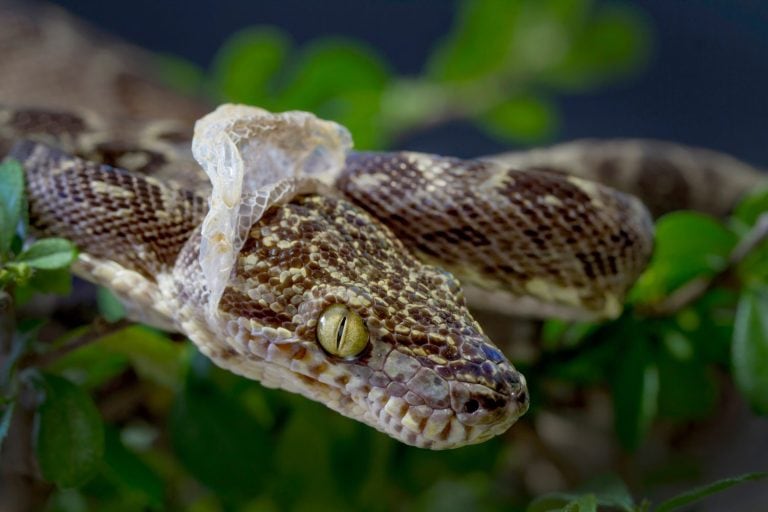
Snakes shed their skin multiple times per year. This is done for the growth and health of the snake. It is a time when snakes are most vulnerable and tend to hide away from the world while their old skin sloughs and the new skin hardens so that it is no longer sensitive. What many people may not realize is that as snakes shed, the protective cover over their eyes, called eyecaps, also sheds. Unfortunately, this process does not always go smoothly, as seen when a snake tried to shed its eyecaps along with its skin, but the eyecaps did not properly detach.
Animal Enthusiast Attempts to Help a Python Shed Its Skin

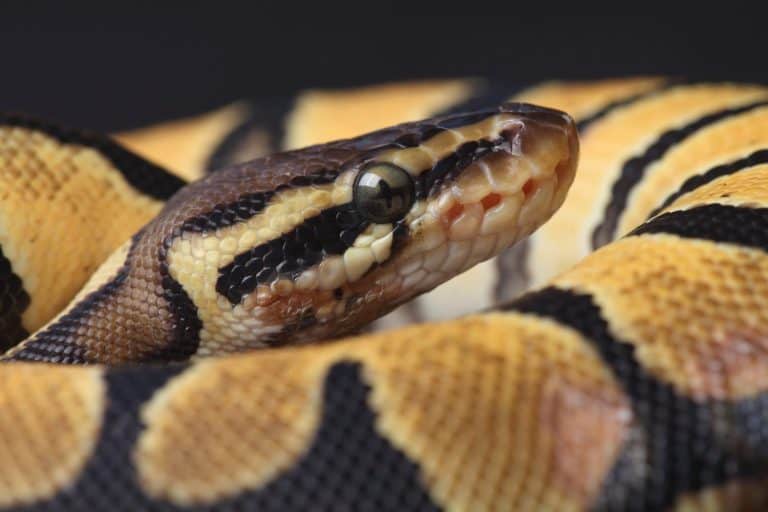
When Jay Brewer tried to help a python shed its eyecaps, the caps became stuck on the eyes.
©Ken Griffiths/Shutterstock.com
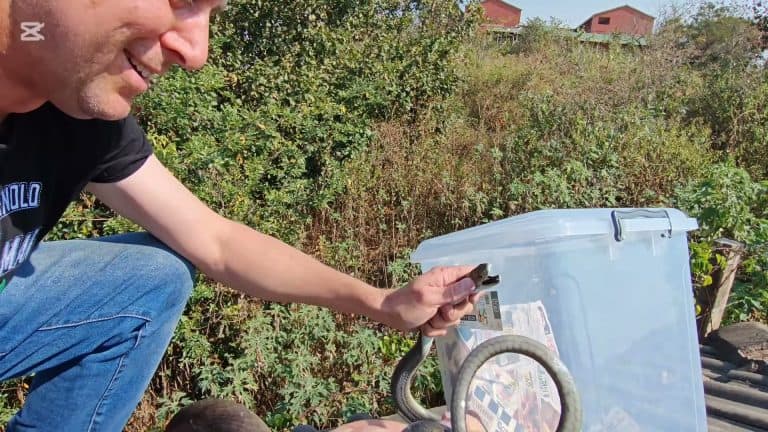
An animal enthusiast and founder of The Reptile Zoo, Jay Brewer, wanted to show viewers on his YouTube channel, Jay Prehistoric Pets, how a snake’s eyecaps are removed during the shedding process. The snake in question was a large female python. According to Brewer’s YouTube short, the snake was already in the process of shedding, and the skin on her head should have come off. Since it had not, Brewer decided to help her and use the experience as an educational opportunity.
As Brewer was gently pulling the skin away from the python’s head, the python moved its head, ripping the shed skin. This made it so that the left eyecap remained covering the eye. As Brewer went to remove the right side of the shed skin, the snake again jerked, causing the right eyecap to remain in place as well. Brewer did not disclose how the eyecaps were ultimately removed. But they needed to be removed promptly so that no injury or infection could occur to the snake’s eyes.
Why Snakes Shed Their Eyecaps
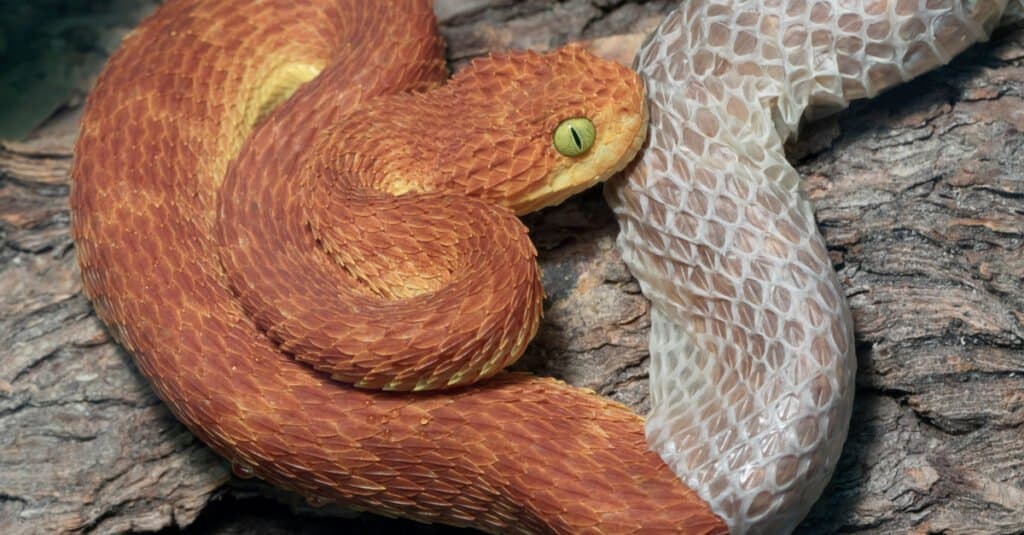
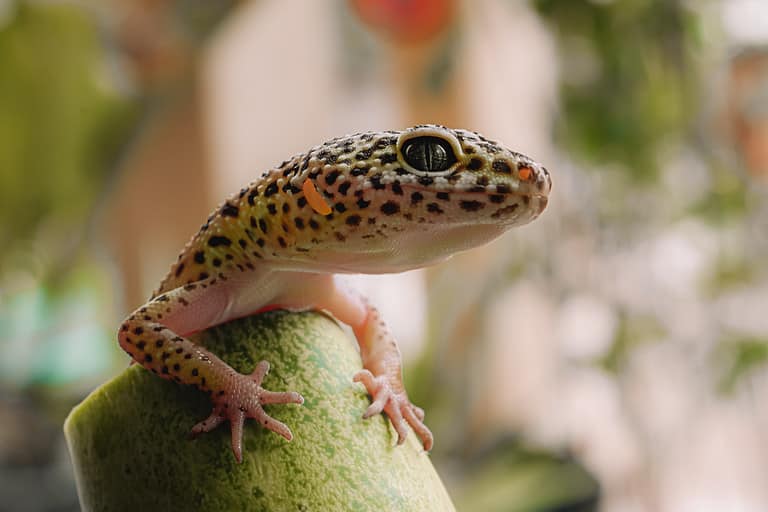
Snakes shed their eyecaps to keep their eyes healthy and infection-free.
©Mark_Kostich/Shutterstock.com
Unlike other animals, snakes do not have eyelids. This means they need a way to protect their eyes. To accomplish this, snakes have clear eyecaps that cover their eyes. Eyecaps not only protect the snake’s eyes from debris, but also help keep the eyes moist and free from infection. However, eyecaps are not permanent; they are specialized scales that cover the eyes and need to be shed periodically.
The eyecaps are shed at the same time a snake sheds the rest of the skin on its body. The shedding process begins as the snake’s hormones trigger the old skin to loosen from the new skin. Once this happens, snakes will rub their faces on rough surfaces to begin removing the old skin from their bodies. As the skin begins to peel off from the head, the eyecaps will be removed during the shedding process. If all goes well, the skin will easily slip off the snake, revealing clear eyes and new eyecaps.
How Often Do Snakes Shed Their Eyecaps?

Snakes shed their eyecaps every time they shed their skin.
©Mark_Kostich/Shutterstock.com
Snakes will shed their eyecaps every time they shed their skin. The age of the snake will determine how often they shed, with younger snakes shedding more frequently as they rapidly grow. Generally, healthy snakes shed their skin between four and 12 times per year. Snakes that are growing, have parasites, or are injured may shed more frequently than usual. To have an easy shed, snakes require optimal conditions. The environment that snakes require for easy shedding includes:
- Humid enclosures
- A place to hide while shedding
- Rough textures in the enclosures that do not have sharp edges the snakes can rub on to help remove skin
- Ground cover in the enclosure that is easy to move along as the snake sheds
- A shallow bowl of water that is large enough for the snake to lie in
If these items are included in an enclosure, a snake has the best chance to shed its skin and eyecaps successfully. However, even under optimal conditions, sometimes the eyecaps do not shed properly. When this happens, the snake may experience negative consequences until the eyecap is removed.
What Happens If An Eyecap Is Not Shed

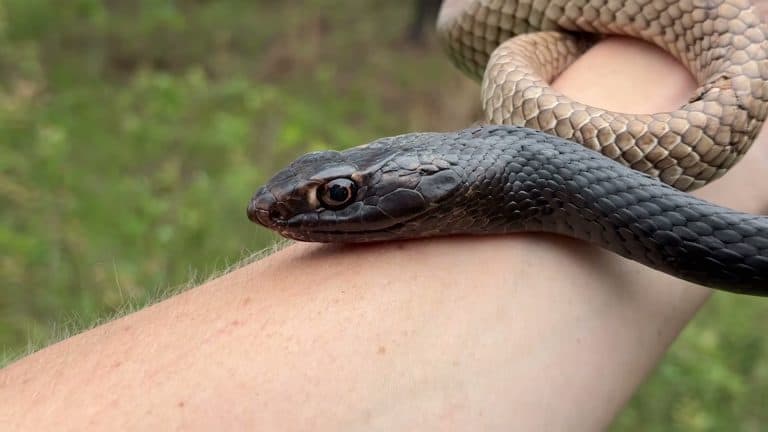
If snakes do not shed their eyecaps, they can get infections, lose sight, and become aggressive.
©Wirestock Creators/Shutterstock.com
Snakes must shed their eyecaps. If they do not, the snake may face some severe issues that impact both its health and mood. Most snake owners will notice that a stuck eyecap appears slightly cloudy or opaque. This appearance makes it difficult for snakes to see. When snakes cannot see, they become stressed and even aggressive toward their owners.
Additionally, the stuck eyecaps can become dimpled or wrinkled. When this happens, vision is impaired further. Infection can easily set in, which can also affect the snake’s appetite. In some cases, blindness will occur if the infection becomes too great. Given the issues that can arise with a stuck eyecap, it is essential to provide snakes with the most conducive environment for shedding, thereby substantially decreasing the chances of stuck eyecaps.
How to Help Snakes Shed Their Eyecaps

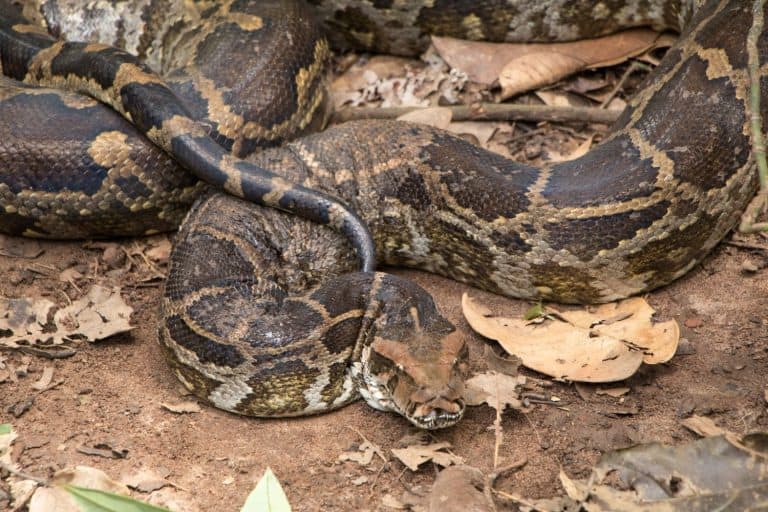
If non-invasive remedies do not work to remove a stuck eyecap, veterinary care is recommended.
©Malpolon/Shutterstock.com
There are times when snakes will not shed their eyecaps. When this occurs, the most common reasons are malnutrition, insufficient humidity in the environment, or dehydration. To help a snake shed its eyecap after the rest of the skin has come off, there are several non-invasive methods you can try. Those ways include:
- Increase humidity in the snake’s enclosure
- Soak the snake in warm, shallow water for 15 to 20 minutes to increase the humidity in the snake’s skin
- Place the snake in a damp pillowcase for 15 to 20 minutes to increase the humidity in the snake’s skin
- Use a damp cotton swab to dab gently around the eyes
Some snake owners claim that placing a piece of tape over the snake’s eye can help remove the eyecap. However, others warn against this method, as well as using fingers to remove the eyecap, because it can cause damage to the snake’s eyes. If none of the non-invasive methods work, it is recommended to seek veterinary care. Veterinarians can use the proper tools to remove the eyecap before an infection develops. This may involve something as simple as applying ointment with a cotton swab, according to PetMD, or using surgical tools if the eyecaps are severely stuck.
Experts state that snake owners should never use tweezers or other tools to remove eyecaps. Doing so can easily cause permanent injury to one or both of the snake’s eyes, leading to partial vision loss or even blindness. It is necessary to remove retained eyecaps, as leaving them in place can severely impact the snake’s vision. Therefore, closely inspect the shed skin each time to ensure the eyecaps have come off. If they have not, take appropriate action.