
The sight of any sea creatures washed up on a beach is upsetting, and the larger they are, the greater impact they have on us. For example, a whale carcass can sometimes dominate most of the shoreline.
Leaving them where they are is usually out of the question, as they are both unsightly and a health hazard on beaches used regularly by the public. We will use the latest media reports about a dead sperm whale that washed up on Nantucket Beach in Massachusetts to examine this dilemma and the different ways authorities have addressed the issue.
Sperm Whale on Nantucket Beach – Initial Report
The first social media post alerting people to the incident was issued on 16th November by the Marine Mammal Alliance Nantucket (MMAN). This team, made up of both seasonal and year-round residents, staffs a hotline and responds to rescue stranded marine mammals on Nantucket. They also advocate for their well-being and educate the public. The team works in partnership with agencies and organizations such as the National Oceanic and Atmospheric Administration (NOAA) and Marine Mammals of Maine (MMoMe).
The initial statement indicated that the MMAN was working with NOAA, the International Fund for Animal Welfare (IFAW), and the Environmental Police to secure the carcass. During these initial stages, there is a risk that such an incredible sight will attract the public, creating additional problems. Therefore, the statement reminded people that they should remain 300 feet away from the whale and view it through binoculars. This is the first sperm whale to wash up on Nantucket since 2002.
Details of the Sperm Whale Released
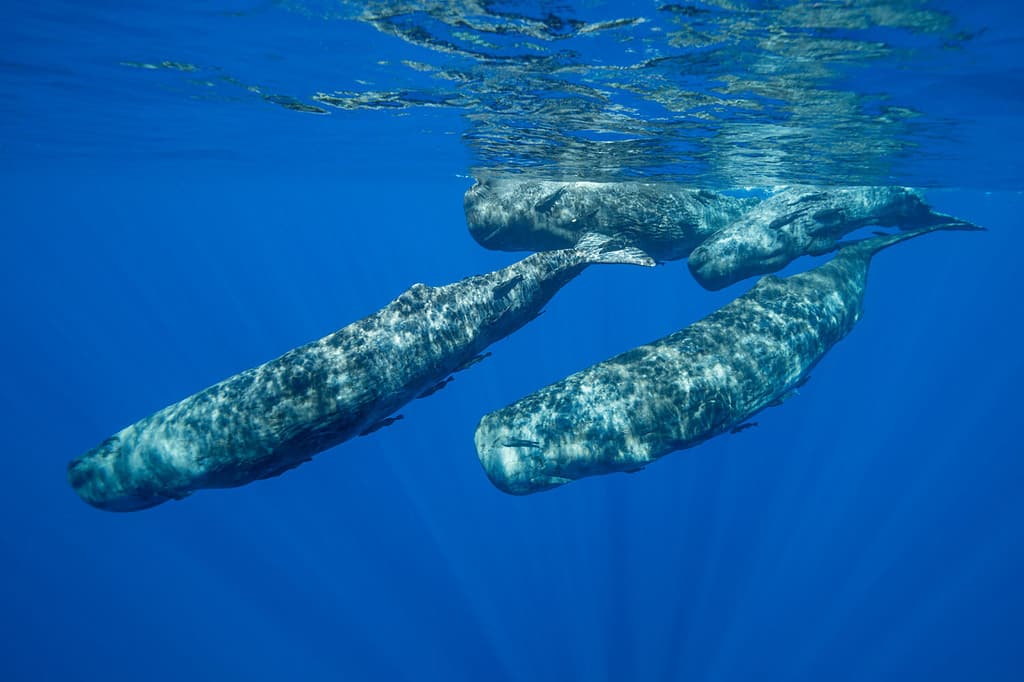
Sperm whales are large sea mammals.
©wildestanimal/Shutterstock.com
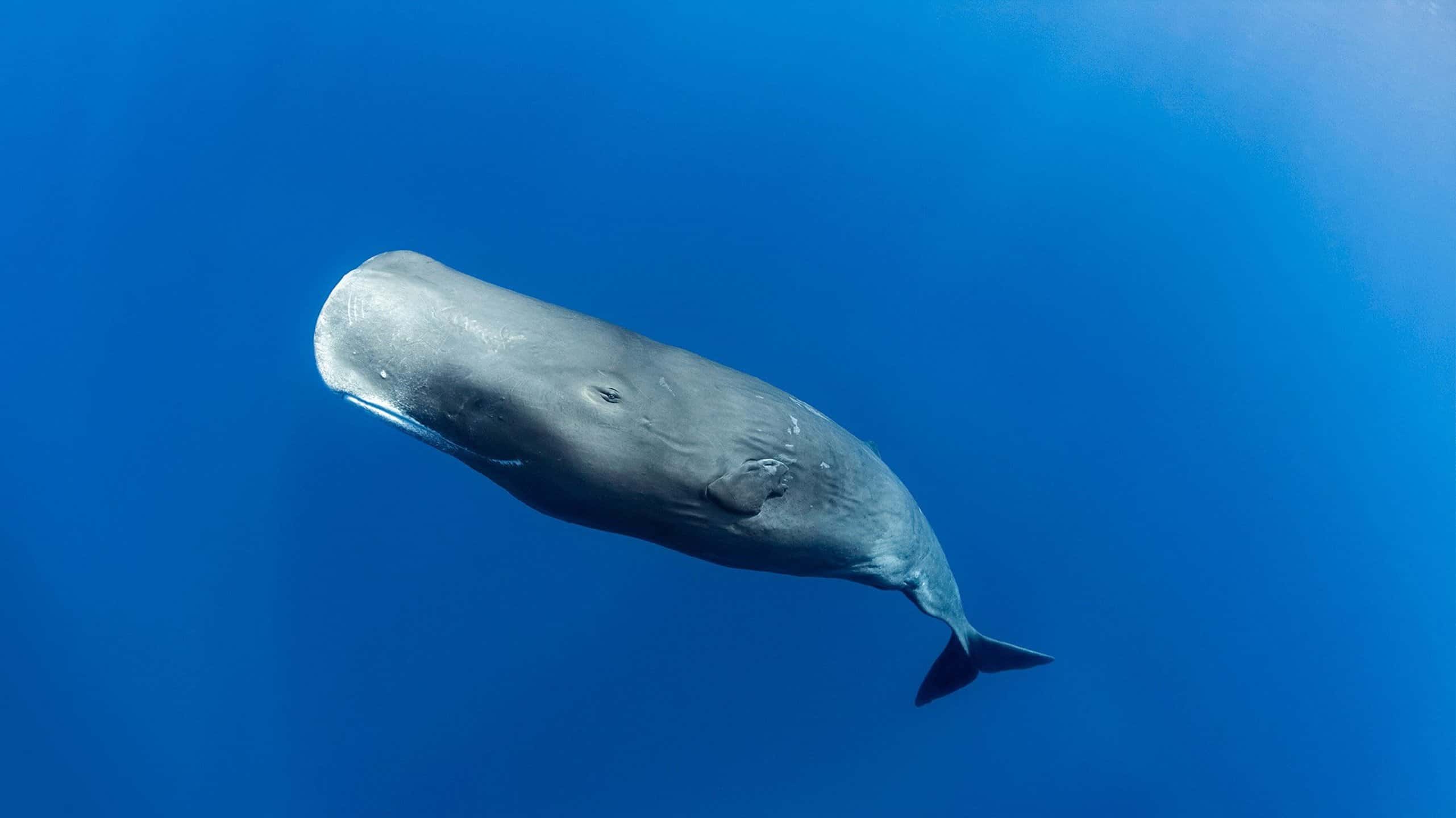
Further details were released by the MMAN on November 17. The deceased sperm whale was a male that was around 50 feet long and weighed approximately 104,000 pounds. The dead whale had been anchored to the shore to prevent it from being washed back out to sea. This allowed for further investigation, as it was hoped that a necropsy (autopsy) could be performed to gain more information.
However, after a meeting involving all the relevant experts, it was decided that this particular whale was too large, heavy, and awkward to remove from the beach and to an appropriate facility. Therefore, the plan changed to conducting a thorough examination on site, including taking samples. The public was reminded to stay away from the carcass to comply with the law and to protect themselves and their pets from potential diseases. The alliance was also considering the most appropriate steps for removing the carcass.
What Are the Options for Removing Whale Carcasses?
MMAN is not the only organization that has faced the problem of removing a huge marine animal from the shoreline. Current disposal methods include:
- Leaving it on the beach to decompose naturally
- Controlled explosion
- Removing it and disposing of it elsewhere, e.g., in a landfill, composting, or incineration
All of these are difficult, expensive, and can present a risk to public safety.
Towing Dead Whales Out to Sea
In July 2023, experts in Australia carried out a detailed assessment of a further option. They discovered a 45-foot-long humpback whale floating in the water off the coast of Noosa Heads in Queensland. They towed it offshore and fitted a satellite tag so they could track its location for 6 days, after which it fell to the seabed. The problem with towing whale carcasses out to sea is that they can end up in shipping lanes or even washed back up on the shore. The scientists hoped that this study would help them accurately predict where a carcass would drift, so they could use towing out to sea as a safe and cost-effective carcass disposal method in the future.
The added benefit of this method is that you are returning nutrients to the ocean, where deep-sea scavengers (such as seabirds, sharks, crabs, and worms) can feed on them. It also contributes to carbon removal and enriches the marine floor for up to seven years.
Danger of Explosion
If whale carcasses are left on beaches or moved elsewhere on land, there is a risk they may explode. As the body starts to decay, gas is produced inside the carcass as a byproduct of decomposition. If left alone, the gas is usually retained in the carcass and disperses slowly, but if humans attempt to move it, an explosion can occur. One such event took place when a dead sperm whale was being transported in the Taiwanese city of Tainan. No one was hurt, but pedestrians and cars were soaked in blood and organs.
The Fate of the 2025 Nantucket Sperm Whale
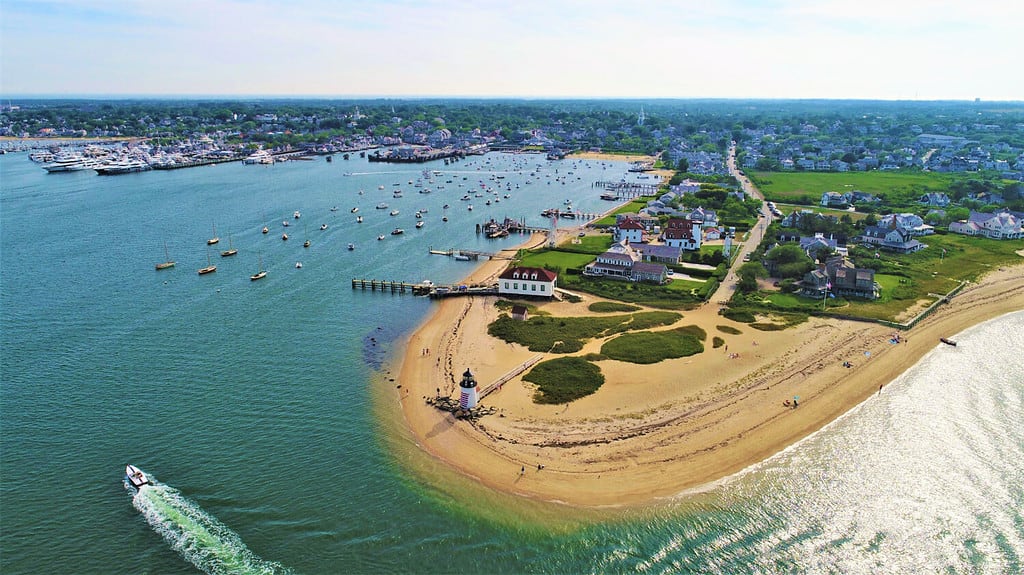
Dead whales on beaches can create a health hazard.
©TeBe Inspires/Shutterstock.com
To ensure that one of the island’s most popular beaches remained safe for the public, the sperm whale carcass was towed out to sea. First, its lower jaw was removed and retained. Organ samples were also taken, and the wound on its back was examined. However, this wound was old and could not be directly linked to the cause of death. As of November 2025, the cause of death of this animal is still unknown.
On Friday, November 21, the whale was pulled into the sea using an excavator and a small vessel. Before this, flowers were laid, and words of gratitude were spoken for the learning experience this magnificent animal had provided.
It was then taken to the waiting tugboat, the ‘Lucinda Smith’, anchored about half a mile offshore. From there, it was transported approximately 50 miles east to ensure that it would not wash back onto shore. In a social media post, the MMAN said, “There he can contribute to a unique, multi-stage and important ecosystem on the sea floor that can last for decades.”