
Quick Take
- Vultures are silently saving farmers thousands of dollars a year, and nobody even asked them to. See the free services →
- Vultures are tougher than almost any animal alive, but one biological quirk makes their populations nearly impossible to save once they start declining. Explore the recovery math →
- The very traits that make vultures nature's most efficient cleanup crew are the same ones quietly driving them toward extinction. See what makes them targets →
- Poachers have a specific, calculated reason to target vultures, and that reason has nothing to do with the birds themselves. Understand the poisoning problem →
Vultures are often seen as solely ominous harbingers of death, but these amazing birds are actually one of nature’s most important cleaning crews. By rapidly consuming animal carcasses, vultures prevent the spread of dangerous diseases and keep ecosystems balanced. Yet, despite their monumental importance, global vulture populations are plummeting due to habitat destruction, poisoning, food scarcity, and extremely slow reproduction.
Celebrated on the first Saturday of September each year—which falls on September 5 this year—International Vulture Awareness Day encourages us to look beyond the “ugly” scavenger stereotype, appreciate vultures’ true value, and take action to protect these essential and extraordinary birds.
Continue reading
Meet the World’s Most Misunderstood Birds
There are 23 vulture species across Europe, Africa, Asia, and the Americas. While they can live 15 to 50 years, their slow reproduction makes it incredibly hard for populations to recover from losses.
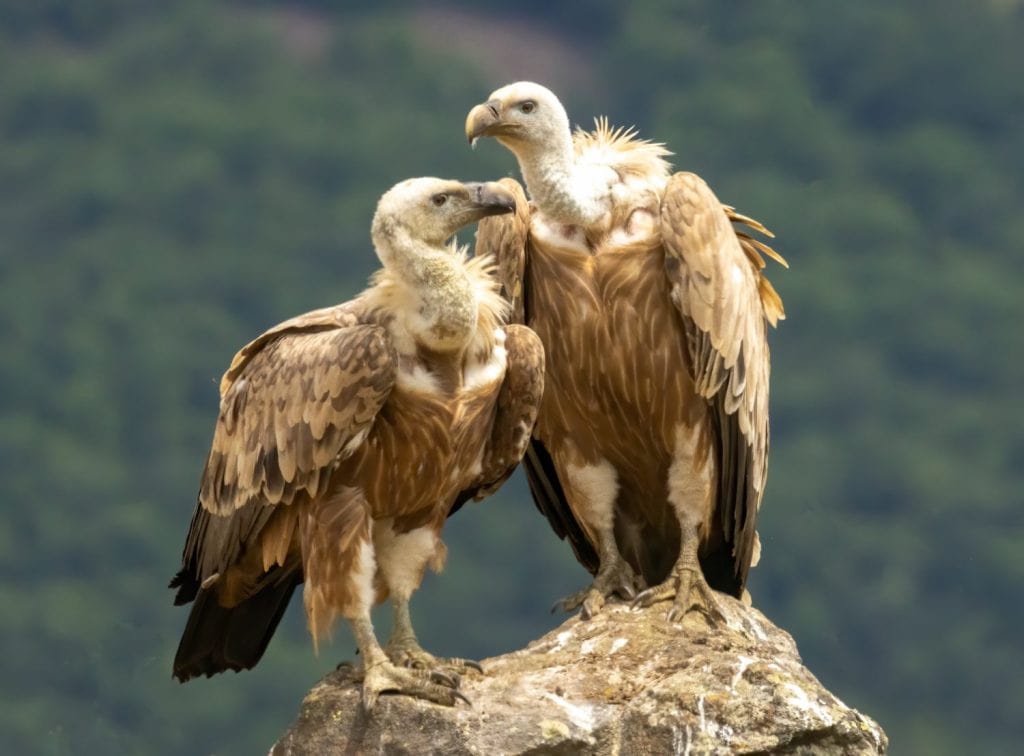
The wingspan of a Eurasian griffon vulture can stretch up to 9.2 feet.
©Gerdzhikov/Shutterstock.com
Everything about a vulture is adapted for a life of scavenging. Their bare heads and necks may look strange to us, but this featherless adaptation helps them stay much cleaner when feeding on carcasses. Their powerful beaks easily tear tough meat, while their feet are built for standing rather than for hunting live prey. Vultures have broad wings that allow them to ride warm air currents, called thermals, for hours. This enables them to soar with minimal effort while scanning the landscape for food.
Old World vultures (native to Africa, Asia, and Europe) rely on their exceptional eyesight to spot food. New World vultures (found only in the Americas) use both keen eyesight and a powerful sense of smell to locate carcasses hidden within dense forests.
Vultures are social birds and often follow large predators to scavenge leftovers. A group of resting vultures is called a “committee,” while a group that is actively feeding is called a “wake.” Although gatherings of these large birds can appear ominous, vultures play a crucial role in clearing dead animals from the landscape, helping to keep ecosystems balanced and thriving.
Nature’s Incredible Cleanup Crew
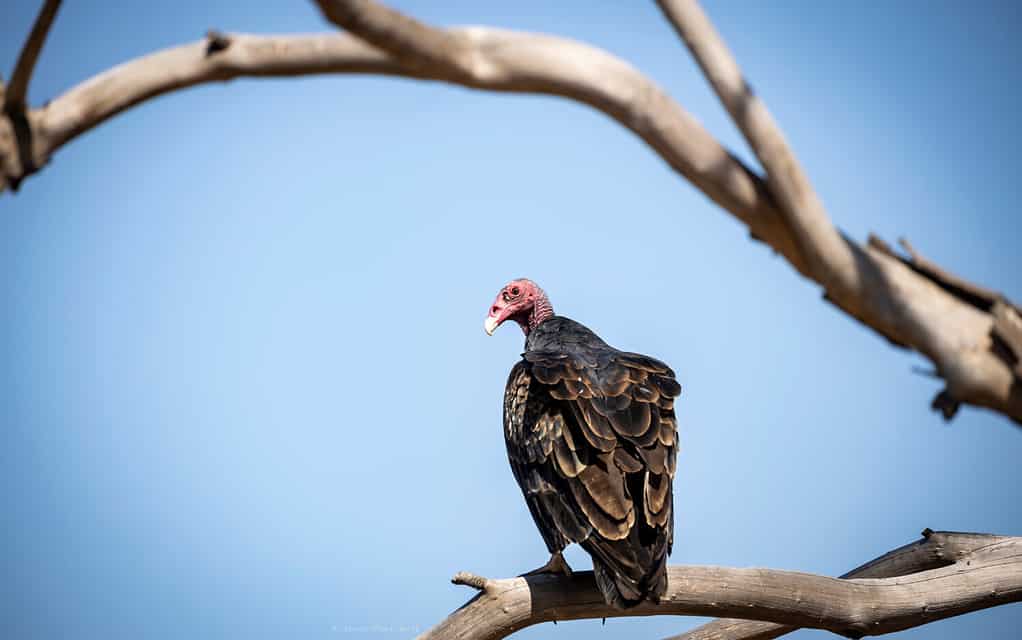
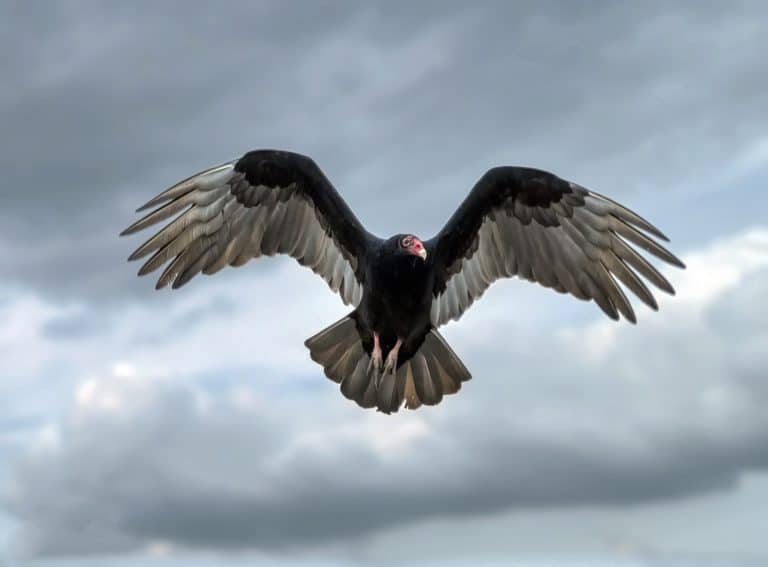
Turkey vultures have completely bald heads, which helps them stay clean while feeding.
©James-Paul Jacob/Shutterstock.com
Decaying carcasses are more than just an unappealing sight; they are breeding grounds for dangerous pathogens that can easily spread through ecosystems. As specialized scavengers, vultures limit the spread of harmful bacteria and viruses by quickly and efficiently clearing carrion from the landscape. Acting as nature’s waste management system, vultures form a critical line of defense that protects wildlife, livestock, and human health.
How Vultures Help Farmers for Free
Vultures provide vital, cost-free services that directly benefit livestock owners, local economies, and the environment. By rapidly clearing dead livestock, they eliminate breeding grounds for disease vectors without costing farmers anything in waste disposal fees. Consuming carcasses where they fall saves farmers fuel and reduces greenhouse gas emissions by eliminating the need to haul livestock to industrial disposal sites.
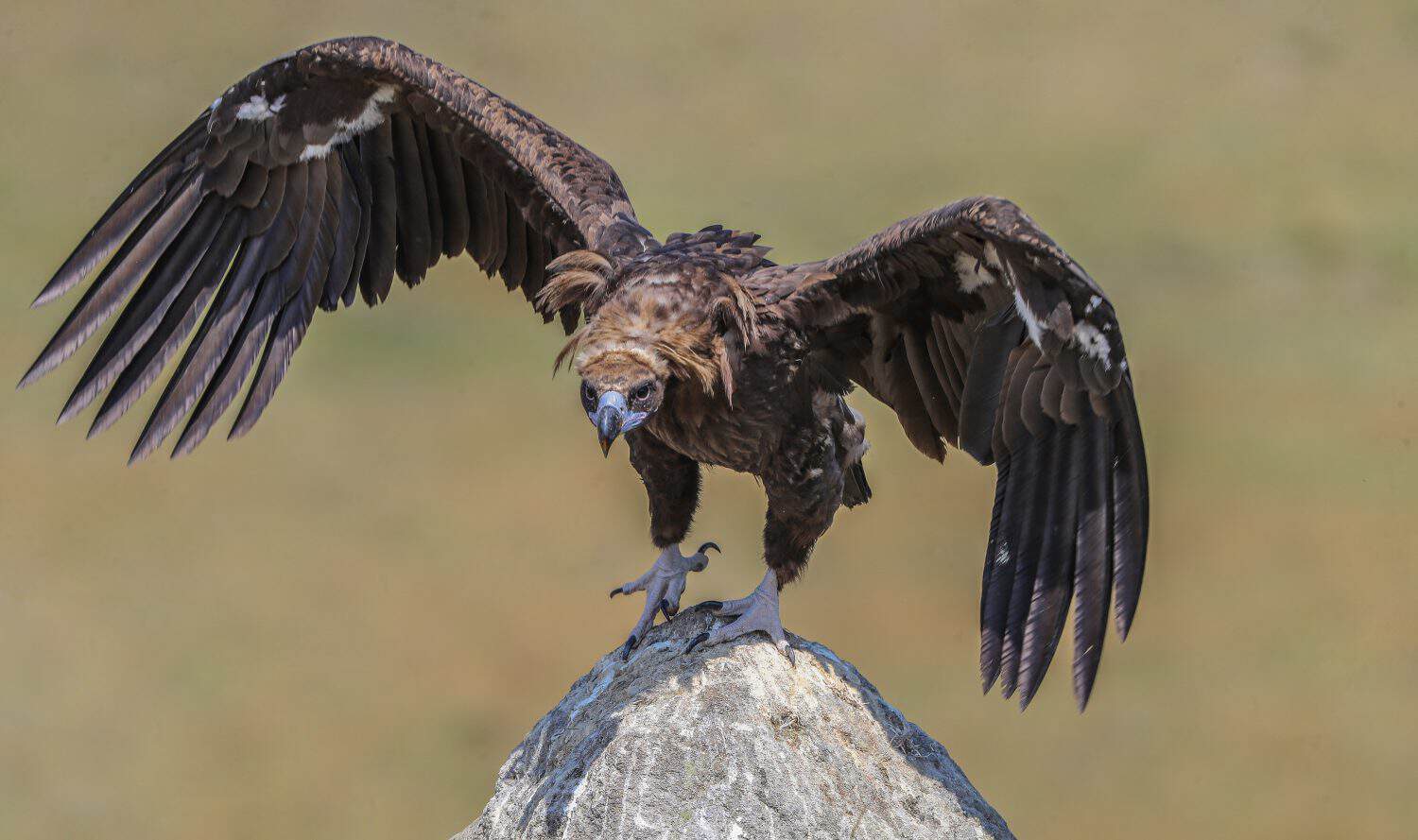
Some vulture species are especially sensitive to environmental changes and serve as early-warning indicators of ecosystem health. For example, tracking populations of cinereous vultures (Aegypius monachus) helps scientists detect threats such as illegal poisoning, habitat loss, and unregulated hunting within an ecosystem.
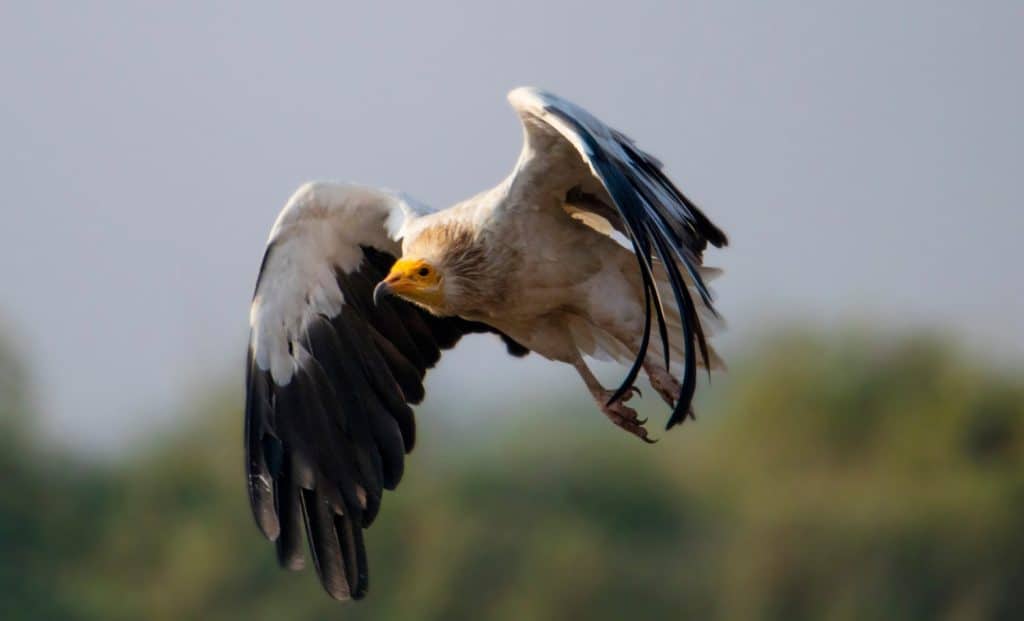
The Egyptian vulture is incredibly intelligent and even uses tools.
©umang sethia/Shutterstock.com
Why Are Vultures So Vulnerable?
Despite their toughness and adaptability, vultures have one fatal weakness: extremely slow reproduction. Because vultures mature late and raise very few offspring, their populations cannot recover quickly when adult birds die.
Most species lay only a single egg per year, typically on bare rocks or sheltered cliffs, with both parents sharing incubation and feeding duties.
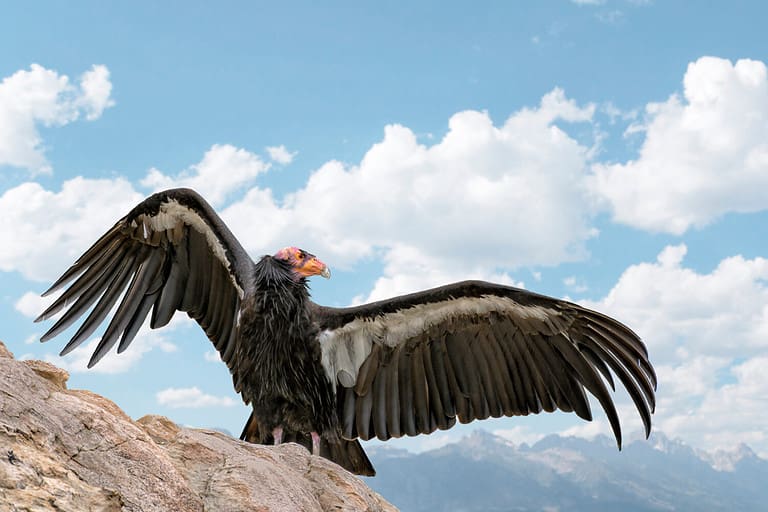
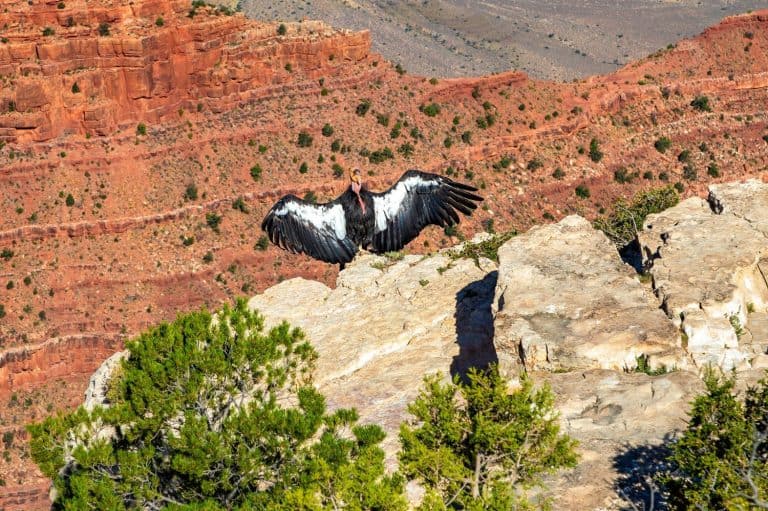
California condors (Gymnogyps californianus) reproduce even more slowly, laying just one egg every two to three years. Their chicks rely on their parents for up to two years. Andean condors (Vultur gryphus) do not reach breeding age until around seven years old, and breed only once every two years.
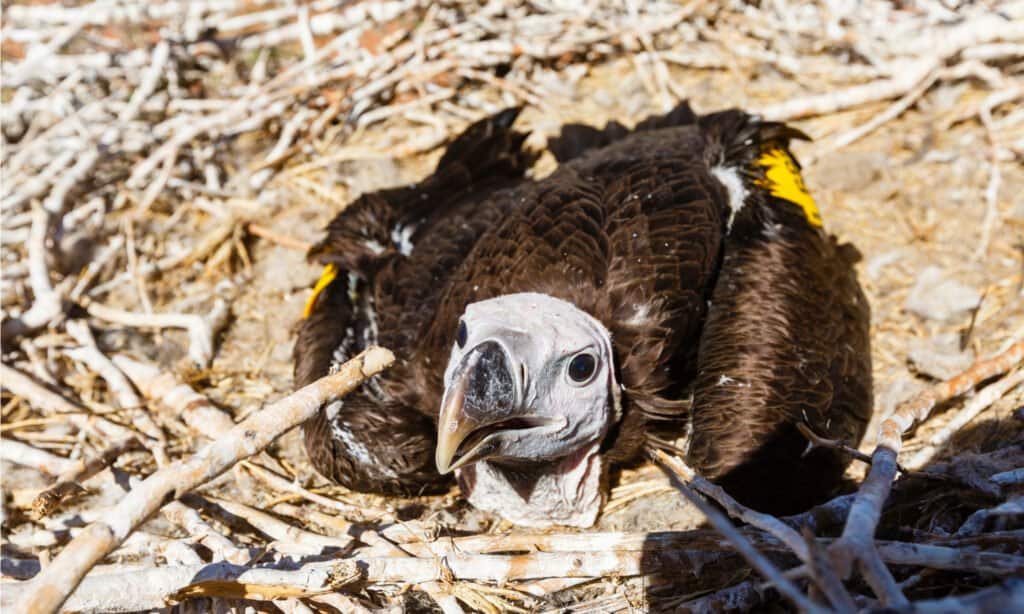
Lappet-faced vultures are endangered.
©Markus Oblaender/Shutterstock.com
Because vultures reproduce so slowly, their populations cannot recover quickly from sudden losses. Losing even a small number of adult vultures can impact the population for decades. Unfortunately, vultures are disappearing much faster than they can replace themselves.
The Growing Threats Facing Vultures
Vulture populations worldwide—especially in Southern Africa—are collapsing due to human activity. Because vultures reproduce so slowly, they cannot recover from these threats without human intervention.
Poachers poison carcasses to kill vultures, as circling flocks can alert park rangers to illegal kills. Vultures are also targeted because of certain traditional beliefs. Farmers sometimes lace livestock carcasses with poison to target predators like jackals and leopards, but this unintentionally kills dozens of scavengers at once. Because vultures feed in large groups, a single poisoned carcass can wipe out an entire flock or breeding colony.
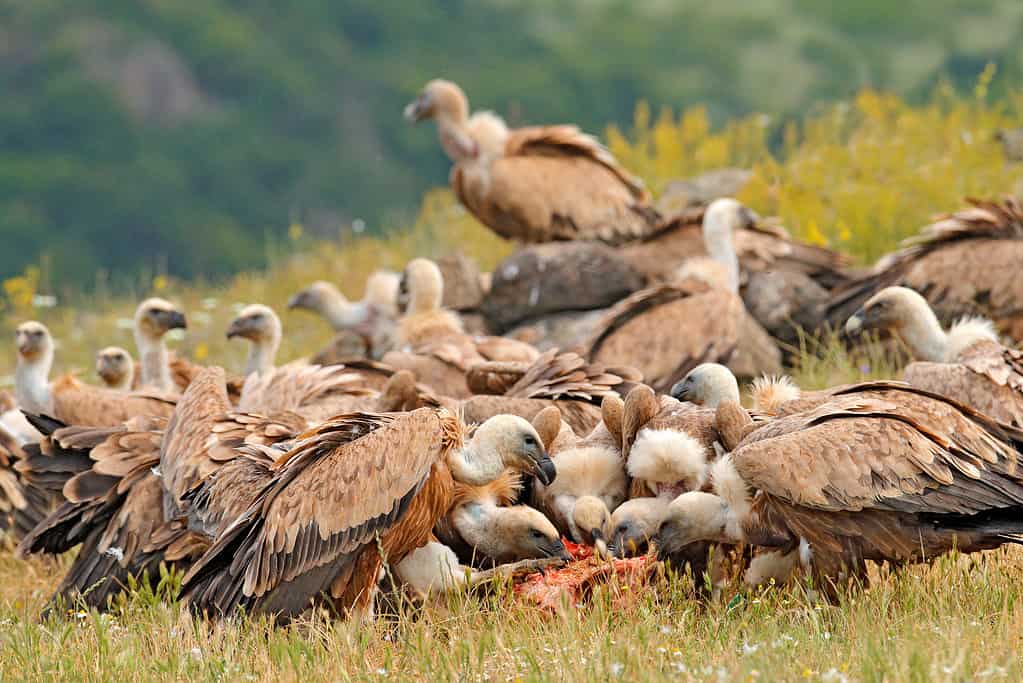
Many vulture species gather in groups to feed.
©Ondrej Prosicky/Shutterstock.com
Vultures can also ingest lead fragments left behind in game animals by hunters, which can result in fatal lead poisoning. Additionally, feeding on livestock treated with certain non-steroidal anti-inflammatory drugs (NSAIDs) can cause rapid kidney failure.
As infrastructure expands, large broad-winged vultures frequently collide with power lines while searching for food or suffer fatal electrocutions when perching on uninsulated electrical pylons.
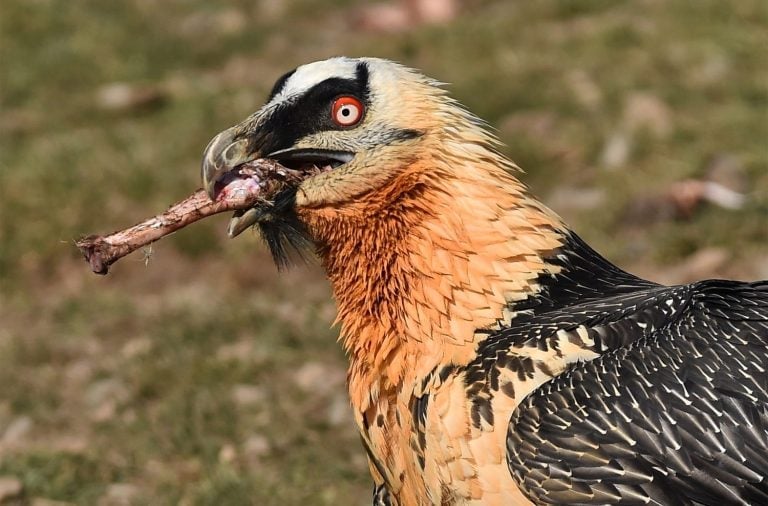
Clearing tall, mature trees for agriculture deprives tree-nesting species, such as white-backed and lappet-faced vultures, of nesting sites. Meanwhile, human disturbance near cliffs disrupts breeding for cliff-nesting species such as Cape and bearded vultures.
Human-Wildlife Conflict
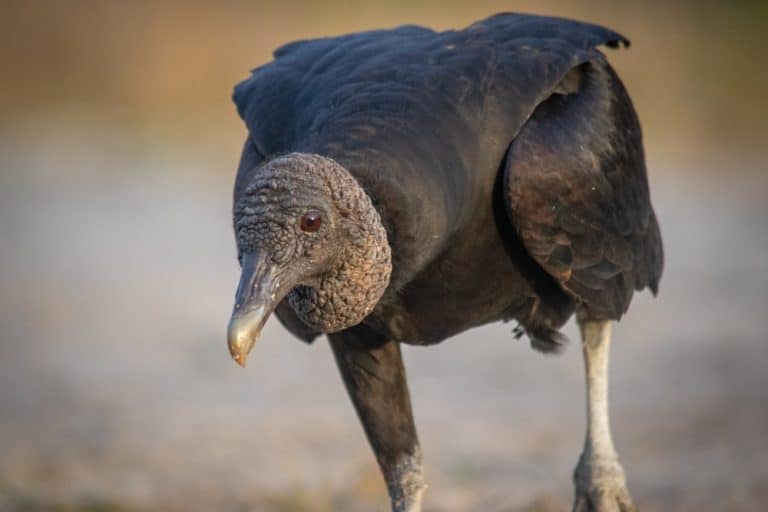
While protected under the Migratory Bird Treaty Act (MBTA), recovering populations of black vultures (Coragyps atratus) and turkey vultures (Cathartes aura) in the United States increasingly clash with agriculture and infrastructure. Unlike turkey vultures, black vultures occasionally attack, injure, and kill vulnerable livestock, including newborn calves and cows giving birth. Large roosting flocks can damage roof shingles, pool covers, rubber liners, vinyl seats, and windshield wipers, and also scratch car paint.
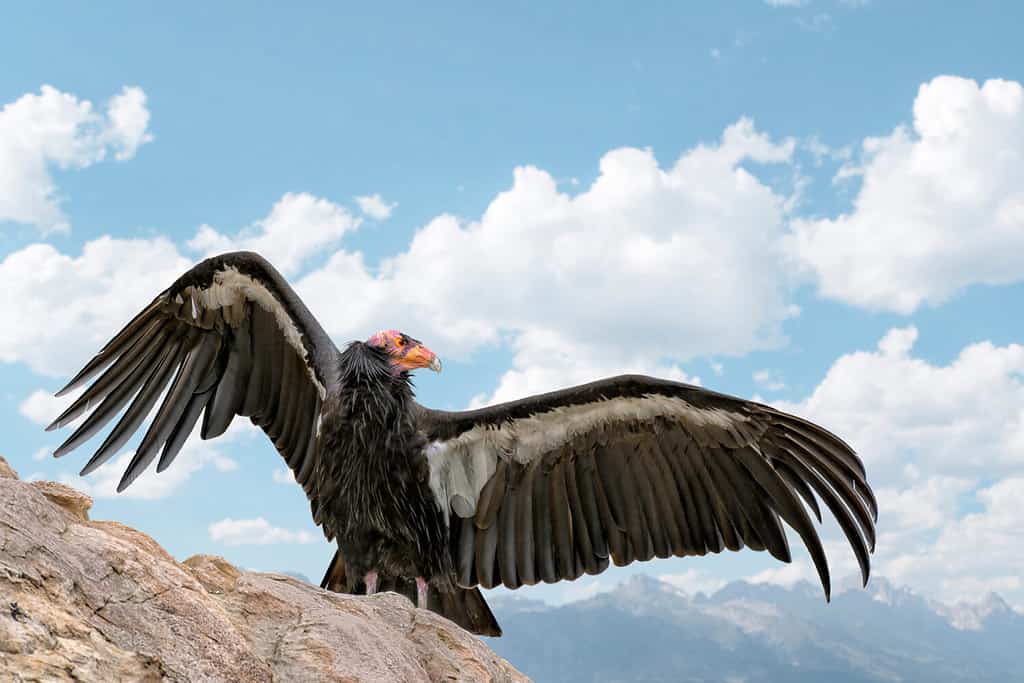
The California condor is critically endangered.
©Barbara Ash/Shutterstock.com
Vulture droppings and regurgitated food can cause electrical shorts, corrosion, and power outages near utility lines. Their droppings can also contaminate open water towers and springs with coliform bacteria. Flocks near airports can pose serious bird-strike hazards for aircraft.
Despite these challenges, non-lethal management strategies consistently demonstrate that humans and vultures can safely coexist without compromising conservation efforts.
Finding Solutions Without Losing Birds
Researchers and farmers are collaborating to develop effective ways for humans and vultures to coexist while minimizing economic losses. Researchers at Purdue are studying the northward expansion of black vultures in the Midwest, which causes millions of dollars in annual agricultural losses. Partnering with the Animal Disease Diagnostic Laboratory, scientists conduct necropsies on livestock carcasses to create clear criteria that help farmers prove legitimate vulture attacks for USDA insurance claims and depredation permits. Farmers assist by donating carcasses, sharing photos, and completing statewide surveys through Purdue Extension to test non-lethal deterrents and guide management policies.
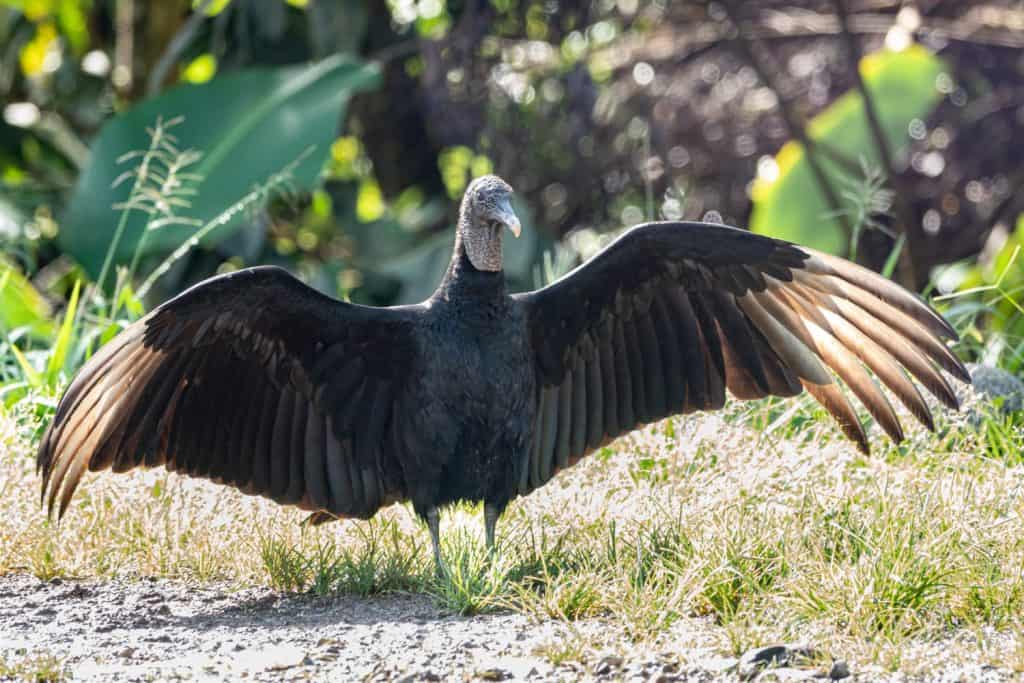
Black vultures are often more aggressive than other species.
©Galaxymix/Shutterstock.com
Scientists at the National Wildlife Research Center in Florida are also evaluating vulture biology, non-lethal deterrents, and effigy guidelines. Their wing-tagging program tracks hundreds of vultures to study roosting habits and foraging movements, with support from public sighting reports.
Why Saving Vultures Matters
Vultures may not be traditionally cute or glamorous, but their unglamorous work is essential for keeping ecosystems safe and resilient.
By rapidly disposing of large carcasses, vultures eliminate hazardous pathogens before they can spread, protecting wildlife, livestock, and human health.
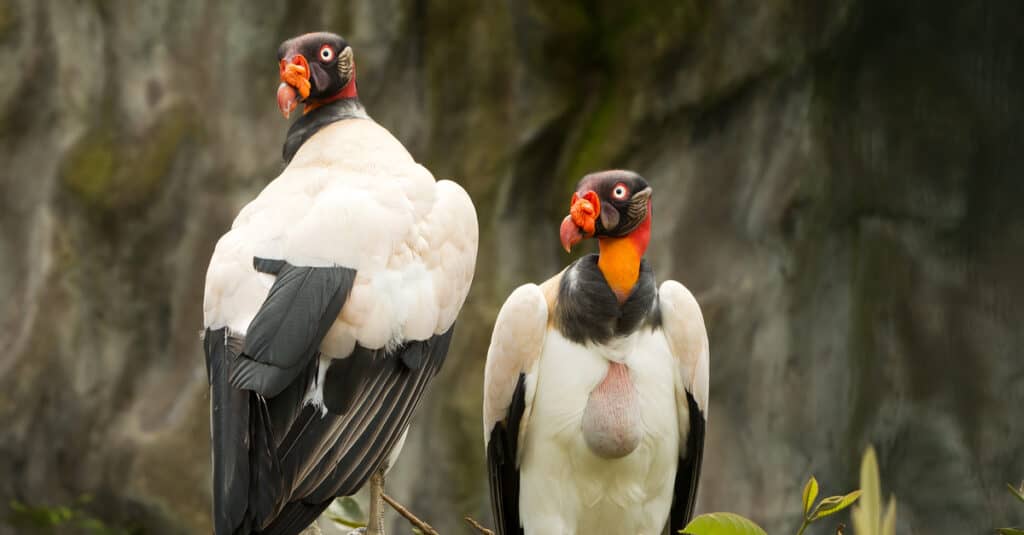
King vultures live in South and Central America.
©Ammit Jack/Shutterstock.com
Unfortunately, the very traits that make them efficient—flying enormous distances, feeding in large social groups, and reproducing slowly—also make them extremely vulnerable to human-caused threats.
Protecting vultures safeguards the entire natural balance. Without them, ecosystems lose their primary line of defense against disease. Vultures may clean up after death, but their survival is crucial for maintaining the health of the living world.