Quick Take
- Birds living in open-sky habitats emit more heat than those living in forested habitats.
- Northern bobwhites were found to emit more heat than any other bird in the study.
- Subspecies of ravens absorbed different amounts of heat, but emitted nearly the same.
- Discovering how open-sky birds emit heat can help engineers build more energy-efficient homes and businesses.
Conservation of bird species has been a major concern for decades. However, the rate of species loss is accelerating due to climate change. Those living in tropical habitats have garnered the most attention, as species in these regions have experienced some of the most significant biodiversity losses and extinction risks in recent years. But when considering which species are best adapted to changing conditions, open-sky habitats provide more insight. It may just be here that researchers can better understand current feather evolution in birds, and in doing so, save species from extinction.
Birds Living in Open-Sky Habitats Release the Most Heat
When the habitats of birds are discussed, it is typically in relation to their coloration and how that impacts their survival. But it is not only what can be seen by the naked eye that is important to bird conservation. What cannot be seen is just as important.
According to a new study published in Integrative Organismal Biology, birds face selective pressure from near-infrared (heat absorption) and mid-infrared (heat emittance). How much selective pressure depends on the habitat they live in.

The Northern bobwhite was found to emit the most heat of the birds in the study.
©Danita Delimont/Shutterstock.com
To determine which birds emit the most heat into space, researchers from the University of California, Los Angeles, and Indiana University selected five bird species, both common and regionally diverse in North America, for examination. These birds included:
- Great horned owl
- Northern bobwhite
- Steller’s jay
- Song sparrow
- Common raven
The researchers used museum specimens to conduct their study. By examining the feathers under a spectrometer and accounting for UV light, mid-infrared, and near-infrared, researchers found that the Northern bobwhite, a species that lives in open-sky habitats, had the highest heat-emittance levels. This led researchers to deduce that birds inhabiting open-sky habitats release the most heat into the atmosphere because they are surrounded by open space. Because space is consistently cooler than the birds’ body temperatures, birds in open-sky habitats emit heat more quickly.
Why Mid-Infrared Is a Bigger Selective Pressure for Open-Sky Habitat Birds
Open-sky habitats are generally overlooked in the world of conservation. However, they play a large role for the animals that inhabit them due to foraging and migrating purposes.
In addition to these habitats being underappreciated, they also create a larger selective pressure (how quickly species have to evolve in order to survive a changing climate) for the birds that live in them. This larger selective pressure is due to increased exposure to mid-infrared radiation in open-sky habitats.
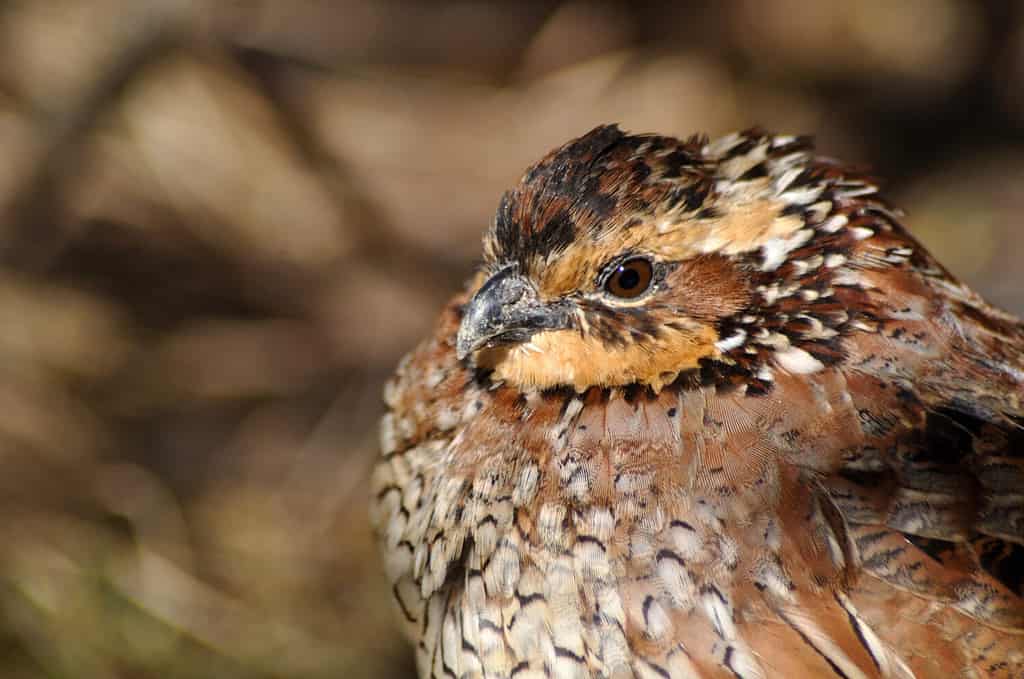
Northern bobwhites live in open-sky habitats, making mid-infrared a bigger selective pressure for them.
©Lakeview Images/Shutterstock.com
Birds that live in forests with canopies and habitats with more places to take shelter are not nearly as affected as those living in open-sky habitats. Birds in open-sky habitats are immersed in what the study’s authors call the “vacuum of space.” According to Dr. Allison Shultz, Curator of Ornithology at the Natural History Museum of Los Angeles County, those living in this habitat lose heat, making mid-infrared a bigger selective pressure.
“Whenever you go outside, and you don’t have a ceiling, a roof, or a tree over your head, because space is so cold compared to Earth, heat is being emitted into space,” Shultz told The Natural History Museum of Los Angeles County. “If you live in the forest and you’re never exposed, mid-infrared might not be a really big selective pressure. But if you’re living out in the open, if you’re a grassland bird, for example, you are exposed to the sky quite a lot of the time. So that might be a larger selective pressure for you.”
Subspecies of Birds Release Heat at Different Rates
To determine how different bird species release heat from their bodies, the team examined five species. However, according to the study, one of those birds, the common raven, exhibited different levels of heat absorbance among its subspecies. This led researchers to look further into two subspecies in particular, the Corvus corax sinuatus and Corvus corax principalis, to see why their heat absorbance differed, but their heat emission did not.
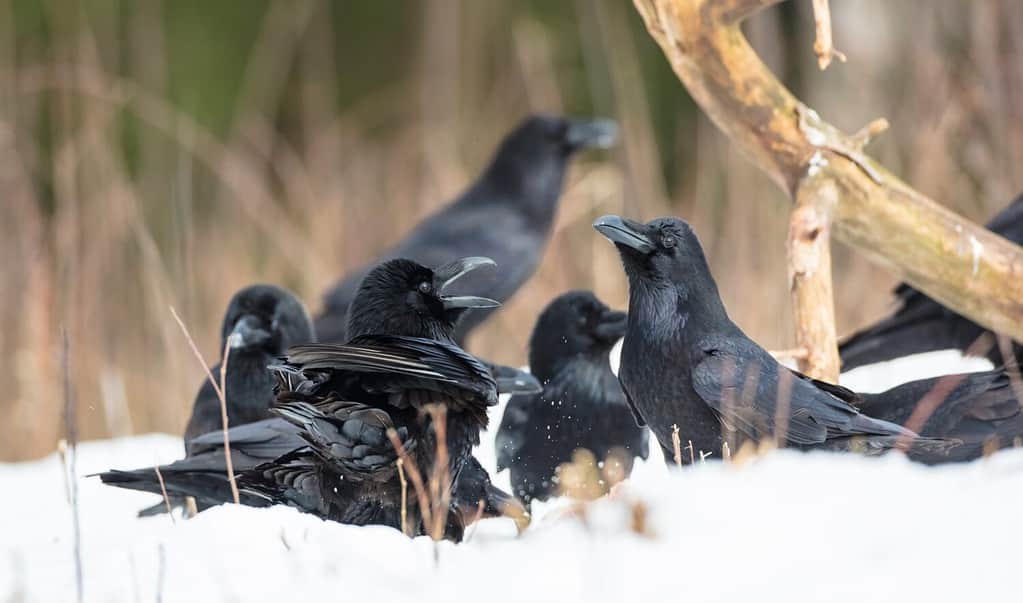
Subspecies of ravens absorb different amounts of heat, despite looking the same to the untrained eye.
©Simonas Minkevicius/Shutterstock.com
C. sinuatus and C. principalis look like the same species to the untrained eye, given their similar size and coloration. However, what the researchers found is that the pigmentation of the ravens’ feathers differed between the two subspecies. This meant the ravens absorbed heat from the sun at different rates because their feathers absorbed varying amounts of near-infrared light.
Therefore, while both subspecies spent time in open-sky habitats, one absorbed heat from the sun at a higher rate. C. sinautus was found to have increased absorbance versus C. principalis. This subspecies, therefore, had darker-pigmented feathers, although this was not visible to the eye. But based on how much near-infrared light was absorbed, this was clearly the case.
Why Do Some Birds Have More Pigmented Feathers Than Others?
As the researchers point out in the study, theories by Constantin Gloger and Charles Bogert, eventually becoming Gloger’s rule and Bogert’s rule, reign supreme when it comes to the debate over why some birds are more colorful and darker than others. Both rules speak to different concepts, but, in the case of this study, they work together to help answer the question of why open-sky habitat birds release more heat into the environment.
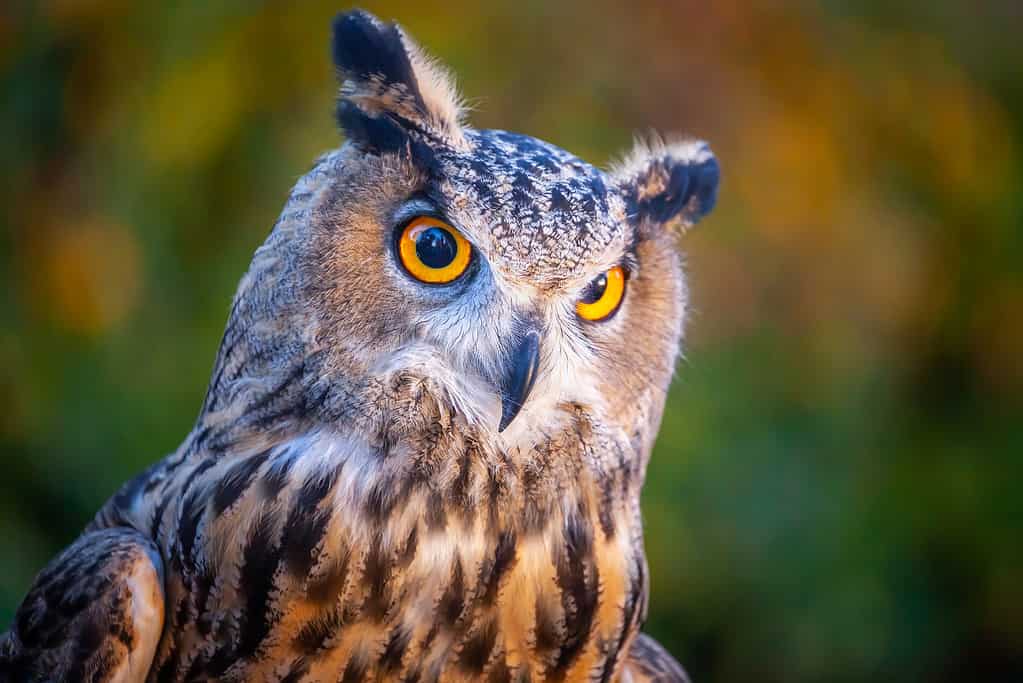
The researchers applied Bogert’s rule when studying the feathers of great horned owls.
©agustavop/iStock via Getty Images
Gloger’s rule: Animals will be darker in warmer, more humid environments. The coloration not only helps them to better camouflage themselves, but also protects against UV radiation.
Bogert’s rule: Animals that use behavioral strategies to offset changes in environment undergo fewer evolutionary changes than those that do not. This is most often seen in thermoregulation. These changes could include seeking a new habitat or adjusting body posture, which alters how climate acts as a selective pressure for the animals.
While these rules speak to how coloration affects the animals, what they do not speak to is how mid-infrared and near-infrared affect animals in both their survival and evolutionary changes. Consequently, this study has raised more questions about how color, heat, and light together affect the growth and evolution of birds’ feathers. Answers to these questions will be important to the conservation of bird species as climate change continues to make the planet warmer year after year.
Can Data About Birds Emitting Heat Be Used to Create Climate Change-Resistant Structures?
As greenhouse gas emissions continue to drive record global warming, dependence on energy for cooling homes and businesses is increasing. This is especially true for states that are increasingly experiencing triple-digit temperatures during the summer.
In recent decades, there has been a growing and ongoing push to make new homes and buildings more energy efficient. Whether through solar panels, increased insulation, or encouraging natural shade by planting established trees, there is a push to rely less on energy, especially as costs skyrocket during the warmer months.
Researchers wanted to better understand, from a thermal engineering standpoint, how birds managed their thermal loads. According to the study’s co-lead author, Thomas Lee, a Ph.D. candidate at UCLA, the better birds’ heat regulation is understood, the easier it is to apply that understanding to new structures being constructed today.
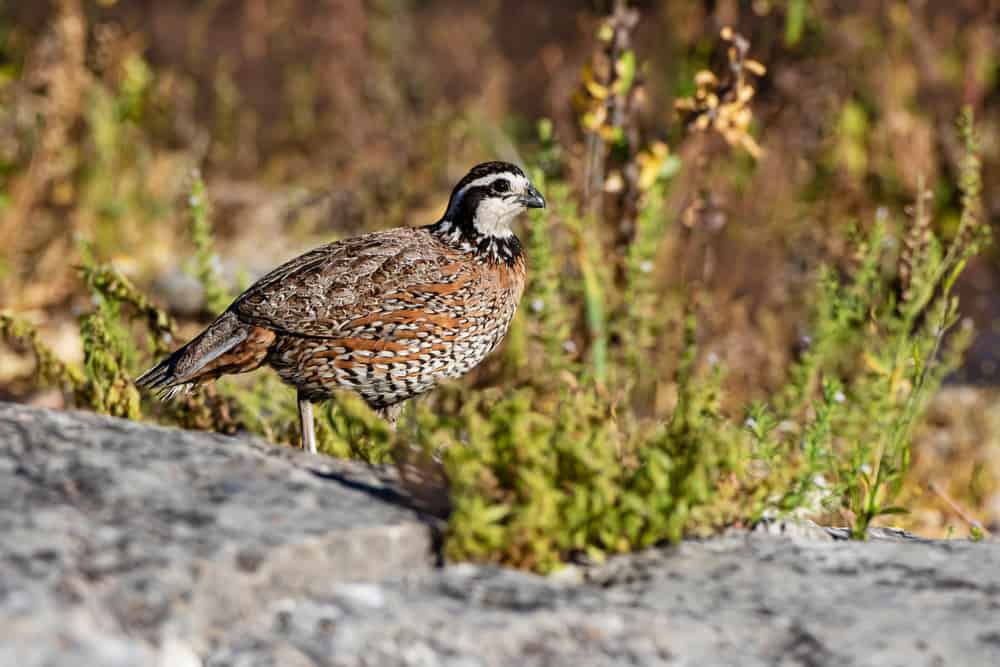
The Northern bobwhite may be the key to helping engineers create more energy-efficient structures.
©Danita Delimont/Shutterstock.com
“A ‘hot’ topic in thermal engineering is to create passively cooling structures, and it’s no secret to engineers that nature contains some of the most optimized, multifunctional adaptations that we would want to replicate,” Lee explained to The Natural History Museum of Los Angeles County. “In order to uncover what it is about animals that allows them to manage their thermal loads, collaborations like this one are required to share interdisciplinary knowledge with one another.”
It is with this understanding that structures can be constructed to keep temperatures cooler inside and reflect heat during the summer. This would be beneficial for homeowners and business owners, as well as the most vulnerable populations who seek shelter when temperatures soar.
As global temperatures are projected to continue rising over the coming decades, understanding the science of how birds living in open-sky habitats can adapt quickly is essential. Not only will changes in their feathers help birds regulate their temperature and survive temperature swings, but this information can also be used to develop technology for cooling buildings. This will be important as global temperatures continue to reach new record highs year after year, pushing energy loads to their limits to cool nations’ populations.