
Quick Take
- Spotted hyenas in Ethiopian cities act as informal sanitation workers, removing large amounts of organic waste each night.
- By consuming carcasses, they help reduce disease risk and prevent significant greenhouse gas emissions.
- Their presence saves cities over $100,000 each year by lowering waste management and public health costs.
- Longstanding coexistence models, like in Harar, show how people and predators can safely share urban spaces.
A silent shift change occurs as the sun sets over the ancient stone walls of Harar and the bustling streets of Mekelle. While most residents head indoors, another workforce emerges — one that doesn’t wear reflective vests or operate garbage trucks. Moving silently on four legs, with powerful jaws and keen senses, they patrol roadsides, markets, and dumping grounds. These “workers” are Ethiopia’s spotted hyenas.
Long dismissed as pests or dangerous predators, they are now being reconsidered as something else entirely: informal sanitation workers. These animals are stepping in where infrastructure falls short, quietly delivering measurable benefits to human health, city budgets, and even the climate.
Nature’s Most Efficient Waste System
In Ethiopia’s rapidly growing cities like Mekelle, formal waste systems struggle to keep up — especially with organic waste. A major contributor is private livestock slaughter. In a city of over 660,000 people, more than one million animals — goats, sheep, and chickens — are slaughtered annually in private homes. The result is a massive and difficult-to-manage stream of organic waste.
A recent 2026 study led by Dr. Gidey Yirga from the University of Sheffield’s School of Biosciences reveals a stark imbalance. His team discovered that roughly two-thirds of meat waste — about 1,367 tons — is discarded in open areas. This is equivalent to the weight of around 31,000 sheep. Left unmanaged, this waste doesn’t just disappear — it rots, spreads pathogens, and releases greenhouse gases.
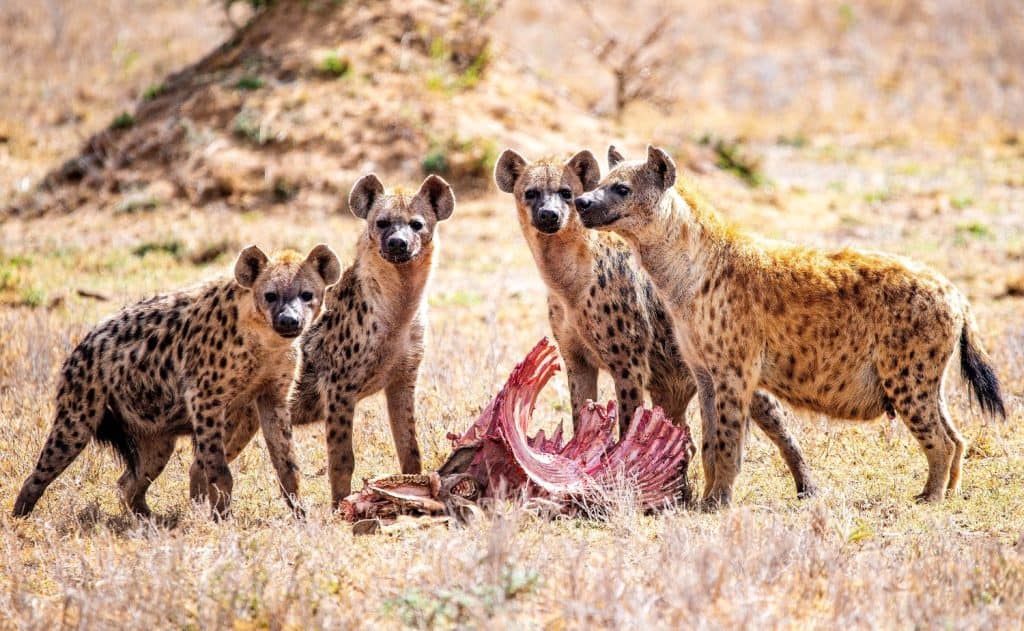
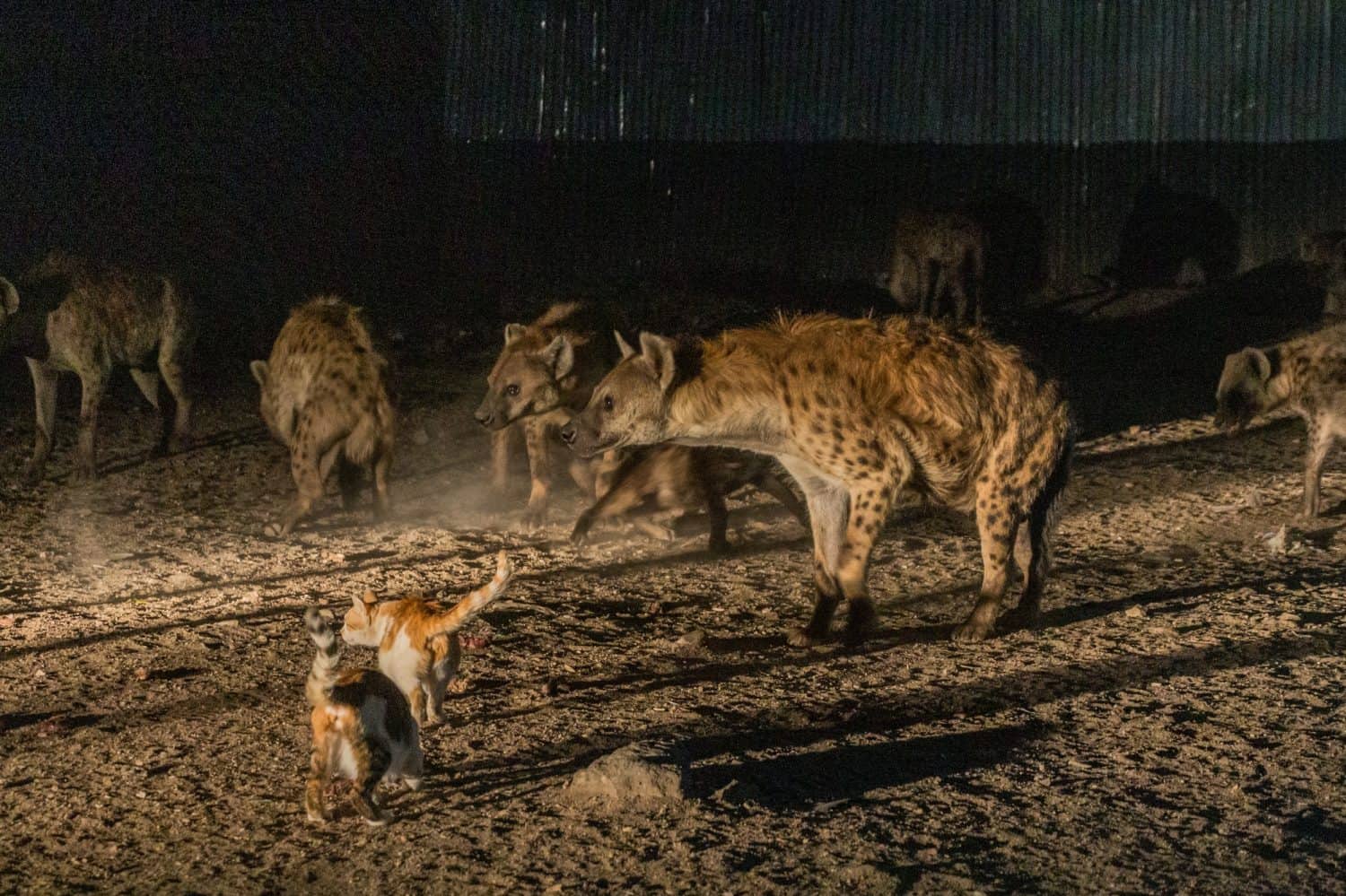
Spotted hyenas live in clans led by the females of the group.
©Sean Clee/Shutterstock.com
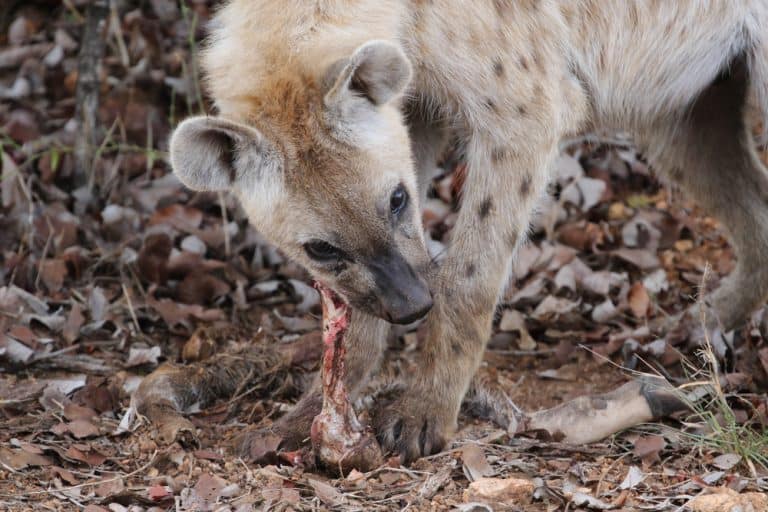
Hyenas are uniquely equipped to deal with this kind of waste in ways other scavengers are not. While many animals simply pick at soft tissue, the spotted hyena’s physiology allows for complete waste elimination. Spotted hyenas have bone-crushing jaws strong enough to consume entire carcasses, including large bones. They leave almost no organic matter left behind that might rot or attract pests.
A single hyena can scavenge nearly 2,100 pounds of waste each year. They focus specifically on the remains of livestock that have either been slaughtered or died of natural causes. The hyenas effectively scour landfills and roadsides every night, eliminating the exact waste humans struggle to manage. Unlike many scavengers, hyenas don’t leave much behind. They don’t simply reduce waste — they nearly eliminate it at the source.
Waste, Emissions, and Economics
The hyena’s efficiency also has a direct climate impact. When organic waste sits in the open, it decomposes and releases greenhouse gases. In Mekelle, unmanaged meat waste represents a quiet but significant emissions source. By consuming 228 tons of waste before it can decompose, hyenas and other scavengers prevent over 1,102.5 tons of carbon emissions from entering the atmosphere each year.
In this light, the hyena is not just a scavenger; it is a specialized carbon-reduction tool integrated into the city’s natural ecosystem.
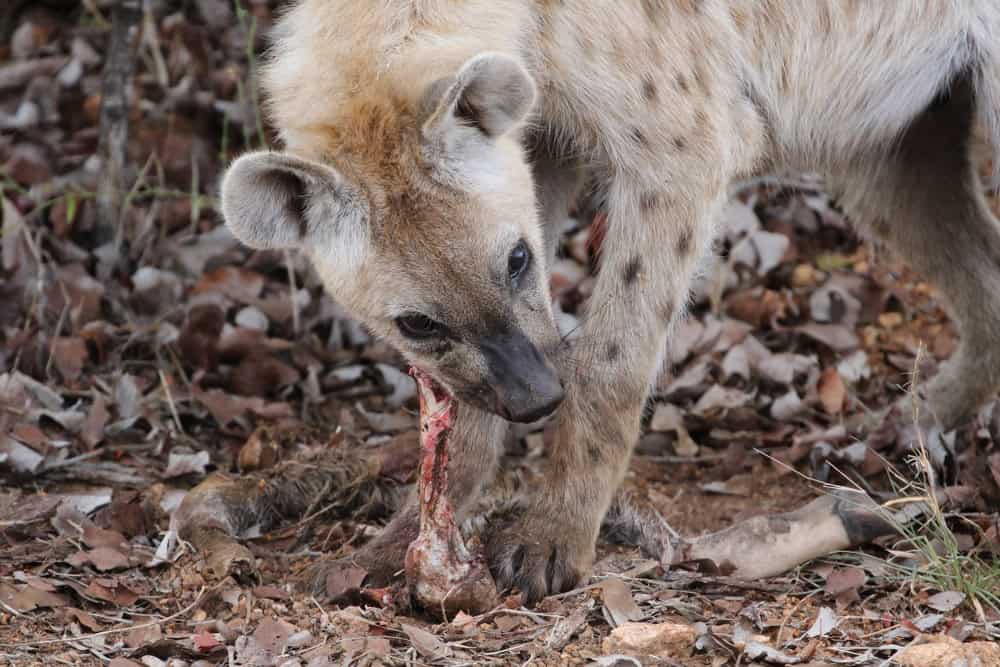
Hyenas are extremely smart, social, and capable of complex problem solving.
©JMx Images/Shutterstock.com
The benefits of these spotted hyenas aren’t just environmental — they’re economic. In a world increasingly focused on carbon footprints and municipal budgets, the hyena has emerged as an unlikely ally in urban sustainability. By disposing of organic waste that the city’s existing infrastructure cannot handle, hyenas save Mekelle more than $100,000 each year in direct waste management costs. But beyond simple trash removal, the city also avoids the high costs of treating infected humans and the financial loss of livestock that would have otherwise perished from scavenge-preventable diseases. And unlike conventional systems, this one requires no fuel, produces no emissions, and runs continuously.
A Shield Against Disease
Some people see hyenas as a nuisance, but it is important to remember that this unique ecosystem is fragile. If hyenas are excluded or eliminated, cities don’t just lose a free service — they inherit new costs. These include increased waste accumulation, higher disease risk, and more human-wildlife conflict as food sources disappear. What looks like “removal of a nuisance” can quickly become a public health and economic setback.
Hyenas don’t just clean cities — they help stabilize them biologically. Beyond mere aesthetics and waste removal, the scavenging of spotted hyenas serves as a critical public health function. Rotting carcasses are breeding grounds for dangerous pathogens. By removing these quickly and efficiently, hyenas act as a kind of living sanitation barrier and help to suppress diseases that could otherwise lead to potentially catastrophic outbreaks.
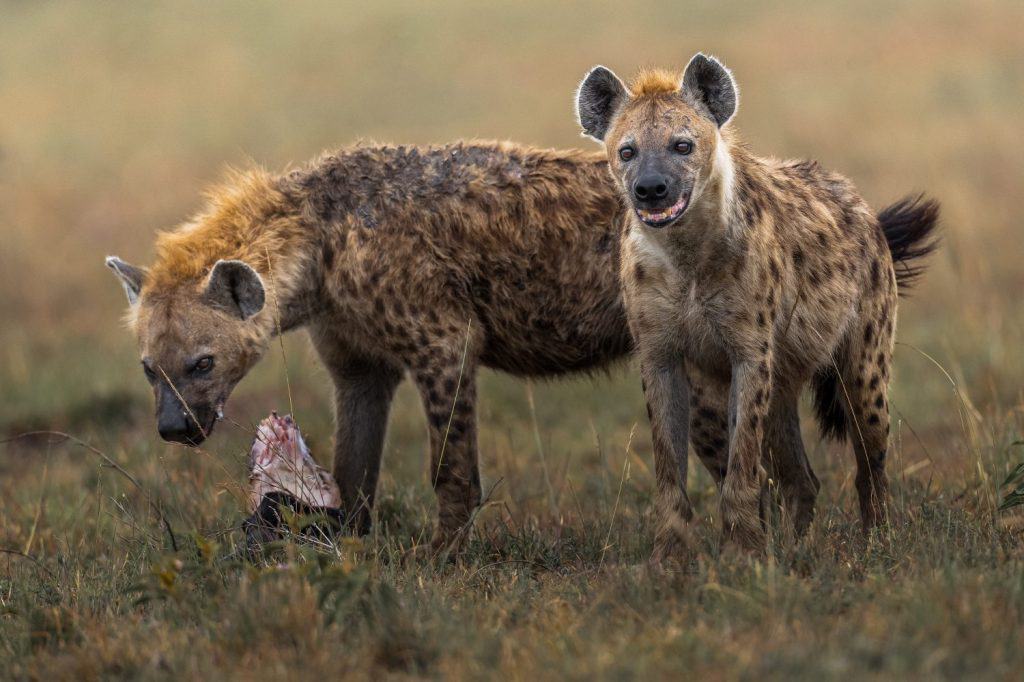
Female spotted hyenas are larger than males.
©Ahmed Abubasel/Shutterstock.com
Anthrax and bovine tuberculosis are the primary threats the hyenas’ nighttime cleanup mitigates. According to research, hyena scavenging prevents an estimate of five human infections of these two diseases each year. This benefit also extends to the agricultural sector, where the same scavenging activity prevents an annual 140 infections in local livestock.
The Hyena Dividend
This disease prevention isn’t just a medical miracle; it’s also a financial one. Dr. Yirga’s study calculates the economic value of these avoided infections and shows that the presence of hyenas saves the city of Mekelle approximately $52,000 dollars per year. This includes the avoided costs of medical treatment for infected citizens and the market value of livestock lost to the diseases.
The hyenas’ work translates to real savings and protection by reducing strain on healthcare systems, lowering the risk of outbreaks in dense urban areas, and resulting in fewer economic losses for livestock owners
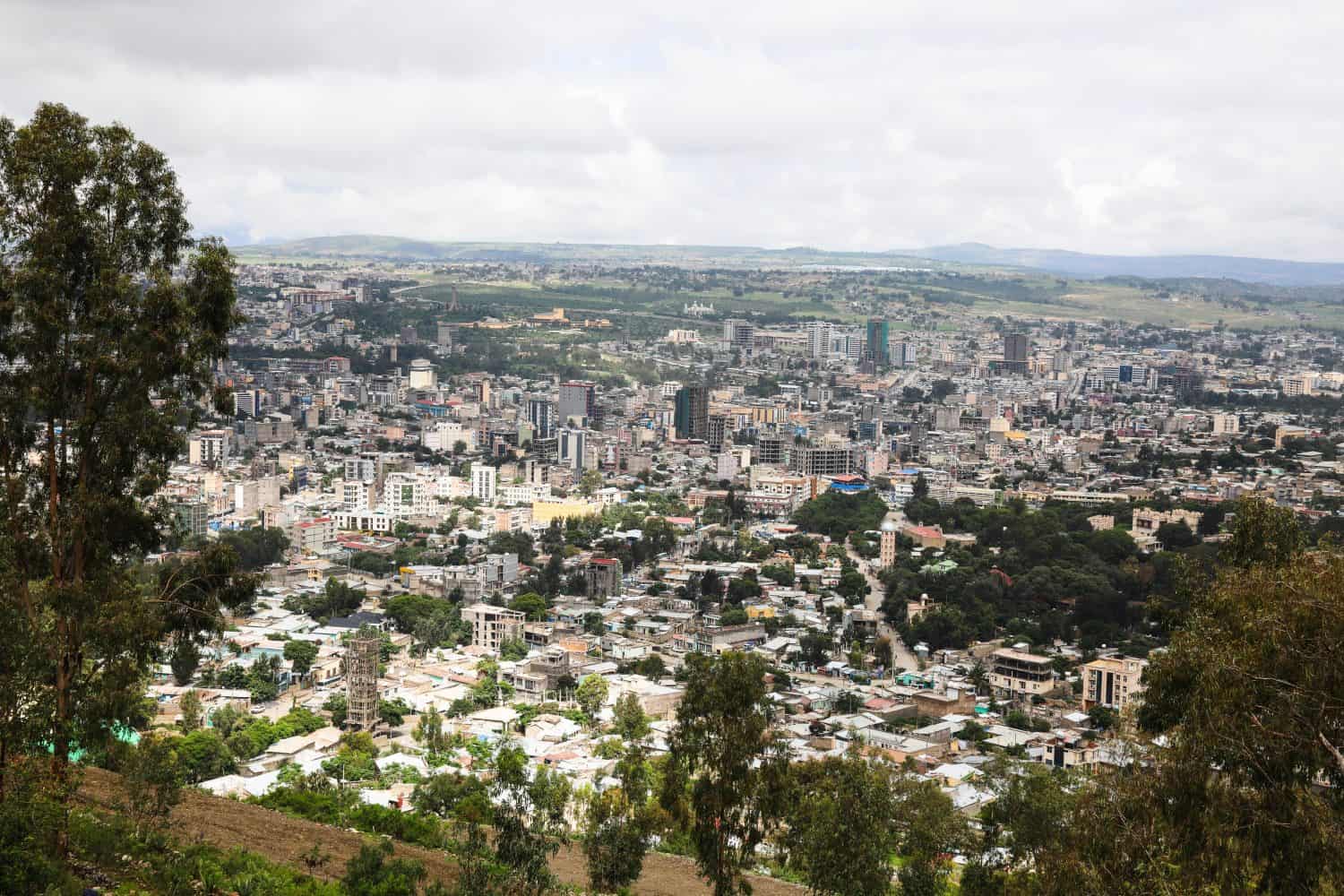
Mekelle is the capital of Tigrai in Ethiopia, and is well-known for its cleanliness.
©Tewodros Hailemichael/Shutterstock.com
In cities where waste systems aren’t designed to handle large animal remains, hyenas effectively fill that gap — processing carcasses that would otherwise sit and rot in landfills or roadsides, spreading disease. Hyenas can consume even the largest animal remains — including hair and heavy bone — and leave virtually no organic matter behind for dangerous pathogens to thrive.
Ironically, removing or blocking hyenas in the name of “cleanliness” could actually make cities less sanitary, not more.
The Harar Model: Coexistence as Infrastructure
While Dr. Yirga’s study in Mekelle shows the measurable benefits of urban hyenas, the residents of Harar demonstrate how coexistence makes those benefits possible. In this ancient walled city, humans and hyenas have lived side by side for centuries — not in conflict, but in cooperation.
According to local legend, the relationship began during a severe famine centuries ago. To prevent hungry hyenas from attacking the city’s inhabitants, town saints allegedly struck a deal: feed the hyenas, and they won’t attack.
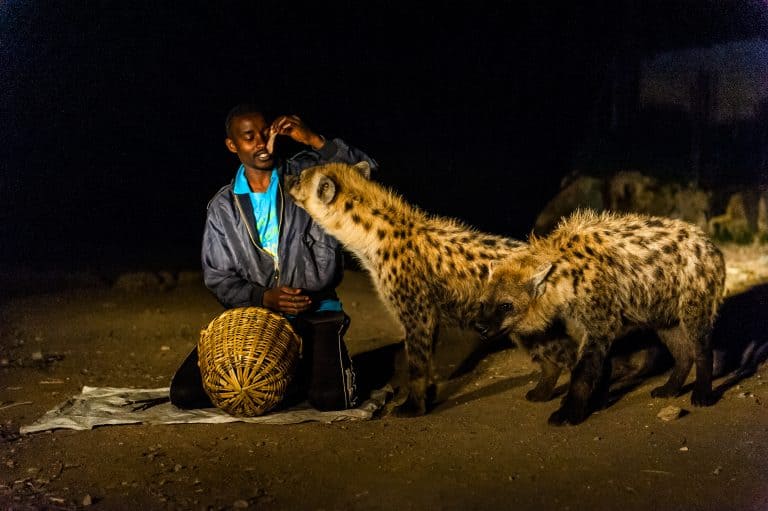
This “pact” still exists today as residents leave food out for the animals during the Ashura festival. The city walls of Harar also include “hyena doors” in the ancient stone fortifications — openings specifically designed to allow the predators into the city at night to perform their scavenging duties.
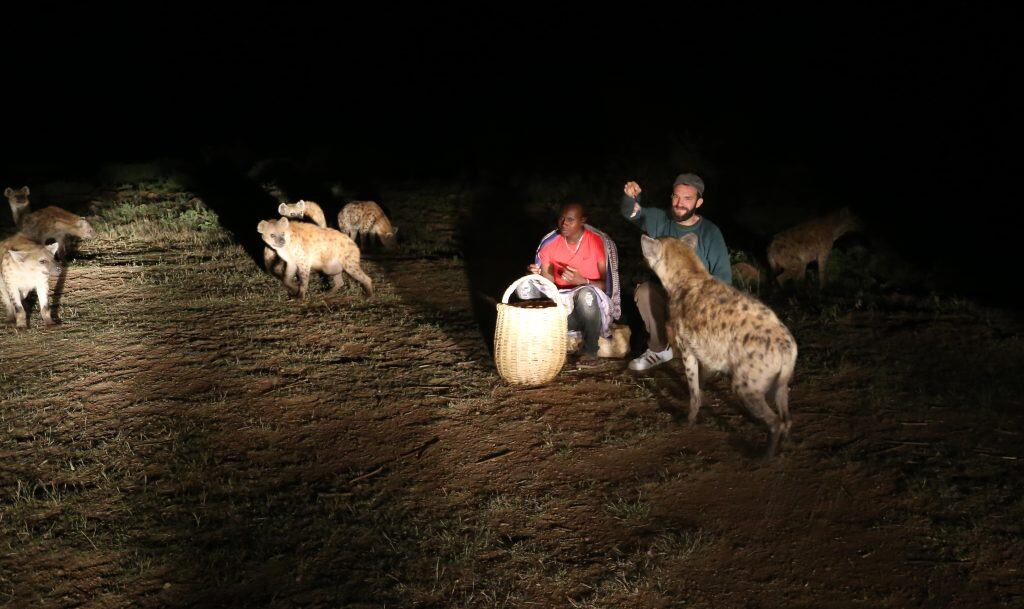
The hyenas near Harar are accustomed to humans.
©Sailko / CC BY 3.0 / Wikimedia Commons – Original / License
The most well-known example of this coexistence is the tradition of the “Hyena Men,” which began in the 1960s with a farmer named Yusuf Mume Salleh. Concerned about the hyenas attacking his livestock, Yusuf tossed scraps to wild hyenas to discourage them from encroaching on his farm. Over the following decades, this practical solution evolved into a relationship built on familiarity and trust. Yusuf passed the tradition down to his son, Abbas Yusuf, who treats the pack as “family members,” calling them by name and feeding the animals by hand.
Today, this unique relationship continues to reinforce predictable animal behavior and reduce fear and conflict. The hyena feeding tradition is also a well-known tourist attraction in Harar.
A Different Way of Seeing Predators
In Harar, hyenas are not just tolerated — they are interpreted as protectors against unseen forces, an integral part of the city’s spiritual landscape, and contributors to its overall balance.
Many residents believe the hyenas protect the city from djinn (mischievous spirits). Local lore suggests hyenas can see and consume these spirits, keeping the human population safe from harm. Some interpret the animal’s habit of regurgitating undigested bone and hair as “spitting out” the spirits they have consumed, further cementing their status as a purifying force.
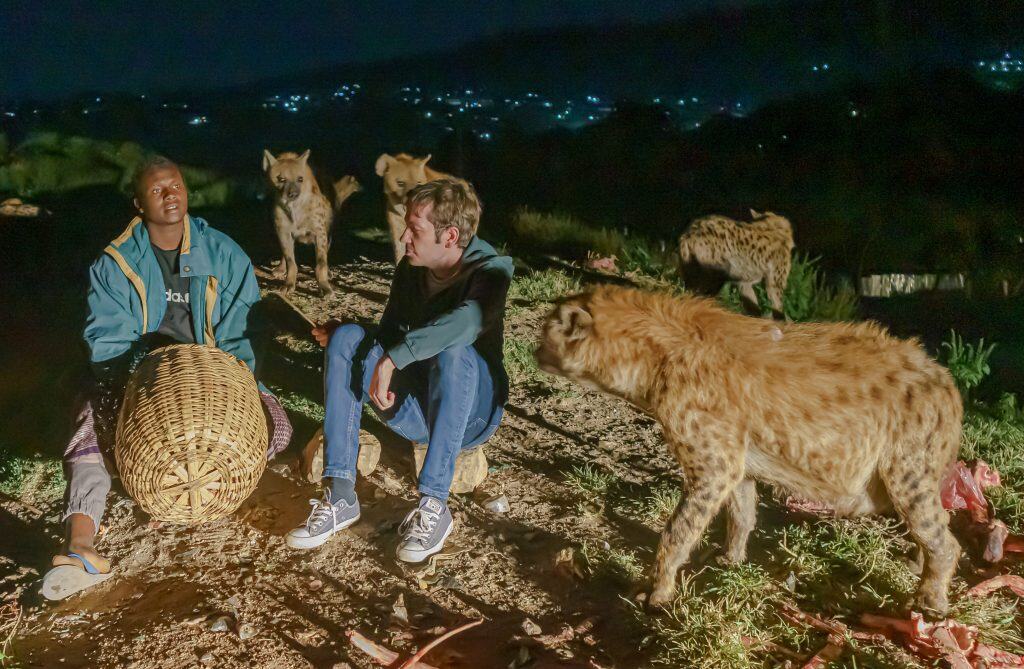
In Harar, hyenas and humans live alongside each other in harmony.
©Ninara31 / CC BY 2.0 / Wikimedia Commons – Original / License
Many also refer to hyenas as waraba or “newsmen” because they are believed to communicate with deceased saints. Yusuf Mume Salleh even claimed he could “hear” news from far away through the animals’ distinct cries.
Whether symbolic or practical, the result is the same: coexistence that works. Notably, locals report that there have been no recorded hyena attacks within the city during decades of this practice.
Modern Pressures on an Ancient System
Unfortunately, the special balance found in Harar and the “free” sanitation services in Mekelle are increasingly under threat. As Ethiopia undergoes rapid development, the physical landscape that allows hyenas to coexist with humans is disappearing.
As Harar expands, the natural caves and brush where hyenas live are being destroyed. Modern buildings and roads block traditional migratory routes and threaten to cut the animals off from the city centers where they perform their vital work. Locals and the “Hyena Men” fear that if the city grows too large and the hyenas lose their habitat, the ancient agreement will be broken. Deprived of their traditional scavenging grounds, hyenas might turn to hunting live livestock, transforming them from partners back into predators.
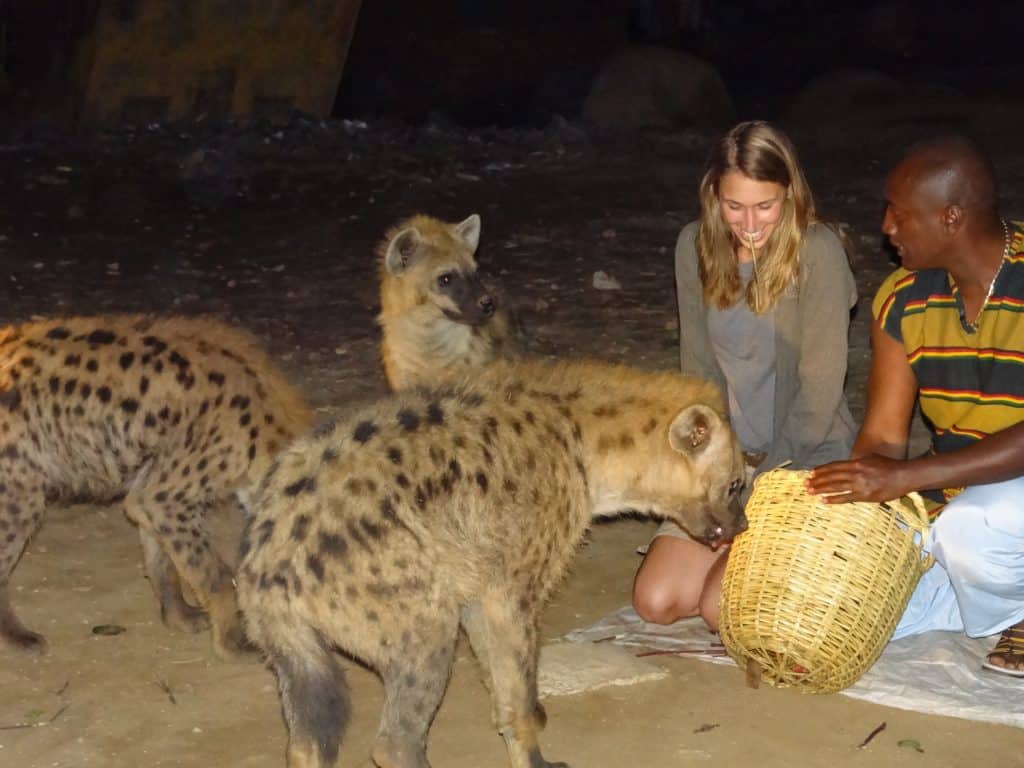
Guided tours allow visitors to feed and observe the hyenas alongside locals.
©msafari2425 / CC BY 2.0 / Wikimedia Commons – Original / License
Rethinking “Nuisance” Wildlife
While those in Harar treat the hyenas with respect and reverence, others still fear the animals and retaliatory killings are common. As cities grow, the very animals helping manage waste are being pushed out. If this continues, cities may lose their low-cost sanitation system, their natural disease buffer, and a meaningful example of coexistence.
Ethiopia’s urban hyenas challenge a common assumption that large carnivores and cities cannot coexist. In reality, however, these animals are not just surviving in human environments — they are contributing to them. The hyenas process large amounts of waste, prevent the spread of disease, reduce emissions, and save cities over $100,000 each year.
As urban areas continue to expand, it is vital to recognize that the choice isn’t always between development and wildlife. Sometimes, the most effective infrastructure is already there — waiting to be recognized. And in cities like Mekelle and Harar, this solution arrives each night on four legs.
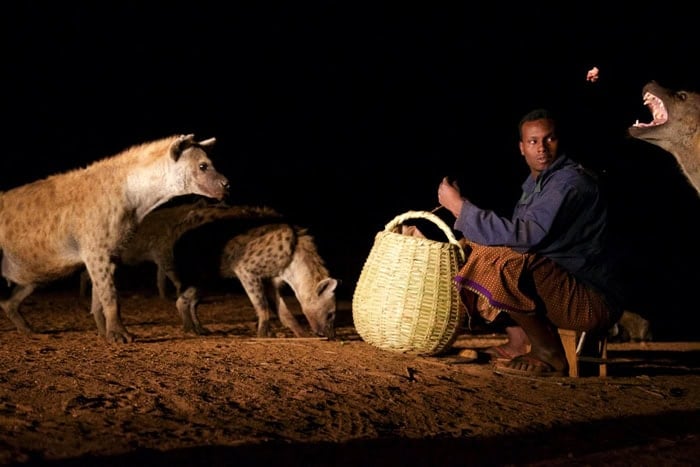
Abbas Yusuf continues to feed the hyenas of Harar even when there are no tourists.
©Wesagn / CC BY-SA 4.0 / Wikimedia Commons – Original / License
As Dr. Yirga’s team move into a second phase of research to see how urban life is physically changing these animals, the message remains clear: Ethiopia’s hyenas aren’t just surviving in the city — they are keeping it alive.
With spotted hyena populations declining across Africa due to habitat loss and human-wildlife conflict, the “Harar model” suggests that the key to a cleaner, safer city might be a better approach to how humans and large carnivores can successfully share a landscape.