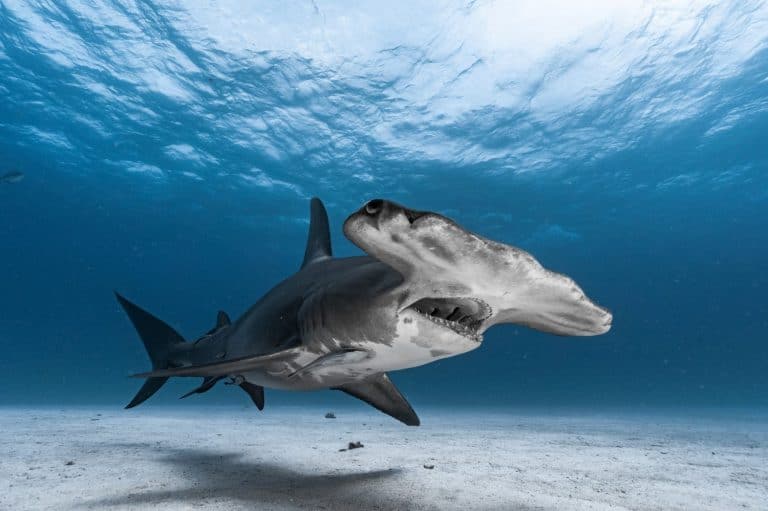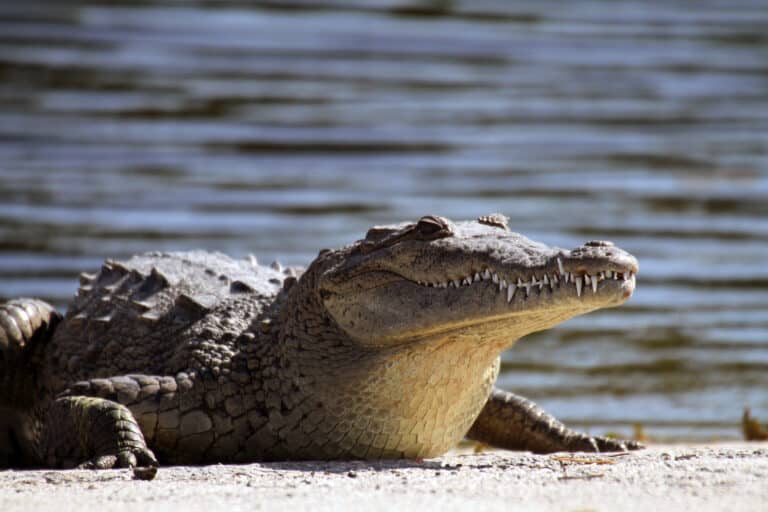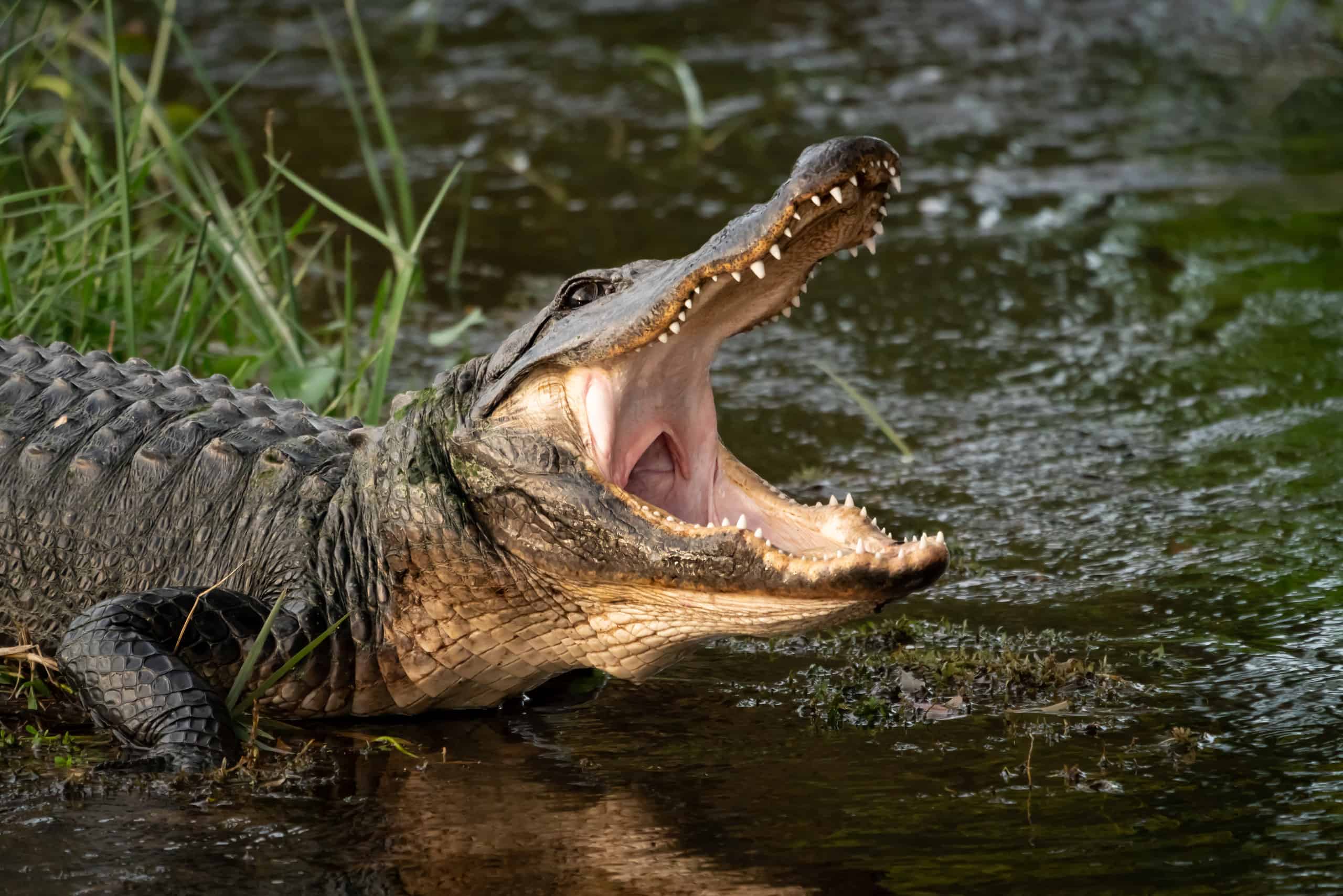

St. Petersburg has a lot to offer, sunshine, sandy beaches, lakes, wildlife preserves, and a diverse ecosystem that supports an abundance of wildlife. For example, Muscovy ducks, coyotes, raccoons, possums, and shorebirds are regular visitors to the city and its neighborhoods. However, there are two species that inhabited St. Petersburg way before humans or other animals, the American alligator and the saltwater crocodile. Therefore, many lakes, estuaries, and rivers in and around St. Petersburg are home to alligators. As a result, swimming in these bodies of water must be done with extreme caution. Some might say that swimming in water with alligators compares to swimming in the ocean with sharks. However, while there are more shark bites yearly in Florida, alligators cause more fatalities.
Alligators in St. Petersburg
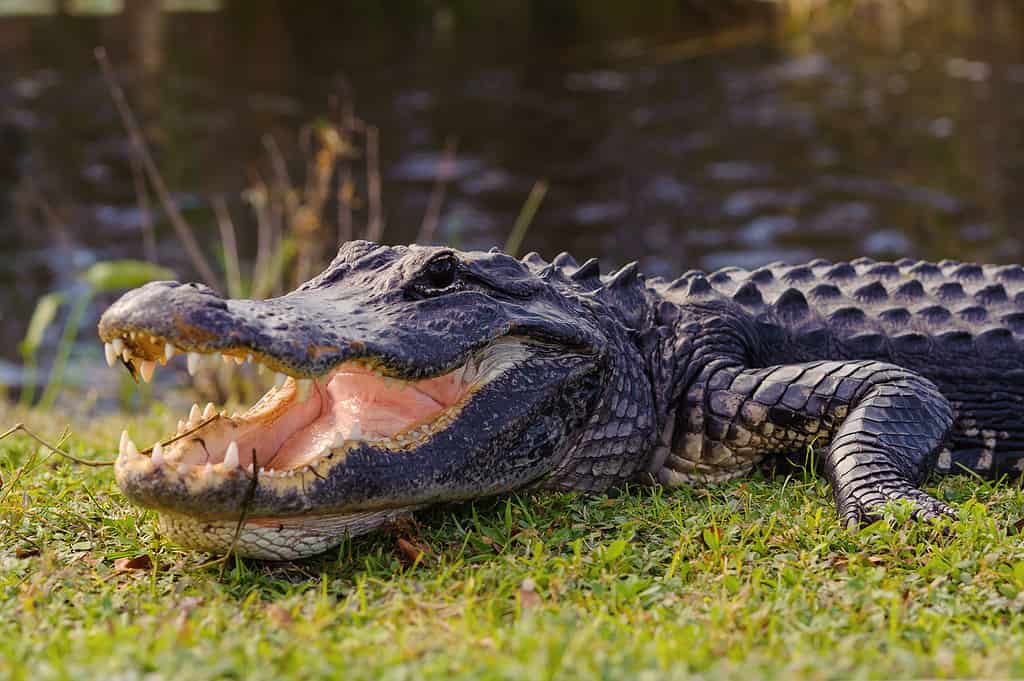
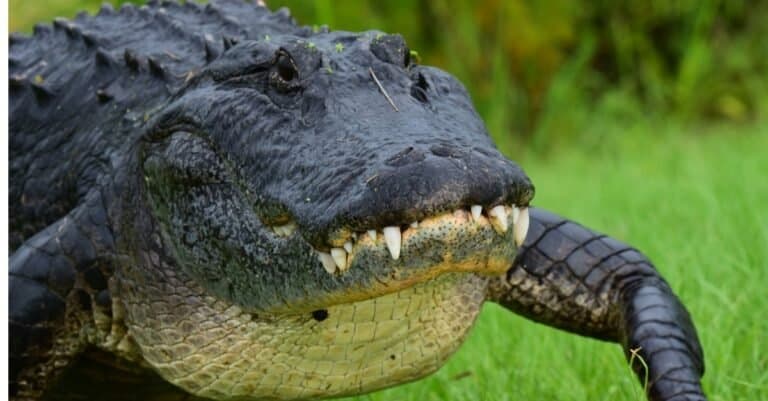
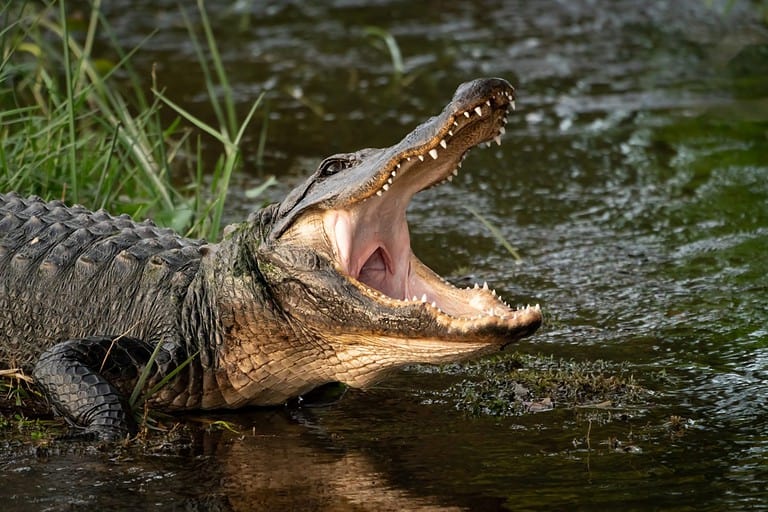
Alligators rarely attack humans and would rather retreat than fight.
©Sorbis/Shutterstock.com
While you won’t find these intimidating reptiles in the ocean, you can find them in Florida’s rivers, lakes, marshes, and bogs. However, you still need to be cautious of the brackish waters in southern Florida because saltwater crocodiles inhabit them. Unfortunately, as urban development expands, it encroaches on their territory, resulting in many unpleasant interactions between alligators and humans. For example, alligators have surprised many residents in developments with man-made lakes, including entertainment resorts, golf courses, and retirement communities.
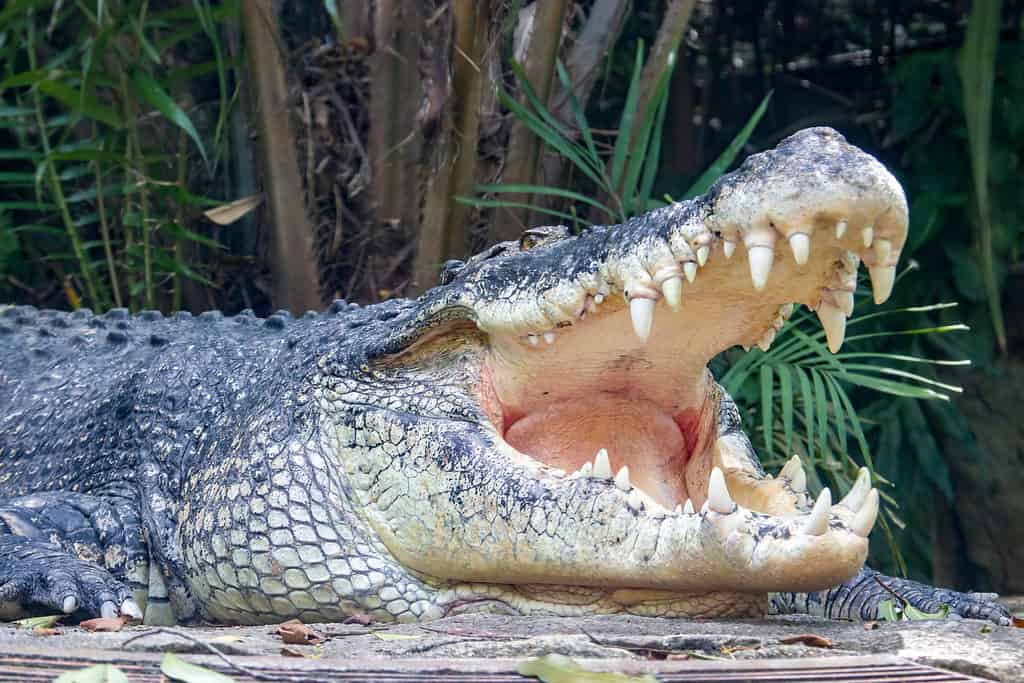
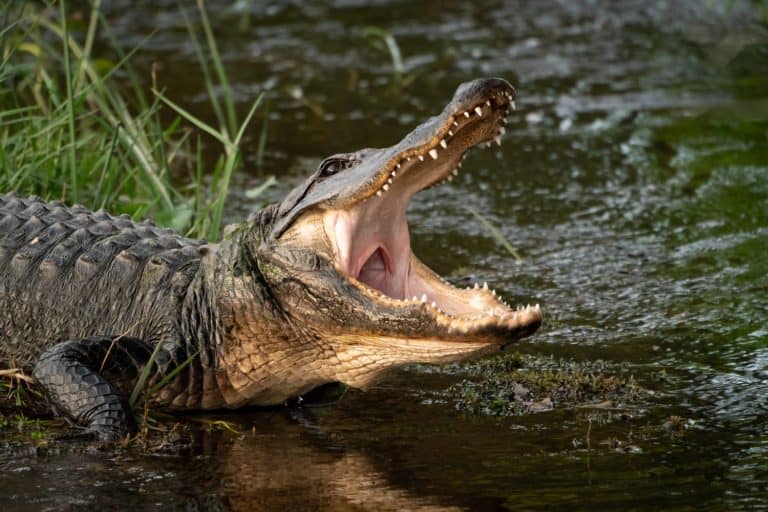
Saltwater crocodiles (Crocodylus porosus) are also Florida residents.
©Danny Ye/Shutterstock.com
Alligator Attacks in St. Petersburg
While alligator attacks in St. Petersburg are rare, they do happen. Sadly, one of these attacks resulted in death.
May 14th, 2006
Sadly, Judy W. Cooper, a 43-year-old, was found in a canal near Oldsmar, FL, just 20 miles from St. Petersburg. Autopsy results indicated that she had been in the water for around 3 days before discovery, and her death was caused by an alligator attack. Then, in a strange turn of events, her hand and arm were later recovered from an 8.5-foot alligator.
October 4th, 2021
On October 4th, 2001, a woman was injured in an alligator attack when she fell into a St. Petersburg canal. The large reptile bit her hand, arm, and leg. The lady was homeless and sleeping on a bridge over Salt Creek when she unexpectedly fell into the canal. Luckily, she was able to escape and raced to the hospital. She sustained serious injuries to her arms but made it out alive.
Alligator Attacks in St. Petersburg: Is It Safe to Swim?
Florida is notorious for their large alligator population. So, it’s not hard to see why they inhabit all 67 counties. They occur in several different ecosystems like lakes, rivers, retention ponds, and golf greens. In fact, some even inhabit saltwater. However, alligators rarely attack humans and would rather retreat than fight. However, that doesn’t mean you shouldn’t be cautious. Therefore, we have compiled a guide on how to avoid alligator attacks when swimming in St. Petersburg.
How to Stay Safe From Alligators While Swimming in St. Petersburg
There are many bodies of water in and around St. Petersburg that are incredibly inviting on a hot summer’s day. So, how do you avoid getting attacked by an alligator in St. Petersburg?
Refrain from Feeding Alligators
It is a crime to feed alligators in Florida. In addition, it is unfair to the animals and puts you and your family in danger. For example, alligators that are fed become used to humans and lose their wariness. Furthermore, they are highly protective of their nests, and if anyone comes too close, they will attack.
Don’t Dump Waste Into the Water
This mainly applies to fishermen, who usually dispose of scraps in the water when they are fishing. Unfortunately, this is basically the same as feeding the alligators.
Do Not Approach an Alligator
Always be aware of your surroundings and never approach or antagonize alligators. Out of all these recommendations, this is the easiest one. Keep your distance.
Be Cautious When Swimming
Unfortunately, you can’t just swim anywhere in Florida. Therefore, you need to stick to areas with designated signs. Furthermore, you should only swim during the day as alligators are primarily active at night. Children should always be supervised when splashing around in the water. Additionally, dogs resemble their natural prey, so keep your pets away from places where gators occur.
Alligators Are Not Pets
While it might seem cool to have an exotic animal as a pet, they are extremely dangerous and can cost you your life. Therefore, never accept an alligator as a pet.
What To Do if an Alligator Attacks
If you are ever unlucky enough to get attacked by an alligator, here are some tips that might be helpful.
Fight Back
There are a few things you can do if you ever get attacked by an alligator. Firstly, never give up. Fight with everything you’ve got. Hopefully, the alligator will tire, decide it’s not worth the energy, and let you go.
Smack the Snout
When in the clutches of their powerful jaws, there is no way a human will be able to open them. Therefore, hit the alligator in one of its more sensitive spots, the snout. If you punch the snout hard enough, it might let go.
Gouge the Eyes
Another sensitive spot you can attack is their eyes. If you poke it in the eyes, it might release you long enough to escape.
Escaping the Death Roll
Alligators are notorious for their death rolls. This is when they hold their prey in their jaws, drag it underwater, and roll violently until their prey drowns. So, if this ever happens to you, don’t even try to resist it. Instead, roll with it and remember the above tips of trying to gouge the alligator’s eyes and hitting its snout. Furthermore, if you are good at holding your breath, you might be able to stick it out until the alligator gets tired, as the death roll requires a lot of energy.
Hold the Jaw Shut
This does not apply if you are already in the alligator’s jaws, but if you manage to dodge its attack but can’t escape, try to wrap your arms around the alligator’s jaws and hold them shut. There is no one on earth who can force an alligator’s mouth open, but many adult humans in good health can hold their mouths closed. Once your arms are holding the gator’s mouth shut, try to get to land where you can release and quickly run away.
How to Keep Alligators Out of Your Yard
Florida residents don’t just have to protect their homes from day-to-day crime; they also need to ensure no alligators make their way into their yards or pools! Therefore, installing a fence will make a world of difference. The fence must be at least 4.5 feet tall since alligators are good climbers. If the fence is below 4.5 feet, it won’t provide adequate protection.
While alligators are dangerous, killing or antagonizing them in Florida is illegal. Therefore, you do not kill an alligator that has wandered into your yard. Instead, call 866-FWC-GATOR(866-392-4286) or contact the FWC office for support.
Other Alligator Attacks in Florida
Unfortunately, records from the Florida Fish and Wildlife Conservation Commission vary. However, they still indicate an increase in the number of alligator attacks on humans since they were taken off the endangered species list. For example, from 1971 to 1986, attacks increased to six a year. Then, from 1987 to 2017, attacks increased to 10 a year. Furthermore, as Florida’s population increases, so do alligator attacks. Below is a table of all the alligator attacks in Florida from 2022 to now:
| Name, Age, Sex | Date | Location |
|---|---|---|
| Gloria Serge, 85, female | February 20, 2023 | Fort Pierce, Florida |
| Rose Marie Wiegand, 80, female | July 15, 2022 | Englewood, Florida |
| Sean McGuinness, 47, male | May 31, 2022 | Largo, Florida |