
Quick Take
- Male alligators calm down after mating season ends, while female aggression follows a completely different timeline that catches most people off guard. Female aggression timeline →
- An alligator nest is easy to stumble across without recognizing it, and that mistake can put you directly in a mother's strike zone. Identify a nest →
- If an alligator chases you, the instinct most people follow is actually the wrong move. What to do if chased →
- There's a specific temperature window that flips alligators into breeding mode, and that window determines exactly when the danger zone begins in your area. See the temperature trigger →
After surviving months of cooler temperatures, alligators become active again in spring and summer. This activity is not strictly limited to hunting; it also marks the beginning of the most aggressive weeks of the alligator breeding season. This is the time when unexpected alligator encounters can occur and, consequently, when those living in alligator country need to be alert.
When Alligator Mating Season Occurs
When temperatures rise, alligators become more active because they are reptiles. However, the warmer weather also prompts alligators to engage in courtship rituals, signaling the beginning of the breeding season.
There is no specific date that the alligator breeding season begins. Instead, when temperatures are consistently between 82°F and 92°F, it signals to alligators that it is time to mate. For most locations in the United States, this starts in May and ends in June.

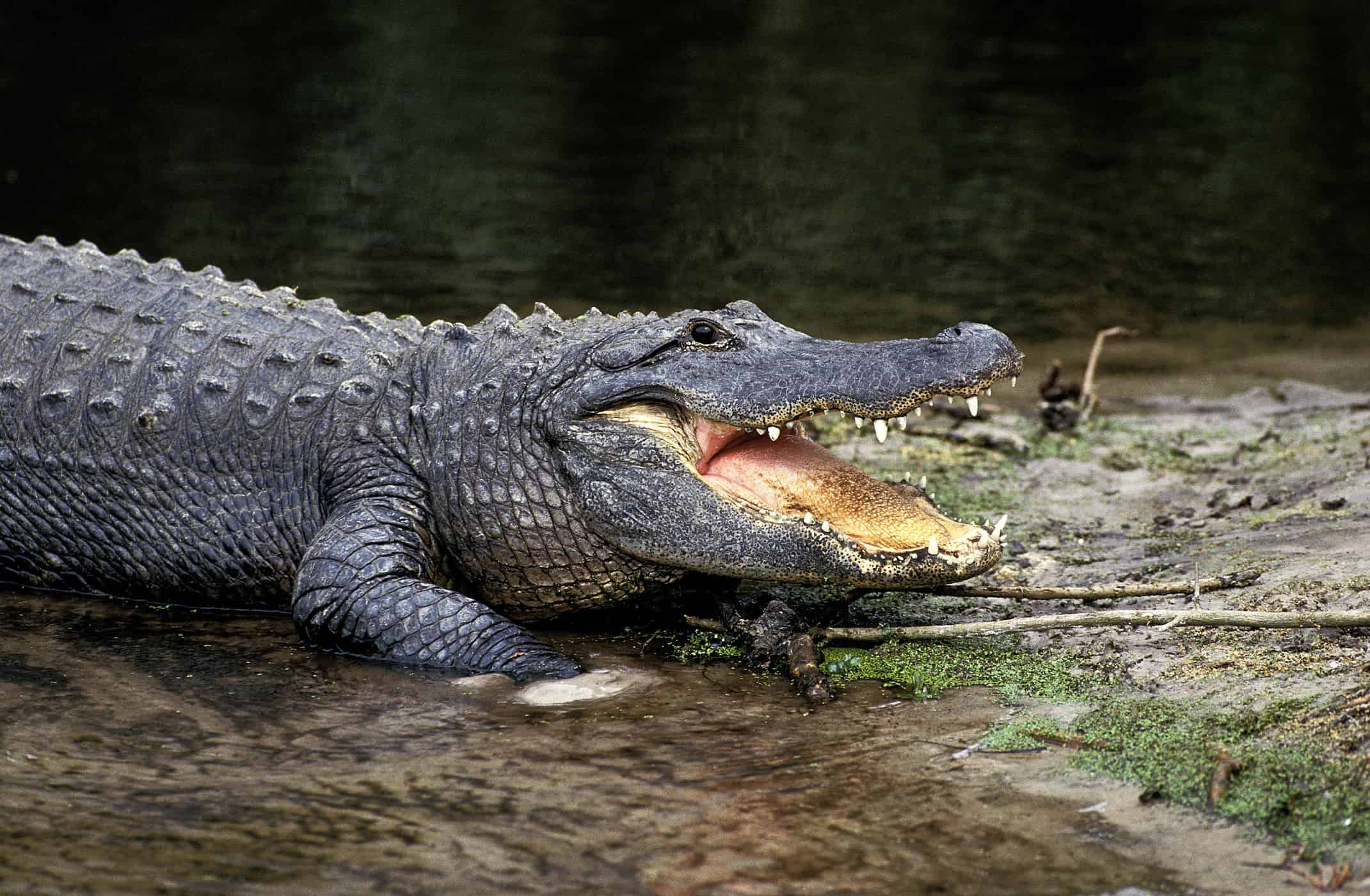
Alligator mating season begins in late spring to early summer.
©Martina Birnbaum/Shutterstock.com
Male alligators fight off other males in hopes of impressing the females they want to mate with. In doing so, their aggressive personalities are on display. This behavior can begin to die out after the mating season ends. Females remain confrontational for much longer.
Nests will begin to be built by female alligators in late June. The clutch of 20 to 50 eggs will incubate for 63 to 68 days. After this time, the baby alligators will begin to hatch, call out to their mothers, and will then be dug up and carried to the water in the female alligator’s mouth.
When Are Female Alligators Most Aggressive?
The breeding season is when female alligators are most aggressive. This is because female alligators are driven to protect their own offspring and keep predators away. Consequently, if people get near their nests, female alligators will attack.
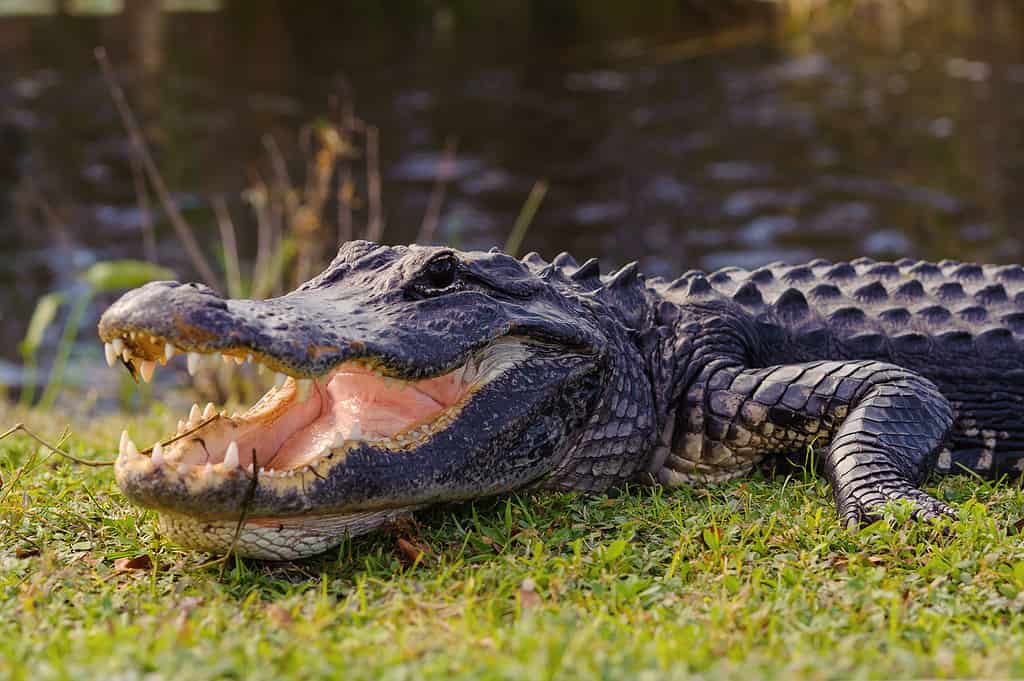
Female alligators are fiercely protective of their nests.
©Sorbis/Shutterstock.com
From late spring to early summer, female alligators are aggressive on land. In total, from mating to egg hatch, the heightened defensive behavior lasts for nine to 10 weeks. After the eggs hatch, female alligators no longer need to stay close to their nests; instead, they begin protecting their hatchlings in the water.
Protecting the hatchlings can last anywhere from several months to a year. This does not mean the aggression is over at this point. Female alligators will continue to chase off would-be threats. Therefore, knowing where nesting sites are located during spring and early summer can help you identify areas near water to avoid, reducing the risk of a surprise encounter with a mother alligator.
Signs of an Active Alligator Nest
Alligator nests tend to be built in areas with easy access to water. But because the eggs need to incubate, alligators will create a mound rather than digging down to the water table. As a result, it can be easy to mistake an alligator nest for a pile of debris or dirt and unwittingly put oneself in the direct line of an alligator attack.
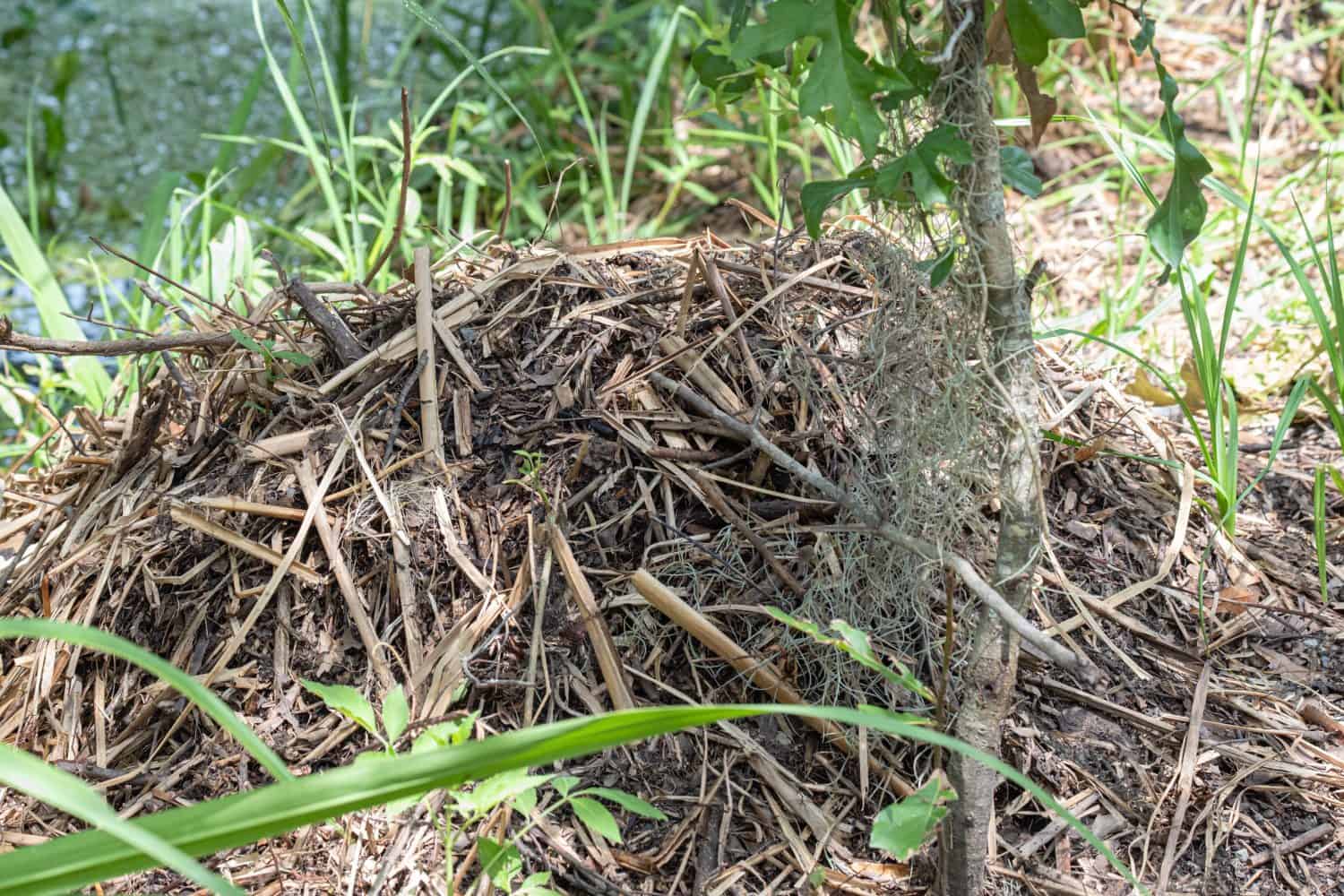
Alligator nests are made of mud, grass, and sticks and can look like a pile of debris.
©William A. Morgan/Shutterstock.com
The typical alligator nest will be approximately one to three feet high and four to seven feet in diameter. It will be made of mud, grass, sticks, and other materials that help insulate and incubate the eggs. In most instances, the nests will be built in places away from foot traffic and human activity. However, if conditions are otherwise optimal—such as proximity to a body of water and availability of nesting materials—alligators may build nests in locations close to people.
If you believe an alligator nest is near a walkway or backyard, do not approach it. Just because an alligator is not visible near the mound does not mean it is not nearby. Instead, contact wildlife authorities and let them assess the situation.
How To Avoid Alligators
Avoiding alligators is not as difficult as it sounds. While the breeding season may make alligators more active than at other times of the year and even cause them to venture into places where they are typically not spotted, there are ways to avoid them.
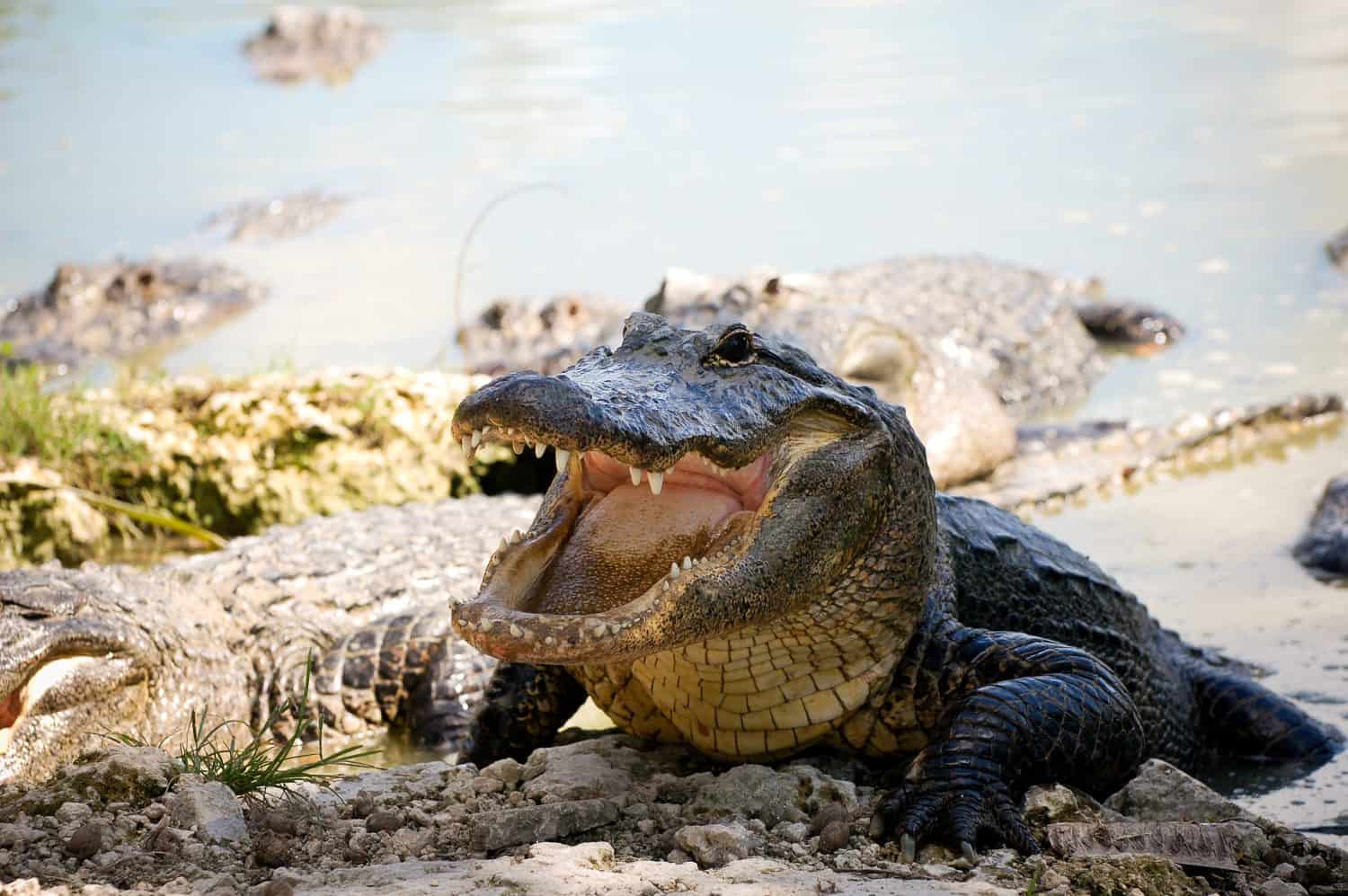
Avoiding lakes, marshes, and slow-moving bodies of water with thick vegetation can help people avoid alligators.
©Heiko Kiera/Shutterstock.com
The best ways to avoid alligators at any time of the year include:
- Stay away from bodies of water with thick vegetation at dawn and dusk
- Do not swim in freshwater lakes, marshes, or other slow-moving bodies of water during breeding season
- Keep dogs and children away from bodies of water
- Remain on marked walkways and boardwalks
- Stay a minimum of 10 feet away from alligators, with 30 feet being an optimal distance
- Never feed alligators
- Eliminate items that could attract alligators to a backyard, such as trash and food items
- Install a fence around the property and pools to keep alligators from entering
By following these steps, the chances of coming into contact with an alligator decrease markedly, whether during breeding season or at any time of the year when alligators are active.
What to Do If You Encounter an Alligator
Despite doing everything possible to stay out of the path of an alligator, those who live in alligator country can find themselves in close proximity when they least expect it. To keep both the alligator and people safe, it is important to know how to handle such situations.
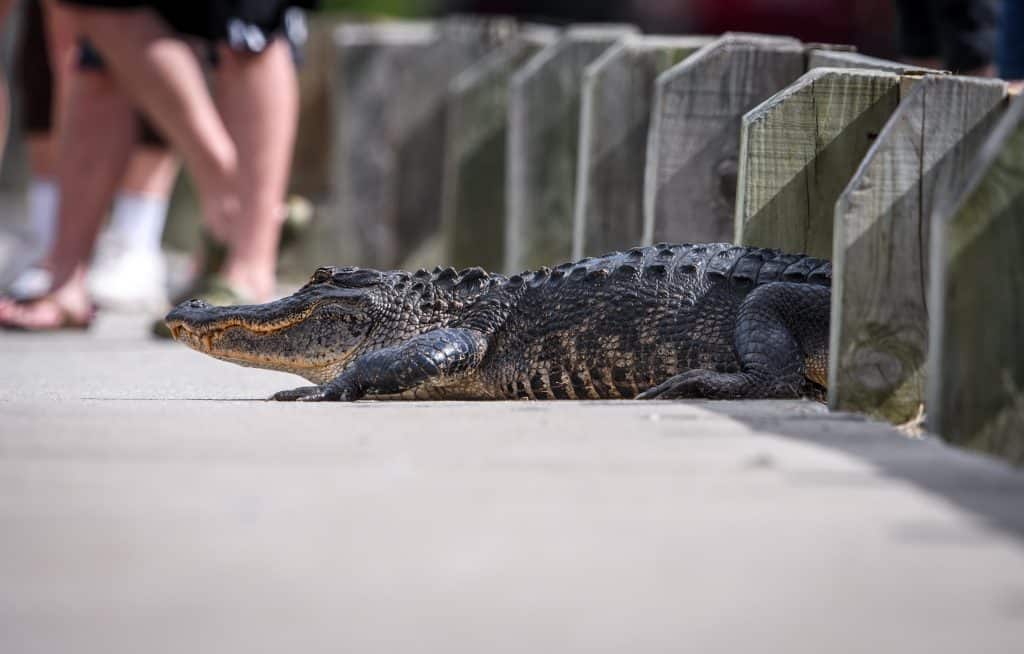
Remaining calm, not turning your back on an alligator, and not making any aggressive movements will help ensure that an accidental encounter with an alligator does not turn out badly.
©Matthew Orselli/Shutterstock.com
The steps to follow when an accidental alligator encounter occurs are as follows:
- Stay calm
- Do not make any fast movements that can trigger alligators to become aggressive
- Move away slowly, never turning your back on the alligator
- If chase ensues, run in a straight line
- Get behind a barrier that the alligator will not be able to maneuver around
Alligators are generally not aggressive toward people unless provoked. Breeding season can make female alligators protective of their eggs and hatchlings. As long as alligators are not approached in a threatening manner, the likelihood of an attack is low. Understanding the signs of an alligator nest and knowing which areas to avoid during breeding season can further reduce the risk of an attack, helping both people and alligators remain safe during the most aggressive period of an alligator’s life.