
Quick Take
- Even as apex predators, lions back off quickly when a hippo emerges, suggesting learned caution around a dangerous rival.
- Hippos are native to sub-Saharan Africa, living mostly in rivers/estuaries (and sometimes reservoirs), staying close to deep water and nearby grasslands.
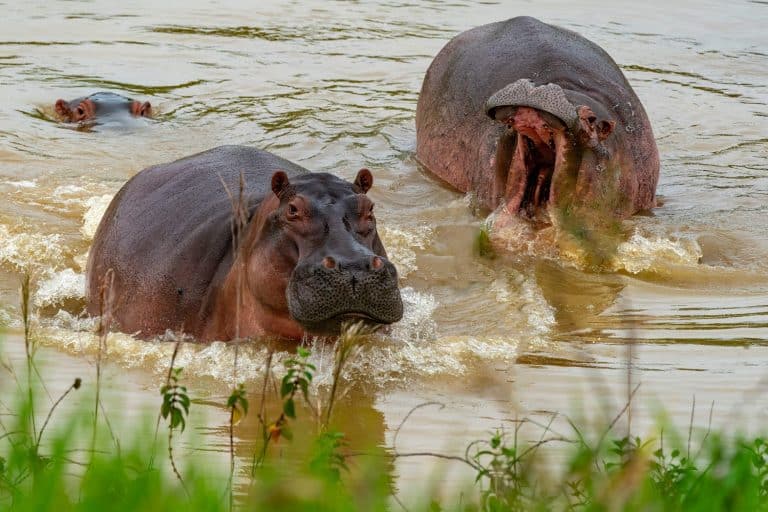
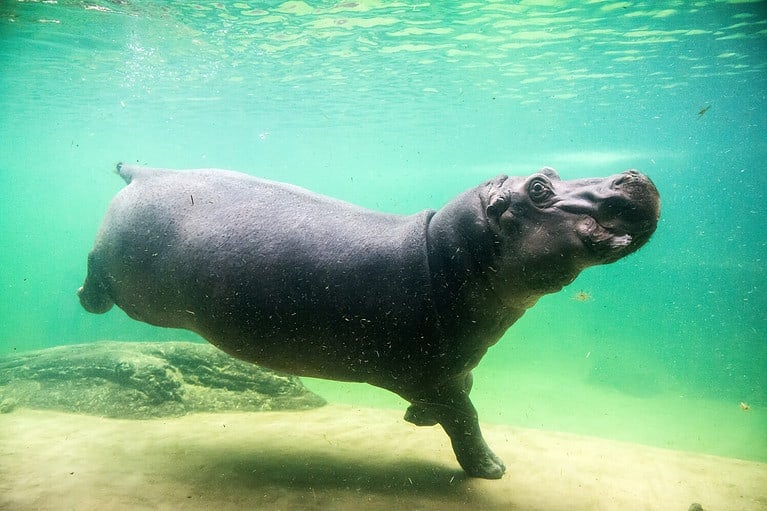
- Hippos spend days submerged with only eyes/nostrils visible, may bask on sandbars, and typically come out at night to forage while defending their patch of water.
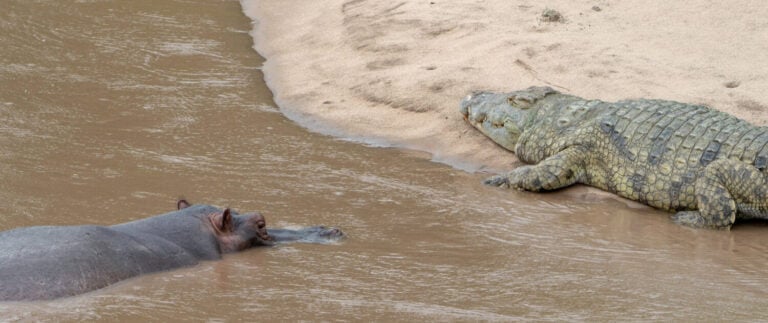
Having watched this clip, it’s hard to miss the caution lions show around hippopotamuses. Even though lions are often described as apex predators in their ecosystems, these individuals don’t linger once a hippo begins to rise from the water. They appear to have learned—through experience, instinct, or both—that hippos have little tolerance for intruders in their stretch of river. In other words, a hippo is not an animal most predators want to confront. To understand why lions may react this way, it helps to look more closely at hippo habitat use and behavior.
Where Do Hippos Normally Live?
Hippopotamuses are native to sub-Saharan Africa. They occur across many countries, including Angola, Namibia, Nigeria, and Zimbabwe. Most commonly, they are associated with estuaries and the lower reaches of rivers, where water levels and access points suit their daily routines. More recently, they have also been documented using reservoirs. Hippos can even occur in rainforest regions, but typically only where large rivers provide the kind of aquatic habitat they depend on.
For most of the year, hippos stay closely tied to water, but during the rainy season they may range farther from the river or lake margins. Access to water is central to hippo well-being: they rely on deep water for daytime submergence, muddy wallows for thermoregulation and skin protection, and nearby grasslands where they can forage.
How Do Hippos Normally Behave?
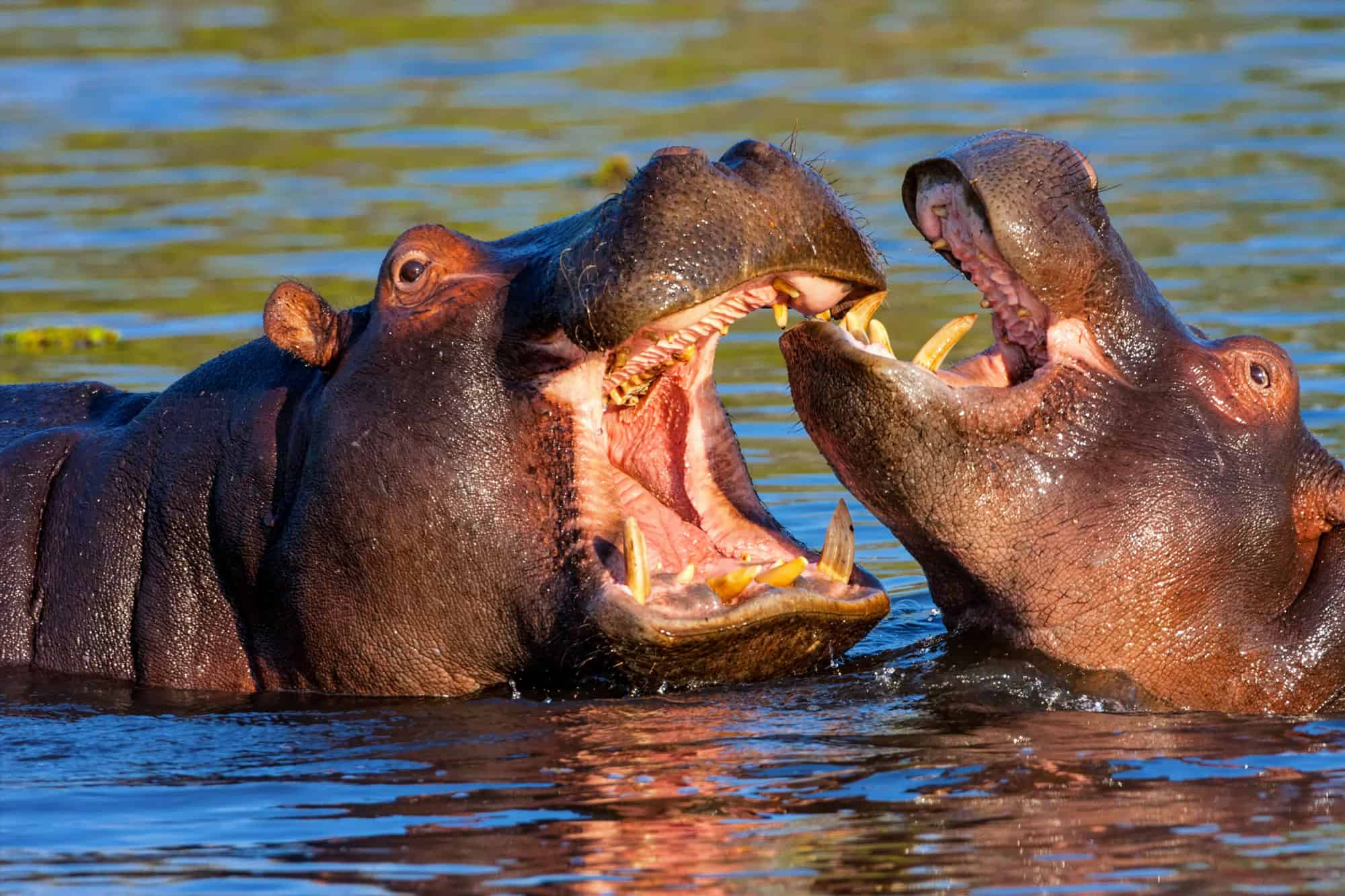
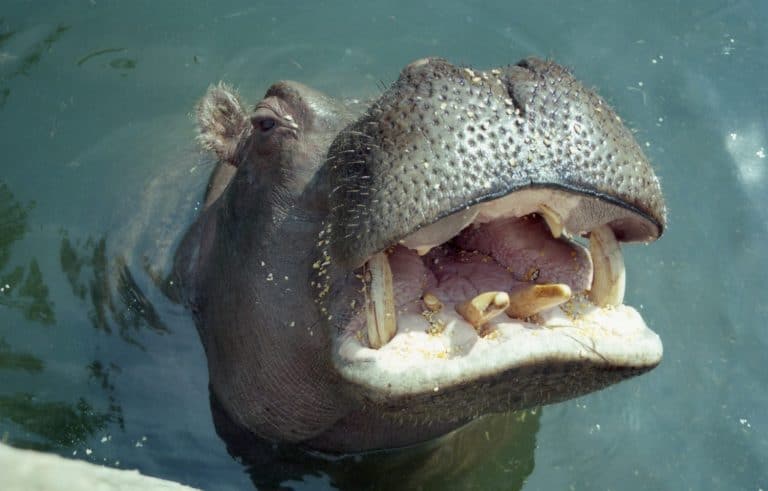
Hippos are highly aggressive and unpredictable and often charge other animals or even humans.
©iStock.com/mesut zengin
Hippos have a reputation for being highly aggressive and unpredictable, and they will sometimes charge other animals—and, in some circumstances, humans.
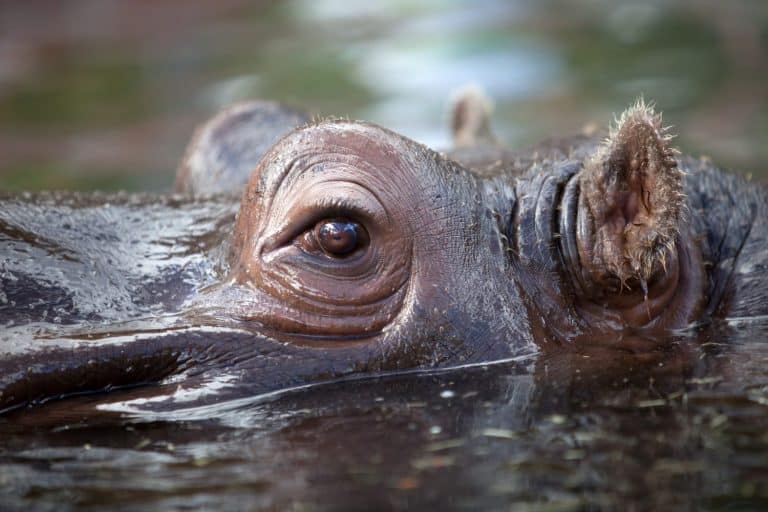
During daylight hours, hippos spend much of their time submerged in deep water. Often, the only visible features are the eyes and nostrils breaking the surface. At times they may haul out to rest on sandbars, but they generally remain within easy reach of the water. At night, they leave the water to feed.